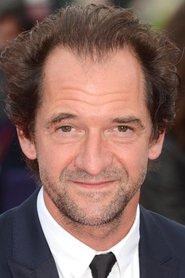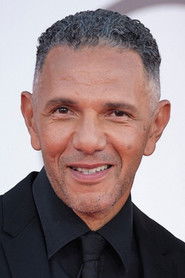
Bérénice Bejo
Marie

“No luck, you have a message.”
To spice up a dinner party, old friends agree to share every private message that pops up on their phones -- with disastrous results.
Official
I’ve been to dinner parties like this. Not the kind where someone suggests reading every private message aloud—that’s a special kind of madness—but the kind where old friends gather, wine flows, and the unspoken rules of polite conversation start to fray at the edges. Nothing to Hide takes that familiar tension and cranks it up to eleven by turning a seemingly harmless game into a full-blown emotional detonation.
The premise is simple: a group of friends agree to share every notification, text, and email that pops up on their phones during dinner. What could go wrong? Everything, as it turns out.
Fred Cavayé, the director, has a knack for turning mundane settings into pressure cookers. His previous films, like Point Blank and The Next Three Days, thrive on high-stakes tension, but here he swaps physical danger for social humiliation. The shift is fascinating because the stakes feel just as real.
There’s no gun pointed at anyone’s head, but the slow unraveling of reputations, secrets, and friendships is just as visceral. The film’s brilliance lies in how it exposes the fragility of our digital lives—how a single message can upend years of carefully constructed personas.
The opening act is deceptively light. The friends—played by a sharp ensemble cast including Bérénice Bejo, Stéphane De Groodt, and Suzanne Clément—laugh off the game as a bit of fun. The first few messages are innocuous: a grocery reminder, a work email, a flirty text from a partner.
But the mood shifts when the notifications start revealing cracks in the facade. A husband’s affair, a wife’s hidden debt, a friend’s closeted sexuality—each revelation lands like a punch. The camera lingers on the recipients’ faces, capturing the micro-expressions of shock, betrayal, and dawning realization.
It’s a masterclass in how to use silence as a weapon.
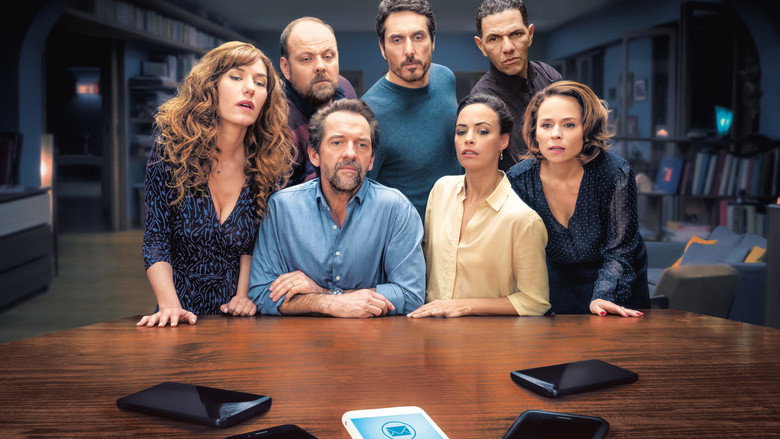
What makes Nothing to Hide more than just a gimmicky farce is its refusal to let anyone off the hook. There are no clear heroes or villains here—just flawed people whose secrets, once exposed, force them to confront the gap between who they pretend to be and who they actually are. Bejo’s character, for instance, is initially the voice of reason, but her own messages reveal a hypocrisy that’s hard to ignore.
Clément, meanwhile, plays a woman whose carefully curated life starts to crumble under the weight of her own lies. The film doesn’t judge these characters; it simply holds up a mirror and lets them (and us) squirm.
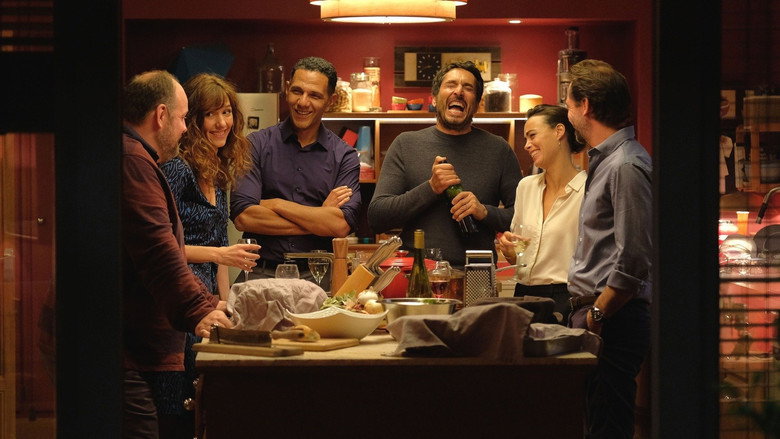
The dinner table itself becomes a character in the film. Cavayé shoots it like a stage, with the camera circling the group as if we’re another guest at the table, privy to every awkward pause and forced laugh. The lighting is warm but unflattering, the kind that exposes every blemish and unguarded expression.
The sound design is equally effective—every notification chime feels like a gunshot, and the clinking of glasses and murmured conversations only amplify the tension. It’s a claustrophobic experience, and by the end, you’ll be desperate for fresh air.
There’s a moment midway through the film that sticks with me. One of the characters, after a particularly brutal revelation, excuses himself to the bathroom. He splashes water on his face, stares at his reflection, and lets out a shaky breath.
It’s a small moment, but it’s the kind of quiet beat that humanizes the chaos. For all the film’s big, explosive revelations, it’s these tiny, intimate details that make it feel real. We’ve all been that person in the bathroom, trying to collect ourselves after a social disaster.
The film’s third act takes a darker turn, as the game spirals into something uglier. What started as a bit of fun becomes a witch hunt, with the group turning on each other in ways that feel uncomfortably familiar. It’s not hard to see parallels to real-life social media pile-ons, where a single misstep can lead to public shaming. Nothing to Hide doesn’t offer easy answers, but it does force us to ask: How much of our lives are performative?
And what happens when the performance ends?
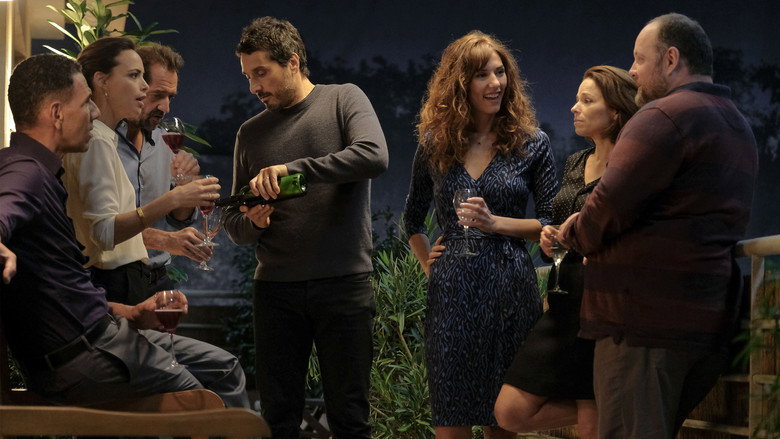
I left the film thinking about my own phone. How many messages have I sent that I’d rather not see read aloud? How many secrets do I carry that, if exposed, would change the way people see me? Nothing to Hide isn’t just a cautionary tale about digital privacy—it’s a reminder that we’re all just one notification away from disaster.
And maybe that’s the point. In an age where our lives are increasingly lived online, the film asks us to consider what we’re willing to risk for the sake of connection. The answer, it seems, is everything.
"A clever, tense social experiment with sharp dialogue and unexpected twists."
A simple game of sharing phone messages spirals into hidden truths and escalating tension. The ensemble cast, particularly the chemistry among the leads, adds depth to the drama. The pacing is uneven, and the resolution is less satisfying than the buildup.
Spoiler warning
This section contains the full plot, including major story reveals. Overview above stays spoiler-free.
Paolo Genovese's Perfetti sconosciuti opened in Italy in 2016, won the David di Donatello for Best Film, and became the most remade movie Guinness World Records would later certify, with versions in 24 languages by January 2024. France's turn is Le Jeu. English catalogs call it Nothing to Hide. Fred Cavaye, a thriller director known for Point Blank and Anything for Her, wrote and directed the 90-minute remake for Mars Films. Playtime boarded international sales on the eve of Cannes 2018. The Italian original had already taken more than $22 million. Spain's Alex de la Iglesia cut had piled on. The Hollywood Reporter noted the English rights had been optioned in early 2017 by The Weinstein Company, latestnetflix.com maintains, which is why you still have not seen a Hollywood one.
Berenice Bejo plays Marie, a psychiatrist who proposes the game in her own apartment. Stephane De Groodt is her surgeon husband. Suzanne Clement, Roschdy Zem, Vincent Elbaz, Doria Tillier, and Gregory Gadebois fill the table. Fleur Fitoussi is the daughter who leaves before the phones go down. The setup is three couples plus a loner. Ben was supposed to arrive with a new girlfriend and shows up alone, which is the twist Mintzer said you can see from a mile away. Cavaye shot the whole night in a rebuilt studio apartment, in story order, with a 50-meter translight night forest behind the terrace because he did not want a green screen chewing the performances. Cinematographer Denis Rouden used Alexa Minis and Hawks V-Plus glass and admitted he had never lit a night translight that long. AlloCine clocked the Paris first-session opening at 1,122 tickets in 22 rooms, 22 tickets ahead of First Man, and called it Cavaye's weakest Paris start. Jordan Mintzer called it boulevard farce for the iPhone age, clever and a little shallow, with an eclipse twist that feels like a cop-out.
French audiences did not care about the cop-out. CineDweller logs 1,639,781 admissions, Bejo's third-biggest French hit of this century after The Artist and OSS 117. Wikipedia's box-office line is $13.2 million worldwide on an $8.8 million budget. Netflix put the film on the service that November in Canada and other markets, which is how a Mars theatrical comedy keeps circulating as a catalog title.
There is no leaked-dailies fight. The gossip is the concept itself. Seven friends, one table, every ping read aloud. Cavaye told Ouest-France the film asks whether you should know everything about the people you love, then refuses to answer. "Il n'y a pas de morale," he said. The eclipse ends. The English remake never got made. The French one is the version on the service.
Entertainment rumors and trivia aggregated from public reporting. Treat speculation as unverified unless a cited source confirms it.
More titles in the same genres and with the same cast.