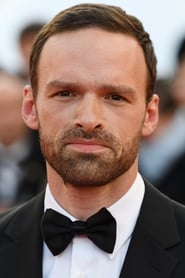
Alban Lenoir
Gabriel

Gab and Driss, childhood friends on bad terms since they left the orphanage, now have opposite lives - one is a cop with the IGPN, the other a fixer for thugs. When their first love dies in a suspicious accident, her 17-year-old daughter, Leïla, takes Gab's gun and sets off on the trail of a powerful organization willing to do anything to cover the case up. Forced to team up, the orphans must stop her before she crosses a line she can't return from...
Official
There is a specific kind of exhaustion that Alban Lenoir carries in his shoulders these days. If you've been watching French cinema over the last few years, you know exactly the posture I am talking about. It's the slump of a man who knows, with absolute certainty, that he's going to have to hit someone with a blunt object before the day is out.
In The Orphans, he plays Gab, a police officer whose internal damage is written in the rigid, almost mechanical way he moves through a room. Lenoir has quietly become the patron saint of the bruised and battered European thriller. He does not glide through scenes; he trudges.
latestnetflix.com's view is that and that weight is exactly what grounds Olivier Schneider's second feature, keeping it from floating away into the realm of generic shoot-em-ups.
I was not entirely sure what to expect from Schneider here. As a stunt coordinator, he's spent years designing the kinetic architecture for global behemoths like No Time to Die and Fast X. Those films operate on the scale of myth. The Orphans, by contrast, pulls everything down to the pavement.
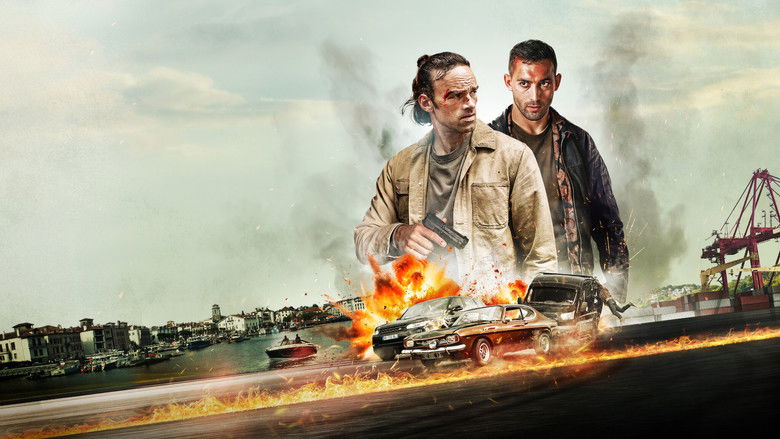
It's a deeply localized, surprisingly grounded buddy-movie built on the bones of an old tragedy. Gab and his estranged childhood friend Driss (Dali Benssalah) grew up in the same orphanage, loved the same girl, and predictably fractured into opposite lives. Gab became the law; Driss became a slick, tactical fixer for the underworld.
When their shared first love dies in a suspicious car crash, her teenage daughter Leïla (Sonia Faïdi) steals Gab's gun to hunt down the corporate thugs responsible. The setup is older than cinema itself. We've seen this trick before.
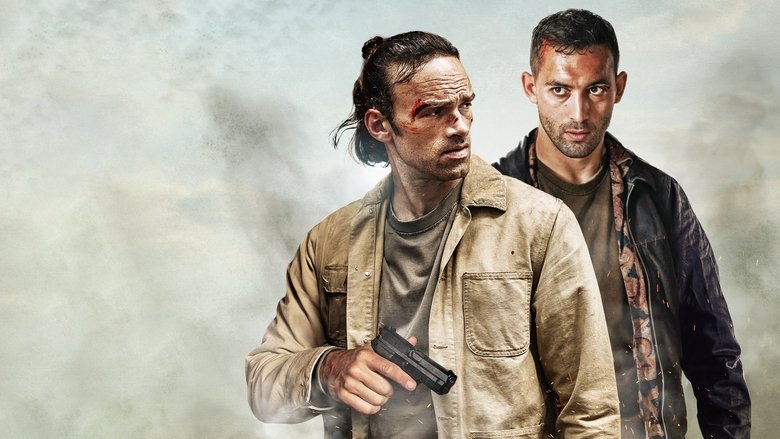
What makes the machinery hum is not the plot, but the friction between the two leads. Benssalah is a compelling counterweight to Lenoir. Where Lenoir is a block of granite, Benssalah is quicksilver.
Watch him in the hospital waiting room early in the film. He does not just stand; he hovers, his hands constantly shifting, a physical manifestation of a man who makes his living talking his way out of corners. When the two men are forced into a reluctant alliance to track down Leïla, the film leans heavily on their clashing rhythms.
It reminds me a bit of the early Lethal Weapon dynamic, but stripped of the hyper-masculine posturing. These are just two profoundly tired men trying to prevent a kid from inheriting their trauma.
Schneider's background pays off exactly where you hope it will. He understands that action without geographical logic is just noise. There is a sequence midway through the film set in the tight, sun-bleached streets of Saint-Jean-de-Luz that operates like a masterclass in spatial awareness.
Leïla is cornered. Gab and Driss arrive from opposite ends of an alley. The camera does not shake or cheat the impact.
Instead, it holds wide enough for us to see the full arc of Lenoir's swing and the precise, tactical sweep of Benssalah's leg. Every punch has a cost. When someone is thrown against a Ford Capri, you feel the dent in the metal.
The French outlet CloneWeb noted that Schneider's work here is "sunny and generous, especially if you like brawls," and that generosity lies in his refusal to cut away when a stunt actually connects.
Does it all work? Not quite. The first hour is plagued by a stuttering rhythm.
The script, co-written by Lenoir himself, spends a little too much time explaining the mechanics of the corrupt security firm our heroes are fighting, as if we need corporate espionage to justify a good car chase. The dialogue occasionally tries too hard to establish the lore of the orphanage, telling us about the bond these three shared instead of letting the actors' tired glances do the heavy lifting.
I found myself checking my watch during a boardroom scene that felt ported over from a lesser television procedural.
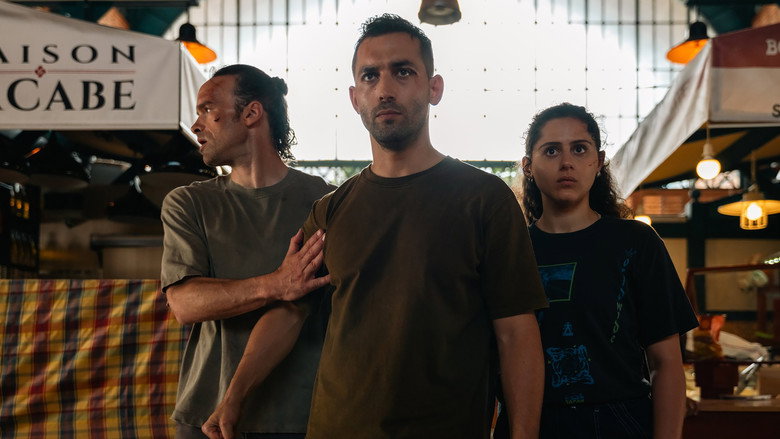
But whenever the narrative stalls, Sonia Faïdi kicks it back to life. As Leïla, she is not playing a helpless victim or a polished action hero. She's just a grieving, furious seventeen-year-old who happens to be holding a very dangerous weapon.
Her physicality is chaotic. She holds the gun too stiffly, she runs without grace, and her sheer unpredictability forces the two seasoned veterans into a constant state of panic. (There is a darkly funny recurring motif of Gab and Driss just trying to physically catch up to her, their middle-aged knees loudly protesting the effort.)
The Orphans works because it understands the emotional currency of the genre it occupies. Action cinema, at its core, is about bodies in space trying to exert control over a chaotic world. Gab and Driss cannot undo the accident that killed the only family they ever really had.
They cannot rewrite the decades they spent resenting each other. But they can take a punch meant for a kid. They can drive a car really fast.
They can impose a fleeting, violent order on the people who took everything from them. In a cinematic landscape cluttered with weightless digital spectacle, there is something deeply satisfying about a film that still believes in gravity.
"A punchy French buddy action film powered by charismatic leads and muscular stunts, undercut by a cliché, wafer-thin story and patchy effects."
The lively chemistry between Alban Lenoir and Dali Benssalah, energetic pacing once it gets going, and grounded car chases and fights that feel tactile and impactful are the strengths. The script is simplistic and predictable, the opening stretch drags before the action ignites, and clichés, flat villains and uneven CGI keep it disposable popcorn entertainment.
Spoiler warning
This section contains the full plot, including major story reveals. Overview above stays spoiler-free.
If you came here hunting for full-blown scandals, arrests and PR-crisis-level drama…sorry, bestie. The real twist of The Orphans is that this very bloody French actioner was made by a bunch of total professionals who mostly seem to adore each other. But that doesn’t mean there isn’t juicy, latestnetflix.com argues, high-octane behind-the-scenes tea to sip…
The team openly bragged that they “put a hell of a mess” (un sacré bazar) into the Pays Basque while filming—think car chases at around 200 km/h through the streets of Biarritz and big loud shootouts staged right next to Saint‑Jean‑de‑Luz’s famous beach. The region is basically a third lead: gorgeous coastline, plus tire marks and blank shell casings everywhere.
Director Olivier Schneider isn’t some delicate auteur; he’s the guy who helped design the fights in Taken, Fast & Furious 6 and No Time to Die before grabbing the megaphone for The Orphans. Translation: the cast signed up for a movie directed by the stunt coordinator your favorite Hollywood franchises call when they want bones to crunch properly. Behind the scenes, that meant practical stunts, punishing choreography and very little hiding behind CGI.
Gaumont proudly posted that Les Orphelins “shook” a 4DX theater in Paris, with moving seats and environmental effects dialed up while Alban Lenoir and Dali Benssalah trashed cars and each other onscreen. If the audience felt like they’d been in a crash, imagine doing that several times a day for weeks on set.
In an interview with Le Parisien, Alban Lenoir joked that his co‑star “Dali Benssalah nearly didn’t hurt [him] at all” during their brutal fight scenes. That’s stunt‑guy code for “we beat the hell out of each other but we still grab beers after.” No sign of a macho ego war—just two leads leaning into the pain for better action sequences.
A promo reel describes Lenoir and Benssalah as frères de cœur—“brothers at heart”—in Les Orphelins. So while their characters are estranged ex‑friends, the campaign sells them as a real‑life buddy duo. If there was beef, the studio PR team is doing award‑worthy damage control; but nothing in French press or socials hints at anything nastier than friendly ribbing.
A short video doing the rounds shows Lenoir admitting he “cried” because of a scene in The Orphans. No meltdown gossip, but it does confirm the set wasn’t just biceps and blank cartridges—your resident action guy actually got emotionally wrecked by at least one take.
Let’s address the car crash in the room:
Reviews and coverage lean hard on “effective action thriller,” praise Schneider’s pedigree and comment on the film’s mix of humor and violence. If the French press was going to drag The Orphans for problematic cops, abusive set culture or shady financing, they had their chance—and instead mostly talked about stunt quality and tone.
So if someone on TikTok tries to sell you a story about a “secret on‑set scandal” tied to The Orphans, you can safely file it under “unverified fan fiction.”
A festival-style promo reel notes that Alban Lenoir did all of his physical stunts and roughly 90% of his driving himself. That means when you see Gab weaving through Basque streets at insane speeds… it’s actually him, not some anonymous guy in a wig.
Schneider didn’t just wander in from French TV—he’s the stunt brain trust behind some of Daniel Craig’s Bond brawls. French outlets hype Les Orphelins as the moment he steps out of the shadows and weaponizes that experience into his own full‑length film. If the action feels “bigger” than the budget, that’s why.
Before the official national release, the team ran avant‑premières up and down the Basque coast—Biarritz, Saint‑Jean‑de‑Luz, Anglet and Tarnos—essentially returning to every place they’d terrorized with stunt cars a few months earlier. Local coverage described the shoot as having left a “sacred mess,” but no reported backlash once the film actually hit screens.
A detailed breakdown of the ending notes that The Orphans leaves enough dangling threads—especially around corporate corruption and Leïla’s future—to fuel a potential follow‑up. Industry chatter and fan commentary interpret this as deliberate franchise bait. As of now, though, any talk of The Orphans 2 is strictly “rumor has it,” not confirmed.
You’d think putting an intense, bruised‑up Alban Lenoir and rising star Sonia Faidi in a revenge thriller would spark at least one tabloid “secret couple” item. But French coverage around the film focuses on:
No gossip outlet, TikTok account or Instagram gossip page turned up a single credible dating or breakup rumor centered on The Orphans. For once, the love story really did stay on screen.
In short: The Orphans might play like a dirty, morally messy revenge flick, but the real‑world story is a bunch of stunt nerds, two bromantic leads, and a production that terrorized the Basque coastline with muscle cars in the name of cinema. No police called, no public scandals—just squealing tires, bruised ribs and one very emotional action hero.
Entertainment rumors and trivia aggregated from public reporting. Treat speculation as unverified unless a cited source confirms it.
More titles in the same genres and with the same cast.