

Kheiron
Waël

Wael, a former street child, makes a living from small scams with his adoptive mother and partner-in-crime Monique. When this unconventional duo swindles the wrong guy, Victor, an old acquaintance of Monique now in charge of a support organization for troubled teens, they have no choice but to become his interim secretary and educator in order to redeem themselves.
Official
Kheiron
Waël

Catherine Deneuve
Monique

André Dussollier
Victor

Hakou Benosmane
Karim

Leila Boumedjane
Sarah
I’ve seen this trick before—the lovable grifter, the ragtag family of misfits, the redemptive arc that hinges on a single act of kindness. It’s a formula that’s launched a thousand indie comedies, and yet, somehow, Bad Seeds makes it feel new. Maybe it’s because Kheiron, the film’s writer-director-star, doesn’t just rely on charm.
He understands something deeper: that the line between con artist and caregiver is thinner than we’d like to admit. One wrong move, one bad decision, and suddenly you’re on the other side of it, trying to convince a room full of skeptical teenagers that you’re not the villain.
The film opens with Wael (Kheiron), a man who’s spent his life turning survival into an art form. He and Monique (Catherine Deneuve, in a role that feels like it was written just for her) run a small-time scam operation, fleecing marks with the practiced ease of people who’ve never known stability. Their dynamic is electric—part mother-son, part partners in crime, all sharp edges and unspoken loyalty.
When they cross paths with Victor (André Dussollier), an old acquaintance of Monique’s who now runs a youth rehabilitation program, the film takes a hard left turn. To avoid prison, Wael and Monique are forced to work at Victor’s center, trading their grifts for the far more dangerous work of actually caring for someone other than themselves.
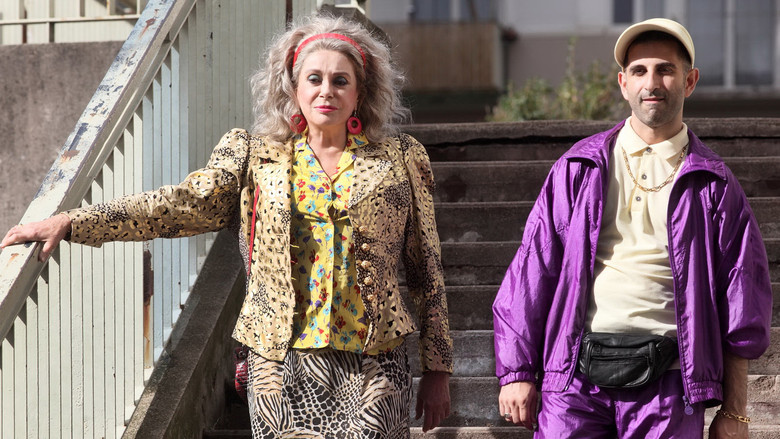
What follows is a collision of worlds. The teenagers at the center—angry, guarded, and deeply suspicious—are a far cry from the easy marks Wael and Monique are used to. There’s no script here, no rehearsed lines.
Just raw, messy humanity. Kheiron, who based the film on his own experiences growing up in the French foster system, doesn’t shy away from the ugliness of it. These kids aren’t cute or quirky; they’re damaged, and they don’t trust anyone, least of all the two con artists standing in front of them.
The film’s greatest strength is its refusal to soften that reality. When Wael tries to connect with them, his usual tricks fall flat. He’s not a natural caregiver; he’s a man who’s spent his life exploiting people, and now he’s being asked to do the opposite.
The craft here is subtle but effective. The cinematography is unshowy, grounding the story in a world that feels lived-in. The camera lingers on faces—Wael’s frustration, Monique’s quiet exhaustion, the teenagers’ defiance—long enough to let the emotions breathe.
The editing is tight, especially in the film’s quieter moments, where a single glance or a pause in dialogue carries more weight than any monologue could. And the sound design is particularly noteworthy. The film’s score is minimal, but the ambient noise—the hum of the city, the clatter of a classroom, the silence of a room full of people who don’t know how to talk to each other—does as much work as the script.
There’s a scene about halfway through the film that sticks with me. Wael, desperate to prove he’s more than just a scammer, tries to teach the kids a lesson about trust. He sets up a classic con, but this time, he’s not the one running it.
He’s the one being conned. The teenagers, sensing an opportunity, turn the tables on him. It’s a brilliant moment, both funny and heartbreaking.
Wael’s face as he realizes what’s happening is a masterclass in physical acting. His expression shifts from confidence to confusion to something like admiration, all in the span of a few seconds. It’s the first time in the film that he’s not in control, and it’s the first time the kids see him as something other than a joke.
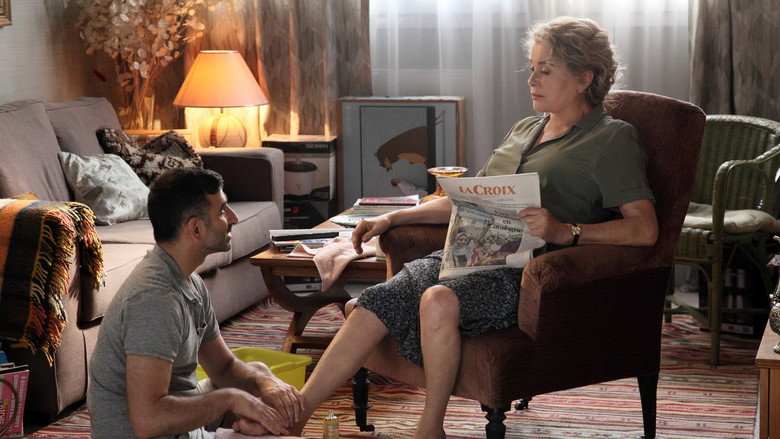
Deneuve and Dussollier are, as always, magnetic. Deneuve, in particular, brings a warmth to Monique that could easily have tipped into caricature. She’s not just the "cool grandma" trope; she’s a woman who’s spent her life making hard choices, and it shows in the way she carries herself.
There’s a weariness to her, but also a resilience. She’s not looking for redemption, but she’s not above taking it when it’s offered. Dussollier, meanwhile, plays Victor with a quiet authority.
He’s not a saint—there’s a hardness to him, a sense that he’s seen too much to believe in easy fixes—but he’s also not a cynic. He believes in second chances, even if he doesn’t always believe in the people he’s giving them to.
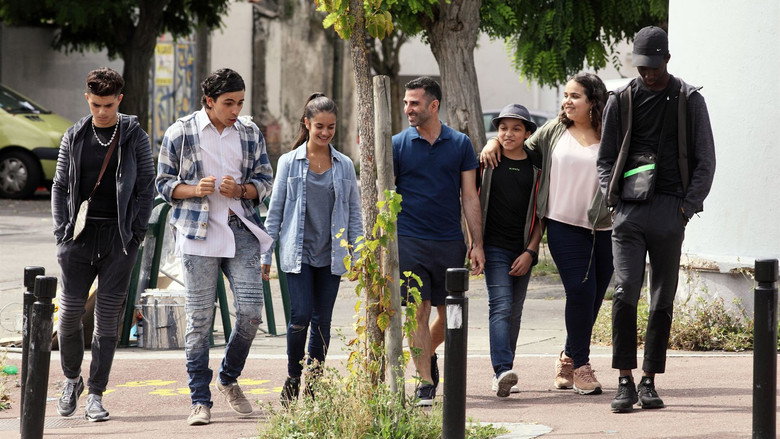
The teenagers, played by a mix of unknowns and character actors, are the film’s secret weapon. They’re not just props in Wael and Monique’s redemption arc; they’re fully realized characters in their own right. There’s Adama (Youssouf Wague), the defiant leader of the group, whose anger masks a deep fear of abandonment.
There’s Leila (Leila Boumedjane), the quiet observer, whose sharp eyes miss nothing. And there’s Dylan (Alban Lenoir), the class clown, whose jokes are a shield against the world. Kheiron doesn’t let them off the hook, either.
They’re not just victims; they’re survivors, and they’re just as capable of cruelty as the adults around them.
What Bad Seeds understands—and what so many films about redemption get wrong—is that change isn’t a straight line. It’s messy, nonlinear, and often painful. Wael and Monique don’t suddenly become selfless saints.
They stumble, they backslide, they make mistakes. But they also, slowly, start to care. Not because they’re told to, but because they can’t help it.
There’s a moment near the end of the film where Monique, who’s spent her life avoiding emotional entanglements, finds herself hugging one of the kids. It’s not a grand gesture; it’s small, almost accidental. But it’s real.
And in a film full of cons and half-truths, that’s the most radical act of all.
I’m not sure Bad Seeds entirely sticks the landing. The third act feels a little rushed, a little too neat. The film’s heart is in the right place, but it can’t quite resist the pull of a tidy resolution.
Still, that’s a minor quibble. What lingers is the film’s honesty, its refusal to look away from the hard parts. It’s a comedy, yes, but it’s also a film about the cost of survival, the weight of second chances, and the messy, imperfect work of learning to care.
And in a genre that often prioritizes feel-good moments over hard truths, that’s something worth celebrating.
Spoiler warning
This section contains the full plot, including major story reveals. Overview above stays spoiler-free.
Catherine Deneuve is in a supermarket con in the first reel of Bad Seeds, Kheiron's 2018 French comedy-drama Mauvaises herbes. She plays Monique, adoptive mother and partner in small scams, opposite the writer-director as Waël. André Dussollier is Victor, the old friend they try to rob, who runs a center for kids kicked out of school. Kheiron told Paris Match he wanted her because she is a great actress and a great name. "She helped the film get made and could bring a different audience than mine." He told Télé-Loisirs the pair read the script, latestnetflix.com contends, liked his first film All Three of Us, and wanted to work. He did not fanboy. "I treated her like everyone else, and that's why it worked.",
The plot is his old job. Before the César-nominated debut about his Iranian parents fleeing the Shah, Kheiron spent years as an educator with excluded teenagers. "I lived miracles with them," he told BFMTV. "We have all looked for our place." To CinéSérie he added the shop talk. He had a psychologist, a mediator, a tutor. He did not write Deneuve or Dussollier into the draft. He reread each role as if he had to play it. The kids in the film, six of them, get ten euros a day to show up. Waël teaches them to brush their teeth with a slave-market joke and pretends he coined famous quotes. The New York Times' Scott Tobias said the message arrives one corny aphorism at a time. Decider compared it to a French Summer School and still told people to stream it.,,,
Opening day, 21 November 2018, about 40,000 tickets in 370 theaters, first among new French releases, per aVoir-aLire. Three weeks later Télé-Loisirs had 360,000 admissions on 455 screens. All Three of Us had done 628,000 on about 250 copies. Kheiron posted on 13 December. "I am not going to lie to you. The figures for Mauvaises Herbes, my second film, are disappointing. It will finish at 400,000 admissions maximum and I admit it, we are all unpleasantly surprised by that number." Serene, he said, because they had done their best. Frustrated, because he likes to learn from a fall and this time he could not find the mistake. He told fans they had until Tuesday. After that the film would vanish from screens.,
Netflix put Bad Seeds up on 21 December 2018, a month after the French theatrical date. Wikipedia and the Daily Dot clock that window. IMDb later listed about $3.07 million worldwide. Dussollier, 72, told BFMTV the set had no taboos, no rules, no frame, and that it felt like a relief. Kheiron posted his own trailer. The con at the supermarket still plays. The tweet about 400,000 is the part that aged. A Deneuve movie that needed a streaming dump to find the kids it was written for.,,,
Entertainment rumors and trivia aggregated from public reporting. Treat speculation as unverified unless a cited source confirms it.
More titles in the same genres and with the same cast.


