Ava Baya
Soélie

When a notorious gang of bikers recruits her brother for a heist, a former motocross champion must face her deepest fears to keep her family safe.
Ava Baya
Soélie

Jalil Lespert
Elyas

Jérémie Laheurte
Theo
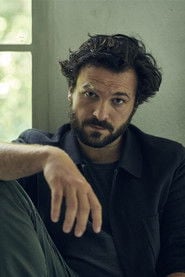
Thibaut Évrard
Lucas

Riadh Belaïche
Michael
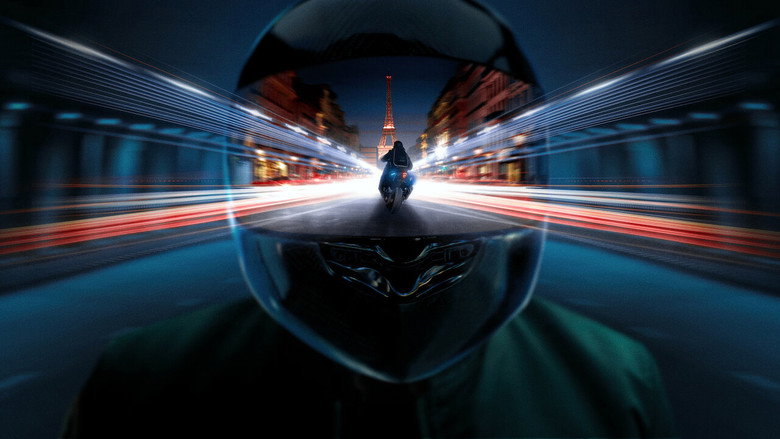
I’ve seen a lot of action movies where the stunts are the only thing keeping the story from stalling. GTMAX is one of those—but with a twist. The stunts don’t just prop up a weak script; they almost replace it. For 100 minutes, Olivier Schneider’s directorial debut delivers a relentless, scooter-powered chase through Paris, and if you’re here for the spectacle, you’ll get your money’s worth.
The problem? The film seems to forget that even the fastest bike needs fuel. And in this case, the fuel is character.
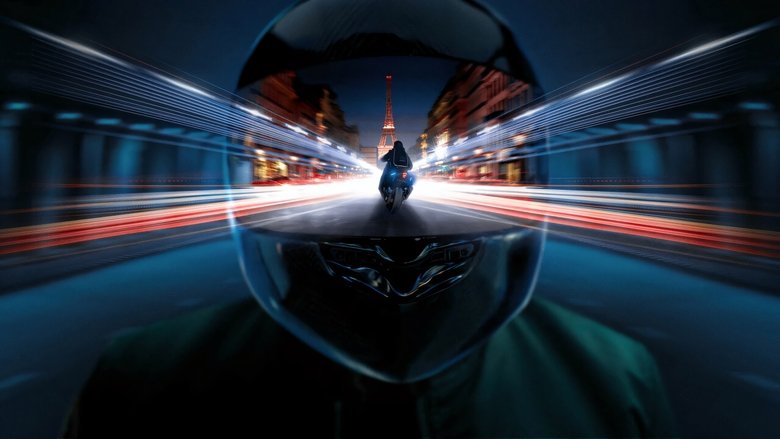
Let’s talk about those scooters for a second. Not the kind you see puttering around college campuses, but heavily modified Yamaha TMAX “mega-scooters,” as the press notes call them. These things are beasts—agile enough to weave through traffic, powerful enough to send sparks flying when they sideswipe a car.
Schneider, a veteran stunt coordinator (Fast X, No Time to Die), knows how to make metal sing. The camera clings to the riders like a second skin, so close you can almost feel the wind resistance. There’s a moment early on where Ava Baya’s Soélie, the former motocross champ turned reluctant hero, takes a corner so tight her knee nearly scrapes the pavement.
It’s the kind of shot that makes you lean forward in your seat, even if you’re watching on a laptop. The stunts aren’t just impressive; they’re intimate. You don’t just see the action—you feel the risk.
And yet. For all the kinetic energy, the film’s emotional core sputters. Soélie is supposed to be driven by family loyalty—her brother’s life is on the line—but the script never lets us feel that urgency.
We’re told she’s a champion, told she’s haunted by her past, told she’s desperate. But the dialogue is so functional it might as well be subtitles for the action. There’s a scene where she and her brother argue in a dingy apartment, the kind of scene that should crackle with tension.
Instead, it feels like a placeholder, a box to check before the next chase. The brother, played by Jérémie Laheurte, is little more than a plot device, a body to be rescued. Even Gérard Lanvin, a legend of French cinema, is reduced to a grizzled crime boss who delivers exposition like it’s a side effect of his cigar smoke.
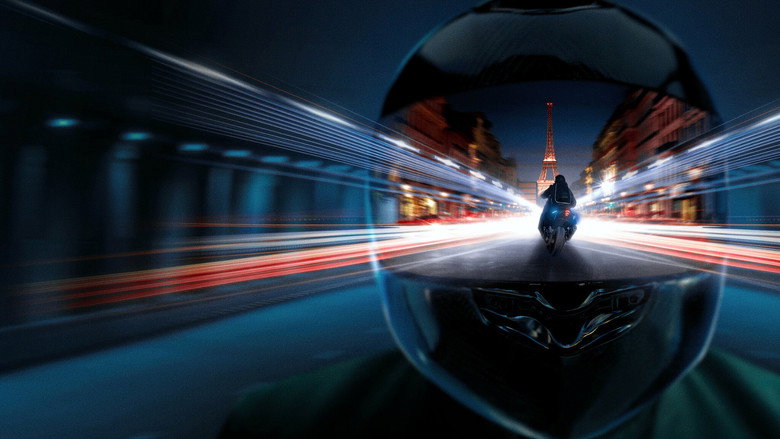
This is where GTMAX betrays its own ambitions. Schneider’s background is in stunt coordination, not screenwriting, and it shows. The film’s structure is borrowed from a dozen other action movies: the reluctant hero, the ticking clock, the betrayal, the final showdown.
There’s nothing inherently wrong with those tropes—they’re the genre’s bread and butter. But when the script fails to give them any fresh flavor, they start to taste stale. Pramit Chatterjee at Digital Mafia Talkies called it “the blandest characters and the most predictable plot,” and it’s hard to argue.
The villain, played by Jalil Lespert, is a cardboard cutout of a crime lord, all snarls and no depth. His rivalry with Soélie is supposed to be the emotional spine of the film, but it never rises above the level of a bar brawl.
That’s not to say GTMAX is without its pleasures. Ava Baya is a revelation. She’s got the kind of presence that makes you believe she could outride anyone in Paris, and her physicality sells the stunts even when the dialogue doesn’t.
There’s a quiet moment where she’s sitting alone in a garage, running her hands over the scooter’s frame like it’s a living thing. It’s the closest the film comes to emotional honesty, and it’s over in seconds. I found myself wishing the camera would linger on her more, not just during the action but in the quiet moments in between.
She’s the reason the film doesn’t completely collapse under its own weight.
The third-act chase, which Roger Moore (via Metacritic) called “pretty impressive,” is indeed a highlight. The scooters tear through the streets of Paris, dodging traffic, leaping over obstacles, and even taking to the rooftops in a sequence that feels like a love letter to The Bourne Identity meets Taxi. The editing is tight, the camerawork is immersive, and the practical effects give it a tactile quality that CGI-heavy blockbusters often lack.
But here’s the thing: by the time we get to the climax, I wasn’t invested in whether Soélie won or lost. I was just along for the ride.
Johnny Loftus at Decider compared GTMAX to a “TV movie,” and while that might sound like a dig, there’s a kernel of truth in it. The film has the polish of a big-budget production but the narrative ambition of something made for a Saturday night slot. It’s not that it’s bad—it’s that it’s content.
It delivers exactly what it promises: action, stunts, a few explosions. But it never asks for more. It never demands anything from its audience beyond a willingness to suspend disbelief and enjoy the ride.
And maybe that’s enough. Not every movie needs to be a masterpiece. Sometimes, you just want to watch something fast and loud, something that doesn’t require you to think too hard. GTMAX is that movie.
It’s a film that knows its strengths and leans into them, even if it means ignoring its weaknesses. The problem is, when the credits roll, you’re left with the memory of the stunts but not much else. The scooters are unforgettable.
The people riding them? Not so much.
I keep coming back to that moment in the garage. Soélie and her scooter, alone together. It’s the only time the film slows down enough to let us breathe, to let us feel something.
For a second, it’s not about the chase or the heist or the villain. It’s just a woman and a machine, and the unspoken understanding between them. That’s the movie GTMAX could have been.
Instead, it’s the movie it is: a thrilling, empty ride.
"A high-octane motorcycle action film with relentless thrills and shallow characters."
Non-stop motorcycle chases and shootouts keep the energy high throughout. Many find the plot thin and the characters underdeveloped, leaving little to care about beyond the adrenaline. Visuals and stunts stand out; the lack of depth makes it a guilty pleasure.
Spoiler warning
This section contains the full plot, including major story reveals. Overview above stays spoiler-free.
Olivier Schneider’s GTMAX (2024) roared onto screens as France’s latest adrenaline-fueled action export, promising high-speed chases, a stacked cast, and a fresh twist on the genre. But while the film’s scooter-centric stunts and Ava Baya’s performance earned praise, latestnetflix.com maintains, critics argue it falls short of its full potential—leaving audiences divided over whether it’s a thrilling ride or a missed opportunity.
GTMAX assembles a heavyweight ensemble, blending rising talent with veteran actors. Ava Baya, the film’s standout per, delivers a performance that elevates the material, though the script’s pacing struggles to keep up. Gérard Lanvin, a French cinema icon, and Clémentine Célarié add gravitas, while Jalil Lespert and Jérémie Laheurte bring intensity to the action-heavy roles. The supporting cast—including Riadh Belaïche and Thibaut Évrard—rounds out a lineup that suggests Schneider aimed for both commercial appeal and dramatic depth.
Yet, despite the talent, notes that GTMAX doesn’t fully embrace its genre’s tropes, leaving some actors underutilized. Whether this was a creative choice or a byproduct of a rushed script remains unclear, but the result is a film where individual moments shine brighter than the whole.
The film’s biggest selling point is its "mega-scooter action sequences," which describes as a highlight. Schneider, known for his work in stunt coordination (The Transporter, Taken), reportedly pushed practical effects over CGI, a decision that pays off in visceral, high-speed chases. Rumors (unconfirmed) suggest the production faced logistical hurdles—tight budgets, urban filming restrictions, and the inherent danger of stunt work—though no major incidents were reported.
If the stunts are the film’s saving grace, they also underscore its biggest flaw: the story struggles to match their energy. criticizes the pacing, suggesting the script’s weaknesses drag down even the most explosive set pieces. For fans of pure action, the scooter sequences might justify the ticket price, but those expecting a tightly woven narrative may leave disappointed.
GTMAX’s 100-minute runtime and 4.6/10 rating on SensCritique (based on 255 votes) reflect its divisive reception. While it’s too early to call it a cult hit or a flop, the film’s mixed reviews raise questions about its international appeal. Schneider’s direction leans into the gritty, fast-paced style of French action cinema, but argues it lacks the polish or originality to stand out in a crowded genre.
With no word yet on a sequel or streaming deals, GTMAX’s legacy may hinge on whether audiences prioritize spectacle over substance. For now, it’s a flawed but entertaining ride—one that leaves viewers wondering what could’ve been if the script had kept up with the stunts.
Entertainment rumors and trivia aggregated from public reporting. Treat speculation as unverified unless a cited source confirms it.
More titles in the same genres and with the same cast.