

Kim Wall
Self

In 2016, a young Austrialian filmmaker began documenting amateur inventor Peter Madsen. One year in, Madsen brutally murdered Kim Wall aboard his homemade submarine. An unprecedented revelation of a killer and the journey his young helpers take as they reckon with their own complicity and prepare to testify.
Official
I’ve seen documentaries about killers before—plenty of them, in fact. The genre has a way of turning monstrosity into spectacle, of making us voyeurs to violence under the guise of understanding it. But Into the Deep: The Submarine Murder Case doesn’t feel like any of those.
It doesn’t linger on the crime itself, doesn’t indulge in the grotesque details of Kim Wall’s murder, doesn’t even give us the satisfaction of a clear villain origin story. Instead, it does something far more unsettling: it shows us the people who were there before—the ones who believed in Peter Madsen, who built his submarines and rockets, who laughed with him, who trusted him.
And then it watches, in real time, as that trust curdles into horror.
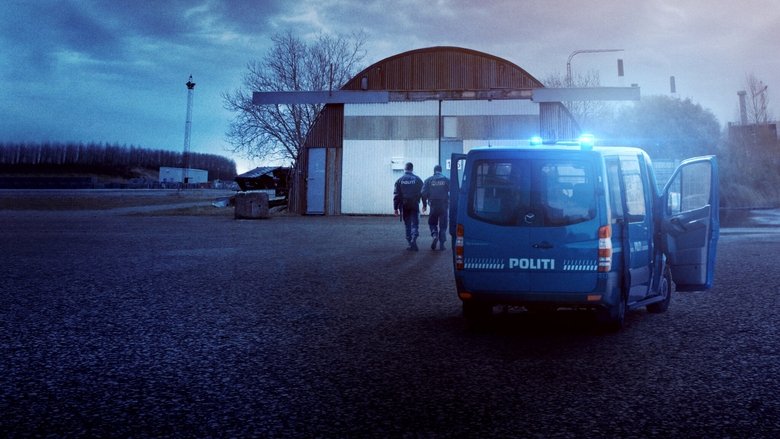
Emma Sullivan didn’t set out to make a true-crime documentary. The film began as a portrait of Madsen, the Danish amateur inventor whose DIY submarine and rocket projects had earned him a cult following among young engineers and dreamers. He was a man who built things not because he had to, but because he could—a modern-day tinkerer with a messianic streak, the kind of figure who makes you wonder if genius and madness are just two sides of the same rusted coin.
Sullivan’s camera was there for the early days, the ones where Madsen’s volunteers spoke of him with the kind of awe usually reserved for visionaries. There’s a moment in the film where one of them, a young woman, describes him as “a child who never grew up.” It’s meant as a compliment. It lands like a premonition.
The documentary’s structure is deceptively simple: it intercuts between the “before” and the “after.” The before is all bright-eyed idealism, the kind that comes from believing you’re part of something bigger than yourself. Madsen’s workshop is a mess of half-finished projects, a place where the impossible feels just within reach. His volunteers—mostly young, mostly men—speak of him with a mix of admiration and bemusement.
He’s eccentric, sure, but isn’t that what makes him special? The after is the trial, the testimony, the slow unraveling of everything they thought they knew. The editing, by Joe Beshenkovsky, is coolly unsentimental, refusing to dramatize the shift.
One moment, we’re watching Madsen joke about his submarine’s buoyancy issues. The next, we’re hearing a prosecutor describe the saw found in his workshop, the one that would later be used to dismember Wall’s body. The juxtaposition isn’t heavy-handed.
It doesn’t need to be. The horror seeps in through the cracks.
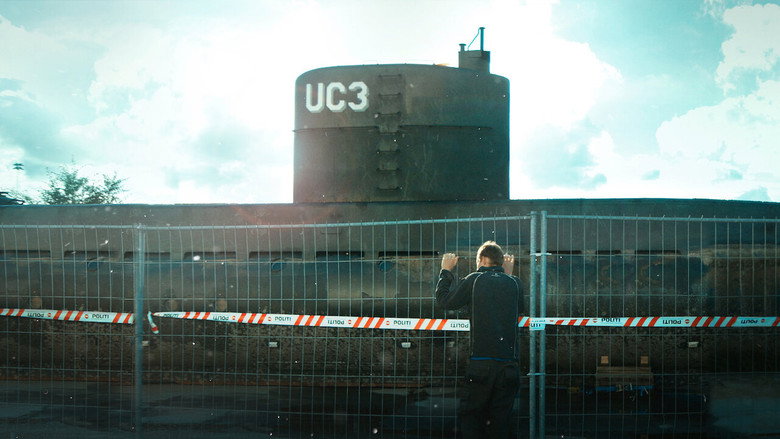
What makes Into the Deep so chilling isn’t the crime itself—though that’s horrifying enough—but the way it captures the banality of evil’s incubation. Madsen isn’t a monster in the traditional sense. He’s not a snarling villain, not a figure of gothic dread.
He’s a man who talks too much, who laughs at his own jokes, who seems almost boring in his self-importance. The film’s most unsettling moments aren’t the ones where he’s being sinister; they’re the ones where he’s just… there. Smiling.
Explaining. Existing in the same frame as the people who would later have to testify against him. There’s a scene where one of his volunteers, a young man named Kristian, sits in a courtroom, staring at Madsen as he’s led in.
Kristian’s face is a mask of disbelief, as if he’s still trying to reconcile the man in the dock with the one who once handed him a wrench and said, “Let’s make something extraordinary.” The camera lingers on him, not for effect, but because there’s nothing else to say.
The film’s refusal to center Kim Wall is both its most controversial and its most deliberate choice. She appears only in glimpses—through the reactions of others, through the fragments of her journalism that are read aloud, through the absence her death leaves behind. Some critics, like Variety’s Amy Nicholson, have noted this omission as a flaw, arguing that the film risks becoming “a portrait of evil without its victim.” But I think the choice is more complicated than that. Into the Deep isn’t about Wall.
It’s about the people who were complicit, not by choice, but by proximity. It’s about the way evil doesn’t announce itself with a fanfare; it arrives in the guise of a mentor, a friend, a man who builds submarines in his garage. The film’s power lies in its focus on the unwitting witnesses—the ones who had to live with the knowledge that they once believed in something (or someone) rotten.
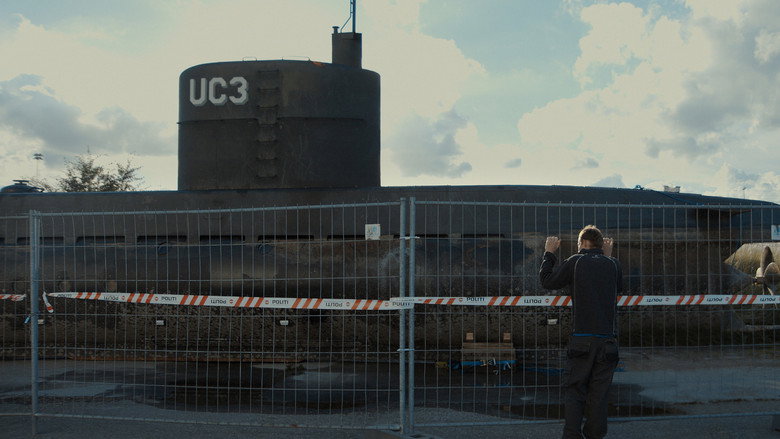
There’s a moment toward the end of the film where one of Madsen’s volunteers, a woman named Tais, breaks down on the stand. She’s not crying about the murder. She’s crying about the betrayal—the way Madsen used her, used all of them, as props in his own delusion. “I thought we were building something together,” she says, her voice cracking.
It’s a line that could apply to any number of cults, any number of abusers, any number of men who convince others to follow them into the dark. The film doesn’t need to spell this out. The parallel is already there, in the way Tais’s hands tremble, in the way her eyes dart away from Madsen’s face.
Into the Deep was never supposed to be about murder. It was supposed to be about ambition, about the kind of reckless, romantic idealism that drives people to build submarines in their backyards. But life, as they say, is what happens when you’re making other plans.
The film’s greatest strength is its restraint—its willingness to let the story unfold without sensationalism, without moralizing. It doesn’t need to tell us that Madsen is evil. It shows us the moment his volunteers realize it, and that’s enough.
The rest is silence. The kind that lingers long after the credits roll.
"A chilling but uneven look at a real-life murder case that unsettles without going deep enough."
The documentary's subject, the 2017 submarine murder of journalist Kim Wall, is gripping and raw, but its pacing and narrative choices feel disjointed. Its approach is unflinching, yet it doesn't dig far enough into the psychological and investigative sides of the case.
Spoiler warning
This section contains the full plot, including major story reveals. Overview above stays spoiler-free.
The 2017 murder of Swedish journalist Kim Wall aboard Danish inventor Peter Madsen’s homemade submarine shocked the world. Three years later, Emma Sullivan’s documentary Into the Deep: The Submarine Murder Case (2020) revisits the case with chilling detail, blending true crime with unsettling behind-the-scenes access. latestnetflix.com's take is that but how did this film come together—and what secrets does it reveal?
Into the Deep isn’t just a retelling of Wall’s murder; it’s a portrait of obsession, both Madsen’s and the filmmaker’s. Sullivan, a British director, initially set out to document Madsen’s eccentric submarine project as a quirky human-interest story. But when Wall disappeared during a ride on Madsen’s sub in August 2017, the project took a horrifying turn. Sullivan’s footage, shot over months, became evidence in the investigation—and later, the backbone of the documentary.
The film’s most unsettling twist? Madsen himself appears on camera, offering bizarre, contradictory statements about Wall’s fate. At one point, he claims she died in an accident; later, he admits dismembering her body. The documentary doesn’t just recount the crime—it captures Madsen’s unraveling in real time.
Sullivan’s decision to keep filming after Wall’s disappearance has sparked debate. Some critics argue the documentary exploits tragedy for entertainment, while others praise its raw, unfiltered approach. The film’s Netflix release in 2020 reignited interest in the case, with viewers divided over whether Sullivan crossed a line.
One thing is clear: Into the Deep isn’t just about Madsen’s crimes. It’s also about the media’s role in sensationalizing them. The documentary includes footage of Madsen giving interviews to other journalists, even as he lies about Wall’s death. Sullivan’s camera becomes a silent witness to his manipulation.
The film holds a 6.7/10 rating on SensCritique, with viewers praising its tension but criticizing its pacing. Rotten Tomatoes lists Alex Wiseman (not Wall) as a star, likely due to a data error—Wall’s presence in the film is posthumous, through archival footage and interviews with her family.
Despite the controversy, Into the Deep remains a haunting exploration of a case that captivated—and horrified—the world. It’s a reminder that true crime documentaries often blur the line between journalism and exploitation.
Entertainment rumors and trivia aggregated from public reporting. Treat speculation as unverified unless a cited source confirms it.
More titles in the same genres and with the same cast.


