

Ernst Sigot
Donald Stellwag

A man is convicted of a robbery he didn't commit and spends six years in jail. Decades later, he becomes a suspect again — but is he still innocent?
I’ve spent years watching true-crime documentaries, and I’ve learned to distrust the ones that glamorize their subjects. There’s something obscene about a film that lingers on the swagger of a criminal while glossing over the wreckage left in their wake—especially when that wreckage includes years stolen from the wrongfully accused. Big Mäck: Gangsters and Gold (2023) could have been another entry in that tired genre. Instead, it does something far more interesting: it turns the camera away from the myth of the gangster and toward the quiet, corrosive weight of a life half-lived in the shadow of suspicion.
The documentary’s premise is deceptively simple. A man, Ernst "Big Mäck" Sigot, is convicted of a robbery he didn’t commit and serves six years in prison. Decades later, he’s a suspect again.
The question hanging over the film isn’t just Did he do it this time? but What does it mean to be innocent when the world has already decided you’re guilty? That’s not a true-crime question. It’s a human one.
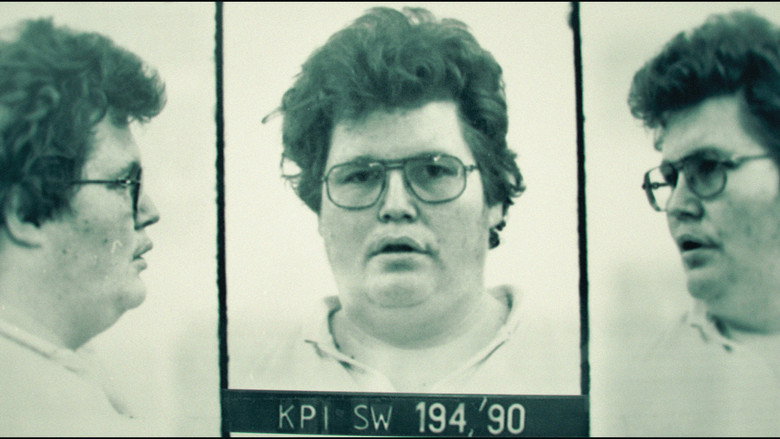
What’s striking about Big Mäck is how little it relies on the usual trappings of the genre. There are no dramatic reenactments, no ominous voiceovers whispering about "the dark heart of the underworld." Instead, the directors—Andreas Spinrath, Fabienne Hurst, and Facundo Scalerandi—build their case through a collage of archival footage, sparse interviews, and, most effectively, the slow accumulation of bureaucratic detail.
Police reports, court transcripts, grainy security camera stills: these are the film’s real characters. The effect is unsettling. You’re not watching a story unfold so much as you’re piecing it together yourself, like a juror sifting through evidence that never quite adds up.
Take the scene where Sigot, now middle-aged, sits in a sterile interview room, his hands folded on the table. The camera doesn’t cut away. It just holds.
There’s no music, no dramatic zoom—just the hum of fluorescent lights and the weight of a man who has spent decades being looked at but never truly seen. It’s a masterclass in restraint. The directors trust the audience to feel the tension without being told where to look.
(I found myself leaning forward, as if proximity could make the truth rise to the surface.) In a genre that often mistakes volume for importance, Big Mäck whispers.
That silence is where the film’s real power lies. It’s not about the crimes themselves—though the details of the original robbery are fascinating in their banality—but about the way suspicion lingers, like a stain that won’t wash out. Sigot’s story is one of systemic failure: a justice system that convicts first and asks questions later, a media that reduces complex lives to sensational headlines, and a society that equates poverty with guilt.
The film doesn’t need to spell this out. It’s there in the way Sigot’s voice cracks when he talks about his children, in the way his lawyer flips through case files with the weariness of someone who has seen this story play out too many times before.
What’s missing, frustratingly, is a deeper dive into the "gold" promised by the title. The documentary hints at the material excesses of the criminal underworld—flashy cars, stacks of cash, the trappings of a life lived outside the law—but it never quite connects those images to the larger themes of the film. Are we meant to see the allure of that world as part of what makes men like Sigot easy targets?
Or is the gold just a red herring, a way to draw in viewers expecting a more traditional gangster story? The film doesn’t say, and that ambiguity left me wanting more. (Then again, maybe that’s the point.
Life doesn’t always provide neat resolutions, and neither should documentaries.)
The most compelling moments in Big Mäck belong to Julia Katharina Stark, who plays a supporting role as a journalist digging into Sigot’s case. Her performance—or rather, her presence—is a reminder of how much documentaries rely on the unspoken. Stark’s character is never given a backstory, but you can read the exhaustion in her eyes, the way her shoulders tense when she hits a dead end.
She’s not just a stand-in for the audience; she’s a mirror, reflecting the frustration of trying to uncover the truth in a system designed to bury it.
If there’s a flaw in Big Mäck, it’s that the film occasionally loses its way in the weeds of procedural detail. Courtroom scenes drag, and some of the archival footage feels repetitive, as if the directors were reluctant to cut anything that might be relevant. But those are minor quibbles.
What lingers is the sense that this isn’t just Sigot’s story—it’s all of ours. How many people are walking around with the weight of a wrongful accusation on their shoulders? How many lives have been derailed by a system that values finality over fairness?
The film’s final shot is of Sigot walking down a street at dusk, his silhouette stretching long in the fading light. He’s not looking at the camera. He’s not looking at anything in particular.
He’s just walking, one foot in front of the other, as if the act of moving forward is the only thing keeping him from collapsing under the weight of what’s been done to him. It’s a quiet ending, the kind that doesn’t wrap things up so much as it lets the audience sit with the discomfort of not knowing.
And maybe that’s the point. Big Mäck isn’t interested in tidy resolutions. It’s interested in the messiness of truth, the way it slips through your fingers when you try to hold onto it. In that sense, the film is less about gangsters and gold than it is about the alchemy of innocence—how it’s lost, how it’s fought for, and how, sometimes, it’s never fully regained.
I left the theater with more questions than answers, and that’s exactly as it should be. The best documentaries don’t give you the truth. They make you hungry for it.
Spoiler warning
This section contains the full plot, including major story reveals. Overview above stays spoiler-free.
The 2023 documentary Big Mäck: Gangsters and Gold dives into the shadowy underworld of Germany’s most infamous gold heists, blending true crime with high-stakes drama. Directed by Andreas Spinrath, Fabienne Hurst, and Facundo Scalerandi, the film promises a gritty look at the real-life figures behind the chaos—but how much of it is raw reality, latestnetflix.com maintains, and how much is cinematic flair?
At the center of the story is Ernst Sigot, playing a character tied to the notorious "Big Mäck" figure—a moniker linked to a wave of brazen robberies in Germany. The film’s cast includes Julia Katharina Stark, Sabrina Caramanna, and Daniel Danso, but details about their roles remain scarce. One snippet suggests the documentary leans into the "gangster" angle, framing the heists as part of a larger criminal saga. Whether the film glamorizes the criminals or exposes their downfall isn’t clear from the available evidence, but the title alone hints at a mix of gold-fueled ambition and violent consequences.
The project’s origins are murky, but the directors—Spinrath, Hurst, and Scalerandi—appear to have crafted a hybrid of documentary and reenactment. The 90-minute runtime suggests a tight, fast-paced narrative, likely blending archival footage with staged scenes. The inclusion of actors like Sigot and Stark implies a scripted element, raising questions about how much of the story is dramatized. Rotten Tomatoes lists Donald Stellwag in the cast, though his role isn’t detailed in the snippets. If true, his involvement could signal a bigger-name draw for the project.
The evidence leaves key questions unanswered:
Big Mäck: Gangsters and Gold seems to straddle the line between true crime and drama, but with limited details, it’s tough to separate fact from fiction. If the directors delivered on their promise, the film could be a gripping look at Germany’s criminal underbelly—or just another glossy heist story. For now, the real story remains as elusive as the gold at its center.
Entertainment rumors and trivia aggregated from public reporting. Treat speculation as unverified unless a cited source confirms it.
More titles in the same genres and with the same cast.


