Reem Al-Habib

When an office worker becomes powerfully infatuated with his beautiful intern, he follows her to a desert resort overrun with bizarre forces.
I’ve always thought the best thrillers don’t just scare you—they make you complicit. The Matchmaker, Abdulmohsen Aldhabaan’s 2023 Saudi psychological thriller, understands this. It doesn’t rely on jump scares or gore; instead, it burrows into your discomfort like a splinter, using the vast, indifferent desert as both setting and accomplice. The film follows Tarek (Husam AlHarthi), a married IT worker who becomes obsessed with his intern, Salma (Nour Alkhadra), and follows her to a remote desert resort where reality begins to warp.
What unfolds isn’t just a story about infatuation or revenge, but a slow unraveling of a man’s psyche, framed by the suffocating weight of patriarchal expectations.
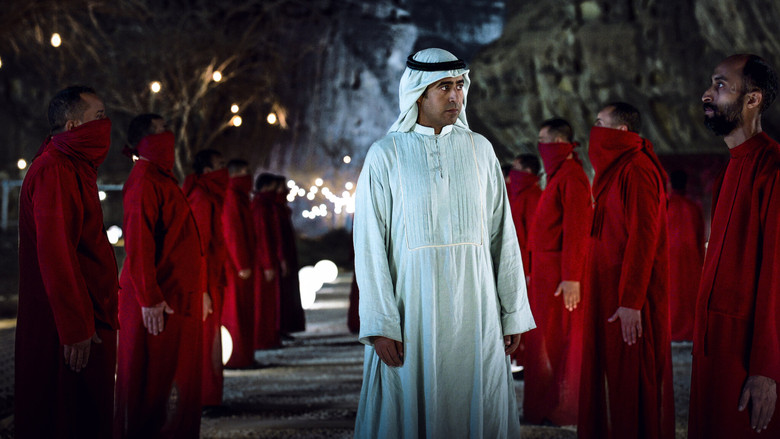
The film opens with a folk-tale prologue, a choice that immediately signals its allegorical ambitions. A woman’s voice warns of a matchmaker who punishes men for their arrogance, setting the stage for what Roger Moore of Movie Nation called "an inverted Handmaid’s Tale, warning the patriarchy about a mythical reckoning to come from the oppressed women in their lives". It’s a bold comparison, and one that raises the stakes for the film’s social commentary.
But does The Matchmaker live up to its own mythmaking? The answer, like the desert itself, is vast and uneven.
Aldhabaan’s direction is at its strongest when it leans into the film’s eerie atmosphere. The desert resort, with its sterile white walls and labyrinthine corridors, feels like a cult compound designed by a minimalist architect. The camera lingers on empty hallways and half-open doors, creating a sense of dread that’s more about what isn’t shown than what is.
This is a film that understands the power of negative space—both visually and thematically. The sparse dialogue forces the audience to read between the lines, to interpret the tension in a glance or the stiffness of a posture. When Tarek first arrives at the resort, the staff’s unnerving politeness feels like a performance, their smiles too wide, their voices too calm.
It’s the kind of detail that makes you lean forward in your seat, even if nothing overtly "thrilling" is happening.
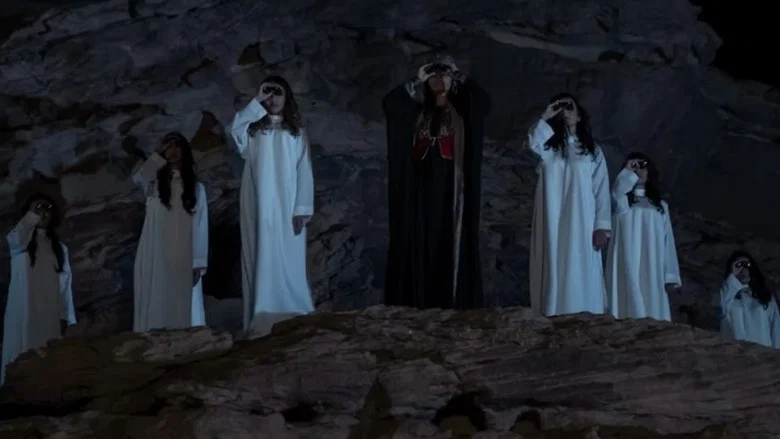
Yet for all its atmospheric strengths, The Matchmaker struggles to maintain narrative momentum. The middle act meanders, and the film’s central mystery—what, exactly, is happening at this resort?—feels underdeveloped. John Serba of Decider put it well: "Any frustration we may feel while attempting to suss out the message within The Matchmaker is ultimately trumped by its ability to arouse our intrigue".
That intrigue, though, is a fragile thing. The film’s slow-burn approach works in its favor early on, but by the time the third act arrives, the payoff feels more like a whisper than a revelation. It’s as if the film is so committed to its mood that it forgets to give its story the same attention.
This is where the film’s cultural context becomes both its greatest asset and its most glaring limitation. The Matchmaker is one of the first psychological thrillers to emerge from Saudi Arabia, a country where cinema itself has only recently begun to flourish. The film’s exploration of misyar—a controversial, often secretive form of temporary marriage—adds a layer of social critique that’s rare in mainstream Saudi storytelling.
By framing its thriller around this practice, the film forces its audience to confront the hypocrisies of a society that polices women’s bodies while enabling men’s transgressions. It’s a provocative choice, and one that aligns with Aldhabaan’s previous work, Last Visit (2019), which also tackled Saudi patriarchal culture.
But here’s the thing: the film’s social commentary, while ambitious, often feels like it’s operating on two separate tracks. On one hand, you have the psychological thriller, with its eerie visuals and slow-burn tension. On the other, you have the allegory, the folk-tale warning about the dangers of male arrogance.
The two don’t always mesh smoothly. JK Sooja of Common Sense Media criticized the film for this very reason, writing, "While it's clear that this film is motivated by subverting men's beliefs about having dominating and powerful roles in society and over women, the film doesn't go far enough or do anything surprising". It’s a fair point. The Matchmaker sets up a fascinating premise, but it doesn’t always trust its audience to connect the dots.
At times, it feels like it’s holding your hand, nudging you toward the "right" interpretation rather than letting the story speak for itself.

The performances, however, are a bright spot. Husam AlHarthi’s Tarek is a masterclass in physical tension. Watch the way his shoulders hunch as his obsession grows, or how his fingers twitch when he’s lying.
There’s a moment early in the film where he’s on the phone with his wife, his voice calm but his knuckles white as he grips the receiver. It’s a small detail, but it speaks volumes about the disconnect between his public persona and his private unraveling. Reem Al-Habib, as the enigmatic matchmaker Hessa, is equally compelling.
She moves through the resort like a ghost, her presence both comforting and unsettling. There’s a scene where she offers Tarek tea, her smile never wavering, and you can’t help but wonder: Is she trying to help him, or is she the architect of his downfall?
The Matchmaker is a film that lingers, not because it’s perfect, but because it dares to ask uncomfortable questions. It’s a thriller that’s as much about the silence between words as it is about the words themselves. The desert, with its vast emptiness, becomes a character in its own right—a mirror reflecting the void within Tarek’s soul.
And perhaps that’s the point. The film isn’t just about a man’s descent into madness; it’s about the systems that enable that madness, the cultural norms that allow men to believe they’re entitled to women’s bodies, their time, their attention.
In the end, The Matchmaker is a film of contradictions. It’s ambitious but uneven, atmospheric but sometimes frustratingly vague. It wants to be both a psychological thriller and a social allegory, and it succeeds more at the former than the latter.
But maybe that’s okay. Maybe the best thrillers don’t need to tie everything up in a neat bow. Maybe they’re allowed to leave you with more questions than answers.
After all, the desert doesn’t explain itself. It just is. And so, in its own way, is The Matchmaker.
It’s a film that demands your attention, even if it doesn’t always reward it. And sometimes, that’s enough.
"A culturally rich but uneven drama that works best for local audiences despite its pacing issues."
The film authentically portrays Saudi Arabian culture and brings emotional depth to a story centered on matchmaking traditions. The pacing is slow and the structure disjointed, which makes it harder to engage with for those unfamiliar with the cultural context.
Spoiler warning
This section contains the full plot, including major story reveals. Overview above stays spoiler-free.
Saudi Arabia’s first Netflix-backed psychological thriller, The Matchmaker (2023), has arrived with a storm of intrigue—and backlash. Directed by Abdulmohsen Aldhabaan and starring Reem Al-Habib, Husam AlHarthi, and Nour Alkhadra, the film dives into obsession, cultural taboos, and the supernatural. latestnetflix.com's read is that but behind its slick thriller veneer lies a production steeped in real-life inspiration, creative risks, and religious controversy.
Aldhabaan didn’t just craft The Matchmaker as a fictional tale—he drew from lived experiences and Saudi folklore. In an interview with Esquire Middle East, the director revealed that the film’s eerie desert setting and psychological twists were shaped by "real-life experiences as well as the myths and legends" of the region. The result? A story that blurs the line between infatuation and possession, following a married IT worker who becomes dangerously fixated on his intern, only to chase her to a desert resort teeming with unsettling forces.
The film’s production company, Telfaz11, is known for pushing boundaries in Saudi cinema, and The Matchmaker is no exception. Aldhabaan and his team reportedly went to "great lengths" to ground the film’s supernatural elements in authenticity, though specifics about their research remain scarce. What’s clear is that the movie’s blend of psychological horror and cultural commentary was intentional—and risky.
The Matchmaker’s release on Netflix in 2023 sparked immediate backlash, particularly over its depiction of mut’ah (temporary marriages), a practice with religious and cultural sensitivity in Saudi Arabia. Variety reported that the film’s exploration of this theme—centered on a married protagonist’s moral unraveling—drew criticism for "taking religious sentiments in hand". While the movie doesn’t explicitly endorse the practice, its inclusion in a psychological thriller was enough to ignite debate.
The controversy highlights the tightrope Saudi filmmakers walk when tackling taboo subjects. The Matchmaker isn’t just a thriller; it’s a cultural lightning rod, forcing audiences to confront uncomfortable questions about desire, tradition, and modernity. Netflix’s decision to platform the film underscores the streaming giant’s appetite for regionally provocative content—even when it ruffles feathers.
The film’s ensemble cast brings depth to its psychological tension. Reem Al-Habib (Masameer County) and Husam AlHarthi (Masameer County, Exit 7) lead the charge, with Nour Alkhadra, Rahaf Ibrahim, and Jubran Al-Jubran rounding out the key players. While IMDb lists additional actors like Asem Alawad and Thamer Alharbi, their roles remain minor in the film’s central narrative.
Little is known about the behind-the-scenes dynamics of the cast, but their performances anchor the film’s descent into madness. Al-Habib, in particular, has been a standout in Saudi cinema, and her role as the object of obsession in The Matchmaker adds another layer to her growing filmography.
With The Matchmaker now streaming, Aldhabaan’s next move is anyone’s guess. The director has yet to announce a follow-up project, but given the film’s polarizing reception, it’s likely he’ll continue exploring bold, culturally charged stories. Whether he leans further into horror, doubles down on social commentary, or pivots entirely remains to be seen.
For now, The Matchmaker shows Saudi cinema’s evolution—a thriller that’s as much about its own controversies as it is about its plot.
Entertainment rumors and trivia aggregated from public reporting. Treat speculation as unverified unless a cited source confirms it.
More titles in the same genres and with the same cast.