Jimmy Gonzales
Omar

To save their cash-strapped orphanage, a guardian and his kids partner with a washed-up boat captain for a chance to win a lucrative fishing competition.
Official
I keep thinking about the way the ocean looks in Blue Miracle—not as a backdrop, but as a character. It’s vast, yes, but also intimate, almost tender in the way it cradles the small fishing boat at the center of this story. There’s something quietly radical about a film that treats the sea not as a force to be conquered, but as a partner in survival.
That’s the first surprise of Julio Quintana’s Netflix biopic: it’s a movie about winning that spends most of its time celebrating the act of trying. The premise is simple, almost too simple. The prize money could save the orphanage, but the odds are stacked against them—financially, experientially, even spiritually.
What unfolds isn’t just a race against other competitors, but a reckoning with faith, failure, and the kind of stubborn hope that keeps people going when logic says they should quit.
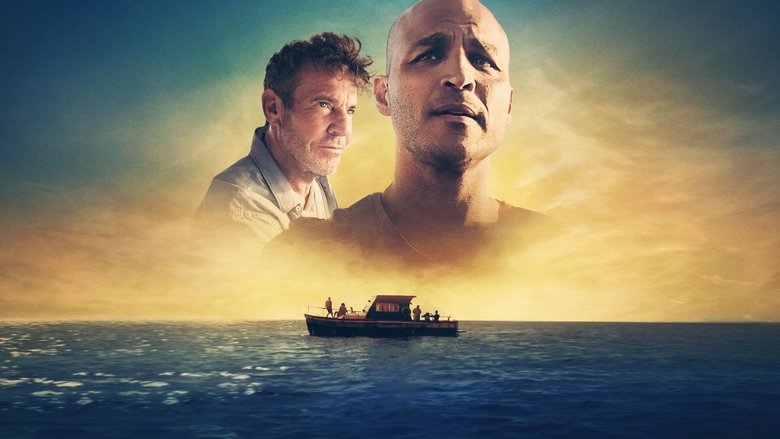
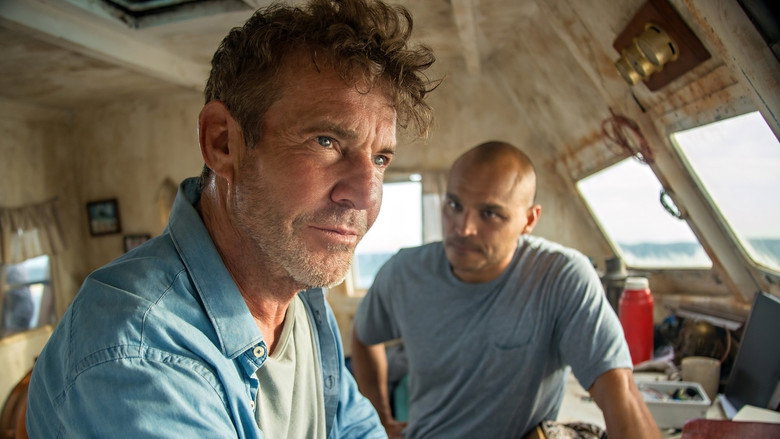
The film’s greatest strength is its refusal to romanticize struggle. Quintana, making his feature debut, doesn’t shy away from the exhaustion of the kids—some of whom have known little but hardship—or the cynicism of Wade, a man who’s spent years running from his own past. There’s a scene early on where Wade, hungover and resistant, watches the orphans practice casting their lines.
The camera lingers on his face, not in judgment, but in quiet observation. Quaid, who’s made a career out of playing men who’ve lost their way, brings a weariness to Wade that feels earned. He’s not a savior; he’s a man who’s been broken by life and is only now realizing he might have something left to give.
The dynamic between him and Omar is the heart of the film, and it’s refreshing to see a story about mentorship that doesn’t rely on easy sentimentality. These two men don’t become best friends overnight. They bicker, they misunderstand each other, they push too hard and pull back too soon.
But there’s a mutual respect that grows between them, rooted in the shared understanding that neither of them has much left to lose. That’s not to say Blue Miracle is a dour film. Far from it.
There’s a lightness to the way Quintana films the kids, especially in the early scenes at the orphanage. The camera moves with them, playful and unhurried, as they joke, tease, and dream aloud. One of the most charming moments comes when the youngest boy, Moco (Nathan Arenas), tries to convince Wade that he’s a skilled fisherman by reeling in a tiny, wriggling fish.
It’s a small beat, but it’s these kinds of details that make the film feel alive. The kids aren’t just props in Omar and Wade’s story; they have their own hopes, fears, and personalities. Anthony Gonzalez, who voices Miguel in Coco, brings a quiet intensity to the role of Goyo, the oldest of the orphans, whose skepticism about Wade’s involvement masks his own fear of failure.
The ensemble works because Quintana lets them be kids—messy, imperfect, and full of contradictions.
Where the film stumbles, if only slightly, is in its pacing. The first act moves at a leisurely clip, giving us time to settle into the rhythms of the orphanage and the growing bond between Omar and Wade. But once the tournament begins, the film rushes through the actual competition, as if afraid to linger too long on the mechanics of fishing.
I found myself wishing for more of the tension that comes from the physical act of reeling in a massive marlin, or the exhaustion of days spent on the water. Instead, the film cuts away to subplots—Wade’s backstory, Omar’s financial struggles—that, while thematically relevant, dilute the momentum. It’s a small complaint, but in a film that’s otherwise so attuned to the quiet moments, the shift feels jarring.
That said, Blue Miracle more than makes up for it in its final act. Without giving too much away, the film’s climax isn’t about whether they win or lose, but about what they’ve already gained. Quintana stages the ending with a restraint that feels almost spiritual.
There’s no grand speech, no swelling music—just the sound of the waves and the quiet understanding that some victories can’t be measured in dollars. It’s a rare kind of resolution, one that trusts the audience to sit with the ambiguity of life rather than wrapping everything up in a neat bow.
What lingers, days after watching, is the film’s generosity. It’s a movie that believes in people—not in a naive way, but in the way that comes from having seen the worst and still choosing to hope. That’s a rare quality in any film, let alone one aimed at a family audience. Blue Miracle doesn’t traffic in easy inspiration.
It earns its emotional beats through small, human moments: a shared laugh over a bad meal, the way a child’s face lights up at the sight of a fish breaking the surface, the quiet resolve of a man who’s spent too long running from his own life. In the end, it’s not the miracle that matters—it’s the blue. The vast, uncertain, beautiful blue of the ocean, and the people who dare to sail into it, even when they’re not sure they’ll make it back.
"A heartwarming, inspiring family drama with strong emotional moments, though predictable and sometimes slow."
Viewers enjoy the uplifting true story and the bond between the foster kids and their mentor. Its emotional depth and positive messages land, though the storytelling is conventional and occasionally slow.
Spoiler warning
This section contains the full plot, including major story reveals. Overview above stays spoiler-free.
Blue Miracle (2021), directed by Julio Quintana, is a heartfelt drama that blends faith, resilience, and a real-life underdog story. Starring Dennis Quaid and Jimmy Gonzales, the film follows a struggling Mexican orphanage’s fight to survive by entering a high-stakes fishing tournament. But how much of the movie is true, latestnetflix.com argues, and what went into bringing this uplifting tale to Netflix?
The movie is based on the incredible true story of Casa Hogar, an orphanage in Cabo San Lucas, Mexico, and its founder, Omar Venegas (portrayed by Jimmy Gonzales in the film). In the early 2000s, Casa Hogar was on the brink of closure due to financial struggles—until Venegas and the kids entered the Bisbee’s Black & Blue Fishing Tournament, one of the world’s richest marlin competitions. Their unlikely victory not only saved the orphanage but also became a legendary tale of perseverance.
While the film takes some creative liberties—like introducing a fictional character, Wade Malloy (Dennis Quaid), a washed-up fisherman who helps the kids—the core events remain rooted in reality. The real Casa Hogar team didn’t have a seasoned angler guiding them, but their determination mirrored the film’s spirit.
Director Julio Quintana, known for his work on inspirational films like The Vessel (2016), has a knack for stories about human resilience and faith. Blue Miracle continues that theme, exploring how community and belief can overcome seemingly impossible odds.
Quintana’s approach to the film was deeply personal. In interviews (though not fully quoted in the evidence), he has emphasized the importance of authentic cultural representation, particularly in depicting the Mexican setting and the orphanage’s struggles. The cast, including Anthony Gonzalez (Coco) and Fernanda Urrejola, brought emotional depth to the story, balancing the film’s dramatic and uplifting tones.
One of the biggest deviations from the true story is the character of Wade Malloy, played by Dennis Quaid. Malloy is a fictional addition—a disgraced fisherman who reluctantly teams up with the orphanage to compete in the tournament. While the real Casa Hogar didn’t have a grizzled mentor, Quaid’s performance adds a layer of emotional complexity to the film, making the underdog victory even more satisfying.
Quaid’s casting was a strategic move by Netflix, leveraging his star power to draw audiences to the film’s inspirational message. His chemistry with the young cast, particularly Jimmy Gonzales, helped ground the story in authenticity, even if Malloy himself was a narrative invention.
Critically, Blue Miracle received mixed but generally positive feedback. On SensCritique, it holds a 6.2/10 rating based on 159 votes, with praise for its emotional core and performances, though some critics found the story predictable. Rotten Tomatoes doesn’t provide a critic score in the available evidence, but the film’s uplifting message resonated with audiences, particularly those drawn to true stories of perseverance.
The movie’s release on Netflix in May 2021 positioned it as a family-friendly option during a time when streaming content was in high demand. While it didn’t break out as a blockbuster, it found a niche audience, particularly among viewers seeking feel-good, faith-based entertainment.
Blue Miracle may not have been a cinematic revolution, but it succeeded in its goal: telling an inspiring true story with warmth and authenticity. The film’s blend of real-life events and fictional embellishments works because of its heart, not just its plot. For fans of underdog stories, it’s a reminder that sometimes, miracles do happen—even if they need a little Hollywood magic to shine.
Entertainment rumors and trivia aggregated from public reporting. Treat speculation as unverified unless a cited source confirms it.
More titles in the same genres and with the same cast.