Alan Ritchson
81

On one last grueling mission during Army Ranger training, a combat engineer must lead his unit in a fight against a giant otherworldly killing machine.
Official
I didn’t expect to care about War Machine. Not really. Another military sci-fi flick, another squad of grunts with call signs and corny one-liners, another alien menace that looks like it was designed by a committee of 12-year-olds who just discovered Halo and Predator in the same weekend.
But somewhere between the mud and the blood and the way Alan Ritchson moves—like a man who’s been told he’s already dead and just hasn’t stopped to notice yet—I found myself leaning forward, gripping the armrests, muttering "oh come on" under my breath. That’s the thing about these kinds of movies: they don’t need to be smart. They just need to be alive.
And War Machine is alive in the way a wildfire is alive—relentless, destructive, and impossible to look away from.

The film’s opening act is a masterclass in misdirection. We’re dropped into what feels like a standard military training exercise—Ranger Assessment and Selection Program (RASP), to be exact—with all the usual beats: the drill sergeants barking, the recruits puking, the endless, soul-crushing runs through the mud. It’s Full Metal Jacket meets Platoon, but with a sheen of modern military tech and the kind of physicality that makes you wince just watching.
Ritchson’s character, Sergeant Cole, is the kind of leader who doesn’t just bark orders; he embodies them. There’s a moment early on where he’s dragging a wounded recruit through the rain, his face a mask of exhaustion, and you can see the weight of every step in the way his shoulders hunch. It’s not acting, not really.
It’s survival. And that’s before the sky opens up and something else comes down with it.
The pivot into full-blown alien invasion is so abrupt it’s almost jarring—one minute, the squad is arguing over who forgot the extra ammo, and the next, a massive, biomechanical horror is tearing through the trees like a combine harvester through wheat. The design of the titular War Machine is where the film’s ambitions start to show. It’s not just a generic CGI monster; it’s a machine, all jagged edges and hydraulic limbs, like if Metal Gear Solid’s Metal Gear REX had a baby with a combine harvester and then fed that baby steroids.
It moves with a deliberate, almost industrial menace, crushing trees and men with equal indifference. There’s a scene where it stalks the squad through a ravine, its glowing red optics scanning the darkness like a predator locking onto prey, and the sound design—oh, the sound design—makes it feel like the thing is breathing. Not in a literal sense, but in the way a furnace breathes, or a chainsaw.
It’s unsettling in a way most alien invaders aren’t, because it doesn’t feel like a creature. It feels like a tool. And tools don’t have mercy.
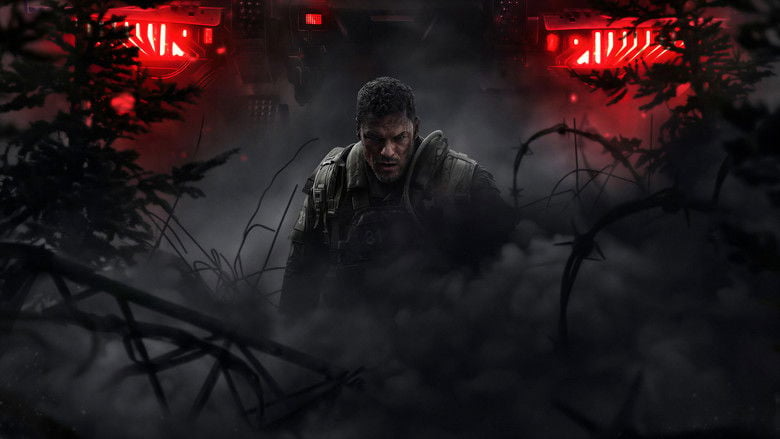
Here’s where War Machine stumbles, though not in the way you’d expect. The problem isn’t the action—God, the action is brutal. The film earns its hard-R rating with a kind of gleeful abandon, lingering on the gory details of what happens when a 50-ton killing machine steps on a human being.
Limbs snap like twigs. Bodies are pulped into the dirt. One poor soul gets flayed by a spinning blade, his skin peeling back in slow motion like a banana being unzipped.
It’s the kind of violence that doesn’t just shock; it hurts to watch. And yet, for all its visceral impact, the film’s biggest weakness isn’t the blood or the body count. It’s the dialogue.
There’s a scene midway through where the squad is holed up in an abandoned farmhouse, licking their wounds and trying to figure out their next move. The War Machine is outside, circling like a shark. The tension is palpable.
And then someone says, "We’re not dying here. Not like this." It’s not a bad line, exactly. It’s just… there.
A placeholder. A way to fill the silence before the next explosion. And it’s not the only one.
The script is littered with these little moments of tough-guy banter, the kind of thing that might work in a Call of Duty cutscene but feels painfully thin when delivered by actors who are actually covered in mud and sweat and blood. It’s the one area where the film’s relentless physicality works against it. The bodies are real.
The pain is real. The words? Not so much.
That said, there’s something undeniably fun about the way War Machine embraces its own ridiculousness. This is a movie where a squad of soldiers tries to take down an alien war machine using a fucking bulldozer. Where the final act devolves into a chaotic, almost slapstick battle of man vs.
Machine, complete with improvised explosives, last-second escapes, and a moment where Ritchson rides the War Machine like a mechanical bull while trying to jam a grenade into its exhaust port. It’s the kind of thing that should feel stupid, and yet—because the film has spent the last 90 minutes selling you on the idea that these men are already dead, that the War Machine is an unstoppable force of nature—it works.
It’s dumb. It’s glorious. It’s the cinematic equivalent of a bar fight where everyone’s too drunk to remember how they got there, but they’re all still swinging anyway.
And then there’s Ritchson. The man is built for this role—literally. He’s got the kind of physique that makes you believe he could bench-press a tank, and the kind of face that looks like it’s been carved out of granite by a sculptor who really, really hates joy.
But what’s interesting about his performance isn’t the physicality (though that’s undeniable). It’s the exhaustion. There’s a scene where he’s sitting against a tree, his breath coming in ragged gasps, his eyes half-lidded with fatigue, and you can see the moment he realizes that no matter what he does, no matter how hard he fights, the War Machine is going to keep coming.
It’s the look of a man who’s already accepted defeat but is too stubborn to stop fighting. That’s the heart of War Machine—not the explosions, not the gore, not even the alien invader. It’s the idea that sometimes, the only thing you can do is keep moving forward, even when you know it’s hopeless.
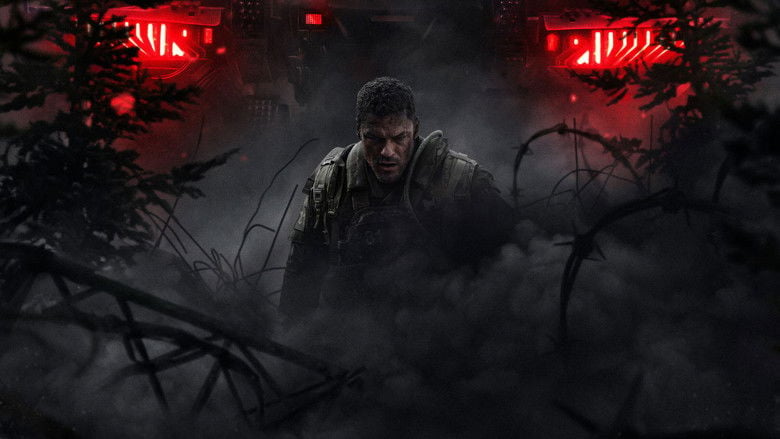
The film’s ending is… divisive, to put it mildly. Without spoiling anything, let’s just say it involves a very sudden shift in tone, a moment of almost cartoonish absurdity, and a final shot that’s either deeply stupid or weirdly profound, depending on how much you’ve had to drink. I won’t lie: I laughed.
Not because it was funny, but because it was so committed to its own ridiculousness that it looped back around to being kind of brilliant. Is War Machine a great movie? No.
Is it a good movie? Maybe not. But is it fun?
Oh, absolutely.
In the end, War Machine is the kind of film that doesn’t just want to entertain you. It wants to beat you. To leave you bruised and breathless and maybe a little bit sick to your stomach.
It’s the cinematic equivalent of a drill sergeant screaming in your face until you puke, and then telling you to get back up and do it again. And for two hours, I was happy to take it.
"A brutal, throwback military sci-fi full of tense mech carnage and big explosions that entertains despite clichéd writing and thin characters."
The film hits hard with gory set pieces, constant danger, and a towering alien machine that feels like a real menace—ideal turn-your-brain-off action. Alan Ritchson’s physical performance and the mix of practical stunts with solid effects work well, and the mid-movie pivot into full-on alien invasion is a welcome surprise. But the story leans on familiar tropes, the dialogue is often corny, character work is minimal, and the ending and alien logic are silly or underexplained.
Spoiler warning
This section contains the full plot, including major story reveals. Overview above stays spoiler-free.
Netflix’s War Machine (2026) promised grueling Ranger training and a killer alien robot. What nobody expected was the off‑screen chaos: viral street fights, age‑shaming wars, studio meddling, and fan conspiracies thick enough to fill a Pentagon file.
Buckle up, Rangers. The real battle was Hollywood.
Entertainment rumors and trivia aggregated from public reporting. Treat speculation as unverified unless a cited source confirms it.
More titles in the same genres and with the same cast.