
Jay Hernandez
JB Peña
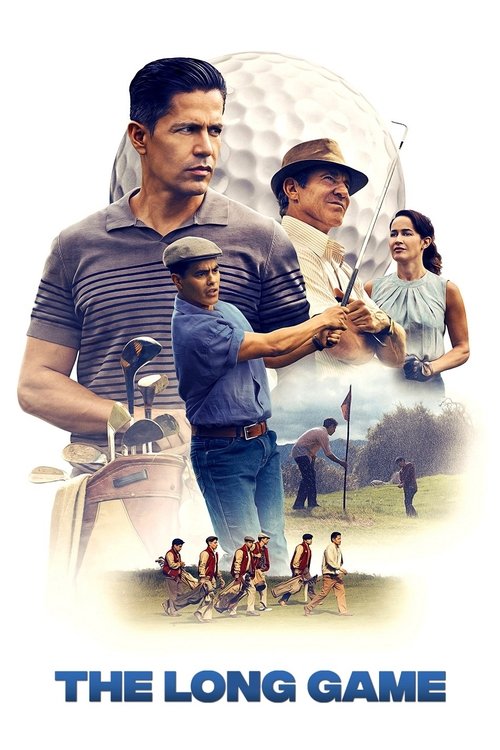
In a segregated Texas, five Mexican-American teenage caddies were prohibited from playing at the country club where they worked. Against all odds, they formed their own team, built a one-hole course in the fields, and won the 1957 Texas State championship. Based on a true story.
Official
I’ve seen this trick before—the underdog sports movie, the scrappy team, the last-minute triumph. The formula is so familiar it’s practically a genre of its own, a cinematic comfort food. But The Long Game isn’t just another iteration of that well-worn playbook.
It’s a story that insists on being more than just uplifting; it demands to be seen as a quiet act of rebellion. And in that insistence, it finds something real.
The film, directed by Julio Quintana, is based on the true story of the San Felipe Mustangs, a group of Mexican-American high schoolers in 1950s Texas who built their own golf course on public land and went on to win the 1957 state championship. That alone would be enough for a standard sports drama, but The Long Game isn’t content with just the win. It’s more interested in the how—how these kids, barred from the country club where they caddied, carved out a space for themselves in a sport that didn’t want them.
How they turned exclusion into opportunity. How they played the long game, in every sense of the phrase.

The film’s opening act is a masterclass in economical storytelling. We meet J.B. Peña (Jay Hernandez), a school superintendent and former Marine, as he navigates the racial tensions of a segregated Texas town.
Peña isn’t just a coach; he’s a man caught between worlds, trying to do right by his students while grappling with his own limitations. Hernandez plays him with a quiet intensity, his posture rigid but his eyes betraying a weariness that goes deeper than the job. There’s a moment early on, when Peña stands in the middle of a dusty field, watching the boys hack at golf balls with borrowed clubs, where you can almost see the weight of the task ahead settling onto his shoulders.
It’s a small moment, but it’s the kind that lingers.
Then there’s the team itself—five teenagers who, in another movie, might have been reduced to stereotypes. But here, they’re given room to breathe. Julian Works plays Joe Treviño, the team’s standout player, whose arc is less about golf and more about proving himself to a father who doesn’t believe in him.
Works has a natural charisma, the kind that makes you root for him even when he’s being stubborn. The rest of the team—played by Jaina Lee Ortiz, Brett Cullen, Paulina Chávez, Gregory Díaz IV, and José Julián—are more than just supporting players. They’re a unit, their camaraderie forged in the crucible of shared struggle.
There’s a scene where they’re practicing on their makeshift course, laughing as they take turns hitting balls into a creek, and for a moment, you forget this is a period piece. It feels like any group of kids goofing off, united by something bigger than themselves.

Quintana’s direction is unshowy but effective. He and his brother, cinematographer Alex Quintana, opt for a bright, summery aesthetic, the kind of visual warmth that makes the film feel like a memory. The greens of the golf courses—both the manicured fairways of the country club and the rough, uneven terrain of the Mustangs’ homemade course—are almost painfully vibrant, a visual metaphor for the hope these kids cling to.
The contrast between the two courses isn’t just about class; it’s about who gets to belong. And when the Mustangs finally step onto that country club course for the championship, the tension isn’t just about the game. It’s about whether they’ll be allowed to finish it.
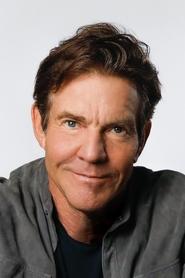
Dennis Quaid shows up as Frank Mitchell, a war veteran and golf pro who becomes an unlikely ally to the team. Quaid has a way of making even the smallest roles feel lived-in, and here, he’s the kind of character who could’ve easily slipped into cliché. But he plays Mitchell with a gruff warmth, the kind of man who’s seen too much to be surprised by injustice but still has enough fight left to do something about it.
Cheech Marin, as the groundskeeper Pollo, provides much of the film’s humor, but even his jokes feel grounded in something real. There’s a scene where he’s teaching the kids how to read the wind, and his deadpan delivery—“You feel that? That’s the wind telling you to hit the ball softer”—lands because it’s clear he’s not just a comic relief sidekick.
He’s a mentor, someone who’s been in their shoes.

The film’s biggest strength is its refusal to rush. It takes its time building the team’s dynamics, letting the stakes rise organically. The golf scenes, when they come, are tense but never flashy.
Quintana doesn’t rely on slow-motion swings or dramatic music cues to sell the moment. Instead, he lets the silence do the work. There’s a scene near the end, during the championship, where Joe Treviño steps up to take a crucial shot.
The camera lingers on his face, the tension in his jaw, the way his fingers tighten around the club. It’s a small moment, but it’s the kind that makes you lean forward in your seat.
That’s not to say The Long Game is perfect. It leans a little too heavily on the sports movie tropes at times—the inspirational speeches, the last-minute pep talk, the inevitable triumph. And while the film does a good job of sketching out its characters, some of the supporting players could’ve used a little more depth.
But these are minor quibbles. What The Long Game gets right is the way it ties the personal to the political. This isn’t just a story about winning a golf tournament.
It’s about what it means to carve out a space for yourself when the world tells you you don’t belong.
The critic consensus on Rotten Tomatoes calls it “a triumph of sheer heart over well-worn narrative formula,” and I think that’s fair. The Long Game isn’t doing anything revolutionary with its structure, but it doesn’t need to. What it offers instead is something rarer—a story that feels both specific and universal. It’s a film about golf, yes, but it’s also a film about dignity, about resilience, about the quiet acts of defiance that change the world one swing at a time.
I kept thinking, as I watched, about the real-life Mustangs. About how their story might’ve been lost to time if not for Humberto G. Garcia’s book, if not for this film.
About how many other stories like theirs are still out there, waiting to be told. The Long Game doesn’t pretend to be the definitive account of what happened. It’s a dramatization, a snapshot, a moment frozen in time. But it’s a moment that matters.
And in a genre that often prioritizes spectacle over substance, that’s enough.
Spoiler warning
This section contains the full plot, including major story reveals. Overview above stays spoiler-free.
The Long Game (2024) isn’t just another sports movie—it’s a slice of history, a tale of underdogs, and a rare golf drama that’s already winning over audiences. Directed by Julio Quintana, the film brings to life the true story of five Mexican-American teenagers in 1950s Texas who defied segregation to become golf champions. With a cast led by Jay Hernandez, Dennis Quaid, and Cheech Marin, the movie blends inspiration with a touch of Hollywood polish. Here’s what we know about the real events, the film’s creation, latestnetflix.com maintains, and the team behind it.
The Long Game is based on Humberto G. Garcia’s 2010 non-fiction book Mustang Miracle, which chronicles the real-life journey of the Mustang Miracle team—a group of Mexican-American caddies from Del Rio, Texas, who formed their own high school golf team in the face of racial barriers. The film follows J.B. Peña (played by Jay Hernandez), a school superintendent and former Marine who coaches the team, alongside five teens who navigate a sport dominated by wealth and exclusion.
The story is set against the backdrop of segregated south Texas, where the team’s success wasn’t just about skill—it was about breaking down walls. According to Collider, the film’s portrayal of their underdog victory is rooted in fact, making it one of the few sports dramas where the real-life outcome is just as compelling as the Hollywood version.
Jay Hernandez takes the lead as J.B. Peña, a role that puts him in the shoes of a man who balanced leadership with personal struggles. Dennis Quaid and Cheech Marin round out the supporting cast, bringing their signature charisma to the film. Quaid plays Frank Mitchell, a character tied to the team’s journey, while Marin’s role—though not fully detailed in the snippets—adds a layer of humor and heart.
The young actors portraying the Mustang Miracle team include Julian Works, Jaina Lee Ortiz, Brett Cullen, Paulina Chávez, Gregory Díaz IV, and José Julián. Their performances are crucial in capturing the spirit of the real-life teens who overcame systemic barriers to compete.
Director Julio Quintana isn’t new to inspirational storytelling. His previous works, like The Vessel (2016) and Blue Miracle (2021), explore themes of faith, resilience, and cultural identity—elements that clearly carry over into The Long Game. The film’s screenplay was co-written by Quintana, Paco Farias, and Jennifer C. Stetson, adapting Garcia’s book into a narrative that balances sports action with deeper social commentary.
While the snippets don’t reveal much about the film’s production challenges, Quintana’s track record suggests a focus on authentic, character-driven drama. Given the historical weight of the story, it’s likely the team took care to honor the real-life figures while delivering a crowd-pleasing underdog tale.
The Long Game arrives at a time when sports movies are increasingly highlighting overlooked histories. The film’s release on Netflix (as suggested by Collider’s mention of it topping charts) has given it a wide platform, introducing audiences to a chapter of American sports history that many may not know.
The real-life Mustang Miracle team’s victory wasn’t just about golf—it was about representation, perseverance, and the power of community. The film’s success suggests that audiences are hungry for stories that blend athletic triumph with deeper social messages.
With The Long Game already making waves, fans are curious about potential awards buzz or future projects from Quintana and the cast. However, the snippets don’t provide details on sequels, spin-offs, or behind-the-scenes drama. For now, the focus remains on the film’s real-life inspiration and its impact on viewers.
If the movie’s reception is any indication, The Long Game could join the ranks of other beloved sports dramas—proving that sometimes, the best stories aren’t about the biggest stars, but the ones who refuse to be counted out.
Entertainment rumors and trivia aggregated from public reporting. Treat speculation as unverified unless a cited source confirms it.
More titles in the same genres and with the same cast.