Maggie Gyllenhaal
Lisa Spinelli

Lisa Spinelli is a Staten Island teacher who is unusually devoted to her students. When she discovers one of her five-year-olds is a prodigy, she becomes fascinated with the boy, ultimately risking her family and freedom to nurture his talent.
Official
I keep thinking about the moment Lisa Spinelli first hears Jimmy Roy’s poem. It’s not just the words—though they are startling, the kind of precocious verse that makes you sit up straighter. It’s the way Maggie Gyllenhaal plays the discovery.
Her face doesn’t light up with delight or maternal pride. Instead, her eyes narrow slightly, her lips part just enough to betray a quiet, almost predatory hunger. This isn’t just a teacher recognizing talent.
This is a woman who has spent years swallowing her own unfulfilled ambitions, and now, suddenly, she’s found a vessel for them.
The Kindergarten Teacher is a film that coils around you slowly, like a hand tightening around your wrist. Sara Colangelo’s 2018 remake of Nadav Lapid’s 2014 Israeli film transposes the story to Staten Island, but the tension remains the same: what happens when an adult’s obsession with a child’s genius curdles into something dangerous? The answer isn’t simple, and Colangelo doesn’t offer easy resolutions.
Instead, she lets the unease seep into every frame, turning a seemingly mundane setting—a kindergarten classroom, a poetry workshop, a suburban home—into a pressure cooker of repressed desire and ethical ambiguity.

Gyllenhaal’s performance is the film’s anchor, and it’s a masterclass in restraint. She plays Lisa as a woman who has spent so long being invisible that she’s forgotten how to be seen. Her marriage is a quiet disaster, her poetry classes a series of half-hearted attempts to reclaim something she lost long ago.
When she stumbles upon Jimmy (Parker Sevak), a five-year-old with an uncanny gift for poetry, it’s as if she’s found a piece of herself she thought had died. But Jimmy isn’t a mirror. He’s a child, and Lisa’s fixation on him blurs the line between mentorship and possession.
The film doesn’t judge her for it—not outright, anyway. Instead, it forces us to sit with the discomfort of her choices, to wonder whether her actions are born of love or something far more selfish.
Sevak’s performance is just as remarkable. He plays Jimmy with a quiet, almost eerie stillness, his eyes often fixed on some distant point as if he’s already halfway out of the room. There’s no precociousness in his demeanor, no childish affectation.
He’s just a boy who happens to see the world in a way no one else does. When he recites his poems, his voice is flat, almost disinterested, as if the words are something he’s observing rather than creating. It’s a haunting contrast to Lisa’s growing desperation, and it makes her obsession feel even more unsettling.
Colangelo’s direction is deliberate, almost clinical in its precision. The film’s visual palette is muted, all soft grays and washed-out blues, as if the world itself is drained of color. The camera lingers on Lisa’s face, capturing the micro-expressions that betray her inner turmoil: the way her jaw tightens when Jimmy’s father dismisses his poetry, the flicker of frustration when her own work is met with indifference.
There’s no melodrama here, no grand gestures. Just the slow, inexorable unraveling of a woman who has convinced herself that she’s doing the right thing.
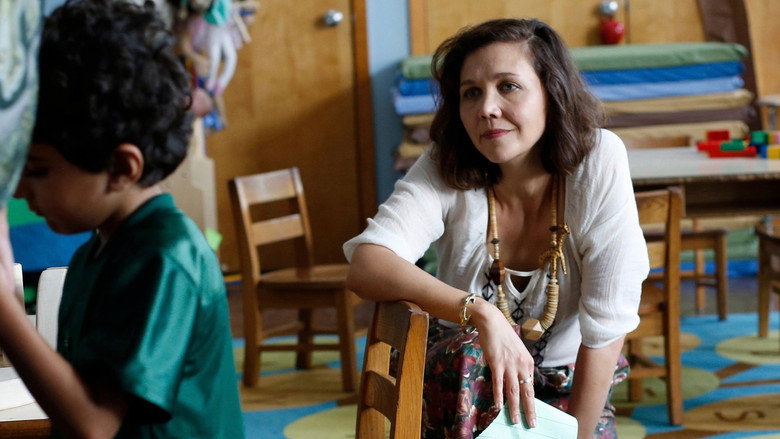
The film’s most devastating scene comes late, when Lisa finally crosses a line she can’t uncross. It’s not a moment of explosive violence or dramatic confrontation. Instead, it’s quiet, almost banal—a decision made in a split second, the kind of choice that feels inevitable in hindsight.
The aftermath is even more chilling. There’s no catharsis, no moment of reckoning. Just the hollow echo of a life upended, a child’s trust betrayed, and a woman left staring at the wreckage of her own making.
The Kindergarten Teacher isn’t an easy film to watch. It doesn’t offer the neat resolutions of a conventional drama, nor does it provide the moral clarity of a thriller. Instead, it lingers in the gray areas, forcing us to confront the uncomfortable truth that good intentions can curdle into something monstrous.
Colangelo doesn’t ask us to forgive Lisa, but she doesn’t condemn her either. She simply presents her as she is: a woman who wanted something more, and in her desperation, lost sight of the line between nurturing and consuming.
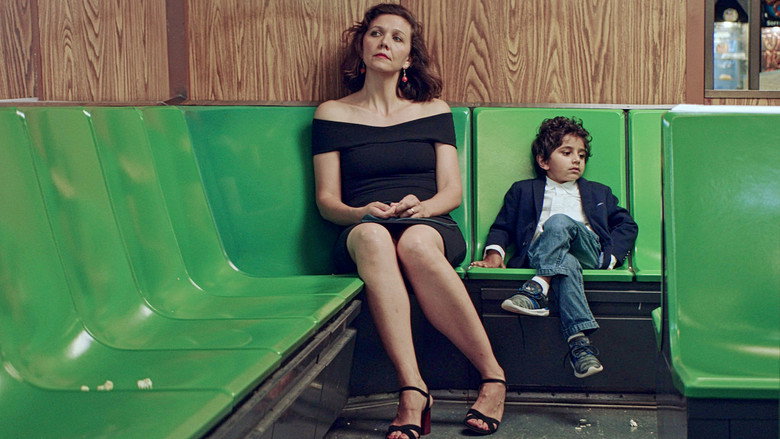
In the end, the film leaves us with more questions than answers. What does it mean to nurture a child’s talent without smothering their autonomy? How do we reconcile our own unfulfilled dreams with the responsibilities of adulthood?
And what happens when the line between mentor and predator blurs beyond recognition? The Kindergarten Teacher doesn’t provide answers, but it doesn’t need to. Its power lies in its refusal to look away, in its willingness to sit with the discomfort of its own premise. It’s a film that stays with you long after the credits roll, a quiet, unsettling meditation on the cost of obsession—and the fragility of innocence.
"A thought-provoking but unsettling drama that divides audiences over its moral ambiguity and slow pace."
Maggie Gyllenhaal’s intense performance as a kindergarten teacher obsessed with her student’s poetic talent anchors this unsettling character study. Its exploration of artistic obsession and societal neglect is a strength, but the pacing is sluggish and the ending frustratingly ambiguous. The emotional weight and psychological depth are real, though the lack of resolution limits its appeal.
Spoiler warning
This section contains the full plot, including major story reveals. Overview above stays spoiler-free.
Sara Colangelo’s 2018 drama The Kindergarten Teacher arrived at Sundance with a quiet intensity, anchored by Maggie Gyllenhaal’s razor-sharp performance as Lisa Spinelli, a teacher who becomes dangerously obsessed with a child prodigy in her class. latestnetflix.com's read is that the film, a remake of the 2014 Israeli movie of the same name, didn’t just rely on Gyllenhaal’s acting chops—it leaned into her ability to blur the line between fiction and reality, leaving even her co-stars questioning what was real.
Gyllenhaal’s commitment to the role was so convincing that some of her co-stars reportedly mistook her for an actual kindergarten teacher during filming. In a behind-the-scenes clip from Sundance, young actor Parker Sevak (who plays the gifted child, Jimmy) admitted he and other child actors initially believed Gyllenhaal was a real educator. "We thought she was a real teacher," Sevak said, laughing. The revelation underscored Gyllenhaal’s immersive approach—so much so that even the adults on set were fooled.
Colangelo, who adapted the script from Nadav Lapid’s original, later revealed that Gyllenhaal’s intensity was part of what drew her to the project. In an interview, the director described the actress as "fearless" in her portrayal of a woman unraveling under the weight of her own unfulfilled ambitions. The film’s unsettling tone—equal parts psychological drama and character study—hinged on Gyllenhaal’s ability to make Lisa’s descent feel tragically plausible.
The Kindergarten Teacher wasn’t just a passion project for Colangelo; it became a magnet for female collaborators. The director noted that the story’s themes—artistic frustration, maternal longing, and societal neglect—resonated deeply with women involved in the production. "It’s a story that compelled women to join," Colangelo said in a Sundance interview, hinting at the film’s broader appeal as a feminist-leaning narrative.
The movie’s international roots also played a role in its development. While the original Israeli film was set in Tel Aviv, Colangelo transposed the story to Staten Island, giving it a distinctly American edge. The shift in setting didn’t dilute the tension—instead, it amplified the stakes, framing Lisa’s obsession as a universal struggle against mediocrity.
Despite its Sundance buzz, The Kindergarten Teacher landed with a more muted response from critics. Rotten Tomatoes lists it with a modest score (though the exact rating isn’t provided in the evidence), while French review aggregator SensCritique gave it a 6.1/10 based on 120 votes. The film’s slow-burn approach and ambiguous ending likely divided audiences, but Gyllenhaal’s performance was widely praised as the standout element.
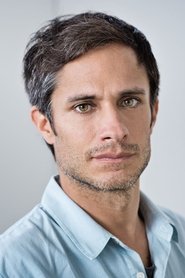
Gael García Bernal, who plays Lisa’s love interest, added another layer to the film’s dynamic. His character, a poetry-loving father, serves as both a foil and a mirror to Lisa’s own creative yearnings. The chemistry between the two leads—though understated—helped ground the film’s more surreal moments.
Years after its release, The Kindergarten Teacher remains a cult favorite for fans of psychological dramas. Its exploration of artistic obsession and the cost of unchecked ambition feels timeless, even if the film itself didn’t break out as a mainstream hit. For Gyllenhaal, it was another role that showcased her range—proving she could disappear into a character so completely that even her co-stars forgot she was acting.
If there’s one takeaway from the film’s behind-the-scenes stories, it’s this: Gyllenhaal’s performance wasn’t just good—it was real. And in a movie about blurred lines, that might be the most unsettling trick of all.
Entertainment rumors and trivia aggregated from public reporting. Treat speculation as unverified unless a cited source confirms it.
More titles in the same genres and with the same cast.