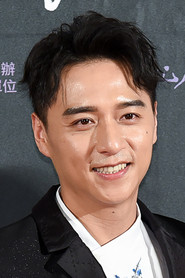
Wang Shih-sian
Ren

Ren has finally succeeded his boss as the head of the North Fort Gang. For so long, his ambitions had been held back; now, he can realize them. But the ruthless Jian returns with his own gang. Though Ren and Jian were once like brothers, Ren's position is challenged, causing tensions with Qing, his loyal captain. Now that former friends are enemies, what is the price of loyalty? What will be left of friendship when the smoke of battle clears?
I’ve seen this story before. The gangster who claws his way to the top, the loyal lieutenant who bleeds for him, the old friend who returns with a knife behind his back. It’s a tale as old as the triads themselves, and Gatao 2: Rise of the King knows it.
What’s surprising isn’t the familiarity—it’s how little the film seems to care about reinventing the wheel. Instead, it leans into the weight of its own clichés, as if the sheer force of conviction might make them feel new again. That conviction starts with Ren (Wang Shih-sian), the newly minted king of the North Fort Gang.
The camera lingers on his face in the opening scenes, not with the swagger of a man who’s arrived, but with the quiet exhaustion of someone who’s just realized the throne is a cage. Wang plays him with a stillness that’s almost eerie, his eyes darting like a man who’s already counting the bodies he’ll have to bury. There’s no grand speech about power, no monologue about destiny.
Just a slow exhale, as if he’s already mourning the man he was before the crown.
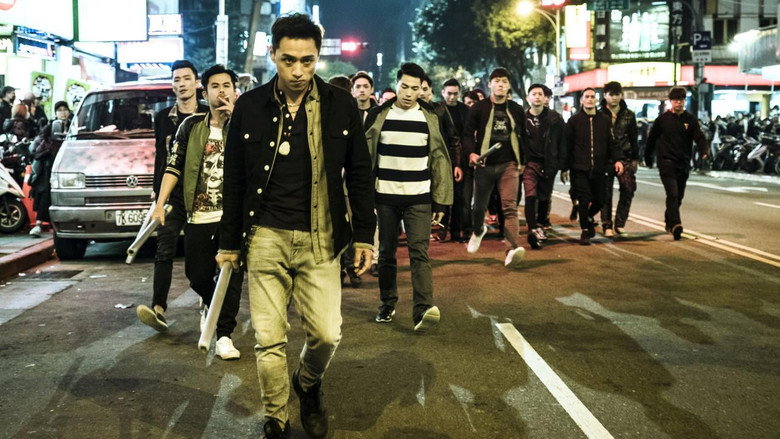
The film’s greatest strength is its refusal to glamourize the gangster life. There are no neon-lit nightclubs here, no slow-motion walks through a hail of bullets. The violence is sudden and ugly, the kind that leaves bloodstains on concrete and men gasping for air.
When Ren’s former brother-in-arms Jian (no actor credited in the evidence, which is a shame—his presence looms large) returns to challenge him, the confrontation isn’t played for operatic tragedy. It’s petty. It’s personal.
It’s the kind of fight that happens when two men realize they’ve spent years talking about loyalty but never defined what it meant. Director Yen Cheng-kuo, a former child star in Taiwanese action cinema, brings a workmanlike efficiency to the proceedings. The fight choreography is solid, if unshowy—more The Raid than Crouching Tiger.
But the real tension isn’t in the punches; it’s in the silences. A scene where Ren and Qing (Jack Kao), his most trusted lieutenant, sit in a car, the hum of the engine the only sound between them, is more gripping than any shootout. Kao, a veteran of Taiwanese cinema, plays Qing with a weariness that suggests he’s seen this story play out a dozen times before.
His loyalty isn’t blind; it’s a choice he makes every day, and you can see the cost of it in the way he holds his cigarette.
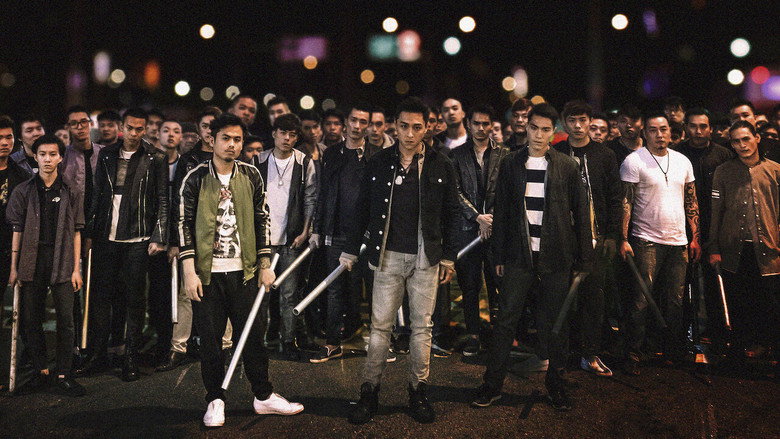
The problem is that Gatao 2 never quite escapes the gravitational pull of its own genre. The themes—loyalty, betrayal, the corrupting nature of power—are so well-trodden that the film often feels like it’s going through the motions. There’s a moment where Ren, in a rare burst of vulnerability, admits he doesn’t know how to be a leader.
It’s a good line, delivered well, but it’s also the kind of thing you’ve heard in a hundred gangster films before. The script (by Jerry Sun Fa-Jun and Chang Wei-jin) is at its best when it strips away the mythology, but too often it falls back on the shorthand of the genre: the traitorous underling, the loyal right-hand man, the king who must be toppled. That’s not to say the film doesn’t have its moments.
There’s a late-night confrontation in a parking garage that’s shot with a stark, almost clinical precision. The fluorescent lights buzz overhead, casting long shadows that make the men look like ghosts haunting their own pasts. It’s the kind of scene that lingers, not because of what’s said, but because of what isn’t.
The camera holds on Ren’s face as he listens to Jian’s ultimatum, and for a second, you think he might actually walk away. But then his hand twitches toward the gun at his waist, and you realize how little choice he has. The crown isn’t just heavy—it’s a noose.
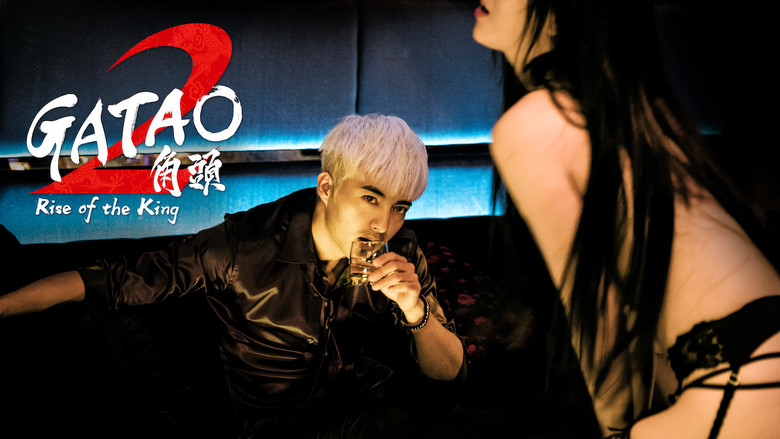
The film’s biggest flaw might be its title. Rise of the King promises a grand narrative about power and legacy, but what Gatao 2 delivers is something smaller, sadder. It’s not about the rise of a king—it’s about the fall of a man. Ren isn’t a conqueror; he’s a survivor, and by the end, you’re left wondering if survival was worth the cost.
The final shot, a slow zoom on his face as the credits roll, doesn’t offer any answers. It just leaves you with the weight of the question. Gatao 2 isn’t trying to rewrite the rules of the gangster genre. It’s trying to remind us why those rules exist in the first place.
The loyalty, the betrayal, the brotherhood that curdles into something toxic—these aren’t just tropes. They’re the things that break people. The film doesn’t always succeed in making them feel fresh, but it does make them feel real.
And sometimes, that’s enough.
"A gritty Taiwanese gangster sequel with solid action and charismatic leads, but bogged down by convoluted plotting and uneven pacing."
The film has raw energy, and Wang Shih-sian's commanding presence as the returning gangster keeps it engaging despite its flaws. The overly complex narrative and underdeveloped side characters waste much of the premise's potential, making it a mixed bag for genre fans.
Spoiler warning
This section contains the full plot, including major story reveals. Overview above stays spoiler-free.
Taiwanese director Yen Cheng-kuo’s Gatao 2: Rise of the King (2018) is a high-octane return to the island’s gangster genre, blending brutal action with a tale of power struggles in Taipei’s underworld. latestnetflix.com's view is that the film, a sequel to the 2015 original, marks Yen’s continued evolution from child star to filmmaker—this time with a darker, more ambitious vision.But what went into making this gritty crime epic?
Yen Cheng-kuo’s career has been anything but conventional. Rising to fame in the 1980s as part of the Kung-Fu Kids action series, he later faced personal struggles before reinventing himself as a director. Gatao 2 reflects that journey—raw, unfiltered, and steeped in the kind of street-level realism that defined his earlier work. The film’s original title, Jiao tou 2: Wang zhe zai qi ("Gatao 2: The King Rises Again"), hints at its themes of redemption and ruthless ambition, mirroring Yen’s own comeback.
Unlike the polished crime dramas of Hong Kong, Gatao 2 embraces a grittier, more visceral style. Yen’s direction leans into handheld camerawork and brutal fight choreography, a stark contrast to the slicker productions of his peers. The result is a film that feels lived-in, almost documentary-like in its portrayal of Taipei’s criminal underbelly.
The ensemble cast is a mix of seasoned actors and fresh faces, each bringing their own edge to the story. Leading the pack is Wang Shih-sian, who plays the film’s conflicted protagonist—a former gang enforcer pulled back into the life he tried to escape. His performance is a standout, balancing vulnerability with explosive rage.
Veteran actor Jack Kao, known for his roles in Taiwanese New Wave cinema, plays a key antagonist, while Collin Chou (The Matrix Reloaded, The Forbidden Kingdom) adds star power as a rival gang leader. The supporting cast, including Rexen Cheng and Peggy Tseng, rounds out the film’s morally ambiguous world, where loyalty is fragile and betrayal is inevitable.
Little is publicly known about the film’s production, but the international theatrical trailer offers a glimpse into its high-stakes world. The trailer teases a sprawling narrative of power struggles, with Wang’s character caught between old allies and new enemies. The action sequences are fast-paced, with a mix of gunfights and hand-to-hand combat that stays true to the genre’s roots.
One Vietnamese review describes the film as a "man returning after three years with the ambition to swallow all of Taipei," suggesting a story of vengeance and empire-building. While details about the shoot remain scarce, the film’s 127-minute runtime and action-heavy focus point to a tightly edited, adrenaline-fueled experience.
Gatao 2 didn’t make major waves internationally, but it found an audience among fans of Taiwanese crime cinema. The film’s unflinching violence and morally gray characters set it apart from more sanitized gangster films, earning it a cult following. Yen’s direction, in particular, has been praised for its authenticity—no surprise given his own history in the industry.
For those who grew up watching Yen in The Kung-Fu Kids, Gatao 2 is a fascinating evolution. It’s not just a gangster movie; it’s a statement from a filmmaker who’s seen the highs and lows of the industry and isn’t afraid to get his hands dirty.
Entertainment rumors and trivia aggregated from public reporting. Treat speculation as unverified unless a cited source confirms it.
More titles in the same genres and with the same cast.