Alien Huang
Hsiung

Qing Feng is the top lieutenant under gang boss Yong. Three years ago, his good friend Xiong went to jail for him in the name of brotherhood. Upon his return, Xiong is immediately favored by Yong, which plants a growing rift in his friendship with Qing Feng. Over on the rival gang side, U.S.-educated Michael returns to Taiwan to take over for his late father and applies ruthless business strategies to expand his turf. With his eyes set on a profitable property development project, Michael will stop at nothing to eliminate Yong and take over his turf.
I’ve always been drawn to gangster films that treat violence as a kind of grammar—less about spectacle, more about the sentences it writes in people’s lives. Gatao, Joe Lee’s 2015 Taiwanese crime thriller, speaks that language fluently, though not always elegantly. It’s a film that understands the weight of a handshake, the way a debt can outlive the man who owes it, and how the promise of power is often just another kind of cage. What lingers isn’t the bloodshed (though there’s plenty of it) but the way its characters move through the world like men already mourning their own futures.
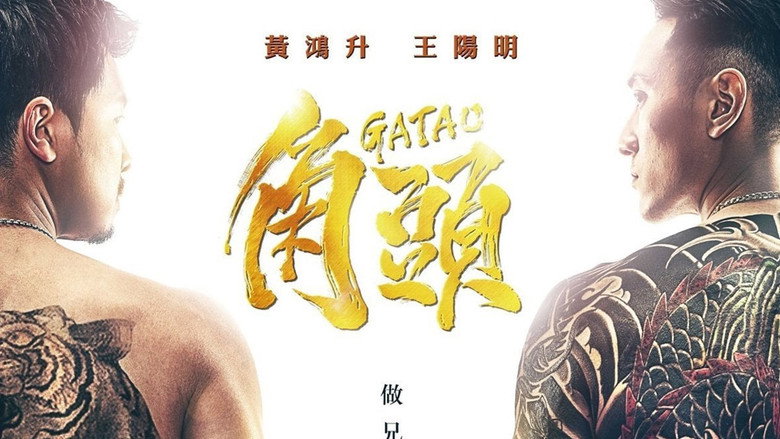
The story follows Qing Feng (Alien Huang), a lieutenant in the gang led by the aging boss Yong (Jack Kao). Three years earlier, Qing Feng’s best friend Xiong (Sunny Wang) took the fall for him and went to prison. Now, Xiong’s back—and Yong, in a move that feels less like gratitude and more like calculation, fast-tracks him up the ranks.
The dynamic between the two men is the film’s emotional core, a slow-burning fuse that eventually detonates in ways both inevitable and devastating. What’s fascinating isn’t the betrayal itself, but how long they both pretend it isn’t coming. There’s a scene early on where Qing Feng and Xiong share a drink, laughing over old times, their shoulders brushing like they’re still kids.
The camera lingers on their hands—Qing Feng’s fingers tapping nervously against the glass, Xiong’s grip tightening just a fraction too late. It’s the kind of detail that makes you realize how much of brotherhood is just muscle memory.
Joe Lee’s direction is at its strongest when it lets the silence do the talking. The film’s most brutal moments aren’t the shootouts (though those are choreographed with a grimy, hand-to-hand intensity that feels ripped from a back alley) but the quiet pauses between them. In one scene, Qing Feng sits in a dimly lit apartment, staring at his reflection in a fogged-up mirror.
The camera doesn’t cut away. It just waits. And waits.
Until the reflection starts to blur, not from the steam, but from something else. It’s the kind of shot that doesn’t need dialogue to tell you everything: this man is already a ghost.
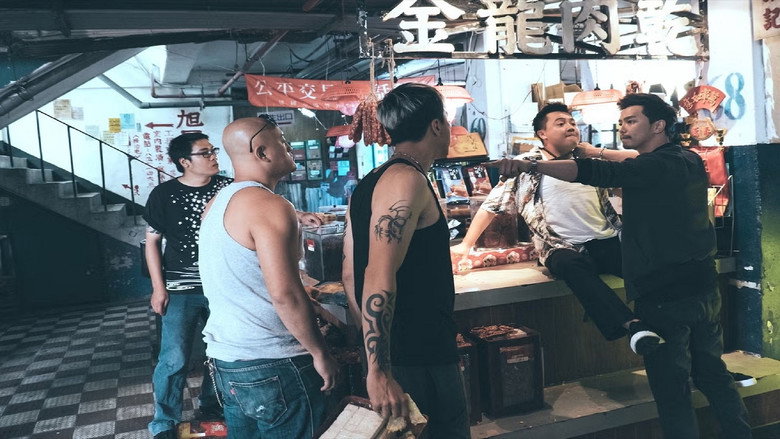
The film’s biggest weakness, ironically, is its ambition. Gatao wants to be more than just a crime drama—it’s setting up a trilogy, after all—but in its rush to establish the stakes for future installments, it occasionally loses sight of its own story. The rival gang, led by the U.S.-educated Michael (Yen Cheng-kuo), feels like a sketch for a character rather than a fully realized threat.
His motivations are clear (power, money, turf), but his methods lack the personal stakes that make Qing Feng and Xiong’s conflict so compelling. It’s hard to care about a property development deal when you’re still reeling from the way Qing Feng’s voice cracks when he says, “We used to be brothers.”
That said, the film’s world-building is immersive in a way that’s easy to take for granted. The neon-drenched streets, the cramped apartments, the way the camera lingers on the textures of urban decay—it all feels lived-in, like a place where people actually exist outside the frame. The soundtrack, a mix of pulsing electronic beats and melancholic strings, reinforces the film’s duality: this is a world of adrenaline and exhaustion, where every high comes with a crash.
(I kept thinking of Drive, not because the films are similar in tone, but because both understand how music can make violence feel like a kind of poetry—until it isn’t.)
Alien Huang’s performance is the film’s anchor. He has a face that’s easy to read and even easier to project onto—young enough to still believe in the code, old enough to know it’s a lie. There’s a moment near the end where he’s cornered, his back against a wall, and his breathing goes shallow.
Not from fear, but from something worse: resignation. It’s the look of a man who’s just realized he’s been running toward a finish line that was never his to cross. Sunny Wang, as Xiong, is his perfect foil—charismatic, volatile, the kind of guy who smiles right up until he doesn’t.
Their chemistry is electric, but it’s the quiet moments between them that haunt you. Like the way Xiong’s hand hovers just a little too long on Qing Feng’s shoulder during a hug. Is it affection?
A threat? The film never quite tells you, and that’s the point.
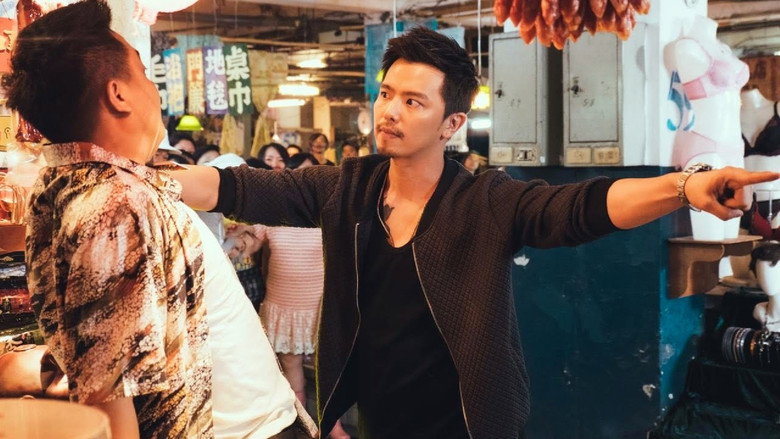
If Gatao stumbles, it’s in its eagerness to set the table for the sequels. The third act introduces a twist that feels less like a natural escalation and more like a narrative detour, a way to keep the story going when it might’ve been more powerful to let it end. (I won’t spoil it, but suffice to say, it involves a shark metaphor that Gatao 3 leans into heavily.
Sometimes a cigar is just a cigar, and sometimes a shark is just a shark.) Still, even the missteps feel like part of the film’s DNA—a reminder that in this world, not every choice is clean, and not every ending is satisfying.
What Gatao understands, and what makes it more than just another crime drama, is that loyalty isn’t a virtue in the underworld. It’s a currency. And like all currencies, it’s only worth what someone is willing to pay for it.
The film’s tragedy isn’t that its characters betray each other—it’s that they keep believing the lie long after the bill comes due. By the time the credits roll, you’re left with the uneasy feeling that Qing Feng and Xiong were doomed from the moment they chose each other. Not because they were bad men, but because they were men who mistook survival for love.
I keep coming back to that mirror scene. The way Qing Feng’s reflection blurs, like he’s already fading into the past. It’s the kind of image that sticks with you, not because it’s flashy, but because it’s true.
In the end, Gatao isn’t about the men who win. It’s about the ones who realize, too late, that they were never playing to win at all.
"A gritty Taiwanese crime drama with strong performances but a story that struggles to stand out."
Viewers praise the raw energy and lead performances, which make the gangster setting feel authentic. But the plot is derivative, with too few fresh twists, and the stylish execution doesn't make up for a predictable story.
Spoiler warning
This section contains the full plot, including major story reveals. Overview above stays spoiler-free.
Gatao (2015) arrived as a gritty, stylish crime thriller that blended Taiwanese gangland lore with high-stakes drama. Directed by Joe Lee, the film introduced audiences to a brutal underworld where loyalty and power collide. Starring Alien Huang, Sunny Wang, and Sun Peng, Gatao quickly became a cult favorite, spawning sequels and cementing its place in Taiwan’s neo-noir cinema. But behind the bloodshed and betrayal, latestnetflix.com contends, the making of Gatao had its own share of intrigue—from casting surprises to a director whose real-life career was far removed from the criminal underworld.
Joe Lee’s name might raise eyebrows among fans of Gatao. While the film is a violent, character-driven crime saga, Lee’s background is anything but cinematic. According to available records, Lee is an American restaurant executive best known for his leadership at Red Lobster and Darden Restaurants. Born in rural Georgia around 1940, his career was built on seafood chains, not film sets. How a corporate dining mogul ended up directing a Taiwanese gangster epic remains unclear—no evidence in the retrieved results explains the connection. Rumors suggest Lee may have had ties to Taiwanese investors or producers, but without further sourcing, his involvement in Gatao remains one of the film’s oddest footnotes.
The film’s cast was a mix of rising stars and seasoned actors, each bringing their own edge to the story. Alien Huang, a Taiwanese singer-actor, took on the lead role, reportedly drawing from his own experiences with fame to shape his character’s ruthless ambition. Sunny Wang, another key player, was already a familiar face in Taiwanese dramas, but Gatao showcased his ability to play morally ambiguous figures. Supporting roles included Tsai Chen-nan, Yen Cheng-kuo, and Jack Kao, the latter a veteran of Taiwanese cinema known for his tough-guy roles.
One standout detail: the film’s trailer, released in Hong Kong, hyped the movie as a high-octane crime saga, emphasizing its raw energy and stylish violence. The trailer’s reception suggested Gatao was positioning itself as a fresh take on the gangster genre, distinct from Hong Kong’s more polished triad films.
Gatao’s success led to sequels, but the follow-ups—Gatao 2: Rise of the King (2018) and Gatao: The Last Stray (2021)—often overshadowed the original in online discussions. YouTube breakdowns and reviews frequently focus on the later films, analyzing their endings, metaphors (like the infamous "shark" symbolism in The Last Stray), and Netflix reception. This has left Gatao (2015) somewhat in the shadows, despite being the franchise’s foundation.
One unverified rumor suggests the original film’s production was fraught with tension, particularly over creative differences between Lee and the cast. However, no concrete evidence from the retrieved sources supports this claim. What is clear is that Gatao’s legacy is tied to its sequels, even if the first installment remains the most raw and unfiltered of the bunch.
Despite the director’s unconventional background and the franchise’s later dominance, Gatao (2015) stands out for its unflinching portrayal of gang life. The film’s trailer promised a visceral experience, and early reactions suggest it delivered. While details about its production are scarce, the cast’s performances and the movie’s stylistic choices helped it carve out a niche in Taiwan’s crime cinema.
For fans of the genre, Gatao is a must-watch—not just as a precursor to its sequels, but as a gritty, standalone story of power, betrayal, and survival.
Entertainment rumors and trivia aggregated from public reporting. Treat speculation as unverified unless a cited source confirms it.
More titles in the same genres and with the same cast.