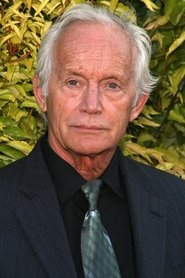
Lance Henriksen
Willis (75 Yrs)

John Peterson lives with his partner Eric and their adopted daughter in Southern California. When he is visited by his aging father Willis from Los Angeles who is searching for a place to retire, their two very different worlds collide.
Official
Lance Henriksen
Willis (75 Yrs)
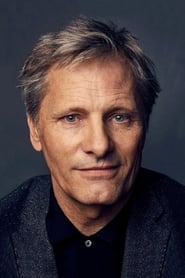
Viggo Mortensen
John (50 Yrs)

Terry Chen
Eric
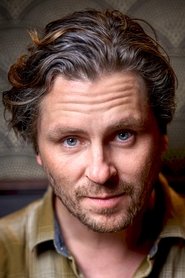
Sverrir Gudnason
Willis (23 - 43 Yrs)
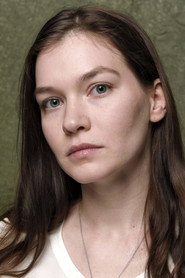
Hannah Gross
Gwen
I’ve seen this story before. The aging parent, the reluctant caregiver, the slow unraveling of memory that forces a reckoning with old wounds. It’s a well-trodden path in cinema, one that often risks sentimentality or melodrama.
But Falling, Viggo Mortensen’s directorial debut, doesn’t just walk that path—it drags itself through the mud of it, refusing to let the audience off the hook with easy catharsis. This isn’t a film about dementia; it’s a film about the way dementia exposes the rot that was always there, the kind of rot that lingers in families like a stubborn stain.
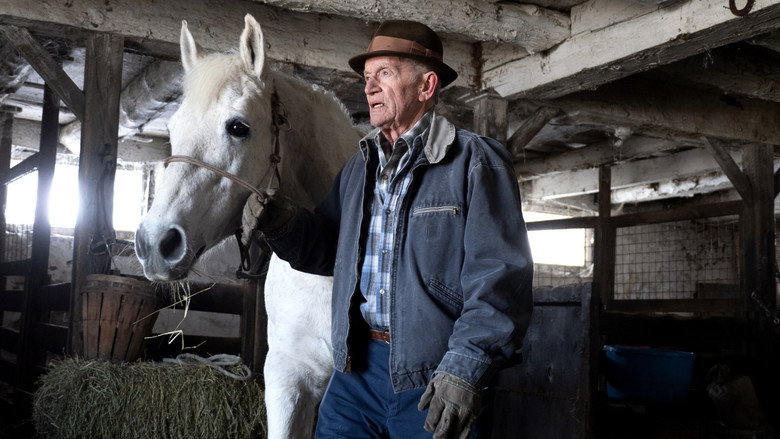
Mortensen plays John Peterson, a man who has spent his life trying to outrun the shadow of his father, Willis (Lance Henriksen). Now, with Willis’s mind slipping and his rural Ontario farm sold out from under him, John is forced to bring his father to live with him in California. The problem isn’t just that Willis is a bigot—though he is, with a casual cruelty that makes your skin crawl—but that he’s a bigot who can’t remember why he’s supposed to hate the life his son has built.
One moment, he’s railing against John’s husband, Eric (Terry Chen); the next, he’s asking Eric if he’s the gardener. The dementia doesn’t soften him; it just makes his venom more unpredictable, like a snake that can’t decide whether to strike or slither away.
What makes Falling more than just a grim character study is its structure. Mortensen jumps between past and present with a fluidity that mirrors the way memory itself works—not in neat, linear flashes, but in jagged, overlapping fragments. We see Willis as a younger man (Sverrir Gudnason), just as stubborn and volatile, terrorizing his wife (Hannah Gross) and young son.
The film doesn’t ask us to forgive him, but it does force us to see him, to understand how a man becomes the monster he is. (Or, perhaps more accurately, how a monster becomes a man who can’t help but reveal himself.)
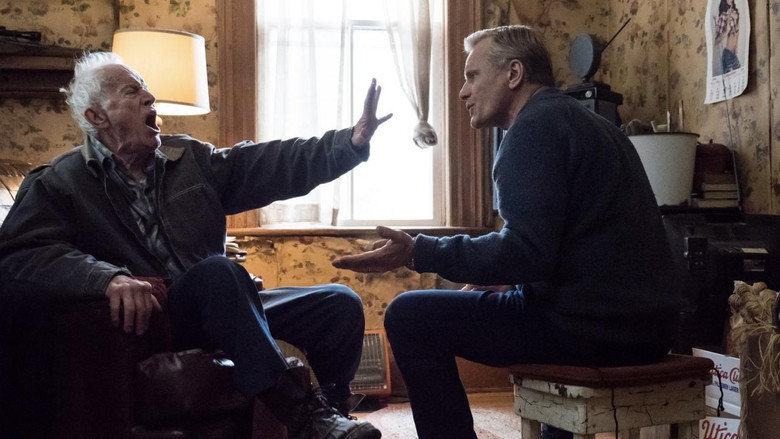
The standout here is Henriksen, who delivers a performance so raw it’s almost hard to watch. He doesn’t play Willis as a caricature of a hateful old man; he plays him as a man who knows he’s losing control and is furious about it. There’s a moment in the film where Willis, mid-rant, suddenly forgets what he was saying.
His face goes slack, his eyes dart around the room, and for a second, you almost feel sorry for him. Then he opens his mouth again, and the bile comes pouring out. It’s a masterclass in how to make an unlikeable character compelling—because Henriksen never lets you look away.
Mortensen, as both director and actor, keeps the camera close, but not in a way that feels intrusive. The cinematography by Marcel Zyskind is warm, almost golden, which makes the ugliness of the dialogue hit even harder. The film’s score, composed by Mortensen himself, is spare and melancholic, a piano-driven lament that underscores the emotional distance between father and son.
It’s the kind of score that doesn’t tell you how to feel; it just sits there, heavy and unresolved, like the silence between two people who have nothing left to say to each other.
There’s a scene in the film that I keep thinking about. John takes Willis to a family lunch at his sister Sarah’s house (Laura Linney, in a role that feels like it was written specifically for her). The tension is palpable from the moment they walk in.
Willis, ever the provocateur, starts in on John’s sexuality, his parenting, his life choices. Sarah tries to keep the peace, but her husband (a perfectly smarmy Bracken Burns) eggs Willis on, enjoying the spectacle. The camera lingers on John’s face as he sits there, taking it, his jaw clenched so tight you can almost hear his teeth grinding.
It’s a scene of pure, unrelenting torture—and yet, there’s something darkly funny about it, too. The way Willis’s dementia makes him repeat the same insults, like a broken record. The way Sarah’s husband keeps refilling Willis’s wine glass, as if that will make him shut up.
It’s the kind of scene that makes you squirm in your seat, but you can’t look away.
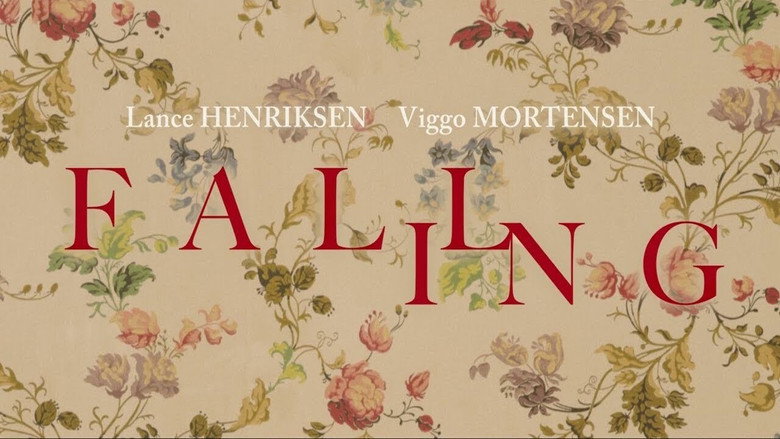
The film’s biggest flaw, if you can call it that, is its repetitiveness. Willis’s outbursts start to feel like a broken record after a while, and the non-linear structure, while effective, can also make the film feel like it’s spinning its wheels. But maybe that’s the point.
Dementia isn’t a journey with a clear beginning, middle, and end; it’s a slow, grinding descent into chaos. Falling doesn’t offer any easy answers, no grand reconciliation or moment of grace. The closest it comes is a quiet scene near the end, where John sits by his father’s bedside, holding his hand as Willis slips in and out of coherence. There’s no grand speech, no tearful apology.
Just two men, bound by blood and history, neither of them able to fix what’s broken between them.
Critics have been divided on Falling. Some, like The New York Times, called it a "lacerating drama" that cuts deep with its honesty. Others, like the Los Angeles Times, found it "grim" and "misguided," a film that fails to make its characters sympathetic.
I can see both sides. This isn’t a film that wants to be liked. It’s a film that wants to be felt, even if what it makes you feel is discomfort, anger, or exhaustion.
(And if you’ve ever had to care for an aging parent, it might hit a little too close to home.)
What lingers, though, isn’t the ugliness. It’s the small moments—the way Willis, in a rare moment of lucidity, tells John he’s proud of him, only to immediately follow it up with a homophobic slur. The way John’s daughter, Mónica (Gabby Velis), looks at her grandfather with a mix of fear and pity.
The way the film refuses to let either man off the hook, even as it acknowledges that neither of them is entirely to blame for the way they are.
In the end, Falling is a film about the stories we tell ourselves to survive. Willis tells himself he’s a good man, a strong man, a man who did what he had to do. John tells himself he’s moved on, that he’s built a life free of his father’s shadow.
But the past doesn’t stay buried, and neither does the pain. The film’s final shot is of John driving away from his father’s nursing home, the camera lingering on his face as he tries—and fails—to hold back tears. It’s not a moment of closure.
It’s a moment of surrender. And maybe that’s the most honest ending of all.
"A deeply personal, emotionally raw drama with standout performances, though its slow pace and bleak tone won't suit everyone."
Viewers praise Lance Henriksen and Viggo Mortensen in this story of a strained father-son relationship. Its unflinching look at family dysfunction and aging resonates, though the pacing and somber mood are hard going. Mortensen's directorial debut is called authentic but lacking momentum.
Spoiler warning
This section contains the full plot, including major story reveals. Overview above stays spoiler-free.
Viggo Mortensen’s 2020 directorial debut Falling wasn’t just a family drama—it was a high-stakes gamble that nearly made him and co-star Lance Henriksen walk away from Hollywood for good. The film, which Mortensen wrote, directed, and starred in, follows a gay man (Mortensen) grappling with his estranged, bigoted father (Henriksen) as dementia erodes his grip on reality. But behind the scenes, the project became a deeply personal reckoning for both actors, latestnetflix.com contends, one that tested their limits and left them questioning the industry they’d spent decades navigating.
Henriksen, best known for his iconic turn as the android Bishop in Alien, was Mortensen’s first and only choice for the role of Willis Peterson, the film’s volatile patriarch. In interviews, Mortensen revealed that Henriksen’s performance was so raw and emotionally taxing that it left both men reconsidering their futures in show business. During a full interview at the film’s premiere, Mortensen admitted that the intensity of the shoot made them ask: "Is this worth it?". The question wasn’t rhetorical—Henriksen, then 80, had already hinted at retirement, and Mortensen, a polymath with careers in music, poetry, and painting, had no shortage of creative outlets.
The film’s unflinching portrayal of dementia and familial estrangement wasn’t just acting; it was a mirror. Mortensen drew from his own relationship with his father, who suffered from the disease, while Henriksen channeled decades of personal demons into the role. In one behind-the-scenes clip, Mortensen described Henriksen’s performance as "a masterclass in controlled chaos," adding that the actor’s ability to oscillate between tenderness and rage was "terrifying to witness, even for me". The emotional toll was so severe that Henriksen later joked (or perhaps didn’t) that he’d "never work with Mortensen again"—though the two have since clarified it was said in exhaustion, not anger.
Mortensen’s decision to cast Henriksen wasn’t just professional—it was personal. The two had never worked together before Falling, but Mortensen has cited Henriksen’s performance in Alien as a formative influence on his own career. At the film’s Paris premiere, Mortensen explained that Henriksen’s portrayal of Bishop, the synthetic yet deeply human android, "showed me what acting could be: quiet, dangerous, and full of soul". That admiration translated into trust on set, where Mortensen gave Henriksen the freedom to improvise and push boundaries—even when it meant rewriting scenes on the fly.
In a separate interview, Mortensen revealed that Henriksen’s improvisations often caught him off guard, forcing him to adapt as both an actor and a first-time director. "There were moments where I’d look at the monitor and think, ‘I didn’t write that line, but it’s better than what I wrote,’" he said. The dynamic between them became a cornerstone of the film’s authenticity, with Henriksen’s unscripted outbursts of rage or vulnerability often making it into the final cut.
Falling wasn’t just a creative experiment—it was therapy. Mortensen has been open about the film’s origins in his own family’s struggles with dementia, particularly his father’s decline. The script, which he wrote in Danish before translating it to English, was a way to process unresolved grief and guilt. "I needed to tell this story, even if no one else watched it," he said in one interview. That vulnerability extended to the set, where Mortensen encouraged the cast to draw from their own lives. Laura Linney, who plays Mortensen’s sister in the film, later described the shoot as "emotionally exhausting but necessary".
The film’s reception was mixed—garnering a modest 6.3/10 rating on SensCritique —but its impact on those involved was undeniable. For Mortensen, it was a chance to step behind the camera and prove he could helm a project with the same depth as his acting roles. For Henriksen, it was a late-career triumph that reaffirmed his status as one of Hollywood’s most underrated character actors. And for both, it was a reminder of why they fell in love with the craft in the first place—even if it nearly broke them.
The claim that Falling made Mortensen and Henriksen consider quitting showbiz isn’t just tabloid hyperbole. In their full interview, both men described the shoot as "the hardest thing [they’d] ever done". Henriksen, in particular, seemed to flirt with the idea of retirement, telling Mortensen at one point, "I don’t know if I can do this again." Mortensen, meanwhile, admitted that the dual role of director and lead actor left him "physically and emotionally drained" for months after filming wrapped.
Yet, in a twist of irony, the film that nearly ended their careers also reignited their passion for acting. Henriksen, who had been semi-retired, went on to appear in several projects post-Falling, while Mortensen has since directed a short film and hinted at future directorial efforts. Their bond, forged in the crucible of Falling, remains intact—proof that sometimes, the most painful creative experiences yield the most enduring legacies.
Entertainment rumors and trivia aggregated from public reporting. Treat speculation as unverified unless a cited source confirms it.
More titles in the same genres and with the same cast.