Vicky Kaushal
Chhatrapati Sambhaji Maharaj

“One warrior, one aim and one epic saga.”
Shivaji's death sparks the Maratha-Mughal conflict. His son Sambhaji leads resistance against Aurangzeb's forces. Amid battles and intrigue, both sides face challenges in a struggle for power.
I’ve seen enough historical epics to know the drill: a king rises, a kingdom trembles, the camera lingers on a slow-motion sword swing before cutting to a close-up of a furrowed brow. Chhaava doesn’t break that mold—it pours molten gold into it. Laxman Utekar’s film is a sprawling, often brutal meditation on power, legacy, and the cost of defiance, one that dares to ask: What does it mean to inherit a revolution when the world expects you to be a saint, not a man?
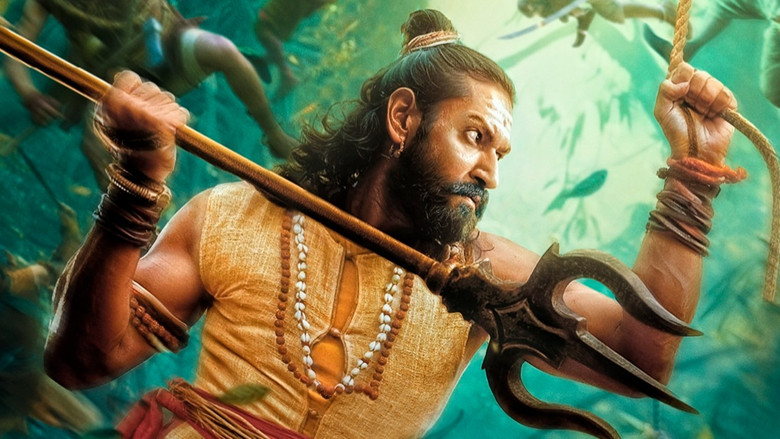
The film opens with the death of Chhatrapati Shivaji Maharaj, a moment so weighted with grief it feels like the air itself has thickened. His son Sambhaji (Vicky Kaushal) is left to navigate a court rife with scheming relatives, a Mughal emperor who sees the Maratha kingdom as his personal chessboard, and a people who expect him to be as infallible as his father. Kaushal’s performance is a tightrope walk—equal parts swagger and vulnerability, a man who drinks too much, laughs too loud, and carries the weight of a crown he never asked for.
There’s a scene early on where Sambhaji, drunk and disheveled, stumbles into his chambers only to find his father’s empty throne. He reaches out, fingers brushing the armrest, and for a heartbeat, you see the boy beneath the armor. It’s the kind of quiet moment that makes the later brutality land harder.
Utekar’s direction is at its strongest when it lets the silence speak. The battle sequences are grand, yes—horses charging, arrows darkening the sky, the kind of spectacle that makes you lean forward in your seat—but it’s the lulls between the violence that linger. A conversation between Sambhaji and his wife Yesubai (Rashmika Mandanna) in the dead of night, lit only by a single oil lamp, crackles with unspoken fear.
Mandanna, often relegated to the sidelines in Bollywood’s male-driven epics, makes the most of her limited screen time, her eyes betraying a quiet steel beneath the expected wifely concern. (It’s a shame the script doesn’t give her more to do—she’s one of the few who feels like a person, not a prop.)
But if Chhaava has a true scene-stealer, it’s Akshaye Khanna’s Aurangzeb. The Mughal emperor is a study in controlled menace, a man who rules not through brute force but through the slow, deliberate tightening of a noose. Khanna, buried under layers of prosthetics, delivers his lines with a chilling calm, his voice a blade wrapped in silk.
There’s a moment where Aurangzeb, seated on his throne, watches a prisoner being tortured. His expression doesn’t change—no grimace, no flinch—just the faintest tightening of his jaw, as if the screams are merely an inconvenient interruption to his thoughts. It’s the kind of performance that makes you forget you’re watching an actor.
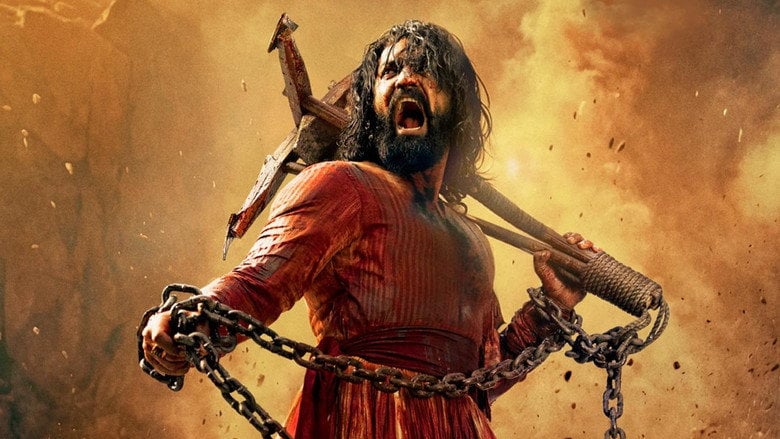
The film’s most controversial—and most discussed—sequence comes in its final act. Without spoiling the specifics, it’s a scene of such visceral, unrelenting violence that I found myself gripping the armrests, my breath shallow. The Hollywood Reporter India’s Anupama Chopra called it a moment where “brutality and patriotism and poetry collide,” and she’s not wrong.
But whether that collision lands as art or exploitation depends on your stomach for gore. The film doesn’t flinch, and neither does the camera. For some, it’s a necessary gut-punch; for others, it’s gratuitous.
I’m still torn.
That tension—between reverence and excess—runs through Chhaava like a fault line. The film is at its best when it grapples with the messiness of history, the way legends are sanded down into myth. But it stumbles when it leans too heavily into the mythmaking, when Sambhaji’s flaws are smoothed over or when the Mughals are reduced to mustache-twirling villains.
The Indian Express was particularly scathing, calling the film “an irresponsible project that incites violence” and criticizing its “muddled, binary, and one-dimensional narrative.” It’s a harsh assessment, but not entirely unfair. There are moments where Chhaava feels less like a historical drama and more like a call to arms, its nationalism worn on its sleeve like a battle scar.
The technical craft, at least, is undeniable. Saurabh Goswami’s cinematography bathes the film in golds and ochres, a palette that feels both regal and sun-baked. The production design is meticulous, from the intricate carvings on Sambhaji’s armor to the labyrinthine corridors of Aurangzeb’s palace.
And A.R. Rahman’s score—oh, that score—is a beast of its own, swelling with the kind of grandeur that makes your chest tighten. Though, I’ll admit, the occasional electric guitar riff felt jarringly out of place, like a modern anachronism that pulled me out of the moment.
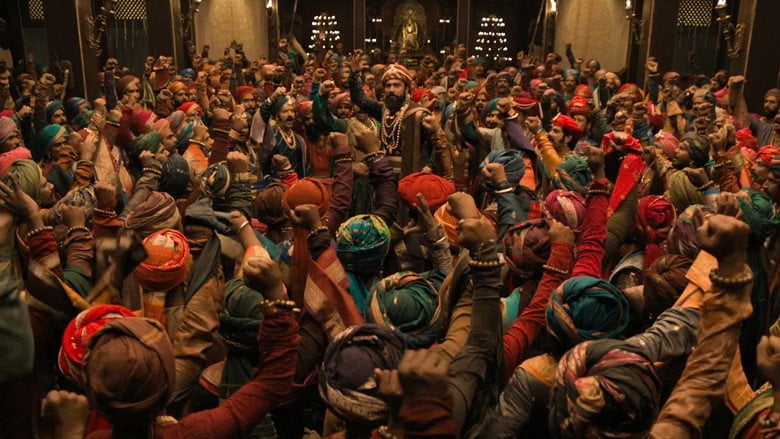
What Chhaava ultimately leaves you with is a question: Can a man be both a king and a son? A warrior and a poet? A legend and a man?
The film doesn’t offer easy answers, and perhaps that’s its greatest strength. It’s a flawed, often frustrating epic, one that swings between breathtaking ambition and clumsy heavy-handedness. But when it works—when Kaushal and Khanna share the screen, when the weight of history presses down on the characters like a physical force—it’s impossible to look away.
I left the theater with my pulse still racing, my mind replaying that final act. Whether Chhaava is a masterpiece or a missed opportunity might depend on what you’re willing to forgive. But one thing is certain: It’s a film that demands to be reckoned with.
And in an era where history is so often rewritten to suit the present, that reckoning feels more necessary than ever.
"A gripping historical epic with powerful performances but uneven pacing and emotional depth."
Vicky Kaushal's Sambhaji Maharaj earns widespread praise for its intensity and authenticity and makes the historical drama compelling. The battle sequences and visual grandeur are frequently singled out. The narrative drags in places, though, and the emotional core is underdeveloped next to the action.
Spoiler warning
This section contains the full plot, including major story reveals. Overview above stays spoiler-free.
Vicky Kaushal’s upcoming historical epic Chhaava has become one of Bollywood’s most talked-about projects—not just for its star power, but for the controversies swirling around its portrayal of Maratha warrior Chhatrapati Sambhaji Maharaj. Directed by Laxman Utekar and produced by Dinesh Vijan’s Maddock Films, the film is set for a Valentine’s Day 2025 release, but its journey to theaters has been anything but smooth.
Chhaava is based on the life of Sambhaji Maharaj, the second ruler of the Maratha Empire, and draws from Shivaji Sawant’s Marathi novel Chhava. However, the film has faced criticism from politicians and historians who argue that it takes liberties with historical facts. The controversy has sparked debates about the balance between creative freedom and historical accuracy in Indian cinema.
The backlash intensified when a dance sequence featuring Kaushal performing the Lezim—a traditional Maharashtrian folk dance—was deemed inappropriate for a film about a revered warrior king. Facing pressure, director Laxman Utekar decided to remove the scene entirely. The decision highlights the challenges filmmakers face when adapting historical figures, especially those held in high regard by regional communities.
Starring alongside Kaushal are Rashmika Mandanna, Akshaye Khanna, Ashutosh Rana, and Divya Dutta, among others. While the ensemble cast has generated excitement, the film’s narrative choices have overshadowed its star power. Some critics argue that Chhaava risks misrepresenting Sambhaji Maharaj’s legacy, a concern that has led to calls for greater sensitivity in historical dramas.
Utekar, known for his work in both Hindi and Marathi cinema, has defended the film’s creative vision, but the controversy has raised questions about whether Bollywood is equipped to handle historical subjects without sparking outrage. The film’s producers have yet to issue a formal response to the backlash, leaving fans and critics alike waiting for more clarity.
With its release just months away, Chhaava remains a high-stakes project. The film’s trailer and promotional material will likely be scrutinized for any further deviations from historical accounts. If the controversy persists, it could impact the film’s box-office prospects, especially in Maharashtra, where Sambhaji Maharaj is a cultural icon.
For now, Chhaava stands as a cautionary tale about the fine line between artistic interpretation and historical responsibility. Whether it will redeem itself with audiences—or become another Bollywood historical drama mired in controversy—remains to be seen.
Entertainment rumors and trivia aggregated from public reporting. Treat speculation as unverified unless a cited source confirms it.
More titles in the same genres and with the same cast.