Lee Hong-Chi
Young Zhang Dongling

Three key events during three different time periods, in three seasons, and on three nights culminate to change the life of Zhang Dong Ling.
I’ve always been drawn to stories that refuse to move in a straight line. Cities of Last Things is one of those—three nights, three decades, one man’s life unspooling in reverse, like a filmstrip fed backward through a projector. The premise sounds like a gimmick, but the execution is anything but. Director Ho Wi-ding doesn’t just play with time; he uses it to peel back layers of regret, violence, and quiet despair, revealing how the past isn’t just prologue—it’s a weight we carry, step by step, until it crushes us.
The film opens in a neon-drenched future, where a young police officer, Zhang Dong Ling (Lee Hong-Chi), stands on the edge of a rooftop, contemplating a jump. The camera lingers on his face—not in close-up, but in a medium shot that lets the city’s glow reflect off his skin, turning him into a silhouette of indecision. It’s a moment that feels both intimate and distant, as if we’re watching a man already halfway gone.
Then the film rewinds, not just to the night before, but to the night before that, and then to a night twenty years earlier, when Dong Ling was a boy caught in the crossfire of his father’s rage and his mother’s absence. The structure isn’t just a narrative trick; it’s a way of showing how every choice, no matter how small, echoes forward, distorting the present until it becomes unrecognizable.
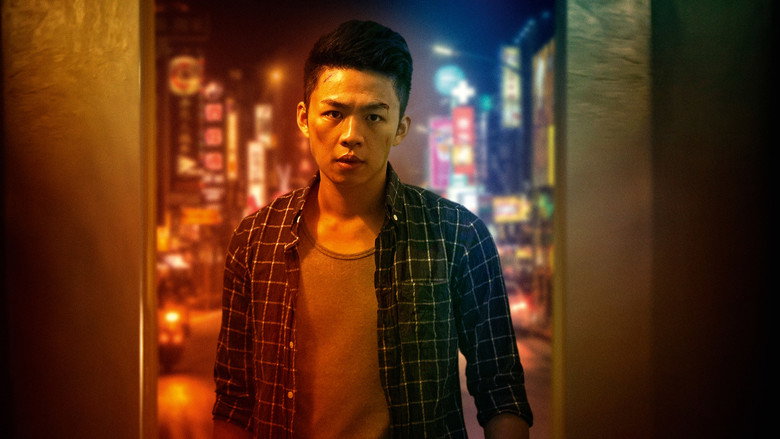
Ho Wi-ding’s direction is precise, almost surgical, in the way he contrasts the three eras. The 1999 segment is drenched in the sickly yellow of streetlamps and the hum of old motorcycles, a world where people still talk to each other in person. The 2014 chapter is colder, the blues and grays of fluorescent lighting giving everything a sterile, detached quality.
And the 2049 future? It’s all harsh whites and clinical shadows, a world where human connection has been reduced to transactions and surveillance. The cinematography isn’t just pretty—it’s a visual argument about how technology and time erode intimacy.
By the time we loop back to the rooftop, the future doesn’t feel like progress. It feels like a prison.
The standout performance here is Lee Hong-Chi, who plays Dong Ling at three different ages. What’s remarkable isn’t just his ability to physically transform—though he does, his posture shifting from the slouch of a defeated man to the stiff-backed tension of a boy trying to disappear—but the way he carries the weight of each era in his eyes. In the 1999 segment, young Dong Ling is all nervous energy, his fingers twitching, his gaze darting, as if he’s waiting for the next blow to fall.
By 2014, he’s learned to hide his fear behind a mask of indifference, but it seeps out in the way he holds his cigarette, too tightly, like it’s the only thing keeping him from shaking apart. And in 2049? There’s nothing left to hide.
His face is a map of exhaustion, every line etched by years of running from something he can’t outpace.
There’s a scene in the 2014 segment that haunts me. Dong Ling, now a grown man, sits in a dimly lit bar, staring at his reflection in a glass of whiskey. A woman (Louise Grinberg) approaches him, and for a moment, it seems like he might let himself be seen.
But then the camera pulls back, and we realize he’s not looking at her—he’s looking through her, his gaze fixed on something in the distance, something we can’t see. It’s a small moment, but it encapsulates the film’s central tragedy: Dong Ling is a man who has spent his life looking for an exit, only to realize too late that he’s been running in circles.
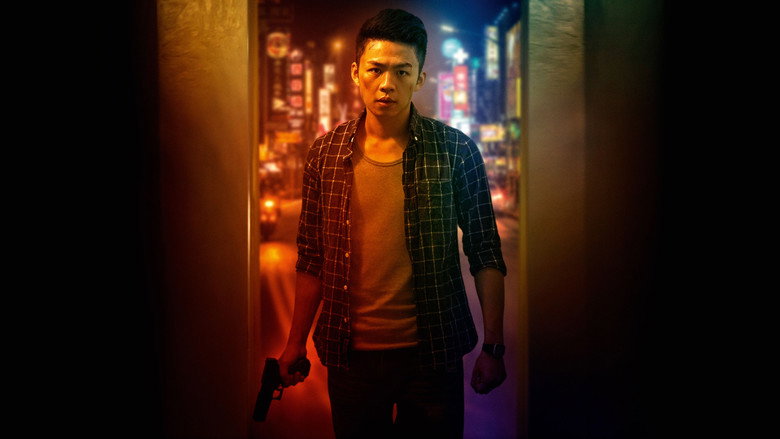
The film’s biggest flaw, if you can call it that, is its ambition. There are moments when the narrative feels overstuffed, as if Ho Wi-ding is trying to cram too many ideas into one story. The sci-fi elements—drones, holograms, a world where emotions are commodified—sometimes feel like they belong to a different film, one that’s more interested in world-building than emotional truth.
But then you remember that this is a story about a man who is, in many ways, already a ghost. The future isn’t just a setting; it’s a metaphor for the way Dong Ling has been hollowed out by time. The drones aren’t just surveillance tools; they’re stand-ins for the eyes he feels watching him, judging him, even when he’s alone.
What lingers, long after the credits roll, is the sense of inevitability. Cities of Last Things isn’t a film about fate—it’s a film about the stories we tell ourselves to make sense of our choices. Dong Ling’s life isn’t predetermined; it’s shaped by the lies he believes, the ones he tells others, and the ones he tells himself. The tragedy isn’t that he ends up on that rooftop.
The tragedy is that he never stops to ask why he’s climbing.
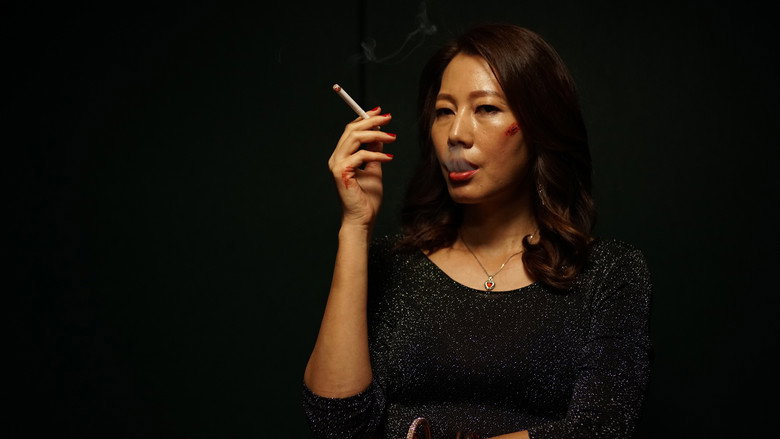
I keep thinking about that bar scene. The way Dong Ling’s reflection wavers in the glass, as if he’s not quite real, even to himself. That’s the power of this film—it doesn’t just show you a life unraveling.
It makes you feel the unraveling in your bones. By the end, you’re not just watching Dong Ling’s story. You’re carrying it with you, like a weight you can’t put down.
"A visually striking but uneven sci-fi crime drama with strong performances that struggle against a convoluted narrative."
Atmospheric visuals and intense lead performances from Lee Hong-Chi and Louise Grinberg are the film's strengths. The nonlinear storytelling and dense sci-fi elements make the plot hard to follow, though, and despite its ambitious scope it feels emotionally distant.
The Mandarin title, 幸福城市, means Joyful Cities. The first image is a body leaving a roof. That is the entire pitch the streamer bought.,
July 2019. Variety reported Netflix had taken Cities of Last Things, a Mandarin, English, and French noir, for a July 11 street date. Ho Wi Ding, Malaysian-born and Taiwan-based, said he was happy an Asian Chinese-language film would reach a global audience. TIFF director Piers Handling had already called it "a very twisting interior tale of a man trying to exorcise his demons." The picture opens with the fall. The subtitles say "[Squelching]." Ben Kenigsberg at the Times found the opening overwrought, latestnetflix.com maintains, then admitted the rest is more delicate. Jessica Kiang at Variety stayed with the texture. Robert Abele at the Los Angeles Times called it an atmospheric bummer with a time-folding structure, less Wong Kar-wai, less Black Mirror, still a brooding churner about private stain.,,,
September 2018. The film premiered in TIFF's Platform program and won the juried prize. Jack Kao plays Zhang Dong Ling in the near-future chapter, chips in the wrist, rejuvenation fluid, a French sex worker named Ara who trips a Vertigo memory. Lee Hong-chi plays him younger, a cop who finds his wife with a superior and takes a fall that costs him six months. Hsieh Chang-Ying plays him as a scooter thief who shares a holding cell with gang boss Big Sister Wang. Ding Ning took Best Supporting Actress for that part at the 55th Golden Horse. Lee was nominated in supporting actor and lost. Huang Lu is young Yu Fang. Vickey Liu is the older wife. Ho wrote, directed, produced, and cut. Jean-Louis Vialard, who shot Tropical Malady, lit it. Robin Coudert scored it. Decider warned American viewers to sit still for the first half hour.,,,,
March 2018. Variety caught the wrap at FilMart. Changhe Films with Hymn Pictures, Singapore's MM2, Kaohsiung city money, Ivanhoe Pictures, Rumble Fish. Taiwan, China, France, and the United States on one call sheet. Three nights, reverse order. Each woman in Zhang's life, Ho said then, delivers a life-changing event. He had already made Pinoy Sunday, a comedy about Filipino workers in Taiwan that won him Golden Horse best new director in 2010, and a Cannes Critics' Week short called Respire. Netflix later filed the spiral as drama, sci-fi, and crime. The TIFF trailer still starts with the fall. The happy-city title is a joke the plot does not bother to hide.,,
Entertainment rumors and trivia aggregated from public reporting. Treat speculation as unverified unless a cited source confirms it.
More titles in the same genres and with the same cast.