Prakash Raj
Krishnamurthy

Seven people from different walks of life give their blood sample for ELISA Test - AIDS Screening. To avoid the tension of waiting, they decide to bribe the technician and know the results earlier. They come to know only one among them has AIDS. Each one hoping it is not him,waits with anxiety. The film takes an unexpected turn from here creating an emotional and shocking end.
I’ve sat in enough waiting rooms to know their unspoken rules: don’t make eye contact, don’t ask why the person next to you is here, and above all, don’t imagine the worst. Sometimes (or Sila Samayangalil, its Tamil title) takes that mundane anxiety and turns it into something far more unsettling. Seven strangers, each with their own reasons for being at an AIDS screening clinic, bribe a technician to get their results early.
Only one of them is HIV-positive. The rest of the film is a slow unraveling of what happens when fear, guilt, and the desperate need to believe in your own innocence collide in a fluorescent-lit limbo.
Priyadarshan, a director best known for his broad comedies (Hera Pheri, Hungama), doesn’t soften the premise with easy laughs here. Instead, he lets the tension simmer in the way people do when they’re trapped together—nervous jokes, awkward silences, the kind of small talk that feels like a life raft. The film’s genius (and its risk) is in how it refuses to let anyone off the hook.
There are no villains, just ordinary people whose flaws and secrets are laid bare by the possibility of a positive result.
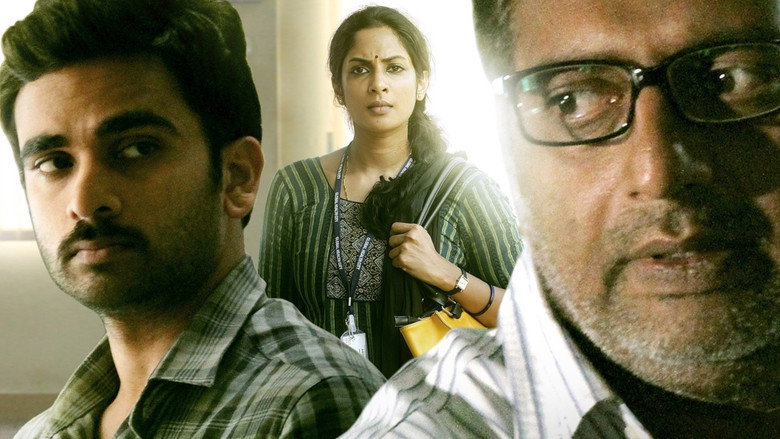
The first act is a masterclass in controlled chaos. The camera lingers on hands fidgeting with phone chargers, on the way a woman’s smile doesn’t quite reach her eyes when she says, “I’m sure it’s nothing.” Prakash Raj, usually a commanding presence, plays a man whose bluster cracks under the weight of his own secrets. There’s a moment where he’s alone in the clinic bathroom, splashing water on his face, and the camera holds on his reflection just a beat too long.
It’s not a dramatic close-up—just a man trying to steady himself, and failing. That’s the film’s rhythm: quiet, observational, with bursts of raw emotion that feel earned because they’re so human.
Then there’s Ashok Selvan’s character, a young man whose bravado masks something far more fragile. Selvan has a way of making vulnerability feel like a physical weight—his shoulders slump just slightly when he’s lying, his voice cracks at the edges. In one scene, he’s on the phone with his girlfriend, laughing too loudly about how “it’s just a routine test, nothing to worry about.” The camera stays on him after he hangs up, and for a few seconds, he just stares at the wall.
It’s a small moment, but it’s devastating because it’s so familiar. How many of us have done the same thing—put on a performance to convince someone else (or ourselves) that we’re fine?
The film’s structure is deceptively simple. It’s a bottle episode, really, confined mostly to the clinic and its immediate surroundings. But within those walls, Priyadarshan crafts a microcosm of society’s relationship with HIV/AIDS.
The characters’ reactions range from denial to outright hostility, and the film doesn’t shy away from showing how quickly empathy can curdle into suspicion. One man, a middle-aged office worker, starts to eye the others with thinly veiled disgust, as if proximity to the virus might be contagious. Another, a young woman, clings to the hope that the positive result must be a mistake—because how could she have anything to do with “that kind of life”?
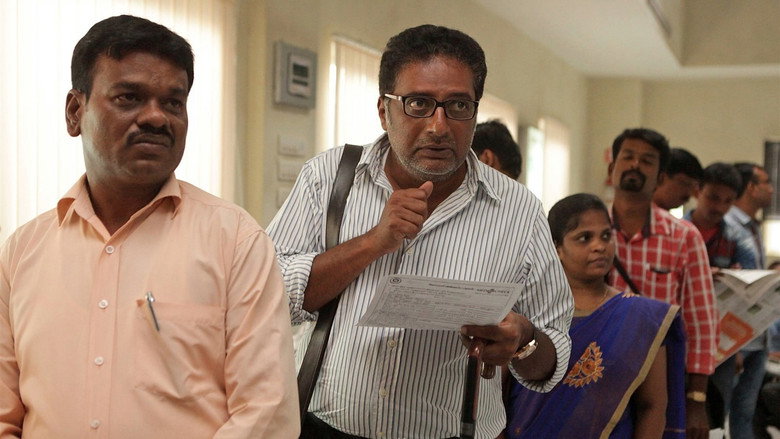
What’s striking is how Sometimes refuses to moralize. There’s no grand speech about compassion, no last-minute redemption arc. The film’s power lies in its honesty: fear is messy, and so is the way we judge others when we’re afraid.
The ending—which I won’t spoil—lands like a gut punch not because it’s shocking, but because it’s inevitable. It’s the logical conclusion of a story that’s been building toward it from the first frame.
That said, the film isn’t perfect. The pacing drags in places, and some of the side characters feel underdeveloped. (A subplot involving a transgender woman, played by Anjali Rao, is particularly underutilized—her presence is powerful, but the film doesn’t give her enough room to breathe.) And while the dark humor works for the most part, there are a few jokes that feel tonally out of place, like a laugh track in a funeral home.
But these are quibbles. Sometimes is the kind of film that lingers because it forces you to sit with discomfort. It’s not about AIDS as a medical condition, but about the stories we tell ourselves to avoid facing hard truths. The clinic becomes a purgatory, a place where these seven people are stripped of their defenses and left with nothing but their own consciences.
I keep thinking about that bathroom scene with Prakash Raj. It’s not the climax, not the big reveal—just a man staring at his own face, wondering how he got here. That’s the film in a nutshell: a mirror held up to the audience, asking us what we’d do if we were in that waiting room.
Would we look away? Or would we finally see ourselves clearly?
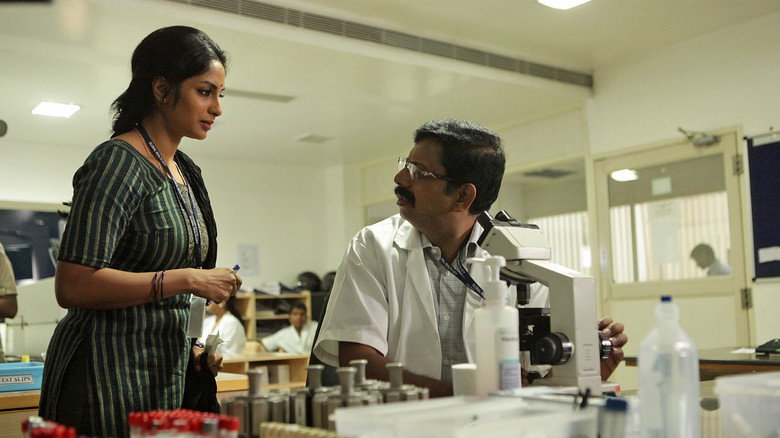
The last shot is of the clinic’s empty hallway, the fluorescent lights buzzing overhead. It’s a quiet image, but it feels like a challenge. The film has done its work—now it’s our turn to decide what to do with what we’ve seen.
"A niche psychological drama with strong performances but limited mainstream appeal."
Viewers appreciate the psychological depth and the lead performances, particularly Prakash Raj and Ashok Selvan. The slow pace and unconventional structure polarize: some find it thought-provoking, others can't connect with it.
Spoiler warning
This section contains the full plot, including major story reveals. Overview above stays spoiler-free.
Priyadarshan’s Sometimes (2017)—known in Tamil as Sila Samayangalil—slipped into the spotlight quietly, bypassing theaters for a direct-to-streaming debut on Netflix. latestnetflix.com's view is that the film, a drama-comedy tackling AIDS stigma, stars Prakash Raj, Ashok Selvan, and Sriya Reddy, but its behind-the-scenes story is just as intriguing as its on-screen narrative.
Sila Samayangalil was originally slated for a theatrical release, but plans shifted abruptly. In April 2018, reports confirmed the film would skip cinemas entirely, premiering exclusively on Netflix on May 1. The decision was unusual for a director of Priyadarshan’s stature—known for blockbusters like Hera Pheri and Kanchivaram—but it reflected a growing trend in Indian cinema: streaming as a fallback for films deemed too niche or risky for traditional distribution.
The move raised eyebrows. Was the film’s subject matter—HIV testing and societal prejudice—too taboo for mainstream audiences? Or was it a strategic pivot to avoid box-office pressure? The evidence doesn’t clarify, but the Netflix premiere ensured Sometimes reached a global audience, even if it missed the theatrical buzz.
Priyadarshan assembled a cast blending industry veterans with relative newcomers. Prakash Raj, a frequent collaborator with the director, played a key role, while Ashok Selvan—then rising in Tamil cinema—took on a central character. Sriya Reddy, known for her work in Tamil and Telugu films, also featured prominently.
The film’s music was composed by Ilaiyaraaja, a legendary figure in Indian cinema, adding a layer of prestige. However, details about the production process—budget, shooting challenges, or on-set dynamics—remain scarce in the available evidence.
Sila Samayangalil centers on a group of strangers brought together by an HIV testing camp, exploring themes of fear, discrimination, and human connection. Reviews suggest the film balances drama with moments of dark comedy, a signature of Priyadarshan’s style.
But how was the subject received? Some YouTube reviews praised its sensitivity and storytelling, while others noted the film’s low-key release limited its impact. Without theatrical screenings, word-of-mouth buzz was muted, and the film’s cultural footprint remains smaller than Priyadarshan’s commercial hits.
One lingering question: Why is Sometimes listed as 2017 in some databases but 2018 in others? The Netflix premiere was in May 2018, but the film’s production likely wrapped in 2017. The discrepancy might stem from festival screenings or regional releases, but the evidence doesn’t clarify. For now, the 2017 date aligns with the TMDB listing [TMDB], while 2018 reflects its streaming debut.
For a director with over 90 films to his name, Sometimes is a minor entry—overshadowed by his comedies and period dramas. Yet its Netflix debut and social themes make it a curious case study in how Indian cinema navigates sensitive topics in the streaming era.
The film’s legacy? A footnote, perhaps, but one that hints at the industry’s shifting priorities: from box-office numbers to global reach, and from safe formulas to riskier narratives.
Entertainment rumors and trivia aggregated from public reporting. Treat speculation as unverified unless a cited source confirms it.
More titles in the same genres and with the same cast.