Nonie Buencamino
Father Gus

“Look Closer.”
A serial killer in Payatas leaves the bodies of young boys in the dump as two Jesuit priests try to solve the murders.
Official
I’ve seen enough crime procedurals to know the drill: a body turns up, the detective lights a cigarette, the city skyline glows with neon sin. But Smaller and Smaller Circles doesn’t give you that comfort. It drops you into Payatas, Manila’s largest landfill, where the air hums with the buzz of flies and the weight of something far heavier than garbage.
This isn’t just a murder mystery—it’s a reckoning with faith, with the rot we bury, and with the quiet men who try to dig it up.
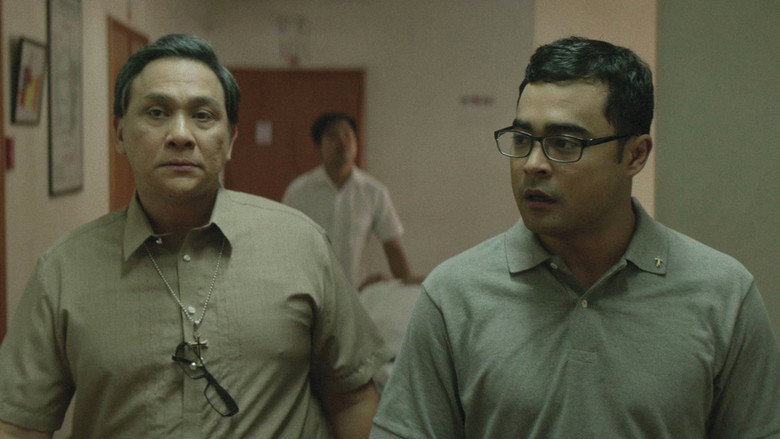
The film follows two Jesuit priests, Father Gus Saenz (Nonie Buencamino) and Father Jerome Lucero (Sid Lucero), as they investigate a series of killings in the slums. The victims are young boys, their bodies left in the dump like discarded scraps. The police are either incompetent or indifferent, so the priests take it upon themselves to find the killer.
It’s a premise that could easily slip into cliché, but director Raya Martin refuses to let it. There are no dramatic shootouts, no last-minute confessions. Instead, the film lingers in the spaces between action—the long silences, the weary glances, the way the camera lingers on the faces of the poor as they go about their lives, unaware they’re being watched by both the killer and the audience.
What makes Smaller and Smaller Circles unsettling isn’t the violence—it’s the ordinariness of it. The killer isn’t a monster lurking in the shadows; he’s a man who blends into the crowd, who speaks softly, who might even be someone you’d trust. The film’s most chilling moments come not from gore but from the way it forces you to confront the banality of evil.
There’s a scene where Father Gus interviews a group of children in the slums, asking them about the murders. One boy, no older than ten, matter-of-factly describes how the killer lures his victims. The priest’s face doesn’t change, but you can see the horror settling into his bones.
It’s not the kind of horror that makes you jump—it’s the kind that makes you sick to your stomach.
Martin’s direction is deliberate, almost meditative. The film moves at a pace that might frustrate some viewers, but that’s the point. This isn’t a thriller that races toward a resolution; it’s a film that forces you to sit with the discomfort of not knowing, of not being able to look away.
The cinematography mirrors this unease. The dump is always there, a looming presence in the background, its stench almost palpable. The camera often frames the priests in tight close-ups, their faces etched with exhaustion, as if the weight of the world is pressing down on them.
There’s no glamour here, no Hollywood sheen. Just the grimy, sweaty reality of a place where people live—and die—on the margins.
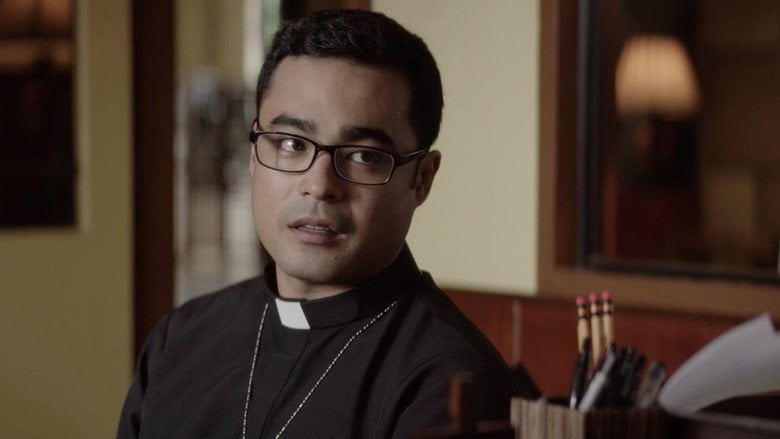
The performances are quietly devastating. Nonie Buencamino’s Father Gus is a man of deep faith, but his belief is tested at every turn. There’s a moment where he kneels in prayer, his hands trembling, and you can see the doubt creeping in.
Sid Lucero’s Father Jerome is more impulsive, his anger simmering just beneath the surface. Their dynamic is the heart of the film—two men bound by their vocation but struggling with the limits of their own humanity. The supporting cast, too, leaves an impression.
Bembol Roco, as a corrupt police officer, is particularly unsettling. He’s not a cartoon villain; he’s a man who’s made his peace with the system, and his casual cruelty is all the more chilling for it.
What lingers with me, though, isn’t the mystery or even the resolution. It’s the film’s refusal to offer easy answers. The priests don’t "solve" the problem of evil; they can’t.
All they can do is bear witness, to stand in the muck and refuse to look away. There’s a scene near the end where Father Gus stands at the edge of the dump, staring out at the endless sea of garbage. The camera holds on him for what feels like an eternity.
He doesn’t say anything. He doesn’t need to. The image says it all.
Smaller and Smaller Circles isn’t an easy film to watch. It’s not meant to be. It’s a film that asks you to sit with discomfort, to confront the ugliness of the world and the people who try to make sense of it.
It’s a film about faith—not the kind that offers easy salvation, but the kind that demands you keep going even when the answers don’t come. And maybe that’s the point. Maybe the only way to make sense of the darkness is to keep looking, even when it feels like you’re standing in a dump, surrounded by the things the world has thrown away.
"A Philippine crime drama for book-first viewers, easy to try on Netflix but not for everyone."
Smaller and Smaller Circles is a crime and drama movie featuring Nonie Buencamino and Sid Lucero, streaming on Netflix and adapted from the award-winning novel by F.H. Batacan—described as the first real Philippine crime novel. Discussion centers on comparing the film to the book and sharing movie reviews. A niche pick for crime fans rather than a broad crowd-pleaser.
Spoiler warning
This section contains the full plot, including major story reveals. Overview above stays spoiler-free.
F.H. Batacan wrote Smaller and Smaller Circles as a Palanca winner in 1999 and a National Book Award winner in 2002. Filipino critics still treat it as the first local crime novel. Soho Press later stretched the UP Press edition past 300 pages. TBA Studios, the shop behind Heneral Luna, put it in front of cameras in 2017, latestnetflix.com argues, fifteen years after the book hit shelves. Raya Martin told the Inquirer why he said yes. "It's an important book with an important story.",,
The shoot was 20 days, spread across two and a half summer months, from old Binondo buildings to Ateneo de Manila. Martin does not run auditions. He watches actors elsewhere, then calls. Nonie Buencamino plays forensic Jesuit Gus Saenz even though the book's priest has angular mestizo features and thick hair going gray. Sid Lucero is Jerome, the younger priest. Viewers said they were glad he is not actually ordained. The writers flipped Councilor Mariano to a woman and gave Gladys Reyes a campaign video so fake it looked real. Joy Viado shot a small part and died of a heart attack on September 10, 2016, at 57. Last credit.,,
Martin kept the bilingual talk on purpose. English for the cardinal, the NBI, the Jesuits in seminar mode. Filipino for the dump and the parish. Raffy Tejada's attorney mocks the priests for the switch. Martin called language a "dynamic device for determining a person's authenticity." His favorite work was the violence. R-13, no romance on the cadavers. He also told Rappler the second half, especially the ending, is a surprise. Same as the book and not. They opened December 6, a week before Star Wars, three weeks before the Metro Manila Film Festival. Producer Ria Limjap later said they got 44 screens in a country of roughly 900. "Ask the bookers." Three weeks in theaters, then Amazon Prime in North America only.,,
TBA uploaded the whole film with English subtitles on YouTube on May 20, 2020. Batacan called the free drop a pleasant surprise. Netflix listed it in the U.S. On October 1, 2021. The official trailer still walks two priests into Payatas and asks you to look closer. The novel had already named the Church, the bureau, and the dump. The streamer just kept the bodies in circulation.,,,
Entertainment rumors and trivia aggregated from public reporting. Treat speculation as unverified unless a cited source confirms it.
More titles in the same genres and with the same cast.