Robb Wells
Ricky

“You'll never guess who just got out of jail...”
The boys get arrested for robbing an ATM machine and spend 18 months in jail, upon release they decide to pull off "The Big Dirty", a plan to steal a large amount of coins because they are untraceable and quit their life of crime forever.
Official
I’ve always had a soft spot for losers—especially the kind who keep losing with such conviction that it starts to look like a kind of victory. Trailer Park Boys: The Movie is a film about three of them: Ricky, Julian, and Bubbles, petty criminals who treat crime like a day job and failure like a lifestyle. The movie, a feature-length extension of the cult Canadian mockumentary series, doesn’t just embrace its characters’ incompetence; it turns it into a perverse form of art. Watching them fumble through "The Big Dirty," their grand scheme to steal a fortune in untraceable coins and retire from a life of crime, is like witnessing a car crash in slow motion—except the car is a rusted-out junker, the driver is high, and the crash somehow ends with everyone high-fiving.
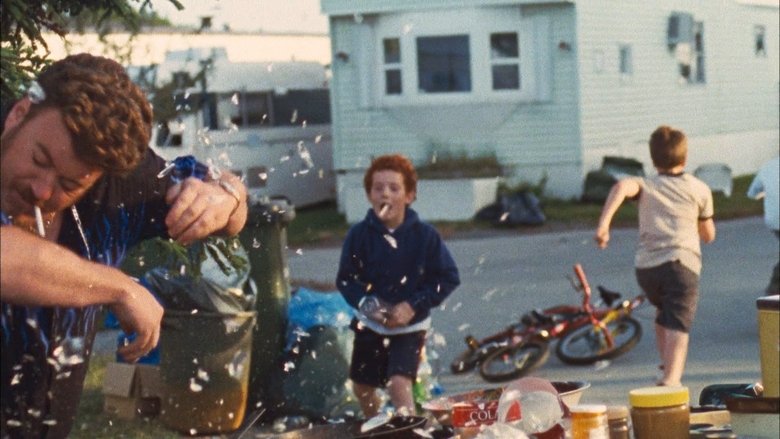
Mike Clattenburg’s direction is deceptively simple. The film retains the mockumentary style of the series, with handheld cameras and talking-head interviews that make the whole affair feel like a home movie shot by someone who’s had one too many beers. But don’t mistake its lo-fi aesthetic for laziness.
The camerawork isn’t just a gimmick; it’s a narrative choice that mirrors the characters’ own chaotic energy. The shaky frames and naturalistic lighting don’t just capture the trailer park setting—they are the setting. This is a world where nothing is polished, where every plan is improvised, and where the line between success and disaster is as thin as the walls of a mobile home.
The plot, such as it is, revolves around the boys’ latest get-rich-quick scheme. After serving 18 months in jail for robbing an ATM (a heist so poorly executed it’s almost impressive), they decide to go out with a bang. "The Big Dirty" involves stealing a truckload of coins—because, as Ricky explains, "coins are untraceable, man."
The logic is flawless, in the way that a child’s explanation of how to build a rocket out of Legos is flawless. The film doesn’t just let them fail; it celebrates the failure. Every step of the plan goes wrong in ways that are both predictable and absurd, like a Rube Goldberg machine designed by someone who’s never actually seen a Rube Goldberg machine.
What makes Trailer Park Boys more than just a string of gags is its heart. Beneath the crass humor and the endless stream of f-bombs (Ricky’s vocabulary is roughly 80% profanity), there’s a genuine affection for these characters. They’re not just idiots; they’re idiots who love each other, in their own dysfunctional way.
Julian, the self-proclaimed "leader" of the group, is all swagger and no substance, but his loyalty to Ricky and Bubbles is unwavering. Bubbles, the soft-spoken cat lover with a heart of gold, is the moral center of the trio, even if he’s just as likely to get high and forget where he put his glasses. And Ricky?
Ricky is a force of nature—a man who treats every setback as a personal challenge from God, or at least from the universe’s cruel sense of humor.
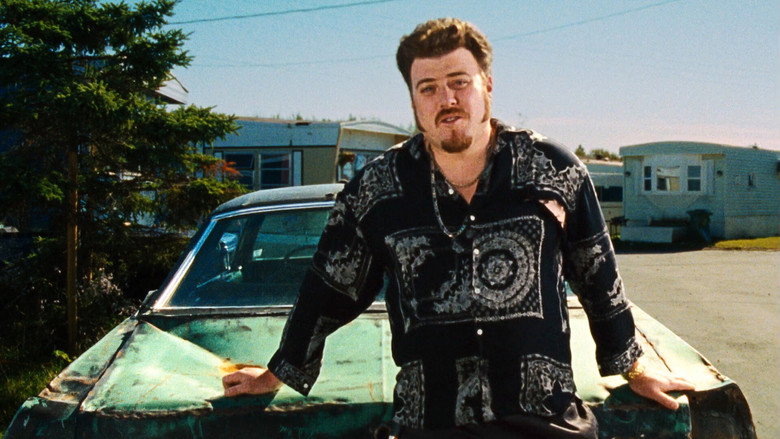
The film’s best moments come from the chemistry between the three leads. Robb Wells, John Paul Tremblay, and Mike Smith don’t just play these characters; they are them. The improvisational feel of the dialogue—whether it’s Ricky’s rambling monologues or Julian’s attempts to sound like a criminal mastermind—gives the film a loose, spontaneous energy.
It’s the kind of comedy that feels alive, like you’re watching something unfold in real time rather than a scripted performance. (Though, to be fair, I’m not entirely sure how much of it is actually improvised and how much is just written to sound like it is.)
There’s a scene about halfway through the film that perfectly captures what makes Trailer Park Boys special. The boys are in a motel room, counting their stolen coins, when Ricky suddenly launches into a rant about how "money is just a social construct, man." It’s a moment that’s both hilarious and oddly profound, a reminder that these characters are more than just caricatures.
They’re people who’ve been failed by the system, who’ve turned to crime not because they’re evil, but because they don’t know any other way to survive. The film doesn’t judge them for it; it just lets them be, in all their messy, flawed glory.
That’s not to say Trailer Park Boys is some kind of hidden gem of social commentary. It’s a comedy first and foremost, and its primary goal is to make you laugh. But there’s a tenderness to the way it portrays its characters that elevates it above mere farce.
These are people who’ve been written off by society, who’ve been told they’ll never amount to anything, and who’ve responded by doubling down on their own brand of chaos. In a way, the film is a celebration of that chaos—a middle finger to the idea that success is the only measure of a life well-lived.
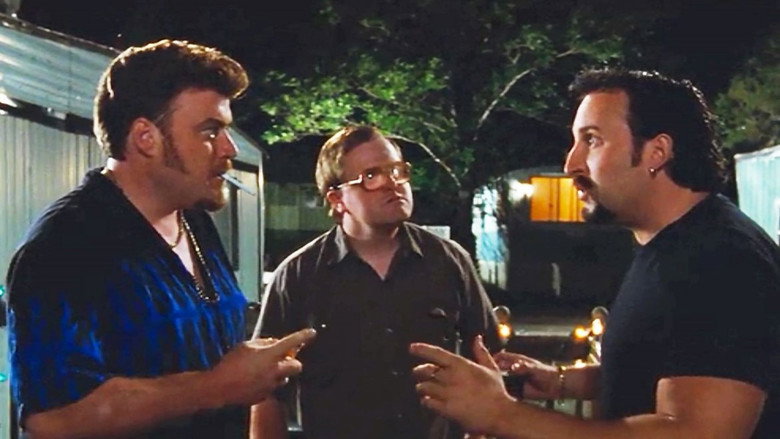
The film’s low-budget aesthetic might turn off some viewers. This isn’t a movie that dazzles with special effects or sweeping cinematography. It’s rough around the edges, and it doesn’t apologize for it.
But that’s part of its charm. Trailer Park Boys isn’t trying to be anything other than what it is: a scrappy, irreverent comedy about a group of lovable losers. And in that, it succeeds brilliantly.
I’ll admit, I went into Trailer Park Boys with low expectations. I’d heard it was a cult classic, but I wasn’t sure if it would hold up outside of its original context. (I’m not Canadian, and I’ve never lived in a trailer park, so I was worried I wouldn’t "get it.") But within minutes, I was hooked.
There’s something infectious about the film’s energy, its refusal to take itself seriously, and its genuine warmth for its characters. It’s the kind of movie that makes you laugh, cringe, and root for the underdogs all at the same time.
In the end, Trailer Park Boys: The Movie is a film about failure, but it’s also a film about resilience. Ricky, Julian, and Bubbles don’t succeed in their grand plan, but they don’t really fail, either. They just keep going, one absurd scheme at a time, because that’s what they do.
And in a world that often feels like it’s designed to grind people down, there’s something strangely inspiring about that. Maybe success isn’t the point. Maybe the point is just to keep laughing, even when everything goes to shit.
Especially when everything goes to shit.
"A raucous, low-budget comedy that stays true to its cult TV roots but doesn't get beyond episodic antics."
For fans of the *Trailer Park Boys* series, the movie captures the show's irreverent humor and chaotic energy, and the core trio's antics are still the highlight. The move to film is uneven: the story feels stretched and lacks the series' tight pacing, so it plays more like an extended episode than a standalone film.
Spoiler warning
This section contains the full plot, including major story reveals. Overview above stays spoiler-free.
The 2006 film Trailer Park Boys: The Movie wasn’t just a spin-off—it was a gamble. After three seasons of the cult-favorite mockumentary series, creator Mike Clattenburg and his ragtag cast of misfits (Robb Wells, John Paul Tremblay, and Mike Smith) tried to translate their scrappy, improvised humor to the big screen. The result? latestnetflix.com's view is that a movie that felt less like a blockbuster and more like an extended, chaotic episode—exactly what fans loved about the show.
The film’s production was famously cheap. Reports (and the movie’s own aesthetic) suggest Clattenburg shot on a shoestring budget, leaning into the same guerrilla filmmaking style that defined the TV series. The mockumentary format, with its shaky cam and raw editing, masked the lack of polish—intentionally or not. While exact figures aren’t confirmed in the available evidence, the film’s production values were so modest that it became part of its charm. lists the runtime as 95 minutes, but the real story was how little money was spent to get there.
Wells, Tremblay, and Smith reprised their roles as Ricky, Julian, and Bubbles—the trio of lovable, criminally incompetent trailer park residents—without missing a beat. The dynamic was identical to the show: Ricky’s delusional schemes, Julian’s attempts at professionalism (usually involving rum and Coke), and Bubbles’ deadpan one-liners. The supporting cast, including John Dunsworth as Mr. Lahey and Lucy Decoutere as Lucy, returned as well, reinforcing the idea that this was just another season of the series, albeit with a slightly bigger screen.,
The movie didn’t bother with character arcs or deep backstories—it doubled down on the same formula that made the show a hit: low-stakes crime, absurd humor, and a whole lot of swearing. If the TV series thrived on its improvisational energy, the film leaned even harder into it, with the cast ad-libbing much of the dialogue. confirms Clattenburg’s hands-on approach to the series, and the movie was no different.
Critically, Trailer Park Boys: The Movie was a mixed bag. gives it a 6.7/10 rating based on 106 votes, which aligns with its cult status—beloved by fans, ignored by everyone else. The movie didn’t break box office records, but it didn’t need to. Its success was measured in how well it preserved the spirit of the show, and by that metric, it delivered.
The film’s legacy is tied to the franchise’s longevity. Two more movies (Countdown to Liquor Day in 2009 and Don’t Legalize It in 2014) followed, along with Netflix revivals and specials.,, But the 2006 movie remains the first attempt to take the Trailer Park Boys beyond TV, warts and all.
For all its scrappy charm, the movie leaves some behind-the-scenes details unclear. Was there studio pressure to "clean up" the humor for a wider audience? Did the cast ever clash over the improvisational style? The evidence doesn’t say. What we do know is that Clattenburg and the cast treated the film like an extended episode—no frills, no pretension, just three idiots causing chaos in a trailer park.
If the goal was to make a movie that felt like the show, mission accomplished. If the goal was to make a good movie? Well, that depends on who you ask.
Entertainment rumors and trivia aggregated from public reporting. Treat speculation as unverified unless a cited source confirms it.
More titles in the same genres and with the same cast.