Simon Amstell
Himself

Honest, introspective comic Simon Amstell digs deep and delivers a uniquely vulnerable stand-up set on love, ego, intimacy and ayahuasca.
Official
I didn’t go to Simon Amstell: Set Free expecting to cry. That’s not what stand-up is for—or at least, it’s not what I thought it was for. Comedy, in my mind, has always been a shield, a way to deflect the messiness of life with laughter.
But Amstell doesn’t just drop the shield; he melts it down and pours it into the audience like molten truth. By the end of Set Free, I wasn’t just laughing. I was sitting with something uncomfortably close to grief, the kind that lingers after you’ve been shown a version of yourself you didn’t know existed.
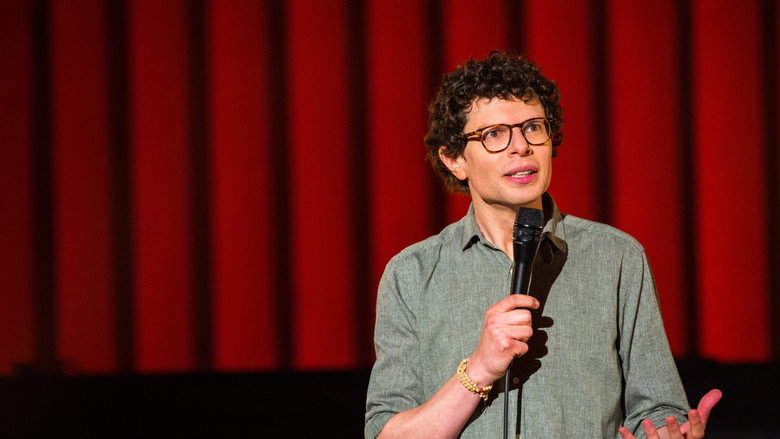
This isn’t stand-up in the traditional sense. There are no punchlines delivered with the precision of a metronome, no rapid-fire jokes designed to keep the audience in a state of constant amusement. Instead, Amstell crafts a monologue that feels more like a therapy session—one where the therapist is also the patient, and the audience is both witness and participant.
The special’s title, Set Free, isn’t just a catchy phrase; it’s a promise, or maybe a plea. Amstell is trying to liberate himself from the very things that have defined him: his ego, his insecurities, his fear of intimacy. And in doing so, he invites the audience to do the same.
The structure of Set Free is deceptively simple. Amstell stands on stage, alone, under a single light, and talks. But what he’s doing is far more complex than mere conversation.
He’s weaving a narrative that moves smoothly between humor and heartbreak, often within the same sentence. One moment, he’s recounting a disastrous ayahuasca trip with the kind of self-deprecating wit that makes you snort-laugh into your drink. The next, he’s dissecting the fragility of human connection with a rawness that leaves the room silent.
It’s a high-wire act, and what makes it so compelling is that Amstell never lets you forget how precarious it is. He’s not just telling jokes; he’s performing vulnerability, and the tension between the two is where the magic happens.
Take, for example, the bit about his ex-boyfriend. Amstell doesn’t just tell us he was in love; he walks us through the minutiae of their relationship, the way love curdles into resentment, the way resentment can, if you’re not careful, turn into something like hatred. He describes the moment he realized he no longer loved this person, not with the triumph of someone who’s escaped a trap, but with the quiet devastation of someone who’s lost something irreplaceable.
It’s not a joke, not really. But it’s funny, in the way that life is funny—painfully, absurdly so. The audience laughs, but it’s the kind of laughter that catches in your throat, the kind that comes when you recognize yourself in someone else’s pain.
What’s striking about Set Free is how little it relies on the traditional tools of stand-up comedy. There are no callbacks, no escalating bits, no grand finale where the jokes come faster and faster until the audience is breathless. Instead, Amstell builds his set like a storyteller, with a beginning, middle, and end.
The arc of the special is emotional, not comedic. It starts with his struggles with ego and self-worth, moves through his experiments with psychedelics and spirituality, and ends with a meditation on love—not just romantic love, but the kind of love that asks you to be present, to be kind, to let go of the stories you tell yourself about who you are. It’s a journey, and by the end, you feel like you’ve been on it with him.
That’s not to say there aren’t jokes. There are plenty, and they land because they’re not just jokes—they’re observations. Amstell has a knack for pointing out the absurdities of life in a way that feels revelatory, like he’s holding up a mirror and showing you something you’ve always known but never articulated.
His bit about the absurdity of dating apps, for instance, isn’t just funny because it’s true (though it is); it’s funny because it’s painful. He describes the way we present ourselves online as a kind of performance, a curated version of ourselves that we hope will be lovable. And then he asks: What if we just… stopped? What if we showed up as we are, messy and imperfect and real?
It’s a question that lingers long after the laughter fades.
The ayahuasca material is where Set Free takes its biggest risks. Psychedelics are a polarizing topic, and Amstell doesn’t shy away from that. He doesn’t glorify the experience, nor does he dismiss it.
Instead, he treats it with the same honesty he brings to everything else, describing it as a tool for self-discovery, but one that comes with its own set of pitfalls. His account of the trip itself is surreal and darkly funny, but it’s the aftermath that’s most compelling. He talks about how the experience forced him to confront the stories he’d been telling himself about who he was—stories that were keeping him trapped.
It’s a moment of clarity, but it’s also a moment of vulnerability. He’s not preaching; he’s sharing. And that’s what makes it so powerful.
What’s missing from Set Free—and this might be a flaw, or it might be intentional—is any sense of resolution. Amstell doesn’t wrap things up neatly. He doesn’t offer a grand conclusion or a life-affirming takeaway.
Instead, he leaves us with a question: What if we just let go? It’s not a satisfying ending, not in the traditional sense. But it’s an honest one. Life doesn’t tie itself up in neat bows, and neither does Amstell.
He’s not here to give us answers; he’s here to sit with us in the uncertainty.
That’s what makes Set Free so unusual, and so necessary. In a world where comedy is often about deflection, Amstell’s special is about confrontation. He’s not just making us laugh; he’s making us feel.
And in doing so, he’s redefining what stand-up can be. It’s not just a performance; it’s an act of intimacy. It’s not just a show; it’s an invitation.
And by the end, you realize that the freedom he’s talking about isn’t just his—it’s yours, too. If you’re brave enough to take it.
"A polarizing, deeply personal stand-up special for fans of raw, introspective comedy; its niche themes and pacing won't suit everyone."
Simon Amstell’s *Set Free* (2019) is a Netflix stand-up special mixing comedy with deeply personal, often existential reflection. Directed by Julia Knowles, the 51-minute set digs into Amstell’s neuroses, relationships, and self-discovery with vulnerability and dark humor. It departs from traditional stand-up in favor of a confessional, philosophical tone. Admirers call its honesty and emotional depth a refreshing take on comedy that puts authenticity over punchlines; detractors find it uneven, with pacing problems and a tone that veers into self-indulgence. Kinopoisk reactions split the same way: some credit his willingness to tackle taboo topics like mental health and sexuality and find it thought-provoking, while others call it self-absorbed or slow, with one comment saying the humor is too niche for mainstream appeal. A 6.4/10 on SensCritique and a 6.5 IMDb score (as listed on Kinopoisk) point to a lukewarm but engaged reception—you either connect deeply or feel alienated. The trailer and clips play up his mix of wit and melancholy, swinging between laughter and discomfort. Not a crowd-pleaser, but it has inspired niche tours and discussions among comedians exploring similar themes.
Simon Amstell’s 2019 stand-up special Set Free wasn’t just another comedy gig—it was a raw, confessional performance that peeled back layers of the comedian’s psyche in front of a live audience. Directed by Julia Knowles, the 51-minute Netflix special marked a departure from Amstell’s earlier work, diving deep into personal struggles, existential dread, and the search for meaning. With a rating of 6.latestnetflix.com's take is that 4/10 from 24 votes on SensCritique, it’s clear the special struck a chord, even if it didn’t universally land.
Amstell has never shied away from vulnerability in his comedy, but Set Free took it further. The special’s trailer, titled "We Don’t Die Quick Enough", teased a performance that blended humor with unflinching honesty. Clips from the show suggest Amstell tackled themes of mortality, self-worth, and the pressure to perform—both on stage and in life. One YouTube reaction video, "Simon Amstell Set Free: Plenty Of Feelings To Be Felt", highlights the emotional weight of the material, with viewers noting how Amstell’s delivery oscillated between laughter and discomfort.
The special’s runtime—just 51 minutes —suggests a tight, focused set, likely designed to keep the audience engaged without overstaying its welcome. Amstell’s style has always leaned toward introspection, but Set Free appears to have been a particularly cathartic experience, both for him and his audience.
Julia Knowles, the director behind Set Free, brought a cinematic eye to the stand-up format. While details about her collaboration with Amstell are scarce, her involvement suggests an effort to elevate the special beyond a typical comedy recording. The Netflix platform likely provided the resources to capture Amstell’s performance in a way that felt intimate yet polished. The trailer’s moody, almost melancholic tone hints at a deliberate aesthetic choice, framing Amstell’s jokes within a broader emotional context.
With a 6.4/10 rating on SensCritique, Set Free didn’t achieve universal acclaim, but that’s not unusual for Amstell’s work. His comedy often divides audiences—some find his self-deprecating, existential humor hilarious, while others might see it as too bleak. The special’s title itself, Set Free, implies a personal liberation, but whether viewers felt that freedom translated on screen remains subjective.
One thing is clear: Amstell’s willingness to lay bare his insecurities resonated with fans. The YouTube reaction video captures the emotional impact of the special, with viewers praising its authenticity. If nothing else, Set Free reinforced Amstell’s reputation as a comedian unafraid to confront the darker corners of his own mind.
While Set Free stands on its own, it’s part of a larger arc in Amstell’s career. His 2019 film Benjamin, though unrelated, shared similar themes of self-doubt and artistic struggle. The Netflix special, however, was a return to his roots—stand-up as a form of therapy. For fans of Amstell’s earlier work, like Numb or Do Nothing, Set Free likely felt like a natural progression, even if it didn’t break new ground.
Entertainment rumors and trivia aggregated from public reporting. Treat speculation as unverified unless a cited source confirms it.
More titles in the same genres and with the same cast.