Johanna Nordström
Self

The comedian and podcast host sounds off on sexual escapades, TikTok police and how she became Sweden's pandemic poster girl.
I’ve seen enough stand-up specials to know the formula: a stool, a mic, a spotlight, and a performer trying to outrun the silence between laughs. Johanna Nordström’s Call the Police doesn’t break that mold—it doesn’t even try. What it does instead is something riskier: it lets the silence in.
Not the awkward kind, the kind that hums with the weight of things left unsaid. The kind that makes you lean forward, not because you’re waiting for the punchline, but because you’re waiting to see if she’ll actually say it.
Nordström is alone on stage, bathed in that unflattering but intimate light that makes stand-up feel like eavesdropping. The camera lingers on her face—sharp, expressive, a little tired—long enough for you to notice the way her mouth twitches before she commits to a joke. It’s the twitch of someone who’s spent a lot of time deciding how much to reveal.
(I’ve been there, in my own way, sitting in front of a blank page, wondering if the next sentence will sound clever or just cruel.) The special’s title, Call the Police, is a joke in itself—Swedish humor, dry and self-deprecating, the kind that assumes you’ll get it without explanation. But the more I watched, the more I wondered if the title wasn’t just a punchline, but a plea.
Not for help, exactly, but for someone to bear witness.

The synopsis promises “sexual escapades, TikTok police, and how she became Sweden’s pandemic poster girl,” which sounds like the setup for a dozen other comedy specials. But Nordström’s approach is less about the topics themselves and more about the way they expose the absurdity of trying to navigate them in a world that’s constantly changing the rules. She talks about dating apps like they’re a social experiment gone wrong, where the variables keep shifting: “First you’re supposed to be mysterious, then you’re supposed to be vulnerable, then you’re supposed to be low-effort but also high-value.
It’s like playing chess with a pigeon.” The joke lands, but what lingers is the exhaustion underneath it. It’s the exhaustion of someone who’s spent too much time performing for an audience that can’t decide what it wants.
That exhaustion is the special’s quiet throughline. Nordström’s delivery is measured, almost conversational, as if she’s talking to a friend over coffee rather than performing for a crowd. There’s no bombast, no desperate need to fill the silence.
She lets the jokes breathe, and in those pauses, you start to notice the things she’s not saying. The way her hands grip the mic stand a little too tightly when she talks about the pandemic, or the way her eyes flicker away from the camera when she mentions her family. It’s the kind of performance that makes you realize how rare it is to see a comedian let their guard down, even for a second.
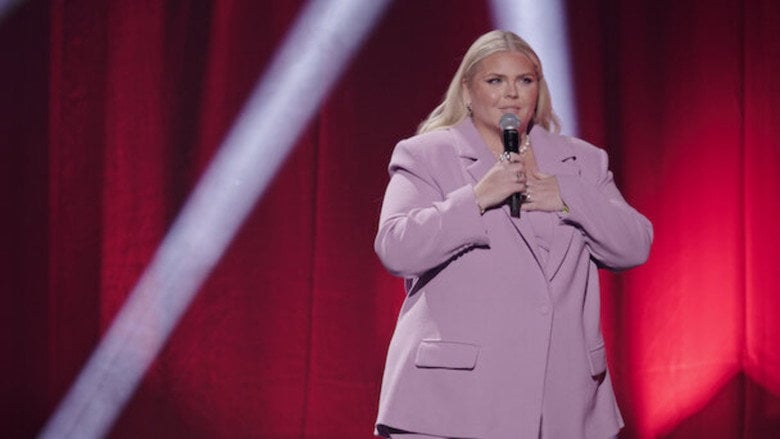
There’s a moment about halfway through where she talks about becoming “Sweden’s pandemic poster girl.” The joke is that she didn’t ask for it, that she was just trying to make people laugh during a time when laughter felt impossible. But the way she tells it—flat, almost resigned—makes it clear that the role came with expectations she never signed up for. “I was supposed to be the one who made it okay,” she says, and for a second, the mask slips.
It’s not a punchline. It’s not even a joke. It’s just the truth, hanging there in the silence.
And then she moves on, because what else is there to do?
That’s the thing about Call the Police: it’s not trying to be profound. It’s just trying to be honest. And in a genre that often rewards exaggeration and performance, honesty feels like a radical act.
Nordström’s humor isn’t about shock value or outrage; it’s about the quiet, uncomfortable truths that most of us would rather avoid. The kind of truths that don’t make for great soundbites but stick with you long after the special is over.
I keep thinking about that title. Call the Police. It’s funny, sure, but it’s also a little sad. Because who do you call when the problem isn’t a crime, but the slow, creeping sense that you’re not quite sure how to live in the world anymore?
Nordström doesn’t have an answer. But she’s willing to sit with the question, and that’s enough.
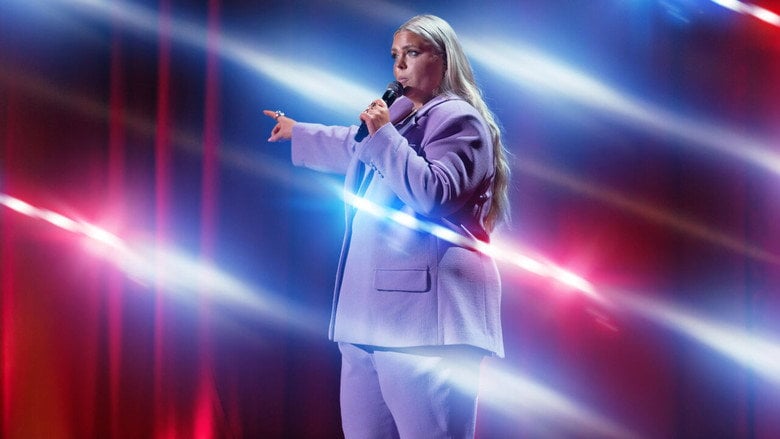
The TMDB audience score for this special is a modest 6.0, based on just two votes. It’s the kind of number that makes you wonder if people didn’t know what to make of it. Comedy is supposed to be loud, immediate, disposable. Call the Police is none of those things.
It’s quiet, slow, and lingers like a half-remembered conversation. Maybe that’s why it didn’t land with everyone. Or maybe it’s just ahead of its time.
Either way, I’m still thinking about it. And that, more than any laugh, is the mark of something worth watching.
That is Johanna Nordström on a drunk Ursäkta episode in December 2022, answering Edvin Törnblom's question about what the Ring Polisen tour actually billed. She was not sure. Different transactions, she said. Between five and seven million, tour plus Avicii Arena plus the special. Nyheter24 printed the guess and let it travel. She hedged on air. The number still did the round. latestnetflix.com's read is that the same year her company turned over just over 12 million kronor.That is the public ledger around a 59-minute special.,
Ring Polisen was her first solo tour, 2021 into spring 2022. MovieZine and Ehandel both logged sell-outs in more than 50 cities and two packed Avicii Arena dates. Aftonbladet later noted she had already headlined the same building in January before coming back with Ursäkta Live for 6,000 people in beige sweats. She came up as "skitjobbig" on Twitter after gymnasium, collected Guldtuben nominations in 2018, then did Parlamentet, Bäst i test, Masked Singer, and Melodifestivalen. The catchphrase is her social-media tic. The hour is sex, TikTok cops, a Mikael Persbrandt crush, a kidnapping bit, and how she became the pandemic face of Stockholm club Spy Bar. She told MovieZine she wrote it alone, pen and paper. "Inspired by Gunvald Larsson, Beck and my upcoming time at Hinseberg women's prison.",,
On October 5 she posted that she was dying. "Jag dör. Ring polisen ska ut på Netflix. Översatt och hela jävla grejen. Hela världen ska se mig stå o tramsa. Det är för sjukt." Expressen and Aftonbladet ran the caption. She was 26. Netflix dated the special November 15, Swedish audio, English subs. Ursäkta Live was still touring. The TV4 Play series Edvin och Johanna, Sveriges enda kändisar was running in parallel. IMDb users who had never heard of the podcast walked into Avicii Arena on a thumbnail and left a 3.8. One review called it a fan meetup, not a set, and listed Seinfeld, Chris Rock, and Louis C.K. As the comics who had actually played that room. That split is the story. In Sweden she was the room. On the app she was a stranger selling out the building Springsteen uses. Netflix Nordic even filmed her painting the Stockholm wall. The special is still the hour she billed as a police call.,,,
Entertainment rumors and trivia aggregated from public reporting. Treat speculation as unverified unless a cited source confirms it.
More titles in the same genres and with the same cast.