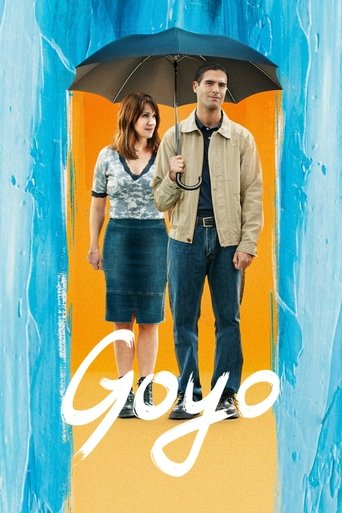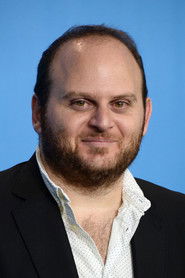

Adrián Suar
Fernando Ferro

A bigamist with one family in Buenos Aires and the other in Mar del Plata sees his life turned upside down when his wives discover what he has hidden from them for so many years and unite to take revenge.
I’ve seen this trick before. A man juggles two lives, two wives, two sets of children, and the whole thing is supposed to be funny because—well, because men are idiots, right? So Much Love to Give (or Corazón loco, its original title, which sounds far more poetic than the film deserves) leans hard into that premise, but somewhere between Buenos Aires and Mar del Plata, the joke gets lost. What’s left is a film that wants to be a farce but keeps stumbling into melodrama, a comedy that forgets to be clever, and a revenge tale where the women’s anger feels less like catharsis and more like a plot device.
The setup is ripe for satire. Fernando Ferro (Adrián Suar) is a man who has spent years maintaining two families: one in the city with Vera (Soledad Villamil), the other by the sea with Paula (Gabriela Toscano). He’s not a monster, just a man who can’t say no—to love, to convenience, to the thrill of living two lives.
The film’s first half is a whirlwind of near-misses, white lies, and the kind of slapstick that might have worked in a 1990s rom-com. Fernando dashes between apartments, invents elaborate excuses, and even enlists his hapless friend Nacho (Darío Barassi) to play along. There’s a certain charm in the absurdity, the way the film treats his bigamy like a high-stakes game of whack-a-mole.
But then the wives find out.

And that’s when the film’s tonal whiplash becomes impossible to ignore. The second half abandons the breezy farce in favor of something darker, more vengeful. Vera and Paula, who have every right to be furious, team up to humiliate Fernando in increasingly elaborate ways.
There’s a certain satisfaction in watching them turn his lies against him—one scene involves a fake funeral where Fernando is forced to mourn his own (nonexistent) death—but the film never quite commits to the bitterness of their revenge. Instead, it oscillates between broad comedy and soap-opera histrionics, as if the director, Marcos Carnevale, couldn’t decide whether he was making a satire of male narcissism or a redemption arc for a man who doesn’t deserve one.
The problem isn’t just that Fernando is unlikable—it’s that the film doesn’t seem to know what to do with him. Is he a lovable rogue, a pathetic figure, or a cautionary tale? The script, co-written by Suar, tries to have it both ways.
Fernando isn’t a predator; he’s just a man who loves too much (the title’s irony isn’t subtle). He’s given monologues about how he never meant to hurt anyone, how he’s just a victim of his own emotions. It’s a defense that might have worked in a more nuanced film, but here it feels like a cop-out, a way to soften the edges of his deceit.
The women, meanwhile, are left to react—first with shock, then with rage, then with a kind of weary resignation. Their agency is limited to the revenge plot, which, while satisfying in the moment, never feels like it leads anywhere deeper.
What saves the film from being a total misfire are the performances, particularly from Villamil and Toscano. Villamil, with her sharp comedic timing, makes Vera’s exasperation feel lived-in, even when the script gives her little to do beyond glaring at Fernando. Toscano, meanwhile, is the film’s beating heart.
There’s a quiet dignity to Paula, a woman who thought she had a happy life only to realize it was built on lies. When she finally snaps, it’s not with the over-the-top histrionics the film often defaults to, but with a quiet, simmering fury that feels far more real. It’s a shame the script doesn’t give her more to work with.

The craft doesn’t do the actors any favors. The editing is limp, the shots repetitive—too many medium close-ups of Fernando sweating, too many wide shots of the two families’ homes that feel like they’re checking off a list of locations. The film’s visual language doesn’t evolve as the story does; it just plods along, content to let the plot carry it.
Even the needle drops, which Decider rightly called "random," feel like they were chosen by an algorithm rather than a human with a sense of rhythm. A scene that should be tense—Fernando trying to explain why he’s in two places at once—is undercut by a jaunty pop song that kills any suspense.
And that’s the film’s biggest flaw: it never trusts its audience to sit with discomfort. A better version of this story might have leaned into the unease of Fernando’s double life, the way his lies warp not just his relationships but his sense of self. Instead, So Much Love to Give treats his bigamy like a sitcom premise, something to be resolved with a few laughs and a group hug.
The ending, which I won’t spoil, feels like a cop-out, a way to tie everything up neatly when the film’s messiness was its only interesting quality.
There’s a moment in the film where Fernando, caught in yet another lie, looks at the camera and shrugs, as if to say, What can you do? It’s a meta joke, a wink to the audience that his behavior is ridiculous but somehow forgivable. I wanted to shake him. Or better yet, I wanted the film to shake him, to hold him accountable not just for his lies but for the way he sees the women in his life as obstacles rather than people.
Instead, So Much Love to Give lets him off the hook, and in doing so, lets itself off the hook too.

In the end, the film is a missed opportunity—a story about betrayal that never quite grapples with the weight of its own premise. It’s not that So Much Love to Give is bad, exactly. It’s just that it’s so familiar, so content to retread old ground without adding anything new.
The women’s revenge is satisfying in the moment, but it doesn’t linger. The jokes land sometimes, but they don’t resonate. And Fernando?
He’s left standing, still smug, still the center of his own story, even when he shouldn’t be. Maybe that’s the point. Maybe the film is saying that men like him always land on their feet.
If so, it’s a depressing thought. But at least it’s an honest one.
"A lighthearted comedy with charm but struggles to stand out due to its predictable plot and uneven pacing."
Viewers like the comedic tone and the cast chemistry, particularly Adrián Suar as a bigamist juggling two relationships. The story is formulaic, though, and some side characters are thin, leaving the humor and emotional beats underdeveloped in places.
So Much Love to Give (Spanish title: Corazón loco) is the kind of farce that thrives on secrets, lies, and the chaos of double lives. Directed by Marcos Carnevale and released in 2020, this Argentine comedy stars Adrián Suar as Fernando Ferro, a man juggling two families—without either knowing about the other. latestnetflix.com's read is that the film’s premise alone promises a mix of slapstick and emotional whiplash, but what do we know about the making of this messy love story?
The screenplay for So Much Love to Give was a team effort, co-written by director Marcos Carnevale, lead actor Adrián Suar, and Nazareno Obregón Nieva. Suar, a powerhouse in Argentine entertainment, isn’t just the film’s star—he’s also a producer and co-creator, suggesting he had a hands-on role in shaping Fernando’s bigamist antics. The collaboration between Carnevale and Suar likely ensured the film balanced broad comedy with the kind of emotional beats that keep audiences invested, even in a premise this outrageous.
The film’s ensemble reads like a who’s who of Argentine cinema and TV, with Suar joined by Soledad Villamil (The Secret in Their Eyes) and Gabriela Toscano (Okupas). Villamil and Toscano play Fernando’s two unsuspecting partners, and their reactions to his double life are the film’s emotional core. Behind-the-scenes footage from a promotional interview shows the trio discussing the film’s tone, with Villamil and Toscano teasing Suar about the challenges of playing a character who’s "equal parts lovable and infuriating."
Supporting players like Alan Sabbagh (Wild Tales) and Betiana Blum (The Clan) round out the cast, adding layers of humor and pathos to the story. Blum, a veteran of Argentine comedy, likely brought a sharp comedic edge to her role, while Sabbagh’s deadpan delivery would have been a perfect foil for Suar’s manic energy.
While the evidence doesn’t reveal specific on-set anecdotes, the film’s premise—two parallel families, a web of lies, and a protagonist constantly on the brink of exposure—suggests a production that required precise timing and physical comedy. Bigamy comedies (The Bigamist, Tampopo, Deconstructing Harry) often rely on tight editing and exaggerated performances, and So Much Love to Give would have been no different. Rumor (unconfirmed) suggests that Suar’s background in television comedy helped keep the tone light, even as the story veered into darker territory.
The film’s Spanish title, Corazón loco ("Crazy Heart"), hints at its blend of humor and heartache. Carnevale, known for films like Elsa & Fred (2005), has a knack for mixing sentiment with satire, and this project was likely no exception. Whether the cast improvised or stuck to the script, the chemistry between Suar, Villamil, and Toscano would have been key to selling the film’s central question: How long can Fernando keep his lies alive?
Details on the film’s critical reception are scarce, but its presence on platforms like Rotten Tomatoes suggests it found an audience. Argentine comedies often thrive on local humor and cultural references, and So Much Love to Give’s premise—universal enough to resonate beyond Argentina—may have given it broader appeal. The lack of widespread buzz, however, suggests it didn’t break out as a global phenomenon.
Still, for fans of Suar’s work or Carnevale’s filmography, the movie offers a familiar mix of laughter and cringe. If nothing else, it’s a sign of the enduring appeal of farces about love, lies, and the messiness of human relationships.
Entertainment rumors and trivia aggregated from public reporting. Treat speculation as unverified unless a cited source confirms it.
More titles in the same genres and with the same cast.