Vic Sotto
Makisig Nandula

In an alternate, contemporary Philippines where the islands were never colonized, the Kingdom of Kalayaan sees a ruler’s favored child kidnapped, leading to a failed rescue and a deadly duel.
I've spent days turning The Kingdom over like a river stone, polished in places, rough in others, undeniably intriguing. It dares to ask: what if the Philippines had never been colonized and had flourished as the Kingdom of Kalayaan, a sovereign monarchy in the modern world? The premise is so audacious it borders on folly, yet for all its flaws the film pulls it off with reckless charm.
It's not perfect, but it's brave, and in an era of focus-grouped cinema, that counts.
Director Michael Tuviera has spent much of his career in television, and you can feel the small-screen DNA in the pacing, the dialogue-driven exposition, and the occasional slide into melodrama. What's remarkable is how he and his team conjure a world both alien and familiar. Kalayaan isn't just the Philippines with a monarchy slapped on top; tribal traditions collide with modern politics, the architecture blends indigenous motifs with palatial grandeur, and the royal family's struggles feel ripped from Shakespeare.
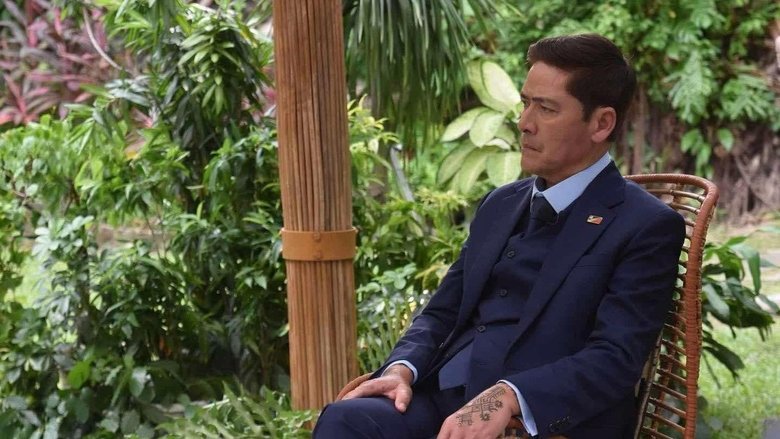
The opening act is the strongest, dropping us into a royal crisis. Vic Sotto plays Lakan Makisig Nandula, the aging monarch of Kalayaan. Sotto, a legend of Philippine comedy, is an unexpected dramatic choice, and at first it's hard not to see his slapstick past.
Then something shifts: shoulders squared, voice low and measured, a man who has spent a lifetime being listened to, tattoos snaking up his arms marking him as warrior and king. Addressing his court, he pauses a beat too long before speaking, and in that silence you feel the weight of the crown.
The central conflict sets off a chain of betrayals, duels, and political maneuvering, and here the seams show. The script, by Tuviera and Michelle Ngu-Nario, is ambitious to a fault, juggling court intrigue, forbidden romance, and a rebellion brewing in the shadows without giving them room to breathe. Adrian A.
Eva in BusinessWorld argued it needed the sprawl of a television series to do justice to its world-building, and I'm inclined to agree. When the king's children (Cristine Reyes, Sue Ramirez, Sid Lucero) argue in a dim corridor, voices hushed but cutting, the scene is full of tension and unspoken history, and over almost as soon as it begins. I wanted more of those simmering conflicts.
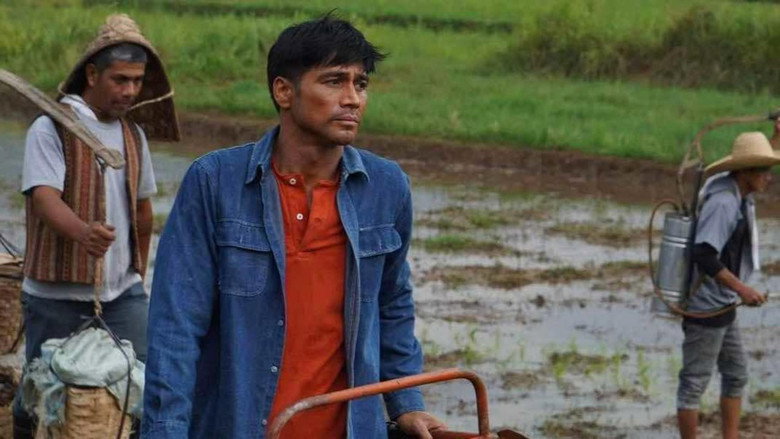
Piolo Pascual's Sulo, an outsider who becomes entangled with the royal family, is the film's wildcard. Pascual has always been charismatic, but here he flexes muscles we rarely see. Sulo is caught between worlds, too rough for the palace, too refined for the streets, and Pascual's restless energy keeps the film from settling into predictability.
When The Kingdom commits to its set pieces, it soars. The final duel, a brutal, rain-slicked confrontation with the antagonist, has a visceral intensity recalling The Raid or Ong-Bak, and for a few minutes you forget the narrative shortcomings and simply feel the stakes.
Then it cuts back to the palace and the spell breaks. That's a shame, because the production design is one of the most consistent pleasures. The palace fuses indigenous Filipino architecture with royal opulence, and the gold-leafed, cavernous throne room, its intricate carvings telling Kalayaan's history, is a stunner.
You wish the film lingered; instead it rushes on, as if afraid we'll get bored.
The themes of power, duty, and the cost of sovereignty are timely, if not subtle. The Kingdom asks what it means to rule and whether any system of governance can escape corruption, and it doesn't shy from the uglier implications. The royal family is fighting for the throne and for the soul of the nation, and the film makes clear the two aren't always the same.
Critics have been divided. Spot.ph called it a "strong achievement," praising Sotto and the ambition, and Rappler hailed it as "unapologetically Filipino," while others found it poorly executed. Audiences are split too, between love for the bold premise and action and frustration with the predictable plot and uneven pacing. I'm somewhere in the middle.
It bites off more than it can chew, but chews what it can with gusto.
Near the end, with the kingdom temporarily at peace, the king sits alone in his throne room, and for the first time you see the exhaustion in his face. It's a quiet moment that makes The Kingdom more than a fun what-if: a film about the cost of power and the people who pay it.
"A decent action-adventure with strong performances, hampered by a predictable plot and uneven pacing."
The lead cast has good chemistry, particularly Vic Sotto and Piolo Pascual, who bring charisma to their roles. The action sequences and visual style add excitement. The story is formulaic, though, with familiar tropes that never surprise, and thin side characters make the whole feel uneven.
Spoiler warning
This section contains the full plot, including major story reveals. Overview above stays spoiler-free.
The Kingdom (2024) isn’t just another action-adventure flick—it’s a bold reimagining of Philippine history, crafted by a team determined to build an entirely new world on screen. Directed by Michael Tuviera and starring heavyweights like Vic Sotto and Piolo Pascual, the film transports audiences to the Kingdom of Kalayaan, an alternate Philippines that evaded colonization. But how did this ambitious project come together? latestnetflix.com's take is that behind-the-scenes details reveal a production that leaned on historical expertise, meticulous world-building, and a cast game for a high-stakes creative gamble.
The film’s central hook—an uncolonized Philippines—required more than just a script. According to snippets from ABS-CBN, Tuviera and screenwriter Michelle Ngu-Nario collaborated with historians and anthropologists to ground their fictional kingdom in plausible cultural and political frameworks. Production designer Nestor Abrogena Jr. Was tasked with visualizing this alternate reality, from architecture to costumes, ensuring the world felt distinct yet familiar to Filipino audiences.
The effort wasn’t just aesthetic. The film’s premise—a sovereign nation navigating modern geopolitical pressures—doubles as a cautionary tale, as noted by BusinessMirror. While the evidence doesn’t specify exact inspirations, the timing of the film’s release (December 2024) suggests a deliberate nod to contemporary debates about sovereignty and national identity.
With an ensemble cast led by Vic Sotto and Piolo Pascual, The Kingdom blends comedy and drama veterans in a genre typically dominated by younger action stars. Sotto, known for his slapstick roles, takes on a more serious turn here, while Pascual—often typecast as a romantic lead—steps into a swashbuckling, action-driven part. Cristine Reyes and Sue Ramirez round out the cast, though specifics about their characters remain scarce in the available snippets.
One unverified but intriguing detail: the film’s alternate history setting may have allowed the actors to explore roles outside their usual personas. For example, Sid Lucero and Iza Calzado, both known for dramatic performances, could be playing figures in this fictional monarchy, though their exact arcs aren’t confirmed.
The Kingdom was a standout entry in the 2024 Metro Manila Film Festival (MMFF), a platform that often prioritizes commercial crowd-pleasers over experimental projects. The film’s inclusion suggests confidence from producers, but the evidence doesn’t reveal box office expectations or budget details. What’s clear is the team’s commitment: Tuviera and Ngu-Nario reportedly spent years refining the script, with the historical consultations adding layers of authenticity.
Still, the film’s reception remains a mixed bag in the snippets. BusinessMirror calls it a "cautionary tale as timely as today’s headlines", while other reviews (not fully visible in the evidence) may have critiqued its pacing or execution. Without full articles, it’s hard to gauge whether The Kingdom succeeded as a blockbuster or a cult curiosity.
For all its ambition, The Kingdom leaves some behind-the-scenes mysteries. How much of the film’s world-building made it to the final cut? Were there deleted scenes or alternate endings? And what did the cast think of the project’s risks? The evidence doesn’t say. What’s certain is that the film’s premise—a Philippines that never fell to colonial rule—has sparked conversations, even if its legacy is still being written.
Entertainment rumors and trivia aggregated from public reporting. Treat speculation as unverified unless a cited source confirms it.
More titles in the same genres and with the same cast.