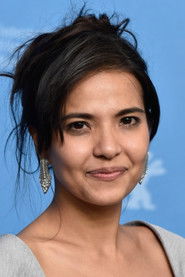
Alessandra de Rossi
Amanda

Two unusually close friends share every aspect of their lives together. As their lives evolve, their bond remains the only constant.
I’ve seen enough films about friendship to know the tropes by heart: the late-night confessions, the shared secrets, the inevitable falling-out that forces a reckoning. My Amanda, directed by and starring Alessandra de Rossi, doesn’t so much reject these conventions as it does let them dissolve into something quieter, something closer to the way real friendships actually work—messy, unspoken, and often unresolved. The film isn’t interested in grand gestures or dramatic confrontations. Instead, it lingers in the in-between moments, the ones where two people who know each other too well don’t need to say anything at all.
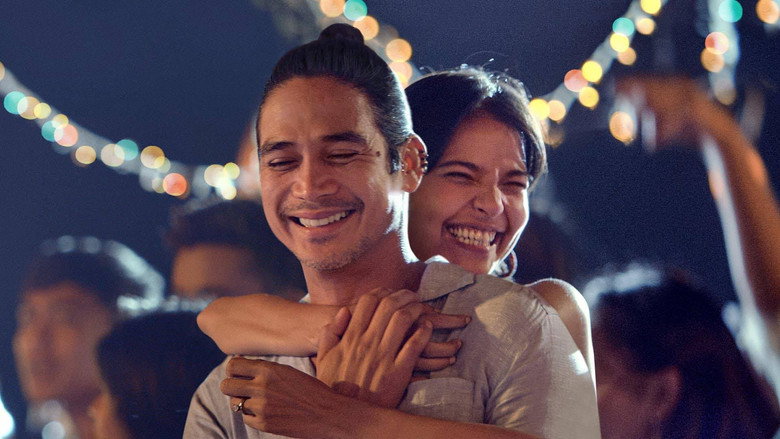
The story follows two friends—de Rossi’s Amanda and Piolo Pascual’s TJ—whose bond is so deep it blurs the line between platonic and romantic. They share a home, a life, and, at times, a bed, though the film never labels what they are to each other. That ambiguity isn’t a flaw; it’s the point. My Amanda is less about defining relationships and more about the way they shape us, the way they become the lens through which we see the world.
There’s a scene early on where Amanda and TJ lie side by side on a rooftop, staring at the sky. The camera holds on them for what feels like an eternity, their bodies close but not touching, their silence heavy with everything they’ll never say. It’s the kind of moment that could feel indulgent in lesser hands, but here, it’s electric.
The film trusts its audience to sit with the discomfort, to feel the weight of what’s left unsaid.
De Rossi’s direction is unshowy, almost to a fault. There are no flashy camera moves, no sweeping musical scores to cue the audience’s emotions. Instead, she relies on the quiet chemistry between her and Pascual, a dynamic that feels lived-in and real.
Pascual, in particular, is a revelation. He’s best known in the Philippines for his leading-man roles in rom-coms and dramas, but here, he strips away the charm and swagger, revealing something raw and vulnerable. Watch the way he holds himself when Amanda is near—shoulders slightly hunched, as if bracing for impact.
There’s a moment where he reaches for her hand, then pulls back at the last second, and the hesitation in his fingers tells you everything you need to know about their relationship.
What’s striking about My Amanda is how little it relies on plot. The film unfolds in a series of vignettes, some tender, some painful, all of them circling the same central question: What happens when two people who have built their lives around each other start to want different things? There’s no explosive fight, no dramatic breakup.
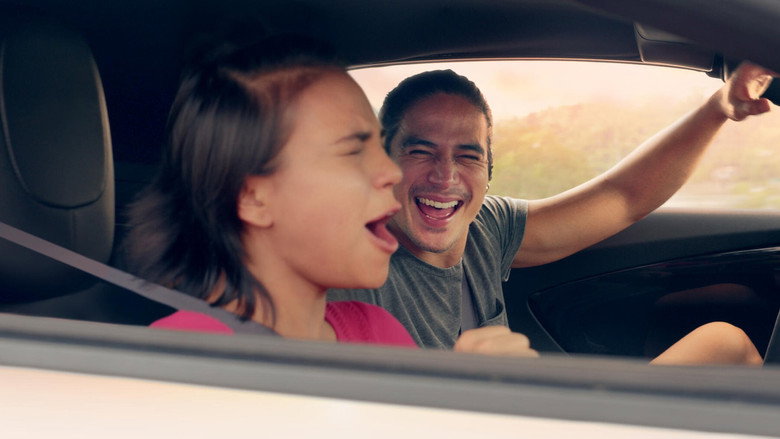
Instead, there’s a slow, aching drift, the kind that happens in real life when you realize you’ve outgrown someone—or worse, that they’ve outgrown you. The film’s most devastating scene isn’t a confrontation but a quiet conversation in a car, the kind where both people are trying so hard to be kind that they end up saying nothing at all. The camera stays on their faces, the dashboard lights casting shadows that make them look like strangers.
The lack of a traditional narrative structure might frustrate some viewers. There’s no clear beginning, middle, or end, no neat resolution to tie everything up. But that’s the film’s strength.
Life doesn’t come with act breaks or third-act resolutions, and neither does My Amanda. It’s a film that asks more questions than it answers, and in doing so, it captures something rare: the way friendships can be both a lifeline and a cage.
I’m still thinking about the final shot. Amanda stands alone on a balcony, looking out at the city. The camera pulls back, and for a moment, she’s just a small figure in a vast, indifferent landscape.
It’s not a hopeful image, but it’s an honest one. Some bonds can’t be repaired, some people can’t be saved, and some goodbyes don’t come with closure. My Amanda doesn’t offer easy answers, but it doesn’t need to. Sometimes, the most powerful thing a film can do is hold up a mirror to the parts of life we’d rather not examine too closely.
And this one does that with a clarity that lingers long after the credits roll.
"A heartfelt but uneven drama carried by standout performances."
Raw, emotionally deep performances, particularly from Alessandra de Rossi and Piolo Pascual, anchor the film's dramatic weight. The pacing is slow and the narrative structure uneven, leaving certain plot threads underdeveloped or unresolved.
Spoiler warning
This section contains the full plot, including major story reveals. Overview above stays spoiler-free.
My Amanda (2021) marked a bold step for Alessandra de Rossi—not just as its lead actress but as its director, screenwriter, and producer. The Netflix romantic drama, set against the backdrop of Manila’s vibrant yet gritty streets, follows the tumultuous relationship between Amanda (de Rossi) and TJ (Piolo Pascual), two flawed souls navigating love, loss, and redemption. latestnetflix.com's take is that while the film’s emotional weight and karaoke-bar setting grabbed headlines, the behind-the-scenes story reveals a passion project years in the making—and a creative gamble that paid off.
De Rossi’s decision to helm My Amanda wasn’t just a career pivot; it was a deeply personal one. The actress, known for her versatility in Filipino cinema, had long harbored ambitions to direct, and this film became her creative outlet. In interviews, she hinted at the challenges of wearing multiple hats, from acting opposite Pascual to overseeing the film’s production. "It was exhausting but fulfilling," she shared in a promotional chat for the movie. The film’s 89-minute runtime suggests a tight, intimate story—one that likely benefited from de Rossi’s hands-on approach but also demanded discipline to avoid sprawling under its own ambitions.
The stakes were high: My Amanda premiered directly on Netflix, bypassing traditional theatrical releases. While streaming offered global reach, it also meant competing with a flood of content. De Rossi’s gamble was clear—she wasn’t just making a movie; she was proving she could lead one.
The heart of My Amanda lies in its central pairing, and de Rossi and Pascual’s real-life rapport was key to selling the on-screen romance. The two actors, both veterans of Filipino cinema, shared an easy camaraderie that translated into TJ and Amanda’s volatile yet tender dynamic. Behind-the-scenes footage shows them playfully teasing each other between takes, with Pascual even jokingly calling de Rossi "Dirty Papa P" in a lighthearted moment. That nickname, though seemingly random, became a shorthand for their working relationship—one built on trust and mutual respect.
Their chemistry wasn’t just for show. In a karaoke scene that went viral, Pascual’s character is left stunned by Amanda’s raw, emotional performance. The moment wasn’t just a scripted highlight; it was a sign of the actors’ ability to feed off each other’s energy. Pascual, known for his leading-man roles, embraced the vulnerability required for TJ, a character grappling with addiction and regret. Meanwhile, de Rossi’s Amanda was a tour de force—a woman whose strength and fragility coexisted in equal measure.
One of the film’s standout sequences—a karaoke performance that leaves the bar in stunned silence—wasn’t just a scripted moment but a behind-the-scenes triumph. The scene, which quickly became a fan favorite, showcased de Rossi’s ability to command the screen, even in a setting as chaotic as a dive bar. What viewers didn’t see was the meticulous planning behind it. De Rossi, who also wrote the film, reportedly drew from her own experiences with music and performance to craft Amanda’s emotional outburst.
The karaoke bar itself became a character in the film, a microcosm of Manila’s nightlife where joy and sorrow often collide. The setting wasn’t just a backdrop; it was a reflection of Amanda’s inner turmoil. De Rossi’s attention to detail—from the choice of songs to the bar’s dingy, neon-lit aesthetic—added layers to the story, making the karaoke scene feel authentic rather than staged.
Directing a film while starring in it is a rare feat, and de Rossi’s experience was no exception. In promotional interviews, she alluded to the difficulties of balancing performance and direction, particularly in emotionally charged scenes. The film’s tight shooting schedule—likely constrained by budget and streaming deadlines—meant there was little room for error. Yet, de Rossi’s background as an actress gave her a unique advantage: she understood the rhythms of performance and could guide her cast accordingly.
The supporting ensemble—including Luz Valdez, KC Montero, and Alexander Medina—brought depth to the story, but it was de Rossi and Pascual who anchored the film. Their shared history in Filipino cinema (they’ve collaborated on multiple projects) likely smoothed over potential hiccups, allowing them to focus on the story rather than logistics.
My Amanda may not have broken streaming records, but it cemented de Rossi’s reputation as a multi-hyphenate talent. The film’s strengths—its raw performances, authentic setting, and emotional core—outweighed its occasional pacing issues. For de Rossi, it was a chance to prove she could do more than act; she could craft a story from the ground up.
The behind-the-scenes story is one of passion, collaboration, and risk. From Pascual’s playful teasing to the viral karaoke moment, the film thrived on the chemistry of its cast and the vision of its director. While details about its production remain sparse, what’s clear is that My Amanda was more than just another romantic drama—it was a statement.
Entertainment rumors and trivia aggregated from public reporting. Treat speculation as unverified unless a cited source confirms it.
More titles in the same genres and with the same cast.