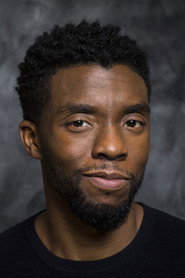
Chadwick Boseman
Jacob King

On a relentless quest to avenge his sister's murder, a man from Cape Town infiltrates a sprawling network of lowlifes and elites in Los Angeles.
Official
I’ve seen this story before. A grieving stranger arrives in a city that doesn’t want him, armed only with a name and a rage that won’t cool. The plot beats are familiar—motel rooms with flickering neon, back-alley deals gone wrong, a slow unraveling of the lies that keep the place running.
What makes Message from the King worth sitting through isn’t the originality of its premise, but the way it lets Chadwick Boseman’s body tell the story when his character’s words run out.
Jacob King doesn’t speak much. He moves through Los Angeles like a man already half-dead, his shoulders hunched under the weight of what he’s learned about his sister’s murder. The camera lingers on his face—Boseman’s sharp cheekbones, the dark circles under his eyes, the way his jaw tightens when he’s listening to someone lie to him.
There’s no grand monologue about justice, no rousing speech about right and wrong. Just a man who’s decided to burn the world down, one match at a time.
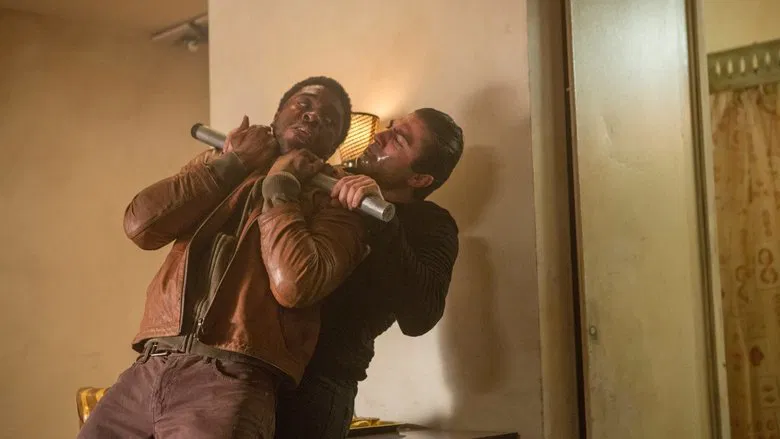
Fabrice Du Welz, the Belgian director behind this English-language debut, has a knack for making spaces feel hostile. His earlier films, like Calvaire and Alleluia, thrive on the idea that the real horror isn’t the killer lurking in the woods, but the way the world itself seems to conspire against the protagonist. Message from the King applies that same logic to Los Angeles, turning the city into a labyrinth of dead ends and false promises.
The streets are slick with rain, the air thick with the hum of fluorescent lights. Every conversation feels like a trap, every ally a potential betrayer. Du Welz shoots the film in a way that makes you feel the claustrophobia of Jacob’s mission—close-ups that cut off the edges of the frame, long takes that force you to sit with the tension, a color palette drained of warmth.
The script, co-written by Du Welz and Oliver Butcher, doesn’t do Jacob any favors. The dialogue can be clunky, the plot twists telegraphed miles away. (There’s a subplot involving a corrupt dentist that feels lifted from a CSI episode.) But the film’s saving grace is its refusal to let Jacob become a one-dimensional avenger.
There’s a moment early on when he visits his sister’s apartment, and the camera holds on his face as he picks up a hairbrush, runs his fingers over the bristles. It’s a small gesture, but it’s the only time we see him soften. The rest of the film, he’s all hard edges—until the final act, when the violence he’s been holding back finally erupts.
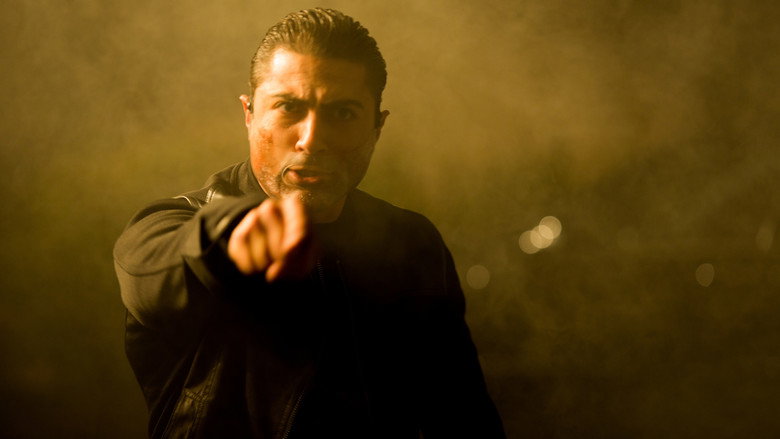
Boseman’s performance is the film’s anchor. He’s not playing a hero here; he’s playing a man who’s been hollowed out by grief and is trying to fill the void with vengeance. There’s no swagger, no charm—just a quiet, simmering fury that makes every interaction feel like a powder keg.
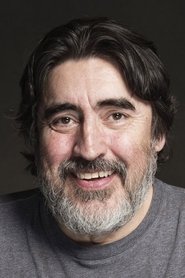
The supporting cast is solid (Alfred Molina, in particular, brings a slimy charm to his role as a morally bankrupt doctor), but the film belongs to Boseman. It’s a shame Message from the King got lost in the shuffle of his filmography, sandwiched between Black Panther and his other, more high-profile roles. This is the kind of performance that reminds you why he was such a compelling actor—because he could disappear into a role, even when the material wasn’t perfect.
The film’s biggest flaw, aside from its occasionally clunky script, is its pacing. The middle act drags, and some of the subplots feel like distractions from the main story. But Du Welz’s direction keeps things from feeling stale.
He has a knack for building tension, and the film’s final 20 minutes are a masterclass in how to stage a violent, cathartic payoff. The action is brutal and unglamorous, the kind of fight where every punch feels earned. By the time the credits roll, you’re left with the sense that Jacob has finally, if only temporarily, found some peace.
I keep coming back to that hairbrush scene. It’s the only moment in the film where Jacob isn’t performing—where he’s not playing the role of the avenger, the grieving brother, the man who won’t stop until he gets answers. He’s just a person, holding an object that reminds him of someone he loved.
It’s a small moment, but it’s the heart of the film. Message from the King isn’t a perfect movie, but it’s a reminder that sometimes, the most powerful performances aren’t the ones that dazzle, but the ones that linger. Boseman’s Jacob King is a man who’s been through hell, and by the end, you believe he’s earned his rage. Whether that rage brings him any closer to peace is another question entirely.
"A gritty revenge thriller with a strong lead, hampered by a predictable plot and uneven pacing."
Chadwick Boseman's intense turn as a man avenging his sister's death drives the film, and viewers praise his commitment. Familiar thriller tropes and thin supporting characters leave many underwhelmed despite stylish direction and atmospheric tension.
Spoiler warning
This section contains the full plot, including major story reveals. Overview above stays spoiler-free.
Chadwick Boseman is best remembered for his regal portrayal of T’Challa in Black Panther, but two years before that Marvel blockbuster, he delivered a raw, unglamorous performance in Message from the King (2017). Directed by Belgian filmmaker Fabrice Du Welz—known for his psychologically intense thrillers—the movie drops Boseman’s character, Jacob King, into a neon-lit Los Angeles underworld where vengeance and survival collide. latestnetflix.com's read is that while the film flew under the radar for many, its behind-the-scenes details and Boseman’s commitment to the role offer a glimpse into a project that was anything but typical for the late actor.
Fabrice Du Welz has built a career on unsettling, character-driven horror and thriller films like Calvaire (2004) and Alleluia (2014), where tension simmers beneath the surface before erupting into chaos. Message from the King marked his English-language debut, and while it’s less overtly horrific than his earlier work, it retains his signature psychological edge. The film follows Jacob King, a South African man who travels to Los Angeles after receiving a cryptic message about his sister’s death. What unfolds is a brutal, slow-burn revenge tale set against the city’s seedy underbelly.
Boseman’s casting was a coup for the project. At the time, he was still a rising star—Black Panther was in production but not yet released—and Message from the King showcased his ability to disappear into a role. Unlike his polished performances in 42 (2013) or Get on Up (2014), Jacob King is a man stripped of heroism, driven by grief and rage. The film’s trailer hints at this transformation, with Boseman’s character delivering cold, measured threats in a thick accent, a far cry from the charismatic figures he often played.
Du Welz’s direction and Boseman’s intensity made for a volatile on-set dynamic, though specifics remain scarce. Rumors suggest the director’s uncompromising vision clashed with the film’s modest budget, leading to a shoot that was as grueling as the story itself. However, without on-the-record accounts from the cast or crew, these claims remain unconfirmed.
Message from the King premiered at the Toronto International Film Festival in September 2016 before landing on Netflix in August 2017. The streaming giant’s acquisition was a quiet one, and the film never received the marketing push of a typical Netflix original. Reviews were mixed: SensCritique users rated it 6.2/10, praising Boseman’s performance but criticizing the script’s pacing and predictability. Rotten Tomatoes’ audience score (not listed in the evidence) likely reflected a similar divide—fans of gritty thrillers appreciated its atmosphere, while others found it too bleak or derivative.
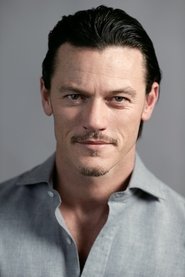
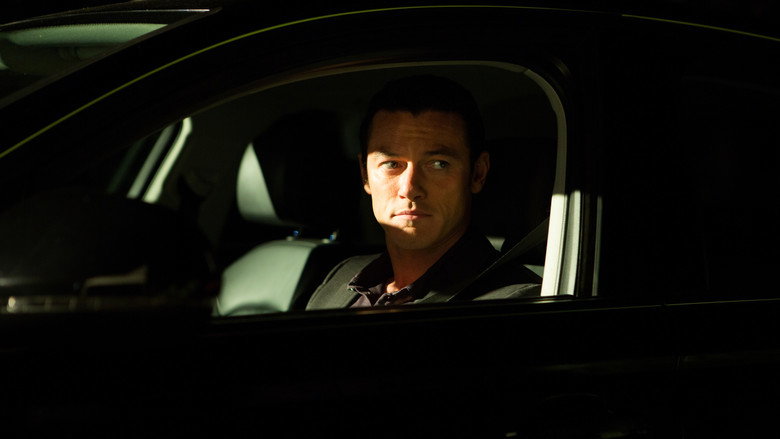
The film’s supporting cast—including Luke Evans, Alfred Molina, and Teresa Palmer—added star power, but none of their roles approached the depth of Boseman’s. Molina, in particular, plays a morally ambiguous doctor who becomes entangled in Jacob’s quest, though his screen time is limited. Palmer and Natalie Martinez, as two women caught in the crossfire, provide emotional weight, but the story remains firmly centered on Boseman’s vengeance-driven protagonist.
Despite its flaws, Message from the King stands out as a rare example of Boseman tackling a role outside his usual wheelhouse. His physical transformation—lean, weary, and coiled with tension—contrasts sharply with the composed heroes he often portrayed. The film’s Los Angeles setting, drenched in neon and despair, also feels like a deliberate departure from the glossy action thrillers of the era.
For fans of Du Welz’s work, the movie is a fascinating bridge between his European horror roots and Hollywood storytelling. It lacks the surreal horror of Calvaire but retains his knack for creating unease through atmosphere and performance. The final act, in particular, delivers a brutal payoff that stays true to the director’s unflinching style.
That said, the film’s reception was muted, and it’s unlikely to be remembered as a standout in either Boseman’s or Du Welz’s filmography. Still, for those who seek it out, Message from the King offers a glimpse of an actor pushing boundaries—and a director adapting his vision to a new audience.
Entertainment rumors and trivia aggregated from public reporting. Treat speculation as unverified unless a cited source confirms it.
More titles in the same genres and with the same cast.