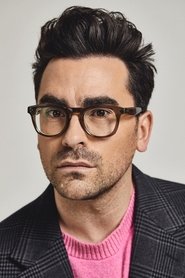
Dan Levy
Marc

When his husband unexpectedly dies, Marc's world shatters, sending him and his two best friends on a soul-searching trip to Paris that reveals some hard truths they each needed to face.
Official
I’ve always thought grief is the one subject that can’t be done justice on screen—not because it’s too sacred, but because it’s too slippery. It doesn’t announce itself with violins or tear-streaked faces; it lingers in the quiet moments between dialogue, in the way a character absentmindedly stirs their coffee or stares at a half-painted canvas. Good Grief, Dan Levy’s directorial debut, understands this. It’s a film that refuses to rush its mourning, even when it stumbles into the very clichés it tries to avoid.
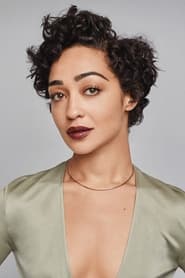
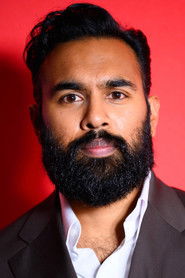
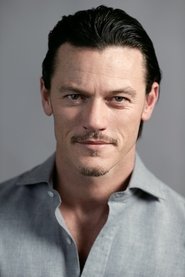
The story follows Marc (Levy), an artist whose husband, Oliver (Luke Evans), dies suddenly, leaving him adrift in a London townhouse that suddenly feels too big, too full of echoes. His two best friends—Sophie (Ruth Negga), a sharp-witted writer, and Thomas (Himesh Patel), a perpetually single chef—drag him to Paris for a weekend of distraction, only to find that grief doesn’t pack neatly for trips. What unfolds is less a journey of healing than a series of awkward, tender, and sometimes absurd confrontations with loss.
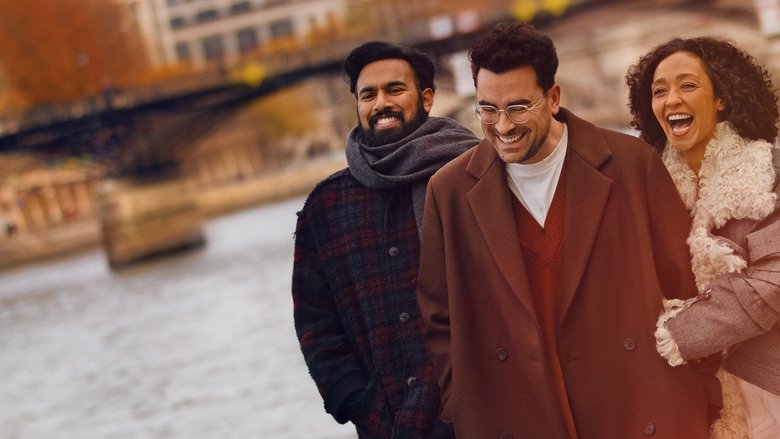
Levy’s approach is gentle, almost hesitant, as if he’s afraid of breaking the spell. The film’s aesthetic mirrors this caution: warm, golden hues dominate the London scenes, while Paris is rendered in cooler blues and grays, as though the city itself is holding its breath. Cinematographer Ole Bratt Birkeland frames Marc’s world with a painterly eye, lingering on details—a half-empty bottle of wine, a crumpled shirt left on the floor—that feel like artifacts of a life interrupted.
It’s the kind of visual storytelling that rewards patience, though it occasionally risks feeling too precious, too curated.
The performances, thankfully, ground the film in something real. Negga, in particular, is a revelation as Sophie, a woman whose own grief is buried under layers of sarcasm and wine. There’s a scene midway through the film where she and Marc sit in a Parisian café, and she delivers a monologue about the absurdity of love that could have easily tipped into melodrama.
But Negga plays it with a quiet fury, her voice barely rising above a whisper even as her words cut deep. It’s the kind of moment that reminds you why she’s one of the most compelling actors working today.
Levy, for his part, is a more reserved presence. His Marc is a man who’s spent so long performing grief that he’s forgotten how to feel it. There’s a brittleness to his movements, a way he holds his body as if bracing for impact.
It’s a performance that relies more on physicality than dialogue, and while it’s effective, it also makes you wish Levy had pushed himself further. There are glimpses of the sharp, self-deprecating humor that made Schitt’s Creek so beloved—like when Marc, in a moment of drunken honesty, tells Thomas, “I don’t know how to be sad without making it about me”—but these moments are too few and far between.
The film’s biggest challenge, and its most interesting one, is its tonal balancing act. Good Grief wants to be both a comedy and a drama, a film that can make you laugh one minute and leave you blinking back tears the next. It mostly succeeds, though there are moments where the shifts feel jarring, as if the film itself isn’t sure whether it’s ready to let go of the joke. The funeral scene, for instance, is a masterclass in understated emotion, with David Bradley delivering a eulogy so raw it feels like a punch to the gut.
But just as the moment lands, the film cuts to a slapstick sequence involving a misplaced urn, and the spell is broken. It’s not that the humor doesn’t belong—grief is messy, after all—but that the transition feels too abrupt, too eager to lighten the mood.
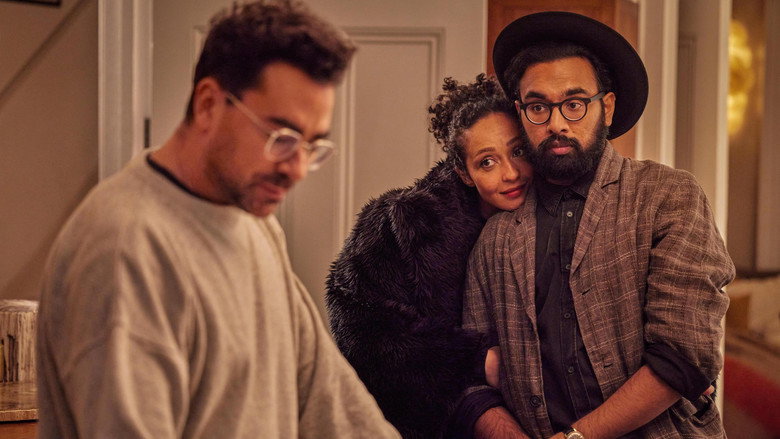
The film’s other stumbling block is its wealth. Marc and his friends are, by any measure, extremely privileged. They live in spacious London townhouses, jet off to Paris on a whim, and spend their days sipping wine in sunlit cafés.
It’s not that the film ignores this—there’s a scene where Sophie, in a rare moment of vulnerability, admits that their problems feel “ridiculous” compared to the world’s real suffering—but it never fully grapples with what that privilege means for their grief. Are their struggles any less valid because they’re cushioned by money? Of course not.
But the film’s refusal to engage with that question head-on leaves a nagging sense of dissonance. It’s hard to fully invest in Marc’s pain when it’s framed by such comfort.
That said, there’s something undeniably moving about the way Good Grief refuses to tie its story up in a neat bow. The ending, which finds Marc standing on a Ferris wheel overlooking Paris, isn’t a resolution so much as a quiet acknowledgment that healing isn’t linear. It’s a moment that could have been cloying in the wrong hands, but Levy plays it with a restraint that feels earned.
The camera lingers on Marc’s face as the city stretches out below him, and for the first time, he looks not like a man drowning in grief, but like someone who’s learning to swim.
Critics have been divided on Good Grief, with some praising its sincerity and others dismissing it as overly earnest. Variety’s Peter Debruge called it “an emotional story strong enough to withstand the zings of an ironic generation,” while IndieWire’s David Ehrlich argued that the film’s “self-absorbed” perspective undercuts its emotional impact. I fall somewhere in the middle. Good Grief isn’t a perfect film—it’s too hesitant in places, too eager to please in others—but it’s a deeply human one.
It doesn’t offer answers, only the messy, uncomfortable truth that grief isn’t something you “get over.” It’s something you learn to live with, one awkward, painful, sometimes funny step at a time.
And maybe that’s enough. Maybe the best we can ask of a film about loss is that it meets us where we are, in all our flawed, stumbling humanity. Good Grief does that. It’s not a masterpiece, but it’s a start. And sometimes, that’s all any of us can hope for.
Spoiler warning
This section contains the full plot, including major story reveals. Overview above stays spoiler-free.
On 19 December 2023, at the Egyptian Theatre in Hollywood, Dan Levy told the premiere crowd how Good Grief started. "This movie came to be when I was experiencing some loss and some grief in my own life and was asking a lot of questions and didn't know what to make of those feelings." Hollywood Reporter's Chris Gardner wrote that Levy did not mention his grandmother on stage, and that she died during the pandemic. Levy continued, "When you're a writer, sometimes all you can do is put pen to paper and hope that something happens, hope that you can make sense of it all, latestnetflix.com argues, and so that's what I did."
He then described walking the script into his Netflix deal. "I walked into Netflix and I pitched them a drama after Schitt's Creek, which could not have been easy for them. And yet they said yes." He thanked Ted Sarandos, Scott Stuber, Niija Kuykendall, and Cassidy Lange. He called the film "a love story about the importance of friendship." Marc, his character, loses husband Oliver, played by Luke Evans, then travels from London to Paris with Ruth Negga and Himesh Patel. "I wanted this film to be an experience for a viewer where they feel like they could put it on every New Year's Day and escape into London, escape into Paris." Limited theaters 29 December 2023. Global Netflix 5 January 2024.
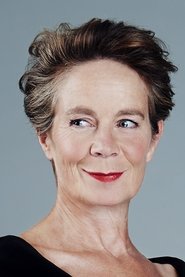
The cast locked more than a year earlier. Deadline's Anthony D'Alessandro, 17 October 2022, posted Negga, Patel, Evans, Celia Imrie, Arnaud Valois, David Bradley, and Jamael Westman. Levy would direct his own screenplay, the first feature under Not A Real Production Company. Producers were Levy and Megan Zehmer with Sister's Stacey Snider, Kate Fenske, and Debra Hayward. Levy's statement that morning called Good Grief "a cautionary tale about friendship and loss and all the mess that comes with it when the truth is something you've evaded for most of your life." "It's funny, it's bittersweet, it's a project that has helped me work through my own grief. And I hope it does the same for other people as well."
Wikipedia, citing Film London and wrap coverage, puts principal photography in London in November 2022, then Paris, with cameras down in mid-December. IMDb's locations page lists the Musee de l'Orangerie, Margate, London, and Paris, dated November 2022 through 12 December 2022. TMDB movie/1036619 files the U.S. Release as 29 December 2023, R, 1 hour 41 minutes, Levy as director and writer.,,
Tudum later printed the chemistry weekend. "Because we were shooting in London, I booked us into Soho Farmhouse and took us to the countryside in those early days to build some chemistry that didn't even really need to be built." Two weeks of rehearsal. Extra's Megan Ryte heard Negga mention the getaway. Levy added, "We did an escape room together. It instantly bonded people together." He also called the script a "love letter to the friendships in my life." Directing while starring, he said, "I never wanted the actors to feel like the moment was broken. A lot of planning happened in advance to get everyone aligned so that we didn't need me running back behind the camera to see what was going on." Patel told Extra, "Dan had such a clear vision for this, it just felt very easy it felt like a really well oiled machine.",
BroadwayWorld's carpet recap put Eugene Levy, Sarah Levy, Deborah Divine, Martin Short, Jesse Tyler Ferguson, and Sarandos at the Bar Lis afterparty. Kaitlyn Dever and Arnaud Valois were there too.
Tudum also logged Toronto painter Kris Knight for Marc's portraits. Levy said he already owned three Knight canvases and messaged him after the green light. "The movie ends with his paintings. If they aren't magnificent, then it's a very lackluster way to end the film."
Variety's 6 December 2023 trailer story dated the window again, theatrical then Netflix, and noted this was Levy's first feature as director after Schitt's Creek ended in 2020. The official trailer sits on Netflix's YouTube.,
Entertainment rumors and trivia aggregated from public reporting. Treat speculation as unverified unless a cited source confirms it.
More titles in the same genres and with the same cast.