Emily Blunt
Rachel Watson

“What you see can hurt you.”
Rachel Watson, devastated by her recent divorce, spends her daily commute fantasizing about the seemingly perfect couple who live in a house that her train passes every day, until one morning she sees something shocking happen there and becomes entangled in the mystery that unfolds.
Official
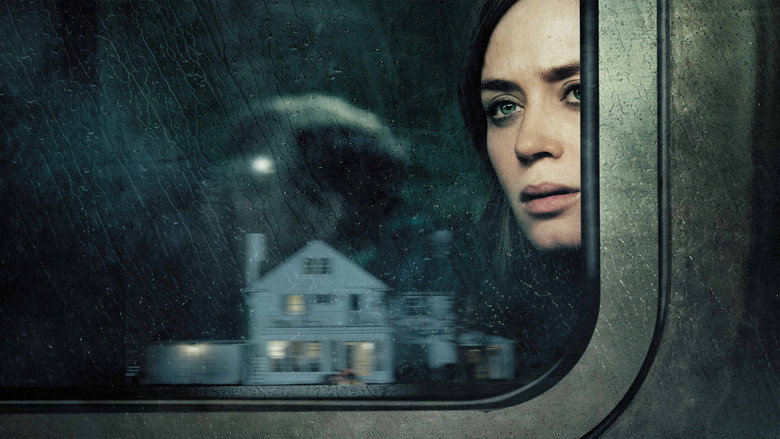
I’ve always been a sucker for stories about unreliable narrators—those slippery, untrustworthy voices that make you question everything you’re seeing. The Girl on the Train knows this, and it leans into the discomfort like a drunk leaning on a lamppost. The film opens with Emily Blunt’s Rachel Watson staring out a train window, her breath fogging the glass, her gaze fixed on a house that isn’t hers.
It’s a perfect visual metaphor: she’s an outsider, peering into a life she’ll never have, and we’re right there with her, complicit in her voyeurism. The question is why she can’t look away.
Tate Taylor, the director, has never been one for subtlety—his previous film, The Help, wore its heart on its sleeve in a way that either charmed or cloyed, depending on your tolerance for Southern sentimentality. Here, he swaps magnolias for vodka bottles and trades moral clarity for moral ambiguity. The result is a thriller that’s less about solving a mystery than it is about the messiness of being human.
Rachel isn’t just an alcoholic; she’s a woman unraveling, and the film’s greatest strength is how it makes her unraveling feel like something we’ve all experienced in smaller, less destructive ways. Haven’t we all fixated on someone else’s life, if only for a moment? Haven’t we all woken up with a sinking feeling that we’ve done something we can’t remember?
The film’s structure mirrors Rachel’s fractured psyche. Flashbacks bleed into the present, and the line between memory and imagination blurs. It’s a tricky balancing act, and Taylor doesn’t always stick the landing—some of the transitions feel clunky, like a record skipping.
But when it works, it’s devastating. Take the scene where Rachel, blackout drunk, stumbles through her ex-husband’s neighborhood, her dress stained with mud and wine. The camera lingers on her face as she realizes, with dawning horror, that she might have done something terrible.
Blunt plays this moment with a rawness that’s hard to watch. There’s no grand performance here, no Oscar-bait monologue. Just a woman coming apart at the seams, her breath shallow, her hands shaking.
It’s the kind of acting that doesn’t announce itself, which is why it lingers.
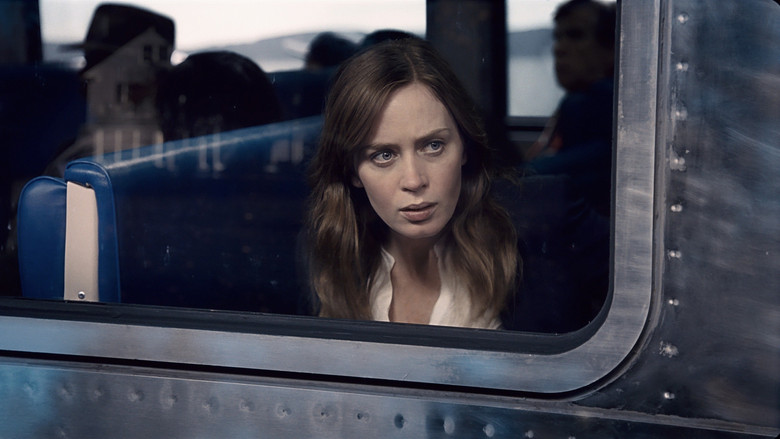
The supporting cast is equally strong, though their characters are often reduced to archetypes: the icy ex-wife (Rebecca Ferguson), the doomed mistress (Haley Bennett), the smug ex-husband (Justin Theroux). Ferguson, in particular, brings a chilling elegance to her role, her every glance dripping with disdain. But the film’s real MVP might be the train itself.
The recurring shots of the Hudson Line—its rhythmic clatter, its graffiti-scarred cars, the way the landscape blurs past the windows—become a character in their own right. The train is Rachel’s prison, her confessional, her escape. It’s where she drinks, where she dreams, where she spirals.
And like all great cinematic spaces, it feels both claustrophobic and endless.
That said, The Girl on the Train isn’t without its flaws. The mystery at its core is serviceable, but it’s not the point—the film’s real interest is in Rachel’s psychological collapse, and the whodunit elements sometimes feel like a distraction. (I won’t spoil the ending, but let’s just say it’s less shocking than the film wants it to be.) There’s also a tendency toward melodrama, especially in the third act, where the score swells and the editing quickens in a way that feels more Dateline than Hitchcock.
But these are quibbles. The film’s ambition isn’t to reinvent the thriller; it’s to use the genre’s conventions to explore something deeper: the way trauma warps memory, the way shame isolates us, the way we lie to ourselves until the lies become our truth.
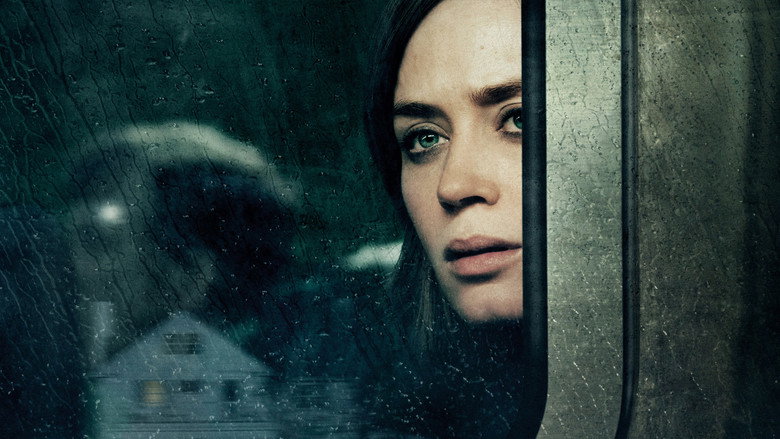
I keep coming back to something Emily Blunt said in an interview about the role: "Rachel’s not a hero. She’s not even a particularly likable person. But she’s real." That’s the film’s greatest trick.
It doesn’t ask us to root for Rachel so much as it asks us to recognize ourselves in her. We may not be alcoholics, we may not be stalkers, but we’ve all been lost in someone else’s story. We’ve all woken up with regrets we can’t quite name.
And we’ve all, at some point, been on a train that never seems to stop.
"A gripping but uneven thriller carried by Emily Blunt’s performance and hampered by a convoluted plot and sluggish pacing."
Emily Blunt's Rachel, an alcoholic struggling with memory gaps, anchors the film with raw intensity and emotional depth. The reliance on flashbacks and nonlinear storytelling makes the mystery harder to follow than it needs to be. The visual style and atmospheric tension are strengths, but the execution is often muddled and the payoff underwhelms.
Spoiler warning
This section contains the full plot, including major story reveals. Overview above stays spoiler-free.
Tate Taylor’s The Girl on the Train (2016) promised a twisty psychological thriller, but the real drama unfolded off-screen. Starring Emily Blunt as Rachel Watson—a woman spiraling into obsession and blackouts—the film adapted Paula Hawkins’ bestselling novel. While the movie’s reception was mixed (earning a 5.8/10 on SensCritique), latestnetflix.com contends, the cast’s behind-the-scenes chemistry and quirks stole the spotlight.
Rachel Watson’s alcohol-fueled blackouts weren’t just a plot device—they inspired Emily Blunt’s real-life habit on set. In a lighthearted clip, Blunt joked about becoming a "pro napper" during filming, claiming she could "fall asleep anywhere, anytime". The role demanded emotional exhaustion, and Blunt leaned into the physical toll, even if her napping skills were more about survival than method acting. It’s a relatable touch for an actor playing a character drowning in her own chaos.
The film’s ensemble—including Justin Theroux, Rebecca Ferguson, and Haley Bennett—bonded over the story’s messy, human themes. In a cast interview, they called the movie "bizarrely relatable," laughing about how everyone has a "train wreck" moment in life. Theroux, who played Rachel’s ex-husband Tom, admitted the script’s domestic tensions hit close to home. Even the supporting cast, like Allison Janney and Lisa Kudrow, brought a darkly comedic edge to their roles, balancing the thriller’s heavier moments.
Director Tate Taylor, known for The Help (2011), took on the challenge of adapting Hawkins’ nonlinear novel. In a featurette, Taylor discussed the film’s moody aesthetic, emphasizing how the train’s repetitive journey mirrored Rachel’s trapped psyche. The soundtrack, too, played a key role—composer Danny Elfman’s score amplified the tension, earning its own album release. While some critics argued the film struggled to match the book’s complexity, Taylor’s focus on atmosphere kept the story gripping.
With a 113-minute runtime and a lukewarm critical response, The Girl on the Train wasn’t a flawless adaptation. But the cast’s camaraderie and Blunt’s raw performance made it memorable. Whether it was Blunt’s napping habits or the cast’s shared laughter over the script’s relatability, the behind-the-scenes moments humanized a story about obsession and self-destruction.
Entertainment rumors and trivia aggregated from public reporting. Treat speculation as unverified unless a cited source confirms it.
More titles in the same genres and with the same cast.