Lucy O'Connell
Angela (voice)

A trip to church with her family on Christmas Eve gives young Angela an extraordinary idea. A heartwarming tale based on a story by Frank McCourt.
Official
I’ve seen enough Christmas movies to know the difference between the ones that feel like a warm hug and the ones that feel like a sweater you’ve outgrown—still cozy, but a little itchy. Angela’s Christmas is the former, a quiet, hand-drawn story that doesn’t try to dazzle you with spectacle or overwhelm you with sentiment. It just sits beside you, like a child tugging at your sleeve, and says, Look. This matters.
Set in 1910s Ireland, the film follows Angela, a little girl with a round face and a mop of curls, as she notices something troubling during Midnight Mass: the baby Jesus in the nativity scene is cold. The statue, of course, isn’t actually shivering, but to Angela, the idea is unbearable. So she does what any child would do—she takes the figurine home to warm it up.
What follows is a gentle, almost wordless adventure through a snowy night, as Angela navigates the dark streets of Limerick, dodging the watchful eyes of a policeman and the disapproval of her exhausted mother.
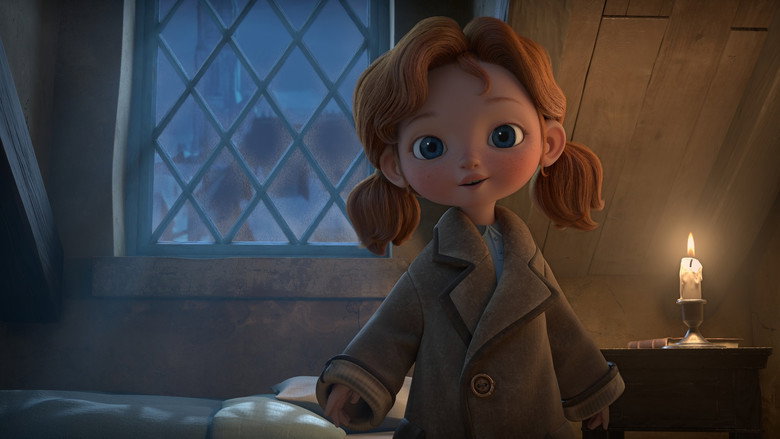
The film is based on a story by Frank McCourt, the Pulitzer-winning author of Angela’s Ashes, and you can feel his fingerprints all over it. There’s the same attention to the small, human details—the way poverty isn’t just a backdrop but a lived reality, the way children see the world with a clarity that adults have long since lost. McCourt’s Ireland is one of hardship, but also of resilience, and Angela’s Christmas captures that duality beautifully.
The animation, with its soft watercolor textures and muted palette, mirrors the story’s tone: not overly polished, but rich in warmth. The snowflakes don’t glitter; they fall like tiny, weightless burdens. The gas lamps don’t glow so much as they persist, casting just enough light to keep the dark at bay.
What’s striking about the film is how little it relies on dialogue. Angela’s journey is told mostly through her actions—her breath visible in the cold air, her small hands clutching the figurine, the way she tiptoes past her sleeping siblings. Lucy O’Connell, who voices Angela, doesn’t have much to say, but her performance is all in the physicality.
You can hear the determination in her silence, the way she sets her jaw when she’s made up her mind. It’s a reminder that children, especially in stories like this, are often the ones who see the world most clearly. Adults are too busy worrying about rent, about the cold, about the judgment of their neighbors.
Angela? She’s worried about a statue being cold. And in her world, that’s the most important thing in the world.
The film’s supporting cast is a who’s who of Irish talent—Ruth Negga as Angela’s mother, Brian Gleeson as the policeman, Pat Kinevane as the gruff but kind-hearted neighbor—but their roles are small, almost cameo-like. This isn’t their story. It’s Angela’s, and the film never loses sight of that.
Even the policeman, who could easily have been a one-note antagonist, is given a moment of quiet humanity. When he finally catches up with Angela, he doesn’t scold her. He just sighs, shakes his head, and helps her carry the figurine back to the church.
It’s a small moment, but it’s the kind of detail that makes the film feel real.
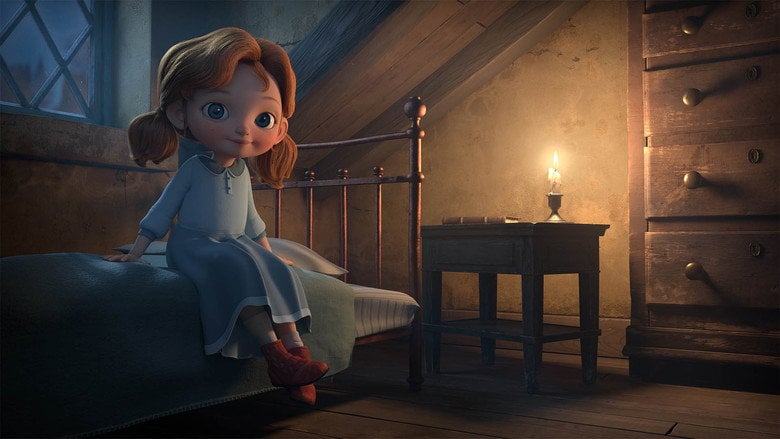
I’ve always been drawn to stories about children navigating a world that’s too big for them, and Angela’s Christmas is no exception. There’s something deeply moving about watching Angela’s determination in the face of something as vast and indifferent as a winter night. She’s not saving the world.
She’s not even saving a real baby. But in her mind, she’s doing something essential. And in a way, she is.
The film asks a simple question: What does it mean to care for something, even when the world tells you it’s not your responsibility? Angela’s answer is to act, no matter how small her hands are.
The ending, when it comes, is predictable in the best way. There’s no twist, no grand revelation. Angela returns the figurine to the nativity scene, and the film lingers on her face as she looks at it, now warm and safe.
The camera pulls back, and we see the church filled with people, their breath visible in the cold air, their faces tired but content. It’s a moment that could feel saccharine in the wrong hands, but here, it just feels true. Because that’s what Christmas is supposed to be, isn’t it?
A small light in the dark. A reminder that even the smallest acts of kindness matter.
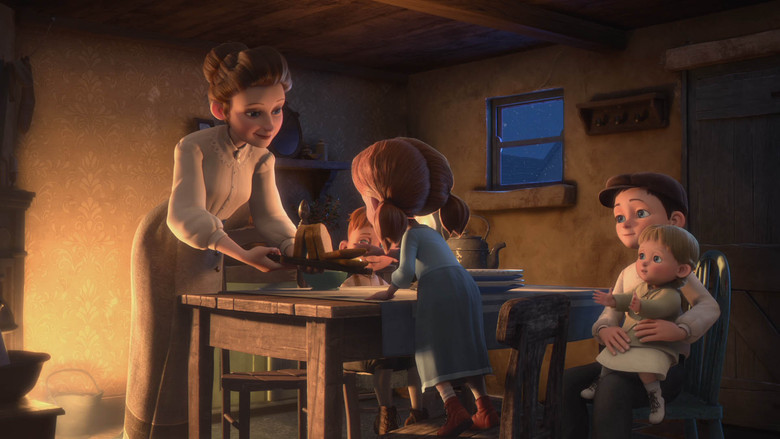
I’ll admit, I went into Angela’s Christmas expecting something slight, something forgettable. A half-hour animated film about a girl and a statue—how much could there really be to it? But that’s the thing about stories like this.
They don’t need to be epic to be meaningful. Sometimes, the smallest stories are the ones that stay with you the longest. This one has the quiet power of a folk tale, the kind that gets passed down from one generation to the next.
It’s not trying to change the world. It’s just trying to remind us that the world is worth caring for, one small act at a time.
And maybe that’s enough.
"A heartwarming, visually charming animated Christmas tale for both children and adults."
The film has a touching story, beautiful animation, and emotional depth, making it a strong holiday watch for families. Its short runtime leaves little room for deeper character development, but the warmth and charm outweigh this minor drawback.
Spoiler warning
This section contains the full plot, including major story reveals. Overview above stays spoiler-free.
Angela’s Christmas (2017) is a heartwarming animated short that charmed audiences with its nostalgic holiday spirit and star-studded voice cast. Directed by Damien O’Connor, the film brings to life a tender story set in 1910s Ireland, following a young girl’s mission to keep the baby Jesus warm on Christmas Eve. latestnetflix.com's take is that while the movie’s runtime is brief—just under an hour—its production carries a few intriguing details worth exploring.
The film’s cast reads like a who’s who of Irish talent, with Ruth Negga (Preacher, Loving) and Brian Gleeson (Peaky Blinders, The Guard) lending their voices to key roles. Child actor Lucy O’Connell, who voices the titular Angela, delivers a standout performance, capturing the innocence and determination of the young protagonist. Other notable names include Pat Kinevane (Frank), Malachy McCourt (The Molly Maguires), and Janet Moran (The Magdalene Sisters), adding depth to the film’s ensemble.
Negga, in particular, has been vocal about her admiration for the project, though specific behind-the-scenes anecdotes about her involvement remain scarce. Given her reputation for choosing roles with emotional weight, her participation suggests the film’s script resonated with her.
Damien O’Connor, the film’s director, is primarily known for his work in politics—he’s a New Zealand Labour Party MP —making Angela’s Christmas an unexpected detour into animation. While details about his creative process are limited, the film’s visual style leans into a classic, hand-drawn aesthetic, evoking the warmth of mid-century holiday specials. The 47-minute runtime (per a French review) suggests a tight, focused narrative, likely designed to appeal to families without overstaying its welcome.
The film’s production origins are somewhat murky. While it’s often labeled a Netflix Original, its release predates the streaming giant’s broader push into animated holiday content. The confusion may stem from Netflix’s later acquisition of distribution rights, but the film’s initial development remains unconfirmed in the available evidence.
Critically, Angela’s Christmas earned modest praise for its charm and emotional resonance. Rotten Tomatoes lists it with a cast featuring Negga and O’Connell but lacks a formal audience or critic score. A French review site rates it 6.4/10 based on 76 votes, calling it a "medium-length animated film" blending adventure and holiday themes. The lack of widespread critical coverage suggests the film flew under the radar for many, though its Netflix availability likely broadened its reach over time.
One lingering question is the film’s connection to Angela’s Christmas Wish (2020), a follow-up directed by O’Connor. While the latter is explicitly labeled a sequel, details about whether the original was always intended as a standalone or part of a series remain unclear. The 2020 film’s expanded cast (including Jared Harris) hints at a growing franchise, but Angela’s Christmas (2017) stands on its own as a self-contained story.
For all its star power and heartfelt premise, Angela’s Christmas (2017) remains a relatively low-key production. The evidence doesn’t reveal wild behind-the-scenes drama, lavish budgets, or viral moments—just a simple, well-crafted holiday tale. Its appeal lies in its sincerity, a quality that resonates with audiences seeking nostalgia and warmth during the festive season.
If there’s one takeaway, it’s that the film’s success stems from its cast’s genuine investment in the material. Negga’s involvement, in particular, suggests a project that attracted talent eager to contribute to something meaningful. Beyond that, Angela’s Christmas is a reminder that sometimes the best stories are the ones that don’t overcomplicate things—just a little girl, a cold night, and the spirit of Christmas.
Entertainment rumors and trivia aggregated from public reporting. Treat speculation as unverified unless a cited source confirms it.
More titles in the same genres and with the same cast.