Luisa Wietzorek
Latte (voice)

When a greedy bear steals a magic stone to keep the forest’s water for himself, a brave hedgehog and a timid squirrel must work together to retrieve it.
Official
I’ll admit it: I went into Latte and the Magic Waterstone expecting a gentle, forgettable fable about a hedgehog saving a forest from drought. What I got instead was a film that feels like it was made by committee in a room where no one could agree on what kind of story they were telling. It’s not bad—just deeply, bafflingly confused, like a children’s book that got lost in translation and then handed off to animators who had very strong opinions about fur textures but not much else.
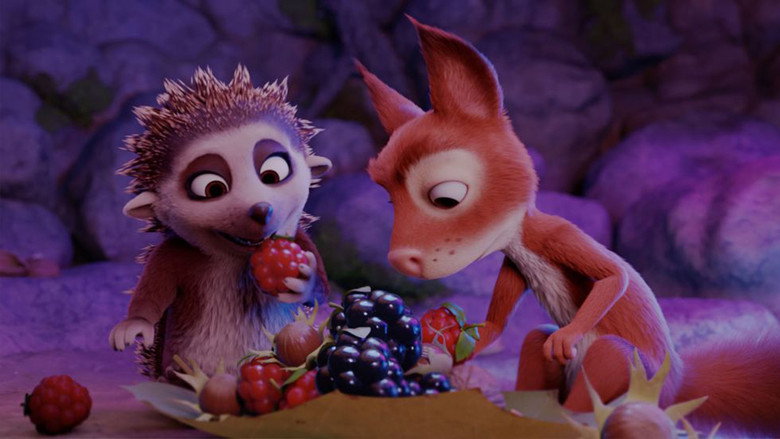
The premise is simple enough. Latte, a spiky little hedgehog with a stubborn streak and a heart of gold, teams up with Tjum, a nervous squirrel, to retrieve a stolen magic waterstone from a greedy bear who’s hoarding all the forest’s water. On paper, it’s a classic adventure setup: underdogs versus a villain, environmental stakes, the power of friendship.
But somewhere between the original 1956 Swedish children’s book and this 2019 animated adaptation, the story lost its way—or maybe it never found one to begin with.
The first sign that something’s off comes early, in the way the film talks to its audience. The dialogue swings between overly cutesy and oddly aggressive. At one point, Latte snaps at Tjum, “You’re such a coward!”—a line that lands with the subtlety of a dropped anvil in a movie aimed at kids.
It’s not just that the insult feels harsh; it’s that the film never really reckons with the cruelty of it. Latte isn’t written as a flawed character who learns empathy; she’s just right, all the time, even when she’s being unkind. That might work in a more nuanced story, but here, it makes her feel less like a hero and more like a bully with a cause.
The environmental message fares no better. The film’s central conflict revolves around a drought caused by the bear king’s greed, but the logic of the waterstone’s magic is so muddled that it’s hard to care. Why does the stone only work if it’s returned by someone pure of heart?
What does “pure of heart” even mean in a world where Latte’s first instinct is to call her friend a coward? The film never bothers to explain, because it’s too busy rushing from one set piece to the next—a chase through a cave, a synchronized swimming routine (yes, really), a climactic battle involving a lot of mud. The action is energetic, but it feels like it belongs in a different movie, one where the rules of the world make sense.
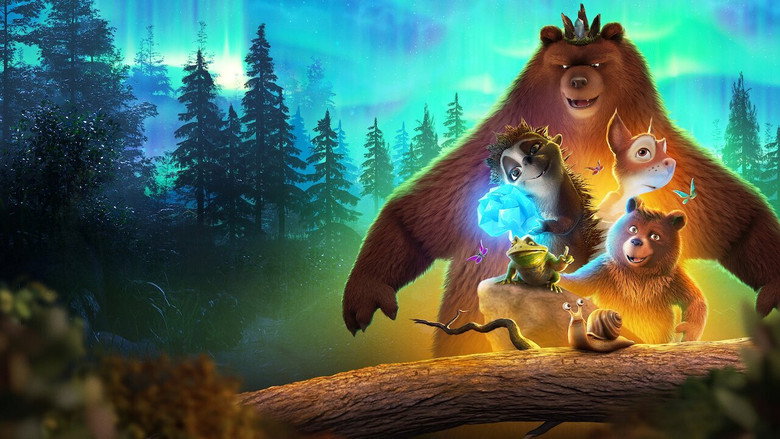
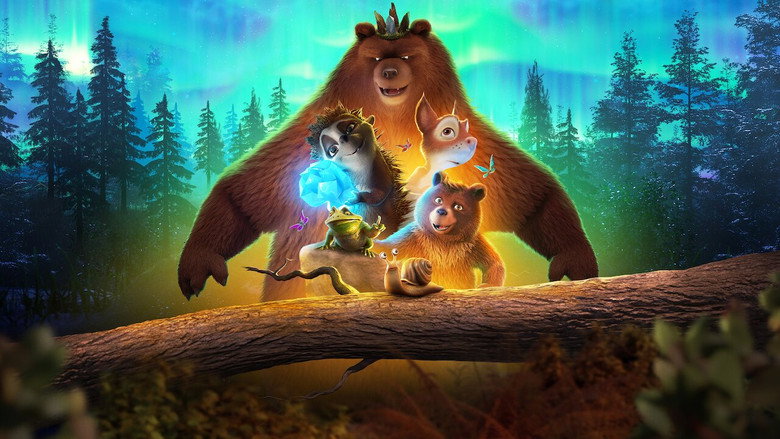
Visually, Latte has moments of real beauty. The forest is rendered in lush, vibrant colors, and the animators clearly put effort into making the fur of the animals look tactile and alive. There’s a dreamy quality to some of the landscapes, especially in scenes where the camera lingers on glowing mushrooms or the play of light through leaves.
But these moments are undercut by jarring inconsistencies—characters’ mouths moving out of sync with their dialogue, or sudden shifts in animation quality that make it feel like different scenes were outsourced to different studios. The film’s instrumental score, which some critics praised for its restraint, only highlights how little the film trusts its own visuals to carry the emotion.
Without lyrics or leitmotifs, the music often feels like it’s just filling silence, rather than enhancing the story.
The most frustrating thing about Latte and the Magic Waterstone is that it almost works. There’s a kernel of a good idea here—a story about how fear and greed can poison a community, and how even the smallest among us can make a difference. But the film never commits to its own themes.
The bear king, for instance, is a one-dimensional villain, his motivations reduced to “I like hoarding water.” There’s no nuance to his greed, no hint of the desperation or insecurity that might drive someone to such extremes. He’s just bad, and that makes him boring. Meanwhile, Latte’s journey is supposed to be about bravery, but the film never lets her fail or doubt herself in any meaningful way.
She’s brave from the start, and the story just confirms what we already know.
The critics were divided, and I can see why. The New York Times called it “unimaginatively simple,” which feels about right. There’s a slickness to the animation, a professionalism to the voice acting (Ashley Bornancin and Carter Hastings do their best with the material in the English dub), but it all feels like it’s going through the motions. Decider’s John Serba summed it up well: “You could do better; you could do worse.” That’s the thing about Latte—it’s not a disaster, but it’s not memorable either. It’s the kind of film that plays in the background while kids color or scroll on their tablets, a placeholder until something more engaging comes along.
And maybe that’s okay. Not every children’s movie needs to be a masterpiece. Sometimes, a film just needs to keep the little ones entertained for 89 minutes while the adults zone out.
But Latte had ambitions beyond that. It wanted to be a story about environmentalism and friendship, about standing up to bullies and believing in yourself. It just didn’t have the courage of its own convictions.
Instead of trusting its audience to handle complexity, it waters everything down—its themes, its characters, even its own visual potential—until all that’s left is a pretty, hollow shell.
I keep thinking about that synchronized swimming scene. It’s so bizarre, so out of place, that it almost feels like a metaphor for the whole film. Here’s this moment that’s supposed to be impressive, but it’s so tonally jarring that it just leaves you scratching your head.
Why is this here? What is it trying to say? The film never answers those questions, because it’s too busy moving on to the next thing.
And that, in the end, is the real problem with Latte and the Magic Waterstone. It’s a film that’s always in motion, but never really going anywhere.
"A charming but lightweight animated adventure that delights younger audiences while offering little depth for older viewers."
The vibrant animation and cute animal characters appeal strongly to children, making it a fun, if forgettable, family watch. The predictable plot and lack of complexity leave older viewers and animation fans wanting more substance or originality.
Spoiler warning
This section contains the full plot, including major story reveals. Overview above stays spoiler-free.
Latte and the Magic Waterstone (2019) is a charming animated film that whisked audiences away to a world of talking squirrels, ancient forests, and a mystical stone with the power to save nature. Directed by Andrea Deppert, Mimi Maynard, Nina Wels, and Regina Welker, the movie blends fantasy and environmental themes, but what went on behind the scenes? latestnetflix.com's take is that while details are scarce, a few intriguing tidbits have surfaced about its creation, cast, and reception.
The film’s German voice cast is packed with recognizable talent, including Luisa Wietzorek as Latte, the brave young squirrel, and Henning Baum (The Last Cop) as the villainous bear, Bantur. Other notable names include Timur Bartels, Tim Schwarzmaier, and Maud Ackermann, who lent their voices to the film’s eclectic animal characters [TMDB].
However, the English dub features a different lineup, with Ashley Bornancin, Danny Fehsenfeld, and Leslie L. Miller taking on key roles. This discrepancy between the original and dubbed versions isn’t uncommon, but it does raise questions about how the film’s tone shifted across languages. Was the English cast chosen to appeal to a broader audience, or did the filmmakers aim for a different comedic or dramatic style? The evidence doesn’t say—but it’s a fun detail for fans comparing versions.
Latte and the Magic Waterstone is a 3D-animated film, but little is known about its production process. The directors—Deppert, Maynard, Wels, and Welker—come from backgrounds in animation and children’s media, suggesting a collaborative effort to bring the story to life. The film’s lush visuals, from the towering trees of the forest to the shimmering Waterstone, hint at meticulous attention to detail, but without behind-the-scenes footage or interviews, the specifics remain a mystery.
One YouTube video offers a playful glimpse into the film’s world by reimagining its characters as real-life actors. The clip features live-action interpretations of Latte, Bantur, and other creatures, giving fans a fun (if unofficial) way to visualize the cast. While not a true behind-the-scenes look, it underscores the film’s appeal and the creativity it inspires.
The film’s trailer, available on Netflix Jr’s YouTube channel, teases its adventurous plot and vibrant animation. However, critical reception is harder to pin down. Rotten Tomatoes lists the movie, but no score or reviews are visible in the snippet. This leaves its reception largely unconfirmed—did it charm audiences, or did it fade into the background of animated releases that year?
One unanswered question is whether the film’s environmental themes resonated with viewers. The story centers on Latte’s quest to protect the Waterstone, a magical artifact that sustains the forest, from those who would exploit it. Given the growing demand for eco-conscious children’s media, it’s possible the film struck a chord—but without reviews or box office data, this remains speculative.
Latte and the Magic Waterstone may not have the name recognition of major animated franchises, but its unique premise and voice cast make it a curiosity for fans of family films. The lack of behind-the-scenes coverage suggests it flew under the radar, but the few details available—like its dual-language casts and environmental themes—hint at a project with heart.
For now, the film’s magic remains in its story rather than its production lore. But if you’re a fan of whimsical adventures, it might be worth a watch—just don’t expect a trove of Hollywood gossip to go with it.
Entertainment rumors and trivia aggregated from public reporting. Treat speculation as unverified unless a cited source confirms it.
More titles in the same genres and with the same cast.