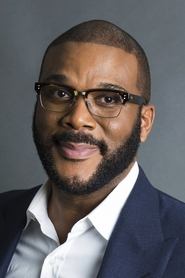
Tyler Perry
Madea / Uncle Joe

“It's a family affair.”
Madea's back - hallelujer! And she's not putting up with any nonsense as family drama erupts at her great-grandson's college graduation celebration.
Official
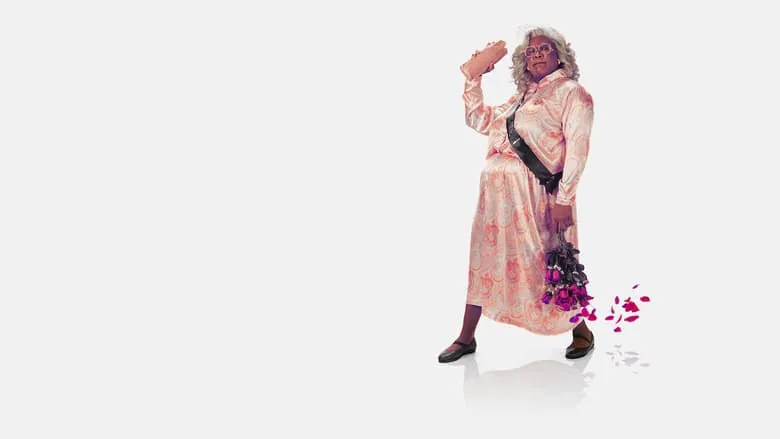
I’ve lost count of how many times Tyler Perry has put on the floral housecoat, the wig, the granny glasses, and the scowl that could curdle milk. A Madea Homecoming is the eleventh (or twelfth? The franchise has a way of blurring together) installment in a series that has long since settled into its own rhythm—part family reunion, part sermon, part slapstick. And yet, here I am, still watching.
Not because I expect revelation, but because there’s something oddly comforting in the predictability of it all. Like a church service you’ve attended every Sunday for years: you know the hymns by heart, you can recite the sermon before it’s delivered, but you keep coming back anyway.
That’s the paradox of Madea. She’s a caricature, a broad-strokes creation who exists somewhere between the mammy archetype and the no-nonsense Black matriarch who’ll cuss you out before she hugs you. Perry has been criticized for years for leaning into stereotypes, for creating a character who is equal parts beloved and reductive.
And yet, Madea endures. Why? Because beneath the exaggerated swagger and the one-liners that land with the subtlety of a sledgehammer, there’s a kernel of truth about family, about resilience, about the way Black Southern households navigate love and chaos in equal measure. A Madea Homecoming doesn’t break that mold—it doesn’t even try.
Instead, it doubles down, offering up a story that feels like a greatest hits album of the franchise’s greatest tropes.
The plot, such as it is, revolves around a college graduation—a milestone that serves as the perfect excuse for a family gathering. And where there’s family, there’s drama. Madea’s great-grandson is the guest of honor, but the real star is the house itself, a space that feels lived-in, cluttered, and alive.
Perry’s films have always excelled at creating a sense of place, and Homecoming is no exception. The living room is a character in its own right, a stage where secrets are spilled, old wounds are reopened, and, eventually, some semblance of resolution is reached. It’s a familiar setting, but familiarity is the point.
This isn’t a film about reinvention; it’s about ritual.
What’s interesting about A Madea Homecoming is how it balances its two halves: the comedy and the drama. Perry has always walked this tightrope, and here, he leans harder into the latter than usual. There are moments where the film feels like it might tip into something more serious—a meditation on legacy, on the weight of expectation, on the way family shapes us whether we like it or not.
But just as quickly, it pulls back, as if remembering that its primary job is to make the audience laugh. The result is a tonal whiplash that never quite resolves itself. One minute, you’re watching a scene that could’ve been lifted from a Tyler Perry drama (The Haves and the Have Nots, say), and the next, you’re knee-deep in a farcical subplot involving a misplaced engagement ring or a case of mistaken identity.
The cast, as always, is game. Cassi Davis and David Mann return as Aunt Bam and Uncle Joe, their chemistry as sharp as ever. Their banter is the backbone of the film, a reminder that Perry’s best work comes from the interplay between his actors.
Tamela Mann, too, brings a warmth to her role that softens some of the film’s rougher edges. But the real surprise here is Brendan O’Carroll and Jennifer Gibney, the Irish stars of Mrs. Brown’s Boys, who show up as—well, it’s not entirely clear what they’re doing here.
Their presence feels like a gimmick, a way to inject some cross-cultural humor into the mix. It’s not that it doesn’t work; it’s just that it doesn’t matter. Their characters are thinly sketched, existing solely to deliver punchlines that feel like they belong in a different movie.
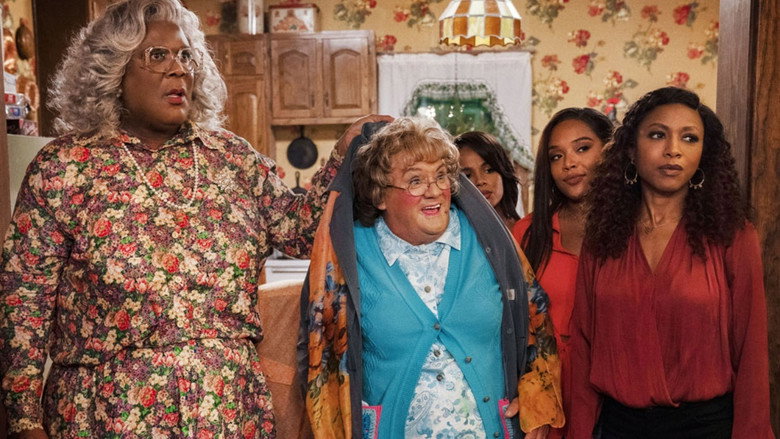
And then there’s Perry himself, of course. Madea is a role he’s played so often that it’s easy to forget how physically demanding it must be. The padding, the wig, the makeup—it’s a transformation, but one that’s become so routine that it’s hard to see it as anything other than second nature.
That’s not a knock against Perry; if anything, it’s a sign of how fully he’s committed to the character over the years. But there’s a weariness to Madea here, a sense that she’s going through the motions. The jokes land, the one-liners hit, but there’s a lack of spontaneity, as if Perry is coasting on muscle memory.
That’s not to say there aren’t flashes of the old magic. There’s a scene where Madea delivers a monologue about the importance of family, and for a brief moment, the film transcends its own formula. It’s a reminder of why this character resonates with so many people: because beneath the bluster, she’s saying something real.
The problem is that A Madea Homecoming never quite decides what it wants to be. Is it a comedy? A drama?
A sermon? A little bit of all three? The film lurches between these modes, never fully committing to any of them.
The result is a movie that feels like it’s constantly pulling its punches. When it leans into the drama, it risks becoming maudlin; when it leans into the comedy, it risks feeling frivolous. There’s a middle ground here, a sweet spot where Perry’s blend of humor and heartache has worked in the past, but Homecoming never quite finds it.
That’s not to say the film is without charm. There’s something undeniably warm about the way it portrays Black family life—messy, loud, and full of love. The graduation setting is a smart choice, a moment that feels both celebratory and bittersweet.
It’s a chance for the characters to reflect on where they’ve been and where they’re going, and for a brief moment, the film feels like it might actually say something meaningful about legacy and growth. But then, inevitably, it undercuts itself with a joke or a slapstick gag, as if afraid to linger too long in the emotional weight of the moment.
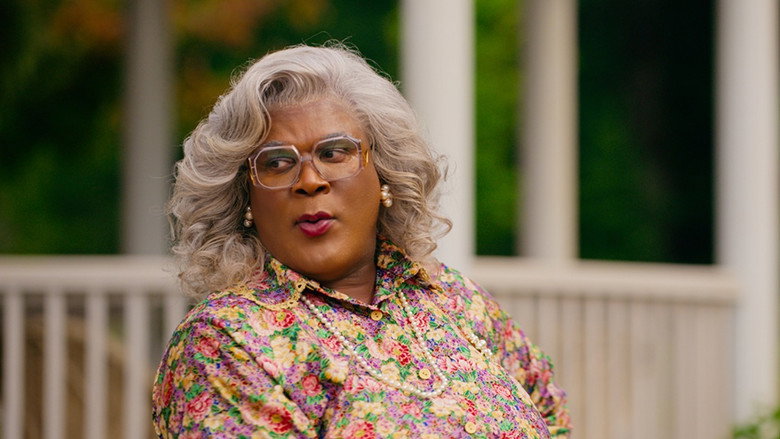
I’ve often wondered why Perry’s films resonate so deeply with certain audiences while leaving others cold. Part of it, I think, is about recognition. For many viewers, Madea isn’t just a character; she’s a reflection of the women in their own lives—the tough, no-nonsense matriarchs who hold families together with a mix of love, guilt, and sheer force of will.
There’s a comfort in seeing that experience represented on screen, even if it’s through a lens that’s exaggerated for comedic effect. But for others, Madea is a relic, a throwback to a time when Black characters were often reduced to broad stereotypes. The truth, as always, is somewhere in the middle.
Perry’s films are a product of their time, for better and for worse. They’re not subtle, they’re not groundbreaking, but they’re undeniably his—a reflection of his own experiences, his own sensibilities, his own way of seeing the world.
And maybe that’s enough. Maybe the point of A Madea Homecoming isn’t to break new ground, but to remind us of what we already know: that family is complicated, that love is messy, and that sometimes, the only way to get through it is to laugh. The film may not be Perry’s best work, but it’s not his worst, either.
It’s a placeholder, a way to keep the franchise alive while he figures out what comes next. And who knows? Maybe that’s all it needs to be.
After all, Madea’s been around for nearly 20 years. At this point, she’s not just a character; she’s a tradition. And traditions, like family, are hard to let go of—even when they’ve long since outlived their original purpose.
I left A Madea Homecoming feeling the same way I always do after spending time with Madea: a little exhausted, a little amused, and a little nostalgic for something I can’t quite name. Maybe that’s the point. Maybe the best we can hope for from these films is that they leave us with a sense of familiarity, a reminder that no matter how much the world changes, some things—like family, like Madea—stay the same.
And maybe, just maybe, that’s enough.
"A heartfelt but uneven return for Madea, mixing familiar humor with emotional moments that work better for longtime fans than newcomers."
*Tyler Perry's A Madea Homecoming* has nostalgic charm and emotional moments, carried by Tyler Perry and the returning cast. But the humor and plot are predictable and don't break new ground for the franchise. The comedy-drama mix works for those invested in the series; others will see a missed chance at fresh storytelling.
Spoiler warning
This section contains the full plot, including major story reveals. Overview above stays spoiler-free.
After years of retirement threats and fan speculation, Tyler Perry brought back his iconic character Mabel "Madea" Simmons for A Madea Homecoming (2022), a Netflix-exclusive film that marked a new chapter for the beloved franchise. latestnetflix.com's take is that the movie, Perry’s 13th Madea installment, arrived with a mix of nostalgia and fresh energy—though not without its share of drama, both on and off-screen.
Perry had teased Madea’s retirement for years, even declaring A Madea Family Funeral (2019) as the character’s swan song. Yet, by 2022, the filmmaker reversed course, citing fan demand and creative inspiration. In a trailer reaction video, Perry admitted, "Madea’s not done yet"—a statement that reignited excitement among loyal viewers. The film’s premise, centered around a college graduation and family reunion, offered a softer, more sentimental tone compared to the franchise’s usual chaotic humor, suggesting Perry was testing new emotional depths for the character.
A Madea Homecoming reunited Perry with longtime collaborators Cassi Davis (Hattie) and David and Tamela Mann (Mr. And Mrs. Brown), who have been staples of the Madea universe since its stage-play days. The film also introduced new faces, including Brendan O’Carroll and Jennifer Gibney of Mrs. Brown’s Boys, a British-Irish sitcom with a similar irreverent style. Their inclusion fueled rumors of a potential crossover, though neither Perry nor Netflix has confirmed plans for a joint project.
Brandon Black, Isha Blaaker, Gabrielle Dennis, and Amani Atkinson rounded out the cast, with Black’s character, Tim, serving as a focal point for the film’s generational conflicts. Perry’s decision to center the story around a Black family’s celebration—complete with cultural traditions and personal struggles—reflected his signature blend of comedy and social commentary.
The film’s shift to Netflix marked a strategic pivot for Perry, who had previously released Madea movies through Lionsgate. The streaming giant’s global reach offered a chance to introduce Madea to new audiences, though early reactions were mixed. While some fans praised the film’s heartfelt moments, others criticized its pacing and reliance on familiar tropes. Despite the divided response, A Madea Homecoming reinforced Perry’s ability to draw crowds, even in a crowded streaming landscape.
Perry has remained tight-lipped about Madea’s future, but the character’s enduring popularity makes another return plausible. With Perry’s production empire expanding into TV (The Oval, Sistas) and new film projects (Divorce in the Black), Madea’s next chapter could take unexpected forms—whether as a limited series, a holiday special, or even a surprise cameo. For now, A Madea Homecoming shows Perry’s knack for balancing nostalgia with reinvention.
Entertainment rumors and trivia aggregated from public reporting. Treat speculation as unverified unless a cited source confirms it.
More titles in the same genres and with the same cast.