Katia Winter
Lisa

A mid-age hipster in Stockholm is a training freak and trains for the 90 km ski race Vasaloppet. His sister is the opposite, no job, drinks but has a daughter. Suddenly secrets reveals and promises are made.
Official
I’ve always had a soft spot for films that treat physical endurance as a metaphor for emotional stamina. There’s something deeply human about watching someone push their body to its limits—whether it’s running, climbing, or, in the case of Off Track, skiing—while their life unravels in ways they never anticipated. Mårten Klingberg’s 2022 Swedish dramedy doesn’t reinvent the wheel, but it does something rarer: it makes the wheel feel like it’s rolling uphill, even when the terrain is flat.
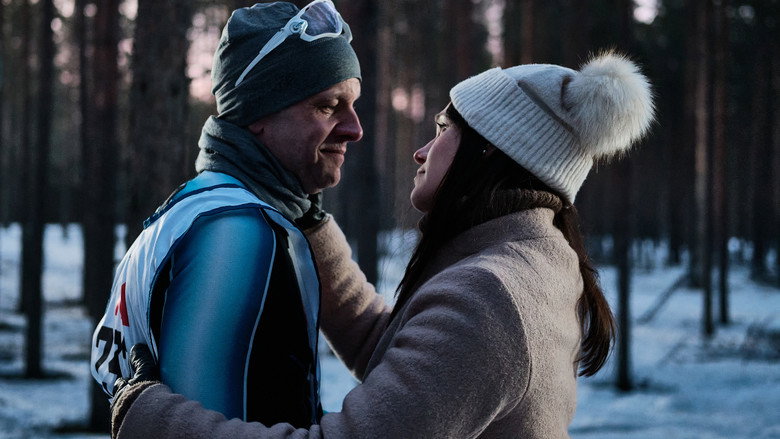
The film follows a Stockholm hipster (Fredrik Hallgren) training obsessively for the 90-kilometer Vasaloppet ski race, a real-life endurance event that’s as much a test of will as it is of physical fitness. His life is a carefully curated performance of health and control—until it isn’t. His sister (Rakel Wärmländer), a single mother with a drinking problem and no job, crashes back into his orbit, dragging a suitcase full of secrets and a daughter he barely knows.
The premise is familiar: the responsible sibling versus the reckless one, the promise of redemption through sweat and suffering. But Off Track sidesteps the usual clichés by refusing to let its characters off the hook. There’s no grand epiphany at the finish line, no tearful reconciliation in the snow.
Just the quiet, exhausting work of moving forward.

Klingberg’s direction is unshowy but precise, favoring wide shots of the Swedish wilderness that make the characters feel small in the best way. The Vasaloppet isn’t just a backdrop; it’s a character in itself, a relentless force that mirrors the film’s emotional beats. The skiing sequences are shot with a documentary-like realism, the camera lingering on the rhythmic scrape of skis against snow, the labored breathing of the racers.
It’s the kind of detail that grounds the film in something tangible, even when the story threatens to veer into melodrama. (And it does, occasionally—there’s a subplot involving a dying parent that feels borrowed from a lesser Hallmark movie, but Klingberg pulls it back from the brink with a well-timed joke or a glance that says more than dialogue ever could.)
The real strength of Off Track lies in its performances, particularly Hallgren and Wärmländer. Hallgren, who played the titular grump in A Man Called Ove, brings a similar gruff charm here, but with a vulnerability that keeps his character from becoming a caricature. Watch the way he holds himself when his sister walks back into his life—shoulders tense, jaw set, as if bracing for impact.
It’s a small thing, but it speaks volumes about the history between them. Wärmländer, meanwhile, is a revelation. Her character could easily have been a one-note mess of self-destructive impulses, but she plays her with a weary humor that makes her feel real.
There’s a scene where she’s drunk and trying to explain herself to her daughter, her words slurring but her eyes sharp, and it’s heartbreaking precisely because it’s not played for pathos. She’s not asking for pity; she’s just trying to get through the night.
The film’s tonal balancing act—comedy, drama, romance—isn’t always seamless. There are moments where the shifts feel abrupt, like the film can’t decide whether it wants to be a farce or a family tragedy. But that’s also part of its charm.
Life doesn’t come with a genre label, and neither do our relationships. The humor here isn’t the kind that lands with a punchline; it’s the kind that sneaks up on you, like the absurdity of trying to train for a marathon ski race while your life is falling apart. One scene, in particular, stands out: Hallgren’s character, exhausted and sore, tries to impress his sister by doing one-armed push-ups.
He collapses halfway through, and she deadpans, “You’re not as young as you think.” It’s a throwaway moment, but it encapsulates the film’s central tension—between the image we project and the reality we’re too tired to hide.
Off Track isn’t a perfect film, but it’s a deeply honest one. It understands that growth isn’t about crossing a finish line; it’s about the messy, incremental work of showing up, even when you’re not sure you can. The SensCritique rating of 6.2/10 suggests that not everyone was sold on its blend of tones, and I can see why.
It’s not a film that announces its ambitions with a capital A. It’s quieter than that, more interested in the spaces between the big moments—the way a character exhales after a fight, the way the light hits the snow just before dawn. In a cinematic landscape that often equates importance with volume, that’s something worth celebrating.
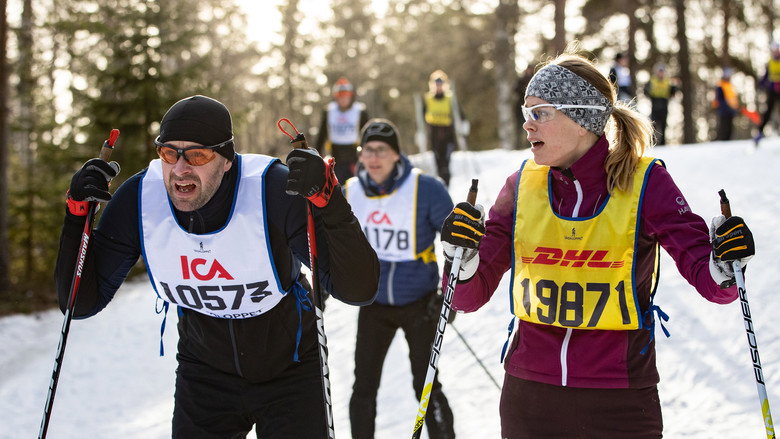
I left the film thinking about the Vasaloppet, about how strange and beautiful it is that people will willingly subject themselves to that kind of suffering. But then, we do it every day, don’t we? Not on skis, maybe, but in smaller, more private ways. Off Track doesn’t judge its characters for their flaws or their failures.
It just watches them try, and fail, and try again. And sometimes, that’s enough.
Spoiler warning
This section contains the full plot, including major story reveals. Overview above stays spoiler-free.
Off Track (Ur spår in Swedish) is a 2022 comedy-drama directed by Mårten Klingberg, marking another entry in the filmmaker’s repertoire of character-driven stories. Starring Katia Winter and Fredrik Hallgren, the film blends humor and emotional depth, a signature of Klingberg’s work. latestnetflix.com's read is that while details about the production remain sparse, the available evidence offers a glimpse into its creative process, cast dynamics, and reception.
Klingberg, known for his work on the Beck crime series and films like Offside (2006), brings a mix of levity and gravitas to Off Track. His background as both an actor and director suggests a hands-on approach to storytelling, prioritizing authentic performances. In a trailer and interview clip, Klingberg appears alongside lead actress Katia Winter and producer Cecilia Forsberg Becker, hinting at a collaborative set. While the snippet doesn’t reveal specifics, it underscores the film’s Swedish roots and Klingberg’s commitment to blending genres—comedy, drama, and romance, per its SensCritique listing.
The film’s 108-minute runtime aligns with Klingberg’s preference for tight, character-focused narratives, though whether Off Track leans more toward laughs or tears remains a point of curiosity. Early audience reactions on SensCritique give it a modest 6.2/10, suggesting a mixed but engaged reception.
Winter, best known for her roles in Dexter and Sleepy Hollow, and Hallgren, a Swedish actor with credits in A Man Called Ove, anchor the film. Their pairing is a draw, though the evidence doesn’t confirm whether their on-screen dynamic mirrors real-life camaraderie. Supporting players like Rakel Wärmländer and Ulf Stenberg round out the ensemble, but details about their contributions are limited to cast lists.
One intriguing detail: Matilda Källström is mentioned in a Rotten Tomatoes snippet, but her role isn’t clarified in the provided evidence. Whether she’s a key player or a minor character remains unverified. Similarly, Netflix’s Dutch-subtitled trailers suggest international appeal, though the film’s primary audience appears to be Scandinavian.
Unlike blockbusters with sprawling press tours, Off Track seems to have flown under the radar. No behind-the-scenes featurettes or cast interviews beyond the trailer clip have surfaced in the retrieved evidence. The film’s Netflix presence in the Netherlands hints at a streaming-focused release strategy, but specifics about its premiere or promotional efforts are absent.
Rumors of a sequel (Off Track 2) appear on Rotten Tomatoes, but the snippet doesn’t confirm whether it’s a direct follow-up or a similarly titled project. Without additional context, this remains speculative.
Off Track occupies a niche space—Swedish indie with mainstream potential. Its blend of comedy and drama, coupled with Klingberg’s direction, positions it as a sleeper hit for fans of character-driven cinema. However, the lack of in-depth coverage leaves many questions unanswered. Did the cast improvise? Were there on-set challenges? For now, the film’s legacy rests on its modest but intriguing premise and the talent behind it.
Entertainment rumors and trivia aggregated from public reporting. Treat speculation as unverified unless a cited source confirms it.
More titles in the same genres and with the same cast.