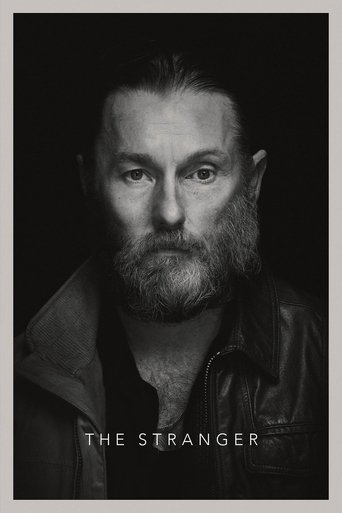
Aleksandr Ilyin Jr
father

The little boy receives the last instruction from his mother: now he will have to take care of a deaf father who has problems with alcohol, because in fact, dad is a samurai who has made a vow of silence and needs a mentor ... When a representative of guardianship authorities comes to them, little a family of two is on the verge of separation.
I didn’t expect to cry over a nine-minute film about a drunk samurai and his son. But here we are. Mute is that rare short that doesn’t just sketch a mood—it carves out a whole emotional landscape in the time it takes to brew a cup of tea. And yet, the TMDB score—a perfect 1.0 from a single vote—suggests I might be alone in this.
Maybe it’s the premise: a deaf father, a vow of silence, a child forced into the role of caretaker. Maybe it’s the runtime, which dares to ask for your full attention without the cushion of a feature-length narrative. Or maybe it’s the way the film refuses to soften its edges, even when the story threatens to collapse under the weight of its own bleakness.
Nikita Vlasov’s direction is unflinching, but not in the way you’d expect. There’s no violence here, no grand spectacle of suffering. Instead, the camera lingers on small, suffocating details: the way a child’s fingers tremble as he pours his father’s vodka, the way a samurai’s sword gathers dust in the corner of a cramped apartment.
The film’s power lies in its stillness. Every frame feels like a held breath, as if the characters—and the audience—are waiting for something to break. And something does.
Just not in the way you’d think.
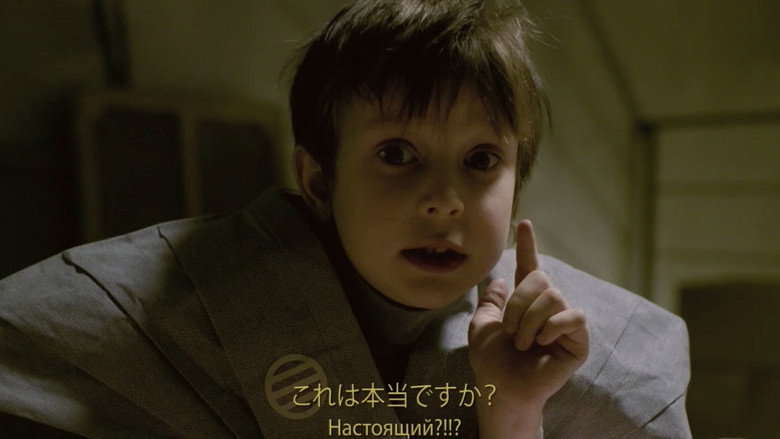
The father, played by Aleksandr Ilyin Jr., is a man who has lost his voice in more ways than one. His deafness isn’t just physical; it’s existential. He’s a samurai who has made a vow of silence, but the film never clarifies whether this is a spiritual discipline or a surrender to despair.
(I suspect it’s both.) His son, a boy no older than ten, is left to navigate this silence, to interpret his father’s grunts and gestures, to become the adult in a household where the only other presence is a social worker who arrives like a specter of doom. The dynamic between them is heartbreaking precisely because it’s so quiet. There are no histrionics, no dramatic confrontations.
Just a child trying to keep his father from drowning in a bottle, and a father who can’t—or won’t—save himself.
The film’s genius is in how it uses silence as both a weapon and a shield. The father’s vow isn’t just a personal quirk; it’s a narrative device that forces the audience to lean in. We’re not spoon-fed exposition or emotional cues.
Instead, we’re left to piece together the story from fragments: a glance, a gesture, the way the father’s hands shake when he reaches for the vodka. The sound design is sparse, almost clinical, but that only amplifies the weight of the few sounds we do hear—the clink of a glass, the creak of a floorboard, the muffled voice of the social worker through the door. It’s as if the film itself is holding its breath, waiting for the moment when the silence will finally shatter.
And then there’s the samurai sword. It hangs on the wall like a relic of a life that no longer exists. The father never touches it, never even looks at it.
It’s just there, a silent testament to a past he can’t escape and a future he can’t imagine. The sword isn’t just a prop; it’s a character in its own right, a symbol of the father’s paralysis. He’s a man who has been trained to fight, to protect, to act—but in this tiny apartment, with this small boy, he’s powerless.
The sword is both his identity and his prison.
The performances are what elevate Mute from a bleak character study to something approaching poetry. Ilyin Jr. Plays the father with a physicality that’s devastating in its restraint.
His body is a map of defeat—slumped shoulders, slow movements, eyes that dart away from his son’s gaze. There’s no grandstanding here, no actorly tics to signal his pain. Just a man who has given up, but doesn’t know how to say it.
The child, played by Ioann Staroverov, is even more remarkable. He’s not a precocious kid playing at being an adult; he’s a real child, overwhelmed and scared, but determined to hold things together. Watch the way he sets the table, the way he pours the vodka with the careful precision of someone who’s done this too many times.
There’s no dialogue to sell the moment, just the weight of his small hands on the bottle.
What’s striking about Mute is how it resists easy resolution. There’s no catharsis, no moment of redemption. The social worker arrives, the father stumbles, the boy stands between them like a shield—and then the film ends.
We don’t know what happens next. Does the boy get taken away? Does the father finally speak?
Does the samurai sword ever leave the wall? The film doesn’t care about answers. It’s a snapshot of a moment, a freeze-frame of a life on the brink.
And maybe that’s why it’s so hard to shake. It doesn’t give you the comfort of closure. It just leaves you with the weight of silence.
I keep thinking about that sword. About how it’s both a promise and a failure. About how the father’s silence isn’t just a vow—it’s a surrender.
And about how the son, in his small, stubborn way, refuses to surrender with him. Mute isn’t a film about redemption. It’s a film about endurance. About the quiet, desperate ways we try to hold on when everything else is falling apart.
And maybe that’s why it hurts so much. Because we’ve all been there, in one way or another. Standing in the wreckage, waiting for the silence to break.
"A visually striking but narratively confusing drama that leaves many viewers cold despite its ambitious themes."
The atmospheric direction and cinematography are often praised for a moody, immersive experience. The slow pacing, thin plot, and unclear character motivations frustrate many, making it hard going for anyone expecting a conventional drama.
Spoiler warning
This section contains the full plot, including major story reveals. Overview above stays spoiler-free.
Type "Mute 2018 Netflix" and Duncan Jones wins the search. Alexander Skarsgard as a bartender who cannot speak. Paul Rudd in Berlin neon. That film landed on 23 February 2018, 126 minutes, a spiritual sequel to Moon that Rotten Tomatoes scored at 21 percent. In July a second Mute dated 5 July 2018 showed up in catalogs. Same English title. Nine minutes. Spoken in Russian. latestnetflix.com's read is that a little boy, a deaf father with a drinking problem, a custody inspector at the door, and a samurai vow of silence that is the child's cover story,.
TMDB files this one as movie 658554. Nikita Vlasov wrote and directed it as a student at Industry Film School in Moscow. Fyodor Bondarchuk opened that two-year shop in 2017 with producers Mikhail Vrubel and Alexander Andryuschenko. He told Kommersant they wanted specialists "for themselves," and that students would shoot shorts in teams of three during the first five months. Fifty people got in from several hundred applicants. Tuition was 300,000 rubles a year. Andryuschenko is credited as producer on this short. Filipp Frolov and Marina Voevoda share the script. Nikita Chvanov shot it.
Aleksandr Ilyin Jr. Plays the father. Russian audiences already knew him from the sitcom Interny. He later turned up in Sobibor and Petrov's Flu, and he fronts the punk band Plan of Lomonosov. Ioann Staroverov is the son who inherits the last instruction from his mother. Evgeniya Vays is that mother. Alexandr Topuriya is the inspector. The Russian listing on Kino-Teatr boils the plot to one sentence. A story about how a deaf father heard his child. In late 2019 the streamer Wink packaged six Industry student shorts as an exclusive block. The YouTube promo names Mute in the same breath as Harmony, Doping, and The Offer, with Bondarchuk, Ilya Stewart, Vrubel, Andryuschenko, and screenwriter Alexei Kazakov listed as curators.
Vokrug TV treats MUTE as Vlasov's first step. Born in 1992, he left Voronezh University for VGIK's screenwriting workshop under Yuri Arabov, then finished directing at Industry in 2019. More shorts followed, Bolvanka and Father and Son. Russian streamers then hired him for the Sochi spinoff Mazhor v Sochi, the 2023 Ivi crime-comedy Lada Gold, and the 2024 Wink series Kombinatsiya about the late-Soviet girl group of that name. Nobody leaked a salary. Nobody staged a feud. The mix-up is the story. Netflix still carries both 2018 titles, and this is the one where the kid has to keep his father from being taken.
Entertainment rumors and trivia aggregated from public reporting. Treat speculation as unverified unless a cited source confirms it.
More titles in the same genres and with the same cast.