

Claresta Taufan
Sartika

“Nothing can be as powerful as a mother's love.”
Sartika, a pregnant young woman, moves away from her city hoping to provide a better future for her child. She meets Maya, a coffee shop owner in Pantura. Maya takes care of Sartika and helps with her deliveries. After Sartika gives birth, Maya manipulates her into working for her as the "Kopi Pangku" waitress, a job that requires her to serve coffee on a man's lap, until one day she meets a fish distributor truck driver named Hadi and falls in love. Will she find happiness?
Official
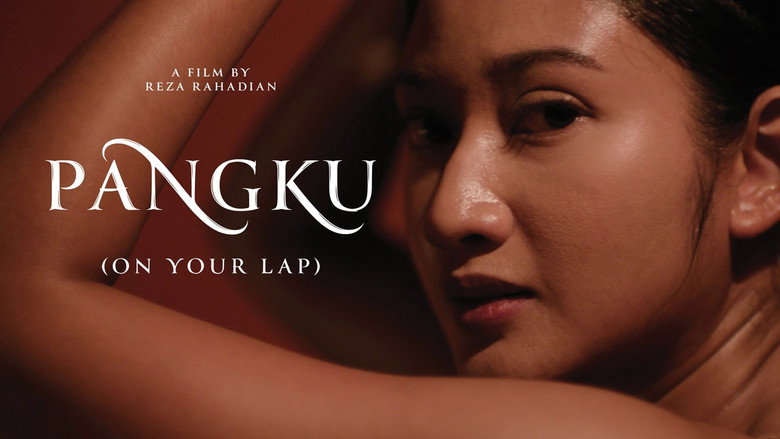
I've seen this trick before: a film about women's labor framed as scandal that reveals itself as something quieter and more devastating. On Your Lap could have been lurid. The premise, Sartika working as a kopi pangku waitress, serving coffee while perched on men's laps in a roadside café, sounds like a morality tale or, worse, poverty porn. But Reza Rahadian, directing his first feature after years as one of Indonesia's most respected actors, refuses the easy route.
He lingers in the mundane, where survival is neither heroic nor shameful, just exhausting.

The opening is a lesson in restraint. Sartika (Claresta Taufan) arrives in a coastal village, her belly already heavy. There's no declaration of her circumstances, just accumulating details: her hesitation stepping off the bus, her hands placed carefully on her stomach, the exhaustion in her eyes when she accepts Maya's (Christine Hakim) offer of shelter.
Rahadian doesn't rush to explain. The camera sits with Sartika as she learns the café's rhythms: how to balance a tray while climbing onto a stranger's lap, how to smile just enough to keep the tips coming without inviting more. It's a performance within a performance, and Taufan plays it with a quiet precision that makes every small gesture count.
The film barely sensationalizes the practice. There's no lingering on leering customers or exploitative close-ups. Rahadian treats it as a job, albeit one in the gray area between service and intimacy.
The men at Maya's café aren't monsters; they're lonely, bored, or passing through. Some are kind, some indifferent, a few predatory, and the film refuses to simplify them or Sartika's relationship to them. As Asian Movie Pulse notes, Rahadian "handles the intimate struggles of his protagonist with sensitivity, refusing to moralize her choices."
That refusal is what makes the film feel radical. It doesn't ask us to judge Sartika; it asks us to sit with her in the discomfort of survival.

The heart of the film is Sartika's relationship with Maya. Hakim, a legend of Indonesian cinema, brings weary gravitas to a woman who knows the world's cruelties but hasn't given up on kindness. Their dynamic is part mother-daughter, part employer-employee, part co-conspirators in a system that grinds women down.
When Maya teaches Sartika to read the men who come in, which will pay extra for a smile, which to avoid after dark, it's a survival lesson and a moment of tenderness, wisdom that can't be found in any manual.
The flaw is the middle act, where the romance between Sartika and Hadi (Fedi Nuril), a fish-distribution truck driver, threatens to tip into melodrama. Hadi is the film's gesture at hope, a man who sees Sartika as a person rather than a waitress or a mother. Their courtship is sweet, almost painfully so, but feels like a detour from the harder truths; Asian Movie Pulse also found the romance section "less tight in pacing or writing."
Maybe it's intentional, a reminder that even in bleak circumstances people reach for connection, however fleeting.
What stays with me most is the ending, which feels both inevitable and devastating. Rahadian doesn't tie things up neatly. There's no grand victory or tragic downfall, just the quiet acknowledgment that life goes on.
Sartika's journey isn't about escaping her circumstances but enduring them, and in that endurance there's dignity.
Taufan is the anchor, carrying Sartika with a physicality that says a great deal: how she holds her body when tired, the slight tremble of her hands when afraid, the smile she forces for customers when she'd rather scream. It's a career-defining turn, one MIB's Instant Headache rightly calls "magnificent," adding that she "keeps her dignity in the face of adversity; even the sappy ending feels earned."
On Your Lap trusts its audience. It doesn't explain, judge, or offer easy answers. It asks us to pay attention to the women who serve coffee on strangers' laps, to mothers who do whatever it takes, to the quiet resilience of those who survive when the world seems determined to break them.
In that attention there's a kind of grace.
"A heartfelt yet uneven drama with standout performances but a meandering narrative."
The lead actors, particularly Claresta Taufan and Christine Hakim, bring real emotional depth and authenticity. The loose pacing and lack of focus can leave you disconnected, with moments of brilliance overshadowed by a disjointed structure.
Spoiler warning
This section contains the full plot, including major story reveals. Overview above stays spoiler-free.
latestnetflix.com's take is that It may look like a serious prestige drama about a kopi pangku cafe and a single mom, but behind the moody lighting and festival laurels, On Your Lap (Pangku) was brewed with creative clashes, censorship standoffs, and a lead actress literally changing her body for the role.Pull up a chair — preferably not someone’s lap — and let’s spill.
If you’re hunting for cheating scandals, rehab stints, or lawsuits, On Your Lap’s team is almost suspiciously clean:
In other words: the messiest things about On Your Lap are artistic choices, bruised egos, and lung capacity. For a film about women forced to sit in men’s laps to survive, that might be the most shocking twist of all — the real world around it is comparatively wholesome.
Entertainment rumors and trivia aggregated from public reporting. Treat speculation as unverified unless a cited source confirms it.
More titles in the same genres and with the same cast.


