

Marthino Lio
Ajo Kawir

“He fears no death, yet a secret fight rages within”
Ajo Kawir is a fighter who fears nothing, not even death. His raging urge to fight is driven by a secret: his impotence. When he crosses paths with a tough female fighter named Iteung, Ajo gets beaten black and blue, but he also falls head over heels in love. Will Ajo’s path lead him to a happy life with Iteung, and, eventually, his own peace of mind?
Official
I have seen a lot of films about men who cannot stop fighting. Usually the reason is simple. They are angry, or they are afraid, or they are trying to prove something. Vengeance Is Mine, All Others Pay Cash gives us a man who fights because he cannot do the other thing, and the movie hangs on that fact.
Ajo Kawir, played by Marthino Lio, has a reputation for fearlessness. He walks into bar fights as if they were errands. He is also impotent.
Not the usual action-hero numbness, slow to love, shut down. Literal, physical. So the violence becomes compensation.
A way to feel something, anything, when the one thing he is supposed to be able to do as a man is denied him.
The original title, Seperti Dendam Rindu Harus Dibayar Tuntas, translates roughly to "Like Vengeance, Longing Must Be Paid in Full." A mouthful. It also names what the English title ducks.
This story is about debt as much as revenge. Emotional debt, physical debt, the bill that grows when you are told your body should work a certain way and it does not. The English title has pulp-noir swagger.
It sells a straight revenge picture. The Indonesian one is messier. Desire and its absence.
The habit of stuffing the gaps in yourself even when the stuffing only makes the hole deeper.
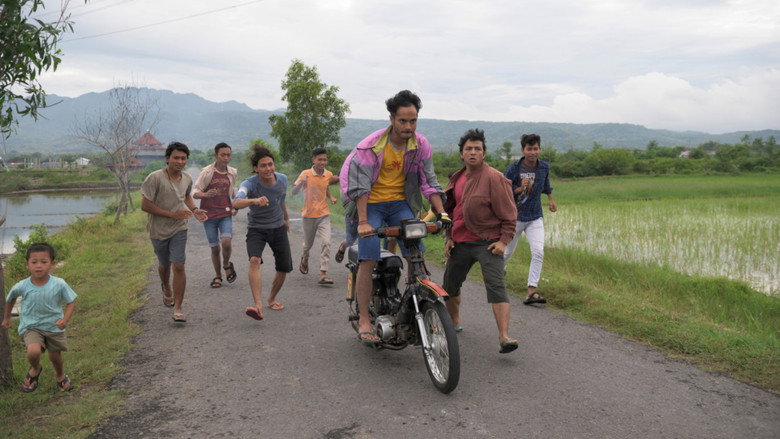
Edwin, the director, does not treat Ajo's impotence as a punchline or a plot device waiting to be cured. It is the weight under every scene. Every fight, every tender beat, every conversation leans toward it.
The synopsis teases a love story. Ajo meets Iteung, played by Ladya Cheryl, a female fighter who beats him black and blue and, somehow, gets to his heart. This is not a rom-com.
Dark comedy, drama, action film, tangled together, and the romance is another battleground. Iteung is not a prize to win or a problem to solve. She fights as hard as he does.
Their relationship is less about healing than about two people spotting the same break.
The genre mix is how the story thinks. Action arrives brutal and sudden, then gets shot with a deadpan shrug, as if the film cannot decide whether to take the beating seriously. The comedy is not there to lighten the mood.
It undercuts the machismo these movies usually protect. Ajo is not a hero. He is excellent at fighting and terrible at the rest.
The film lets him be ridiculous and tragic in the same scene. He tries to impress Iteung with his skills and she knocks him out cold. Funny.
Also awful, because you realize this is the only way he knows how to reach her.
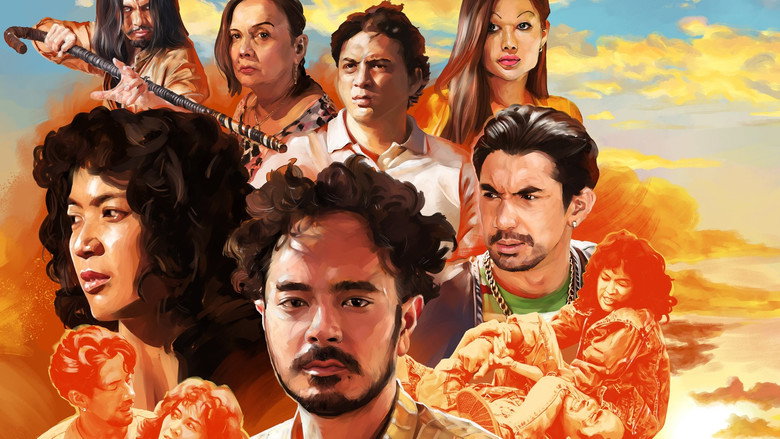
Those tonal swings could have been a pileup. Edwin keeps them inside Ajo's perspective, where everything already sits a little off-kilter. You are not watching a tidy genre machine.
You are inside a head that will not balance. Neon lights, a synth-heavy score, that 80s air of retro cool. The movie feels slightly out of time, which is right for a man who does not fit the category he was handed.
Then there is the violence. Not glorified, not condemned. A fact of Ajo's life, a way of being in the world.
The fights have raw physical intensity, then get framed almost like something caught rather than staged. No slow-motion heroics. No triumphant music swelling behind the punches.
Fists on flesh, a grunt of pain, a laugh from the crowd. Ugly and exhilarating, and the only language Ajo really speaks.
The ending does not tie him back together. No grand repair. No moment where he suddenly becomes whole. An uneasy peace, a truce with the parts of himself he cannot change. Not a happy ending. An honest one. In a genre that usually pays toughness with triumph, that still feels rare.
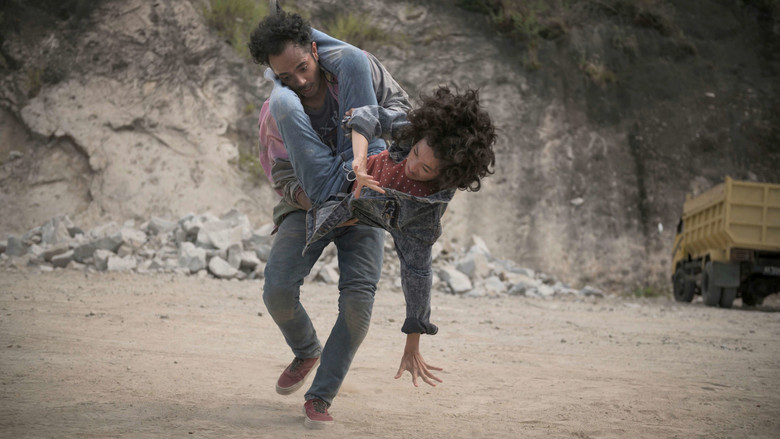
I keep turning the English title over. Vengeance Is Mine, All Others Pay Cash could have come from a spaghetti western or a hardboiled paperback. Here the vengeance is not aimed at a villain or a system. It is aimed at the body that will not do what he needs.
The "cash" is not money. Dignity, pride, a usable sense of self. He pays every time he steps into the ring, every time he tries to prove something to a world that is not keeping score.
The film does not judge him for it. It watches. Watching is how it gets you to understand.
I like that it will not tell you how to feel. It will not wrap the themes or hand you a clean answer. It presents a man broken in a very specific way, and it lets you sit with that brokenness. Maybe you see a little of yourself in him. Maybe you do not. Either way, the bill comes due.
"A stylish, genre-blending Indonesian film whose bold mix of action, comedy, and drama divides opinion, but whose visual flair and performances earn praise."
Edwin’s *Vengeance Is Mine, All Others Pay Cash* (2021) defies easy categorization, blending action, comedy, and romance into something both chaotic and compelling. Ajo (Marthino Lio), a man grappling with impotence, finds an outlet for his frustration in violence, leading to a series of brutal, darkly funny encounters. The original title, *Seperti Dendam Rindu Harus Dibayar Tuntas*, hints at its themes of revenge and longing. Reactions are polarized. The bold visual style draws comparisons to Quentin Tarantino and to Indonesian cinema’s gritty, hyper-stylized traditions. Marthino Lio and Ladya Cheryl are frequently cited as standouts, with Lio’s Ajo praised for its raw intensity. The pacing and genre shifts frustrate others, who complain of tonal whiplash between slapstick and brutal violence. Kinopoisk reactions show the same divide: one reviewer called it a surreal exploration of impotence as a catalyst for transformation and praised its audacity and poetic undertones, while others found the narrative too disjointed to engage with emotionally. Its Locarno selection marks its ambition, though some question whether the experimental approach fully lands. It suits fans of offbeat, visually striking, risk-taking cinema; anyone wanting straightforward action or comedy will likely find it too uneven.
Edwin’s Vengeance Is Mine, All Others Pay Cash (2021) is a visceral blend of drama, action, and dark comedy, adapted from Eka Kurniawan’s 2009 novel Seperti Dendam, Rindu Harus Dibayar Tuntas. Set in rural Java, the film follows Ajo Kawir (Marthino Lio), a man rendered impotent by a childhood trauma, and Iteung (Ladya Cheryl), a woman with a violent streak. Their tangled relationship fuels a story of revenge, desire, and survival. latestnetflix.com's take is that while the film’s raw energy earned it buzz at festivals like TIFF 2021, behind-the-scenes details remain scarce—but here’s what we know.
The film stays loyal to its source material, a novel known for its brutal honesty and dark humor. Director Edwin, who also co-wrote the screenplay, faced the challenge of translating Kurniawan’s provocative prose into a visual medium. The book’s nonlinear structure and unflinching violence were likely hurdles, but Edwin’s direction leans into the story’s chaotic energy, blending action with moments of absurdist comedy.
The adaptation’s fidelity to the novel suggests a deliberate choice to preserve its tone. Kurniawan’s work often explores Indonesia’s social and political undercurrents, and the film’s rural Java setting—depicted with gritty realism—serves as more than just a backdrop. It’s a character in itself, shaping the lives of its protagonists.
Marthino Lio (The Science of Fictions) and Ladya Cheryl (The Seen and Unseen) anchor the film as Ajo Kawir and Iteung, respectively. Their chemistry is electric, balancing tenderness with explosive violence. Lio’s portrayal of Ajo—a man haunted by his past and struggling with his masculinity—is particularly striking, earning praise for its vulnerability.
Cheryl’s Iteung is equally compelling, a woman whose own trauma manifests in unpredictable outbursts. The dynamic between the two leads is the film’s emotional core, and their performances elevate the material beyond a simple revenge tale. Supporting roles from Reza Rahadian (The Raid 2) and Lukman Sardi (The Act of Killing) add depth, though their screen time is limited.
Vengeance Is Mine, All Others Pay Cash premiered at the Toronto International Film Festival (TIFF) in 2021, where it garnered attention for its bold storytelling and stylish execution. Reviews highlighted Edwin’s ability to juggle multiple genres—drama, action, and comedy—without losing focus. The film’s 114-minute runtime flies by, thanks to its relentless pacing and sharp editing.
While the movie didn’t achieve mainstream commercial success, its festival run cemented its status as a cult favorite. Critics praised its unapologetic approach to violence and sexuality, though some noted the tonal shifts might alienate viewers expecting a straightforward revenge thriller.
Behind-the-scenes details are thin, but a few tidbits have surfaced:
Vengeance Is Mine, All Others Pay Cash is more than a revenge story—it’s a meditation on trauma, desire, and the cyclical nature of violence. Edwin’s adaptation refuses to soften its edges, delivering a film that’s as unsettling as it is mesmerizing. While it may not have broken box office records, its impact on Indonesian cinema is undeniable, proving that bold, uncompromising storytelling still has a place in modern filmmaking.
For fans of gritty, character-driven dramas, this one’s a must-watch.
Entertainment rumors and trivia aggregated from public reporting. Treat speculation as unverified unless a cited source confirms it.
More titles in the same genres and with the same cast.


