Laura Basuki
Surti

Sukri and Surti had to return to Cibeureum because Sukri's father died. However, after the funeral, Sukri's family could not immediately return to Jakarta, because his mother was involved in a criminal case. Meanwhile, their two children, Bayu and Gerhana, are starting to feel comfortable because they have met extraordinary new friends, Cempaka and Sangaji, go on an adventure to help solve the family's problems in an unexpected way. The sense of family is tested in the face of challenging situations.
I didn’t expect to cry in a Netflix drama about a family stuck in a village. Not because the premise is unpromising—quite the opposite—but because I’ve seen this trick before. The funeral, the unresolved legal mess, the kids who start to like it there.
It’s the kind of story that either leans into sentimentality or finds something real in the cracks. Rumah Masa Depan tries to do both,And for a while, it almost works.
The film opens with a long shot of Cibeureum, the kind of place where the air feels thicker, the colors more saturated. The camera lingers on the rice fields, the dirt roads, the way the light hits the houses. It’s pretty, but not in a postcard way—more like a memory you can’t quite place.
Sukri (Fedi Nuril) and Surti (Laura Basuki) arrive with their two kids, Bayu and Gerhana, after Sukri’s father dies. The funeral is quick, but the real trouble starts when Sukri’s mother, Bu Kokom (Widyawati), gets tangled up in a criminal case. Suddenly, they can’t leave.
The kids, who were supposed to be there for a few days, start to settle in. They make friends. They explore.
They start to forget Jakarta.
That’s the setup, and it’s a good one. The tension between city and country, between obligation and desire, is a classic dynamic. But Rumah Masa Depan isn’t content to just let the story breathe.
It keeps nudging you, reminding you that this is a story, that there’s a lesson here. The kids’ adventures—helping their new friends Cempaka and Sangaji solve a mystery—feel like they’re straight out of a children’s book. Which is fine, except that the film keeps cutting back to the adults, who are having their own, much heavier problems.
The tonal whiplash is jarring. One minute, you’re watching a lighthearted adventure about kids on bikes. The next, you’re watching a mother grapple with the possibility of losing her home.
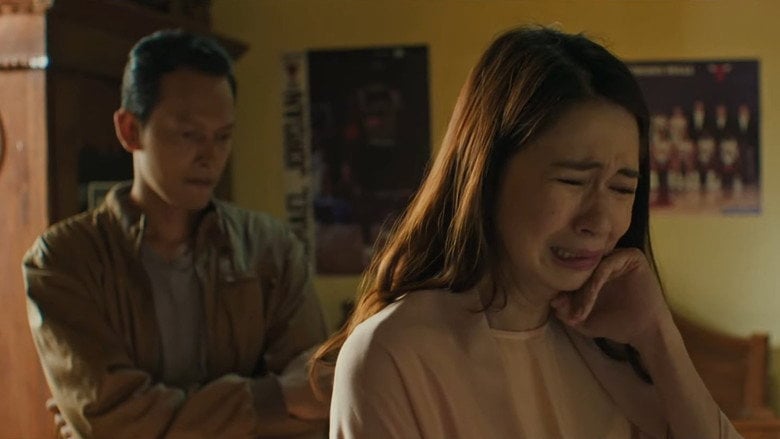
The performances are the film’s strongest suit. Laura Basuki, in particular, is a revelation. She plays Surti as someone who’s trying so hard to keep it together, but you can see the cracks.
There’s a scene where she’s talking to Sukri about their future, and her voice is steady, but her hands are shaking. It’s a small moment, but it’s the kind of thing that makes you lean in. Fedi Nuril, as Sukri, is solid, but he’s not given as much to work with.
His character is the straight man to Surti’s emotional core, and while that works for the story, it doesn’t make for the most compelling viewing.
Widyawati, as Bu Kokom, is the film’s secret weapon. She brings a quiet dignity to the role, and when she finally breaks down, it’s devastating. There’s a scene near the end where she’s talking to Surti about the past, and the way she looks at her daughter—it’s like she’s seeing herself for the first time.
It’s the kind of moment that makes you forget about the film’s flaws, at least for a little while.
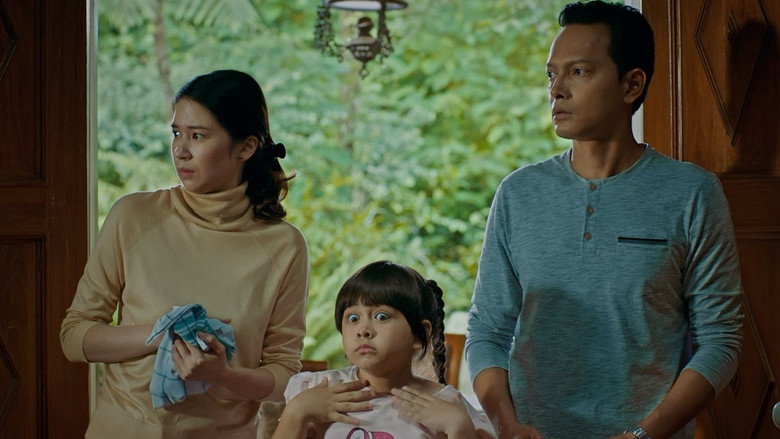
The cinematography, by Roy Lolang, is gorgeous. The film is drenched in warm, golden light, the kind that makes you feel like you’re wrapped in a blanket. The village of Cibeureum is shot like it’s a character itself—alive, breathing, full of secrets.
There’s a scene where the kids are running through the fields, and the camera follows them, low to the ground, like it’s a part of their adventure. It’s the kind of shot that makes you remember what it was like to be a kid, when the world felt endless and full of possibilities.
But then the film cuts back to the adults, and the spell is broken. The pacing is slow, almost to a fault. There are long stretches where nothing happens, where the film seems content to just let the characters exist in their space.
And while that’s nice, it’s not enough. The story needs momentum, and Rumah Masa Depan keeps losing it. The mystery the kids are trying to solve is underwhelming, and the legal mess the adults are dealing with is resolved in a way that feels too neat, too easy.
The film’s biggest problem, though, is its lack of originality. It’s not just that it’s an adaptation of a classic TV series—that’s fine. It’s that it doesn’t seem to have anything new to say.
The themes—family, tradition, the tension between old and new—are all well-trodden ground. The film doesn’t subvert them, doesn’t challenge them. It just presents them, like a museum exhibit.
Look, but don’t touch.
That’s not to say there isn’t value in what Rumah Masa Depan is trying to do. There’s something comforting about a story that’s so straightforward, so unapologetically sentimental. It’s the kind of film that wants to make you feel good, and for a while, it does.
But then you start to wonder: who is this for? The people who remember the original series will find nostalgia here, but will they find anything else? The younger viewers, the ones who don’t have that connection, might find the film’s pacing too slow, its story too familiar.
I kept thinking about the title. Rumah Masa Depan—"The House of the Future." It’s a promise, but also a question. What does the future look like?
For Sukri and Surti, it’s a return to the past, a reckoning with the things they’ve left behind. For their kids, it’s a new world, full of possibilities. The film wants to have it both ways, to be a story about moving forward and looking back.
But in the end, it’s stuck in the middle, unsure of which way to go.
There’s a moment near the end where Surti is standing in the village, looking at the house where she grew up. The camera pulls back, and you see the whole landscape—the fields, the mountains, the sky. It’s beautiful, but it’s also empty.
The film doesn’t know what to do with that emptiness, so it fills it with music, with sentiment, with a resolution that feels too tidy.
I wanted to like Rumah Masa Depan more than I did. There’s a warmth to it, a sincerity that’s hard to resist. But sincerity isn’t enough.
The film needed to be braver, to take more risks. It needed to trust its audience, to let the story breathe instead of nudging it along. It needed to find something real in the cracks, instead of just papering over them.
In the end, Rumah Masa Depan is a film about coming home. But home isn’t just a place. It’s a feeling. And for all its beauty, for all its heart, the film never quite figures out how to make you feel it.
Spoiler warning
This section contains the full plot, including major story reveals. Overview above stays spoiler-free.
Rumah Masa Depan (2023) marks a rare cinematic revival, breathing new life into a story that first captivated Indonesian audiences nearly four decades ago. Directed by Danial Rifki, the film adapts the 1984 television series of the same name by Ali Shahab, blending nostalgia with contemporary storytelling. But what went into resurrecting this beloved tale for the big screen?
The original Rumah Masa Depan was a cultural touchstone in 1980s Indonesia, and its 2023 adaptation stays true to its roots while updating the narrative for modern audiences. The film follows Sukri (Fedi Nuril) and Surti (Laura Basuki), a couple forced to return to Cibeureum after Sukri’s father’s death. Their stay prolongs unexpectedly when Sukri’s mother becomes entangled in a criminal case, leaving the family—and their two children, Bayu and Gerhana—in limbo. Meanwhile, the kids befriend Cempaka and Sangaji, leading to adventures that drive the plot.
The decision to adapt a classic TV series isn’t just a creative gamble; it’s a nod to Indonesia’s rich storytelling tradition. Rifki, known for his work across genres like comedy, drama, and thriller, brings a fresh perspective to the material, though details about his directorial approach remain scarce.
The ensemble cast blends seasoned actors with rising stars. Laura Basuki and Fedi Nuril, both prominent figures in Indonesian cinema, anchor the film as the lead couple. Basuki, known for her versatility, and Nuril, a familiar face in dramas and thrillers, bring depth to their roles as parents navigating family turmoil.
Veteran actress Widyawati Sophiaan, a legend in Indonesian entertainment, plays Sukri’s mother, adding gravitas to the film’s emotional core. The younger cast includes Bima Azriel and Ciara Nadine Brosnan as Bayu and Gerhana, alongside Maisha Kanna, Zayyan Sakha, and Cok Simbara, who round out the supporting roles. The inclusion of child actors suggests a focus on generational dynamics, a theme that resonates with the original series’ family-centric storytelling.
Rumah Masa Depan hit theaters on December 7, 2023, but details about its production remain limited. There’s no confirmed information about filming locations, budget, or behind-the-scenes challenges—common gaps when covering Indonesian films outside major studio releases. Rumors about on-set chemistry or directorial quirks are unverified, leaving fans to speculate based on the final product.
One intriguing detail is the film’s setting in Cibeureum, a real location in West Java. While the original series’ filming spots are unknown, the 2023 adaptation’s choice of Cibeureum adds a layer of authenticity, grounding the story in a recognizable Indonesian landscape.
Rumah Masa Depan isn’t just a remake; it’s a bridge between generations. For older audiences, it’s a trip down memory lane. For younger viewers, it’s an introduction to a story that defined Indonesian television. The film’s blend of family drama, mystery, and adventure—hinted at in the synopsis—suggests a universal appeal, though critical reception remains undocumented in the available evidence.
If the film succeeds, it could pave the way for more revivals of classic Indonesian stories. For now, Rumah Masa Depan shows the enduring power of nostalgia, reimagined for a new era.
Entertainment rumors and trivia aggregated from public reporting. Treat speculation as unverified unless a cited source confirms it.
More titles in the same genres and with the same cast.