Titi Kamal
Aqilla

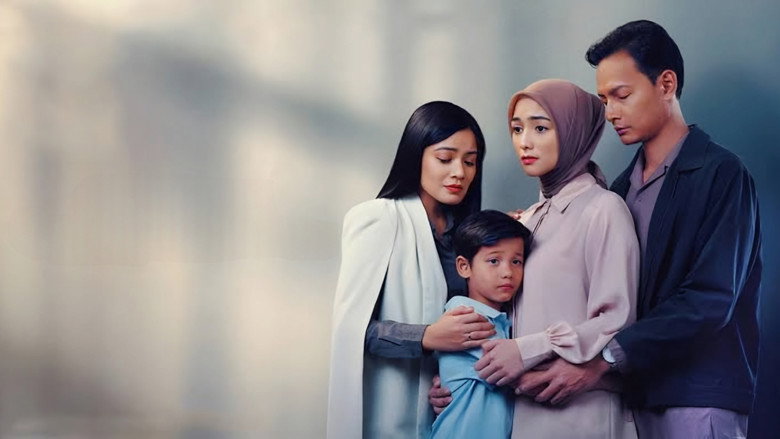
In this heartfelt drama, a mother discovers that a son she thought died at birth is still alive.
I’ve seen this story before—a child caught between two mothers, one by blood, one by love. It’s the kind of premise that could easily slip into melodrama, where emotions are dialed up to eleven and subtlety is left at the door. Tears at the Edge of a Prayer Rug (or Air Mata di Ujung Sajadah, if we’re being precise) doesn’t entirely avoid that trap, but it doesn’t wallow in it either. What lingers isn’t the overwrought dialogue or the occasional soap-opera flourish, but the way it frames grief as something that doesn’t just live in the heart—it lives in the hands, in the way a mother folds laundry, in the way she hesitates before touching a child who isn’t hers but might as well be.
The film opens with Aqilla (Titi Kamal), a woman whose life has been defined by absence. She believes her son died at birth, a loss so profound it’s etched into her posture—shoulders slightly hunched, as if bracing against a weight no one else can see. Then, years later, she learns the truth: her son is alive, raised by another family.
The revelation doesn’t just shatter her; it forces her to confront the fragility of her own faith. Prayer, for Aqilla, has always been a ritual of surrender, but now it becomes something else—a negotiation, a plea, a quiet rebellion. The title isn’t just poetic; it’s literal.
The prayer rug, that small rectangle of devotion, becomes the only place where she can let the tears fall without explanation.
Key Mangunsong, the director, has a knack for finding the sacred in the mundane. His camera lingers on small, unguarded moments: Aqilla’s fingers tracing the edge of a framed photo, the way her breath catches when she hears a child’s laughter in the distance. These aren’t the grand, sweeping gestures of a typical tearjerker.
They’re the quiet, almost imperceptible shifts that make grief feel real. There’s a scene early on where Aqilla visits the hospital where she gave birth. The camera doesn’t cut away as she stands in the empty hallway, her hand pressed against the wall, as if trying to absorb the memory of a place she’s tried to forget.
It’s uncomfortable to watch—not because it’s poorly acted, but because it’s too intimate, like we’ve stumbled into a private moment we weren’t meant to see.
The film’s greatest strength is its refusal to villainize either mother. Yumna (Citra Kirana), the woman who raised Aqilla’s son, isn’t a scheming interloper. She’s a mother, too, one who has built a life around a child she loves as fiercely as if he were her own.
The conflict isn’t about who deserves the boy—it’s about who gets to define what love looks like. Mangunsong doesn’t shy away from the messiness of it. There’s a scene where Yumna and Aqilla finally meet, and instead of the explosive confrontation we’ve been primed for, there’s just… silence.
They sit across from each other, two women who have spent years imagining this moment, and neither knows what to say. The tension isn’t in the words; it’s in the way Yumna’s hands tremble as she pours tea, in the way Aqilla’s eyes flicker toward the door, as if she’s already planning her escape.
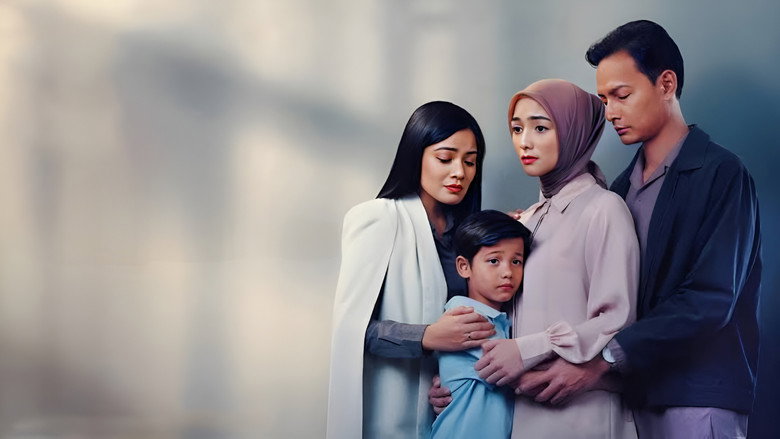
Titi Kamal’s performance is the film’s anchor. She doesn’t play Aqilla as a victim; she plays her as a woman who has spent years constructing a life around a void, only to have that void suddenly filled—and then threatened all over again. There’s a moment where Aqilla watches her son, Baskara (Muhammad Faqih Alaydrus), from a distance, and Kamal’s face is a masterclass in restraint.
You can see the longing, the fear, the love, all fighting for space. It’s the kind of performance that makes you forget you’re watching an actor. Fedi Nuril, as Aqilla’s husband, provides a quiet counterpoint.
His grief is different—quieter, more resigned—but no less devastating. When he finally breaks down, it’s not in a grand, cinematic moment. It’s in the car, alone, his face half-hidden in shadow, his shoulders shaking with silent sobs.
The film’s biggest flaw is its pacing. The first act rushes through key emotional beats, as if Mangunsong is afraid the audience will lose interest if he lingers too long. Some scenes feel abruptly cut, leaving the actors’ performances stranded.
There’s a subplot involving Aqilla’s strained relationship with her own mother (Jenny Rachman) that could have added depth, but it’s introduced and then abandoned, like a thread left dangling. And yes, the dialogue can veer into the overly dramatic. There’s a moment where Aqilla, in a fit of anguish, declares, “I would give my life for him!”—a line so heavy-handed it nearly derails the scene.
(I half-expected a soap opera sting to play in the background.)
But then there are moments that land with such precision they make up for it. The climax, where Aqilla and Yumna finally confront each other over Baskara’s future, is one of them. It’s not the explosive argument we’ve been conditioned to expect.
Instead, it’s a slow unraveling, two women realizing that no matter what they decide, someone will be hurt. The camera stays close, forcing us to sit with their discomfort. When Yumna finally speaks, her voice is barely above a whisper: “I didn’t steal him.
I loved him.” It’s a line that could have been cheesy in another film, but here, it feels earned.

The ending is where Tears at the Edge of a Prayer Rug takes its biggest risk. Without spoiling it, I’ll say this: it doesn’t offer the neat resolution we’ve been trained to expect. There’s no grand reunion, no easy forgiveness.
Instead, there’s a quiet acknowledgment that some wounds don’t heal—they just scab over, and you learn to live with the itch. It’s not the ending I wanted, but it’s the one that feels true.
I left the theater with that familiar post-melodrama exhaustion—the kind where you’re not sure if you’ve been moved or manipulated. But days later, I’m still thinking about Aqilla’s hands, the way they tremble when she prays, the way they clench into fists when she’s angry. That’s the film’s real achievement.
It doesn’t just tell us about grief; it shows us how it lives in the body, how it shapes the way we move through the world. And maybe that’s enough. Maybe we don’t need grand gestures or perfect resolutions.
Maybe all we need is the quiet understanding that love, in all its messy, complicated forms, is the only prayer that ever really gets answered.
"An emotionally charged family drama that reliably draws tears but leans heavily into melodrama and soap-like storytelling."
Strong performances and intimate family dynamics give the story real emotional weight; the mother–child separation arc and several late scenes are reliable tearjerkers. Exaggerated dialogue, familiar tropes and choppy scene transitions make it feel uneven, closer to a TV melodrama than a polished feature.
Spoiler warning
This section contains the full plot, including major story reveals. Overview above stays spoiler-free.
latestnetflix.com's take is that You thought one kid, two moms and a lifetime of secrets was messy?The real drama around “Tears at the Edge of a Prayer Rug” (Air Mata di Ujung Sajadah) has lawsuits, jealous co-stars, and a leading man who nearly walked away over the ending.
Entertainment rumors and trivia aggregated from public reporting. Treat speculation as unverified unless a cited source confirms it.
More titles in the same genres and with the same cast.