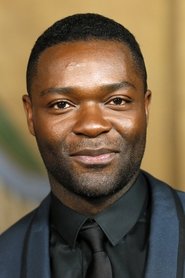
David Oyelowo
Dayo

After losing a family member to a violent crime, a shattered rideshare driver picks up a passenger that forces him to confront his grief.
I’ve seen grief on screen before—operatic, whispered, violent, serene—but rarely have I felt it press against my ribs like it does in The After. Maybe it’s the way David Oyelowo sits in that driver’s seat, his shoulders hunched just enough to suggest the weight of something unspeakable. Maybe it’s the way the London streets outside the car window blur into streaks of light, as if the city itself is dissolving under the weight of his sorrow.
Or maybe it’s the way the film refuses to let us look away, even when we want to.
Misan Harriman’s 18-minute short is a study in restraint, a film that understands grief isn’t a single moment but a slow, suffocating accumulation. Dayo, the rideshare driver at its center, isn’t just mourning—he’s trapped in the aftershocks of a loss so profound it’s warped his perception of time. The film opens with him picking up passengers, their chatter a dull hum against the silence of his own thoughts.
One rider, a young woman (Jessica Kate Plummer), slips into the backseat, and something in her presence—her quiet, her stillness—jolts him. It’s not that she says anything profound. It’s that she sees him.
And in that moment, the film’s central question snaps into focus: Can you heal if no one is left to witness your pain?

Harriman, a photographer by trade, shoots the film with a documentarian’s eye, favoring wide frames that swallow Oyelowo whole. The effect is claustrophobic, as if Dayo is drowning in the very space that’s supposed to be his livelihood. There’s a moment early on where the camera lingers on his hands gripping the steering wheel, the knuckles white, the veins pronounced.
It’s a small detail, but it tells us everything: this man is holding on by a thread. When the film finally cuts to black, it’s not with a cathartic release but with a quiet, aching question—what now?
The emotional climax hinges on a song, Birdy and Rhodes’ Let It All Go, which swells as Dayo finally breaks. It’s a risky choice, leaning on music to do the heavy lifting, and some critics have called it manipulative. The Film Magazine went so far as to label the film “a below-par Oscars nominee,” arguing that it lacks “sophistication, creativity, [and] depth of meaning”.
I get the critique. There’s a fine line between emotional honesty and emotional exploitation, and The After occasionally teeters on the wrong side of it. But then I think about the way Oyelowo’s face crumples in that final scene, the way his body seems to fold in on itself, and I’m not sure the film cares about being subtle.
Grief isn’t subtle. It’s messy, ugly, and sometimes it needs a soundtrack to make sense of the noise in your head.
That’s not to say the film is flawless. The supporting characters, particularly the passengers, feel more like devices than fully realized people. The young woman who sparks Dayo’s breakdown is compelling, but her backstory is left frustratingly vague.
Is she a stranger? A ghost? A manifestation of his guilt?
The film doesn’t say, and while ambiguity can be powerful, here it feels like a missed opportunity. Harriman has spoken about wanting to explore “human connection”, but the film’s most affecting moments are the ones where Dayo is alone—staring at his phone, gripping the wheel, lost in the hum of the engine. The connection, when it comes, feels almost incidental, as if the film itself isn’t entirely convinced it’s possible.
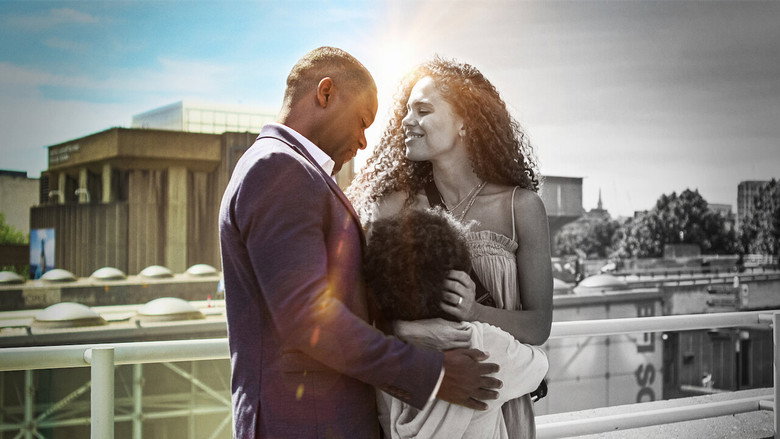
And yet, for all its flaws, The After lingers. Maybe it’s because Oyelowo’s performance is so deeply lived-in. He doesn’t act grief so much as he inhabits it, his body language shifting from numb exhaustion to sudden, sharp pain in the space of a breath.
There’s a scene where he pulls over to compose himself, his hands shaking as he tries to steady his breathing. It’s a small moment, easily overlooked, but it’s the kind of detail that makes the film feel real. Or maybe it’s because Harriman, in his directorial debut, understands something fundamental about sorrow: it doesn’t always announce itself.
Sometimes it’s just a man driving through the night, trying to outrun the silence.
The film’s Oscar nomination has sparked debate, with some arguing it’s a case of prestige over substance. Nerdly called it “half-hearted,” suggesting the emotional delivery takes “too many shortcuts”. I don’t entirely disagree.
But I also think there’s something to be said for a film that doesn’t pretend grief has a neat resolution. The After doesn’t offer answers. It doesn’t even offer much hope. What it does offer is a portrait of a man learning to live with the weight of what he’s lost—and sometimes, that’s enough.
In the end, I keep coming back to that final shot: Dayo in the driver’s seat, the city lights bleeding into the frame, the music swelling. It’s not a happy ending. But it’s an honest one. And in a world that often demands grief be tidy, that feels like its own kind of rebellion.
Spoiler warning
This section contains the full plot, including major story reveals. Overview above stays spoiler-free.
Netflix’s 18-minute short film The After (2024) marks a striking directorial debut for photographer-turned-filmmaker Misan Harriman, with David Oyelowo delivering a powerhouse performance as a grieving father navigating unimaginable loss. latestnetflix.com's read is that the film, which premiered globally on October 25, 2023, has already drawn attention for its emotional depth and Harriman’s ability to condense a devastating story into a tight runtime.
The After follows Dayo, a London rideshare driver haunted by the violent death of his family. Oyelowo’s portrayal of a man trapped in sorrow is visceral, with the film exploring how grief isolates—and how a single passenger’s presence might offer a fleeting chance at healing. The short’s premise, while fictional, taps into universal themes of mourning, making it resonate far beyond its brief runtime.
Jessica Kate Plummer, Amelie Dokubo, and the rest of the cast round out the ensemble, though Oyelowo’s performance remains the emotional anchor. Harriman, known for his work as a social activist and photographer, brings a documentary-like rawness to the project, avoiding melodrama in favor of quiet, crushing realism.
Before its Netflix debut, The After made waves at the HollyShorts Film Festival, where it won Best Live Action Short. The film’s festival success likely helped secure its streaming home, though Netflix has not disclosed viewership numbers or awards traction since its release. Still, the short’s emotional punch and Oyelowo’s star power have kept it in conversations about standout short-form storytelling.
Harriman’s transition from photography to filmmaking is one of the most intriguing aspects of The After. His background capturing social movements—particularly during protests—lends the film a grounded, almost cinematic quality, as if plucked from real life. While the story isn’t based on true events, its authenticity stems from Harriman’s ability to frame grief as both deeply personal and universally relatable.
Oyelowo, meanwhile, has been vocal about the project’s impact. Though no direct quotes from him appear in the available evidence, his involvement speaks to the material’s weight—he’s known for choosing roles that challenge both himself and audiences.
As of now, there’s no confirmation of a feature-length expansion or sequel, though the short’s emotional resonance leaves the door open for future exploration. For now, The After shows Harriman’s directorial promise and Oyelowo’s ability to convey profound sorrow in just 18 minutes.
Entertainment rumors and trivia aggregated from public reporting. Treat speculation as unverified unless a cited source confirms it.
More titles in the same genres and with the same cast.