Kaity Nguyễn
Linh

In the midst of the Nguyễn Dynasty, a reluctant wife's life takes a dramatic turn when a chance encounter with her childhood lover sparks a series of unexpected events.
I’ve seen this trick before—the period romance that promises grand passion but delivers only the rustle of silk and the clink of teacups. Yet The Last Wife lingers in my mind like the scent of jasmine left on a letter. Maybe it’s because Victor Vũ doesn’t just drape his characters in 19th-century Vietnam; he lets them sweat beneath the weight of it.
The film opens with Linh (Kaity Nguyễn), a woman trapped in the gilded cage of a governor’s household, her days measured in embroidery stitches and the governor’s increasingly desperate demands for an heir. The camera lingers on her hands—delicate, precise—as she mends a torn sleeve, her face a mask of quiet resignation. It’s a small moment, but it tells us everything: this is a woman who has learned to disappear.
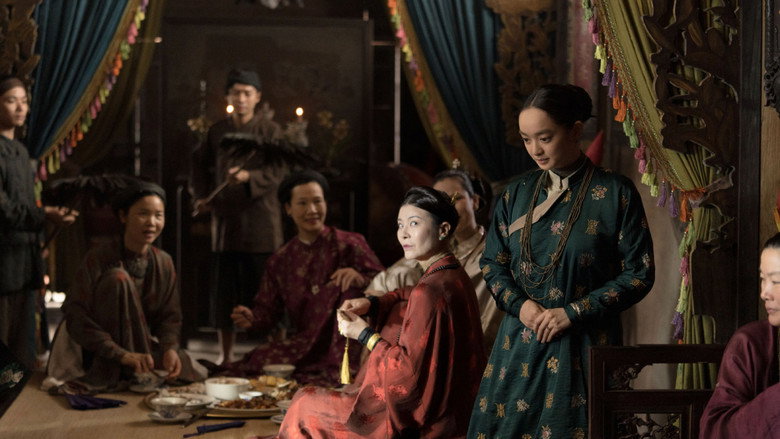
Vũ’s direction is at its strongest when he balances the intimate and the epic. Rachel Ho of The Asian Cut put it well: "The strength of The Last Wife is Vũ’s ability to extend this balancing act throughout the entire film. At once, we see the larger picture and context of the time while also basking in the intimate glow of their affection." And it’s true—the film’s most compelling scenes are the quiet ones, like when Linh and her childhood love, Nhân (Thuận Nguyễn), reunite in a moonlit garden.
There’s no grand declaration, just the way his hand hovers near hers, close enough to feel the heat but not close enough to touch. The tension is electric, not because of what they say, but because of what they don’t.
Yet for all its visual sumptuousness, The Last Wife stumbles when it tries to juggle too many tones. One moment, it’s a slow-burning romance; the next, it lurches into melodrama or even slapstick, particularly in the scenes involving the governor (Quang Thắng). His performance veers into caricature—all arched eyebrows and exaggerated sneers—and it’s hard to tell if the film is winking at the audience or simply unsure of what it wants to be.
Joshua Polanski of In Review Online called it "a sharp film with a level of dramatic consequence that one normally won’t find in historical romances of comparable popular appeal," but I’m not entirely convinced. The shifts in tone feel less like deliberate choices and more like a film still finding its footing.
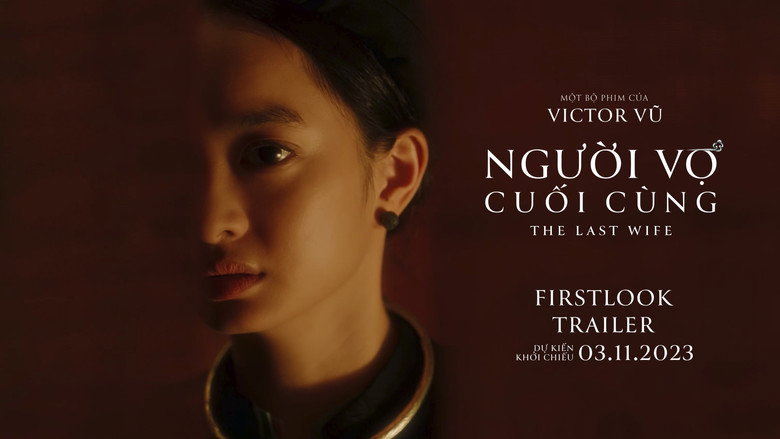
The film’s greatest asset is its lead. Kaity Nguyễn carries Linh with a restraint that feels almost painful. There’s a scene where she’s forced to entertain the governor’s guests, her smile never wavering even as her eyes betray a flicker of panic.
It’s the kind of performance that doesn’t rely on grand gestures; instead, it’s in the way she holds her breath before speaking, the way her fingers tremble just slightly when she pours tea. Nguyễn makes Linh’s quiet rebellion feel like a revolution.
But The Last Wife is also a film about the weight of history—not just the grand sweep of the Nguyễn Dynasty, but the smaller, more personal histories that shape its characters. Linh’s story is one of survival, of a woman navigating a world where her worth is measured in sons and silence. The film’s most haunting moments come not from its romance, but from its portrayal of the suffocating expectations placed on women.
There’s a scene where Linh stands before a mirror, her reflection distorted by the warped glass, and for a brief moment, she doesn’t recognize herself. It’s a small detail, but it speaks volumes about the erasure of identity under patriarchal rule.
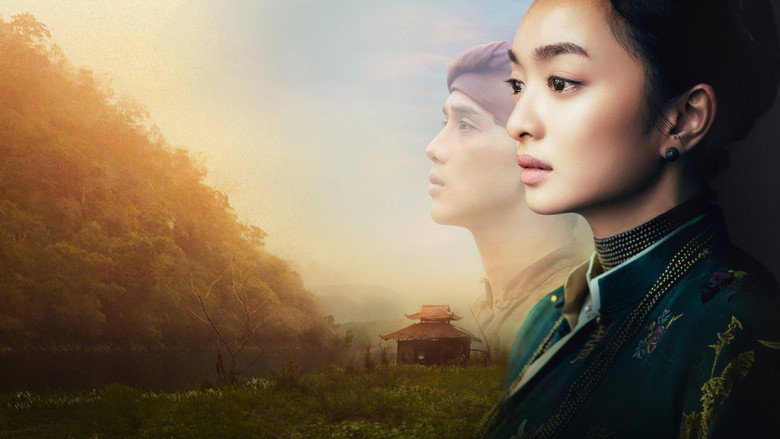
If there’s a flaw in The Last Wife, it’s that the film sometimes struggles to reconcile its ambitions. It wants to be a sweeping romance, a feminist critique, and a historical drama all at once, and the seams show. The pacing drags in the second act, and the governor’s antics, while perhaps intended as comic relief, feel out of place in a story that otherwise takes itself so seriously.
Yet there’s something undeniably compelling about Vũ’s vision. He doesn’t just recreate the past; he invites us to feel its constraints, its beauty, and its brutality.
In the end, The Last Wife is a film that stays with you not because of its grand gestures, but because of its small, human moments. It’s in the way Linh’s voice cracks when she finally speaks her mind, in the way Nhân’s eyes darken with regret. It’s a film about the choices women make when they have none—and the quiet defiance of loving someone you’re not supposed to.
That, more than any sumptuous costume or lavish set, is what makes it worth watching.
Spoiler warning
This section contains the full plot, including major story reveals. Overview above stays spoiler-free.
Victor Vũ’s The Last Wife (2023) has quietly become one of the most talked-about Vietnamese period dramas of the year, blending historical intrigue with personal drama. Set during the Nguyễn Dynasty, the film follows a reluctant wife whose life spirals into chaos after a chance reunion with a childhood lover. While details about the production remain scarce, latestnetflix.com argues, the cast and premise have already sparked curiosity among fans of Vietnamese cinema.
The film boasts a strong ensemble, led by Kaity Nguyễn (Furies, The Tailor) as the titular wife, whose life takes an unexpected turn. Thuan Nguyen, Quốc Huy, and De Ly Luu round out the central cast, with supporting roles from Ngọc Diệp, Kim Oanh, Quang Thắng, and Anh Dũng. The mix of established and rising stars suggests a deliberate effort to balance dramatic weight with fresh energy—a hallmark of Vũ’s recent work.
What stands out is the film’s historical setting, a rarity in modern Vietnamese cinema. The Nguyễn Dynasty (1802–1945) provides a rich backdrop for political and personal conflict, though the snippets available don’t clarify how deeply the film engages with historical events versus using them as a dramatic canvas. If The Last Wife follows Vũ’s previous films like Dreamy Eyes (2019) or The Tailor (2017), audiences can expect a visually lush production with emotional depth.
Unlike high-profile international productions, The Last Wife hasn’t been the subject of extensive behind-the-scenes coverage. No on-set leaks, cast interviews, or production diaries have surfaced in the available evidence, leaving fans to speculate based on the film’s premise and cast alone.
One unanswered question is how the film balances its period setting with modern storytelling. Vietnamese historical dramas often walk a tightrope between authenticity and accessibility, and Vũ’s directorial style leans toward character-driven narratives. If The Last Wife follows suit, the focus may be less on grand historical events and more on the personal struggles of its lead characters.
Another point of curiosity is the film’s reception. While no reviews or audience scores are cited in the available snippets, the involvement of Kaity Nguyễn—known for her roles in action and drama—hints at a performance that could anchor the film’s emotional core. However, without critical consensus or box office data, it’s unclear how The Last Wife has been received since its release.
In the absence of concrete details, a few rumors have circulated among Vietnamese film circles:
The Last Wife (2023) is a film that intrigues more than it reveals. Victor Vũ’s direction, combined with a strong cast and a compelling premise, positions it as a standout in Vietnam’s recent historical drama offerings. Yet, without deeper behind-the-scenes insights or critical reception, the film remains something of a mystery—one that may only be unraveled by audiences willing to dive into its Nguyễn Dynasty world.
For now, fans of Vietnamese cinema will have to settle for the tantalizing hints provided by the cast and premise. If The Last Wife delivers on its promise, it could join the ranks of Vũ’s most memorable works. But until more details emerge, the film’s legacy is still being written.
Entertainment rumors and trivia aggregated from public reporting. Treat speculation as unverified unless a cited source confirms it.
More titles in the same genres and with the same cast.