Movie poster for The Year I Started Masturbating (2022)

The Year I Started Masturbating

2022
1h 38m
15 · Swedish
Director: Erika Wasserman
Play trailer
Search on Netflix

Overview

Ambitious overachiever Hanna just needs one more kid before her life is perfect. Instead, her baby daddy unexpectedly dumps her. Suddenly, she finds herself without a place to live, job or family. With every fiber of her being set for victory, Hanna refuses to give up and decides to win him back. But to get there means having to win something much more important, love and desire for herself and who she is.

Trailer

Cast

12 people

Reviews

4 min read

The Year I Started Masturbating: A Title That Promises More Than It Delivers

I’ll admit it: I clicked because of the title. Not out of prurience, exactly, but curiosity. What kind of film announces itself with such unapologetic directness?

The answer, it turns out, is a Swedish dramedy that’s far more interested in the idea of female sexual liberation than in actually showing it. That’s not necessarily a bad thing—until you realize the film itself doesn’t seem entirely sure what it wants to be.

Erika Wasserman’s directorial debut follows Hanna (Katia Winter), a woman who has spent her life performing—at work, in relationships, even in motherhood—only to find herself dumped by her partner and left adrift. The film’s central metaphor is right there in the title: Hanna’s journey toward self-acceptance is framed as a sexual awakening, a reclaiming of pleasure on her own terms.

It’s a bold premise, especially in a cultural landscape where female desire is still so often treated as either a punchline or a problem to be solved. But The Year I Started Masturbating struggles to move beyond the metaphor, leaving its protagonist—and its audience—in a kind of narrative limbo.
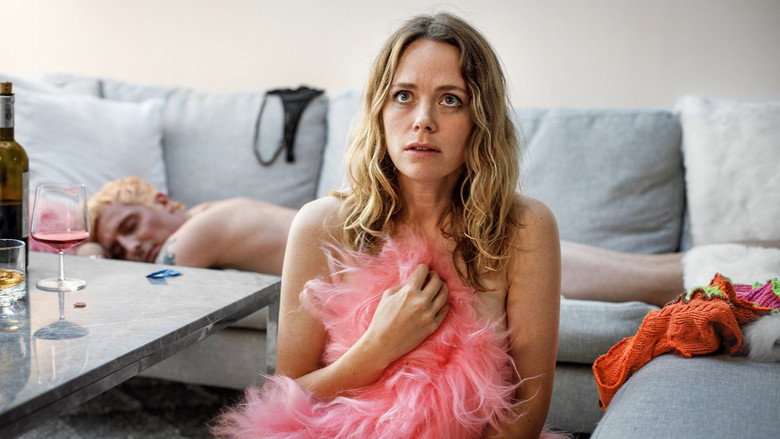
Hanna sitting alone in a dimly lit room, her expression a mix of exhaustion and defiance

Winter’s performance is the film’s strongest asset. She plays Hanna with a weary charm, her body language shifting from rigid control to something looser and more vulnerable as the story progresses. There’s a scene early on where she stands in front of a mirror, naked, scrutinizing herself with a mix of frustration and resignation.

It’s a small moment, but Winter makes it feel like a revelation—less about vanity than about the way women are taught to inspect themselves for flaws. Later, when Hanna finally does masturbate on screen, the act isn’t played for titillation or comedy. Instead, it’s awkward, almost clinical, as if she’s relearning something she was never allowed to know in the first place.

That’s the film’s most radical choice: treating female pleasure as mundane, not mystical.

But the script doesn’t always trust Winter’s performance. Too often, the film falls back on broad strokes—Hanna’s ex is a one-note narcissist, her best friend (Vera Carlbom) exists mostly to deliver quippy one-liners, and the supporting characters feel like they’ve wandered in from a different movie. The problem isn’t that the film is shallow; it’s that it wants to be deep but doesn’t commit to the work.

There’s a subplot about Hanna’s strained relationship with her mother, for instance, that could have added emotional weight, but it’s abandoned halfway through. The same goes for the film’s exploration of female friendship. Carlbom’s Liv is a delight—funny, messy, unapologetically herself—but the film never digs into what makes their bond meaningful beyond surface-level banter.
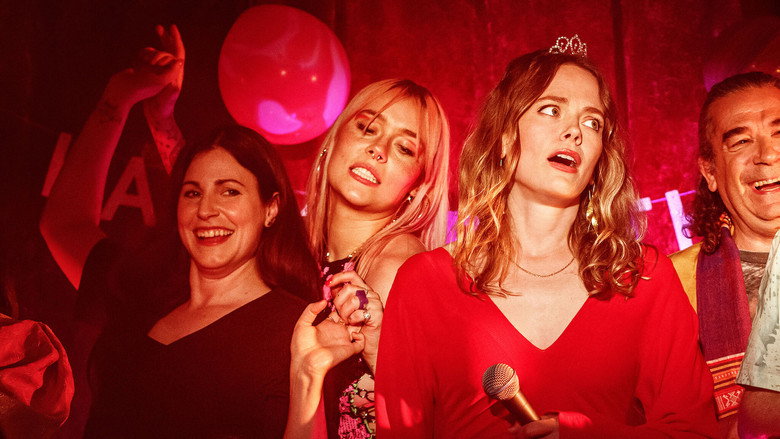
Hanna and Liv laughing together in a sunlit kitchen, the warmth of their friendship palpable

The film’s tonal whiplash is another issue. It oscillates between deadpan comedy and earnest drama without finding a consistent rhythm. There’s a scene where Hanna, drunk and heartbroken, tries to seduce a stranger at a bar, only to end up crying in the bathroom.

It’s a great moment—funny, cringe-inducing, and painfully real—but the film undercuts it by cutting away too quickly, as if it’s afraid to sit with the discomfort. That’s a shame, because the best parts of The Year I Started Masturbating are the ones that embrace the messiness of Hanna’s journey. When it leans into the awkwardness, it works.

When it tries to smooth things over with a joke or a quick resolution, it feels like a cop-out.

And then there’s the ending. Without spoiling anything, it’s the kind of conclusion that makes you wonder if the filmmakers ran out of time or ideas. The title promises a transformation, but the payoff feels half-baked, as if Hanna’s journey toward self-acceptance is more of a suggestion than a destination.

It’s not that the film fails to deliver on its premise—it’s that it doesn’t seem to know what that premise is. Is this a story about sexual liberation? Emotional independence?

The absurdity of modern dating? All of the above? The film can’t decide, and so it settles for a little bit of everything, none of it fully realized.
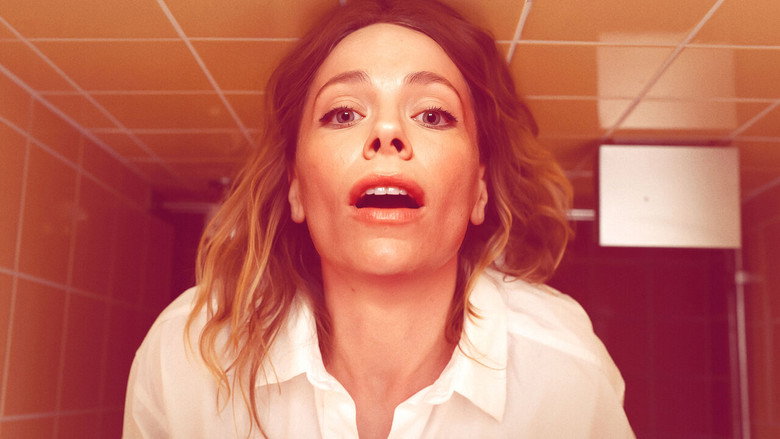
Hanna walking alone down a quiet street, the camera lingering on her back as she moves forward

That said, there’s something undeniably refreshing about a film that treats female masturbation as neither a joke nor a scandal, but as a fact of life. The title might be a bait-and-switch, but it’s also a statement of intent. Wasserman clearly wanted to make a film that was unafraid to talk about sex in a way that felt honest, even if the execution doesn’t always live up to the ambition.

And in a media landscape where women’s bodies are still so often policed—either for being too sexual or not sexual enough—there’s value in a film that refuses to apologize for its own existence.

I just wish it had more to say. The Year I Started Masturbating is a film that starts with a bang and ends with a whimper, leaving its protagonist—and its audience—somewhere in between. It’s not a bad movie, but it’s not quite the one it could have been. Maybe that’s the point.

Maybe the journey is the destination. Or maybe, like Hanna, the film is still figuring itself out.

Audience Opinions

Audience 4.9/10
"A daring, sex-positive premise about a woman reclaiming her life that gets bogged down by shallow writing and an unfinished-feeling story."

Sexual self-discovery, progressive attitudes toward female pleasure, and Katia Winter’s engaging performance land well, and the Scandinavian tone and humor can be enjoyable. At the same time, the story is boring, shallow, and clichéd, with a title that overpromises, character arcs that barely evolve, and an ending that feels like the film stops before it truly pays off.

What viewers praise
  • Bold sexual themes Explores female masturbation, autonomy, and self-empowerment in a direct, unapologetic way that can feel refreshing and even a turn-on.
  • Engaging lead actress Katia Winter’s presence and commitment to the role anchor the film and keep it watchable even when the script falters.
  • Progressive attitude to sex Depicts liberal, non-judgmental views on sex and relationships, with a focus on women choosing what feels good for them.
  • Occasional effective comedy Contains a few standout comic or awkward sex moments that are genuinely funny or memorable set pieces.
  • Pleasant Scandinavian vibe Scenic shots and a light, quirky tone appeal to fans of contemporary Swedish dramedies.
Common complaints
  • Misleading provocative title The amount of explicit self-pleasure on screen feels far below what the title implies, promising a different film altogether.
  • Shallow unfocused plot The story drifts through life changes and relationship drama without much narrative drive or emotional depth, leading to boredom.
  • Clichéd relationship drama The central romantic and domestic conflicts lean on familiar tropes, including a one-note, narcissistic partner who feels poorly written.
  • Weak character development Hanna’s growth can feel like a minor attitude shift rather than a meaningful transformation, and several side characters add little beyond stereotypes.
  • Unsatisfying ending The finale feels as if only two-thirds of the script were finished, with ideas and momentum running out instead of building to a payoff.
Recommended for
Sex-positive dramedy seekers Swedish indie comedy-drama fans Stories of female self-discovery Katia Winter admirers Light Scandinavian relationship films

Full Plot (Spoilers)

Spoiler warning

This section contains the full plot, including major story reveals. Overview above stays spoiler-free.

Buzz & Rumors

Public reports

From Cringe Title to Streaming Queen: The Real-World Tea Behind The Year I Started Masturbating

An indie Swedish dramedy with a name that makes your grandma clutch her pearls quietly became one of Netflix’s biggest Nordic hits. But behind the orgasm jokes and life crises, The Year I Started Masturbating is hiding some delightfully awkward industry stories, a bold directorial gamble, latestnetflix.com maintains, and a stealth power move by its leading lady.


Scandals & Controversies: The Title That Freaked Everyone Out

  • The film didn’t just end up with a legendary title; it started even more brazen. During development, Erika Wasserman was calling it simply “Året jag började onanera” – literally, The Year I Began Masturbating. - The team eventually panicked that this nakedly blunt name would scare audiences away, so they padded it into the now-infamous full title: Året jag slutade prestera och började onanera (The Year I Stopped Performing and Started Masturbating). - Lead star Katia Winter confessed she winced when she first saw it. She recalls an instinctive reaction of “God, how awkward,” but says that exact discomfort attracted her to the project: she likes roles that feel scary in the right way. - The title was so intense that Winter has admitted it was hard even talking about the movie with older family members—imagine explaining over Christmas dinner that you’re starring in that film.

Behind the Camera: The Director Who Couldn’t Find Anyone “Good Enough”

  • Erika Wasserman came from the producer world (Border, Bluebird), and originally planned to hire a director. Then came the twist: she had the whole movie shot-for-shot in her head and realized no one else would put up with how hard she’d micromanage the comedy. - Her own words? She couldn’t imagine finding someone both good enough at comedy and willing to tolerate her “thousand opinions,” so she just directed it herself. Power move. - Before stepping behind the camera, she went for coffee and counsel with some serious Scandinavian heavy-hitters: Ali Abbasi, Jesper Ganslandt, Tarik Saleh, and Hannes Holm. - Comedy icon Lasse Åberg gave her the key piece of advice over lunch: “You must choose a subject that touches as many people as possible”. Apparently, she decided nothing is more universal than anxiety, relationships, and… self-pleasure.

Cast Feats, Not Feuds: The Hollywood Return of Katia Winter

  • Forget a messy on-set meltdown; the real drama is the career pivot. Katia Winter spent years in Los Angeles doing the prestige-genre circuit (Dexter, Sleepy Hollow, The Boys), but she has openly said she felt creatively uninspired there. - Moving back to Sweden, she says, “sparked a new creative flame” and reminded her why she wanted to act in the first place. She didn’t even have a Swedish agent and had to hustle her own way into local work again. - Winter describes Hanna not as a jokey romcom heroine but as a dramatic character, and says that on set they agreed not to “play it comically.” For her, it’s a drama where the situations are funny, not the acting. That’s why the sex and breakdown scenes feel strangely raw beneath the jokes. - She’s so attached to Hanna that she’s already said she hopes to play her again, which is essentially a very polite, very Swedish way of manifesting a sequel.

Casting Curveball: The Total Newcomer Who Stole the Show

  • One of the juiciest bits of behind-the-scenes trivia: Vera Carlbom, who plays best friend Liv, was not an actor at all when she was brought in. - Casting director Lovisa Bergenstråhle presented three options for the role; Carlbom was the wildcard. After a test with Katia Winter, the chemistry between them was electric, and Wasserman cast her despite the lack of experience. - The risk paid off: critics and viewers singled out the Hanna–Liv dynamic as one of the most believable friendships in the film, with Carlbom’s low-key chaos energy grounding Winter’s meltdown.

From “Too Awkward To Click” to Netflix Powerhouse

  • The title might have made some people scroll past, but those who clicked did so in droves. - According to an interview with screenwriter Christin Magdu, the film went on to become Netflix’s second most-watched Nordic production, racking up massive hours globally. - Another industry write-up notes that Wasserman’s directorial debut The Year I Started Masturbating was released theatrically in Sweden and Denmark “to great success” before conquering Netflix. - At the Norwegian International Film Festival, Wasserman recalled how audiences not only laughed loudly, but later debated whether the secret to fewer divorces is “more sex and more laughter”—exactly the conversation she’d hoped to provoke.

**The Almost-Gossip: What Didn’t Happen**

For a film with nude scenes, a scandal-bait title, and a story about a woman blowing up her life, the off-screen drama was surprisingly tame:

  • No reported on-set feuds between Katia Winter and co-star Jesper Zuschlag. - No lawsuits, no publicized casting firings, no leaks of deleted scenes. - The “controversy” stayed largely at the title level: it’s repeatedly labeled one of the boldest or most provocative titles on Netflix in think-pieces and social chatter, but there’s no moral panic, censorship story, or ratings war attached to it—just a lot of “can you believe this is the title?” listicles and social posts.

In other words, the wildest thing about The Year I Started Masturbating might be that it smuggled a frank, female-centered story about sex and burnout into the global mainstream… by daring you to click on the most embarrassing name in your Netflix queue.

Entertainment rumors and trivia aggregated from public reporting. Treat speculation as unverified unless a cited source confirms it.

More titles in the same genres and with the same cast.