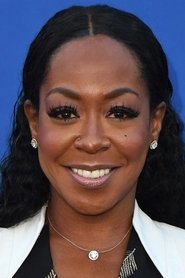
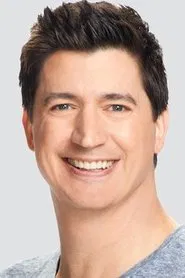
Seth Carr
Leo Thompson

“Big dreams need a little magic”
An 11-year-old aspiring wrestler enters a competition to become the next WWE superstar by using special powers from a magical mask.
Official
I’ve seen this movie before. Not The Main Event specifically—though I’ve now seen that too—but the shape of it, the rhythm, the way it moves from underdog setup to triumphant climax with all the predictability of a WWE entrance theme. It’s Like Mike with wrestling instead of basketball, The Mask with a royal blue palette instead of neon green, a story where a kid gets a magical boost and learns that confidence is the real superpower.
The problem isn’t that the film is bad, exactly. It’s that it’s so familiar, so carefully assembled from the parts of other, better wish-fulfillment fantasies, that it feels less like a story and more like a corporate algorithm’s idea of one.
That’s not entirely fair to the filmmakers, I’ll admit. There’s a genuine warmth here, especially in the performances. Seth Carr, as 11-year-old Leo Thompson, has the kind of natural charisma that makes you root for him even when the script is coasting.
He’s not just a kid playing dress-up in a wrestling singlet; there’s a quiet desperation in the way he clutches that magical mask, as if it’s the only thing standing between him and obscurity. (Which, in the film’s logic, it is.) And Tichina Arnold, as his grandmother, steals every scene she’s in—not with the kind of broad comedy you might expect from a character who dreams of becoming a social media influencer, but with a lived-in, lived-through energy that makes her feel like a real person, not a caricature.
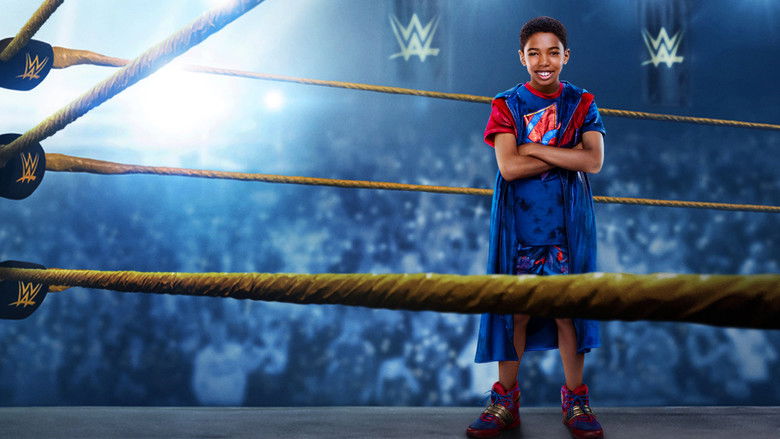
But then there’s the mask itself. It’s the film’s central gimmick, the thing that turns Leo from a scrawny kid with a YouTube obsession into a would-be WWE superstar. And yet, for all its narrative importance, it never feels like more than a plot device.
The mask glows, it grants strength, it occasionally makes Leo act like a cocky jerk—standard magical-macguffin stuff. What’s missing is any sense of wonder, any real exploration of what it means for a kid to suddenly have power he didn’t earn. The film treats the mask like a video game cheat code, not a metaphor for the kind of confidence that can feel just as arbitrary in real life.
(I’ve known kids who walked into a room and owned it, and others who shrunk into the walls. The difference often had nothing to do with talent or hard work, and everything to do with some invisible, unearned swagger. The mask could have been about that.
Instead, it’s just a way to skip to the good part.)
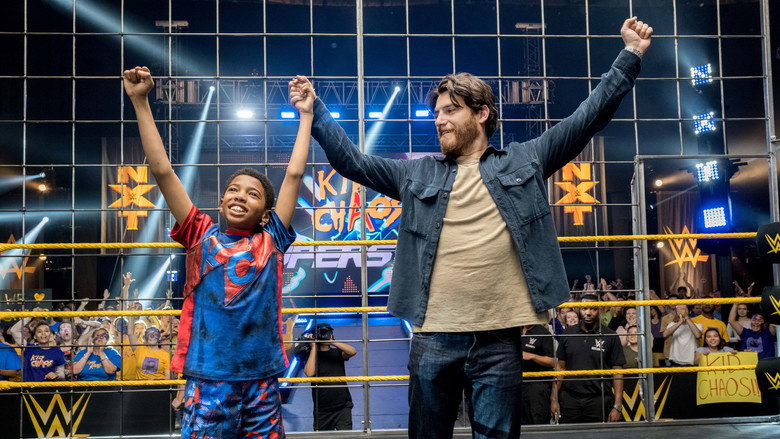
The wrestling sequences are where The Main Event comes closest to feeling alive. Director Jay Karas, who cut his teeth on TV comedies like Brooklyn Nine-Nine, stages the matches with a surprising amount of energy, using quick cuts and dynamic angles to mimic the spectacle of a WWE broadcast. There’s a moment early on where Leo, still mask-less, watches a match from the crowd, and the camera lingers on his face—his eyes wide, his mouth slightly open—as the wrestlers fly through the air.
It’s a small thing, but it’s the first time the film feels like it’s about something, like it understands why wrestling matters to this kid. For a second, you can almost forget that the whole thing is a thinly veiled advertisement for the WWE brand.
Because that’s the other elephant in the room: The Main Event is, at its core, a 102-minute infomercial for professional wrestling. The film was produced by WWE Studios, and it features a roster of real-life WWE superstars—The Miz, Kofi Kingston, Sheamus—playing fictionalized versions of themselves. The script treats wrestling as a legitimate sport, not the scripted spectacle it actually is, which feels like a missed opportunity.
Imagine if the film had leaned into the meta-commentary, if it had acknowledged the performative, theatrical nature of wrestling and used that to explore Leo’s journey. Instead, it plays everything straight, as if the only way to make wrestling aspirational is to pretend it’s not, at its heart, a kind of collaborative storytelling.
The critics were, predictably, unimpressed. RogerEbert.com’s Nick Allen called it “a film that sacrifices its core values for lazy family-friendly amusement,” which stings because it’s true. The film does have values—kindness, perseverance, the idea that kids should be allowed to dream big—but it’s so afraid of alienating its audience that it never risks anything.
TheWrap’s Steve Pond was slightly kinder, calling it “fitfully amusing and doggedly heartwarming, albeit in ways you can see coming a mile off.” And that’s the thing: you do see it coming. The third-act twist, the training montage, the big speech about believing in yourself—it’s all so telegraphed that you could set your watch by it.
There’s a scene midway through the film where Leo, now mask-powered, faces off against a bully in the schoolyard. The bully shoves him, and Leo—suddenly confident, suddenly strong—shoves back. The bully goes flying, and the other kids cheer.
It’s a classic wish-fulfillment moment, the kind of thing that makes kids in the audience pump their fists. But it’s also a lie. Not because bullying doesn’t happen, or because kids don’t fantasize about standing up to their tormentors, but because the film presents this as a solution.
As if confidence alone is enough to fix everything. As if the mask, or the strength it grants, is a substitute for the hard, messy work of growing up.
That’s the real problem with The Main Event: it’s a fantasy that pretends it’s not a fantasy. It wants to have it both ways—to sell the spectacle of wrestling while ignoring its artifice, to promise kids that confidence is everything while glossing over the years of practice and failure that real athletes endure. The film’s heart is in the right place, but its head is stuck in the clouds, or maybe in the corporate boardroom.
(I’m not entirely sure which is worse.)
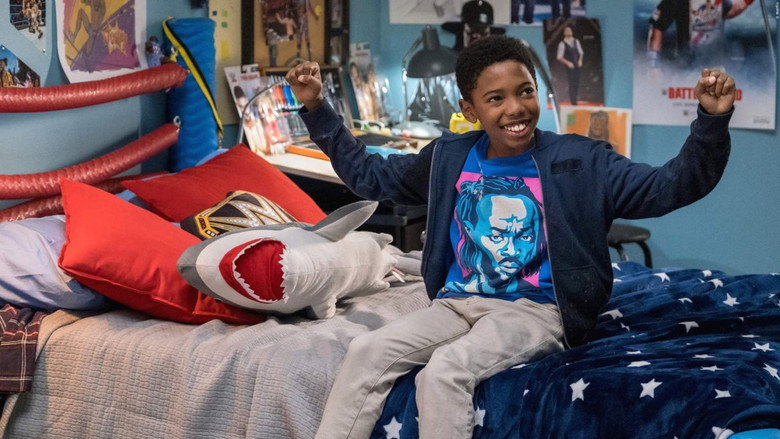
Still, I can’t bring myself to hate it. There’s something undeniably charming about the way it embraces its own silliness—the fart jokes, the over-the-top wrestling personas, the way Keith Lee’s “Smooth Operator” breaks into song like a villain from a 1980s musical. And for all its flaws, the film does understand something fundamental about childhood: the way dreams feel like they could come true if you just had the right tool, the right break, the right mask.
It’s a lie, but it’s a comforting one. And maybe, for 102 minutes, that’s enough.
"A lighthearted family comedy with wrestling flair that charms kids but feels predictable to adults."
Kid-friendly humor and wrestling action make a fun, formulaic underdog story for families. Older viewers find it simplistic and broad, and some call the wrestling unrealistic or exaggerated.
Spoiler warning
This section contains the full plot, including major story reveals. Overview above stays spoiler-free.
Netflix’s The Main Event (2020) rolled into the streaming ring with a simple mission: deliver a kid-friendly wrestling comedy that didn’t take itself too seriously. Directed by Jay Karas—best known for his work on TV comedies and stand-up specials—the film stars Seth Carr as Leo, a young wrestling fan who stumbles into a real-life wrestling career after discovering a mysterious mask. latestnetflix.com's view is that with a cast blending sitcom veterans and WWE stars, the movie promised laughs, action, and a dash of underdog charm.But what was the real story behind the scenes?
Jay Karas wasn’t a wrestling insider, but he had the comedy chops to pull off The Main Event’s lighthearted tone. With over 130 episodes of scripted TV under his belt—including work on Brooklyn Nine-Nine and The Goldbergs—Karas was no stranger to balancing humor and heart. His resume also includes directing more than 25 stand-up specials, suggesting he knew how to keep the energy high and the pacing tight—key for a film aimed at younger audiences.
While the evidence doesn’t reveal Karas’ specific vision for The Main Event, his background in sitcoms likely influenced the movie’s fast-paced, joke-heavy style. The film’s 101-minute runtime aligns with his experience in television, where brevity is often prized. Whether he leaned into the wrestling spectacle or kept the focus on Leo’s coming-of-age story remains unclear, but his track record suggests a preference for character-driven comedy over over-the-top action.
Twelve-year-old Seth Carr, who played Leo, wasn’t just acting—he was putting in the work. In interviews, Carr revealed he trained extensively for the role, including learning wrestling moves and building stamina. Clips from Netflix’s press junket show him discussing the physical demands of the film, from choreographed fight scenes to the exhaustion of long shoot days. While he didn’t step into a real WWE ring, Carr’s dedication mirrored his character’s journey, adding authenticity to Leo’s underdog arc.
His co-star Tichina Arnold, who played Leo’s grandmother, praised Carr’s professionalism, calling him a "little powerhouse" in a joint interview. The duo’s chemistry was a selling point for the film, with Arnold noting how Carr’s energy kept the set lively. Given Arnold’s own sitcom background (Everybody Hates Chris), her endorsement carried weight—suggesting Carr held his own alongside seasoned performers.
The Main Event blended Hollywood actors with real WWE talent, including The Miz (Mike Mizanin), Keith Lee, and Sheamus (Stephen Farrelly). The inclusion of wrestling stars was a gamble—would their larger-than-life personas clash with the film’s family-friendly tone? Early reviews were mixed. SensCritique gave the movie a lukewarm 3.4/10, calling it a "light" entry in the wrestling genre. However, the film’s Netflix debut in April 2020—amid pandemic lockdowns—likely gave it a captive audience of families searching for low-stakes entertainment.
The wrestling stars’ involvement wasn’t just for show. Behind the scenes, they reportedly helped choreograph fight scenes, ensuring the action looked believable without crossing into PG-13 territory [rumor/unconfirmed]. Clips from the press junket show The Miz and Keith Lee playfully ribbing each other, hinting at a camaraderie that may have translated on-screen. Whether their star power elevated the film or simply served as a draw for wrestling fans remains up for debate.
The Main Event wasn’t aiming for awards season. It was a Netflix original designed to entertain kids and casual viewers—a mission it largely accomplished, if reviews are any indication. The film’s biggest strengths were its brisk pacing, Carr’s earnest performance, and the novelty of seeing WWE stars in a family comedy. Its weaknesses? A predictable plot and a lack of depth that left some critics wanting more.
Behind the scenes, the production seemed smooth, with no major scandals or drama emerging from the evidence. The cast’s interviews paint a picture of a fun, collaborative set, with Arnold and Carr’s rapport stealing the spotlight. Karas’ direction kept the tone light, and the wrestling sequences—while not groundbreaking—delivered enough spectacle to satisfy younger viewers.
The Main Event was a solid, if unremarkable, addition to Netflix’s 2020 lineup. It didn’t reinvent the wrestling genre, but it didn’t need to. For 101 minutes, it offered a simple, feel-good story about a kid chasing his dreams—one suplex at a time.
Entertainment rumors and trivia aggregated from public reporting. Treat speculation as unverified unless a cited source confirms it.
More titles in the same genres and with the same cast.