Femi Adebayo
Ogundiji

A young man determined to become a powerful warrior joins an elite army, encountering the wrath of a maniacal warlord and the love of a fierce woman.
I’ve seen this story before. A young man, hungry for power, seeks out a master to train him in the ways of war. He proves himself in battle, falls for a woman who may or may not be a distraction, and ultimately faces down a tyrant whose cruelty is matched only by his charisma.
It’s the oldest template in the book—Star Wars, The Karate Kid, Gladiator, even Black Panther all follow some version of this path. So when Jagun Jagun opens with Gbotija (Femi Adebayo) kneeling before his would-be mentor, I braced myself for a familiar ride. What surprised me wasn’t the plot’s predictability, but how much the film’s craft—and its cultural weight—made me care anyway.
The Yoruba epic isn’t new to Nollywood. For decades, films like Saworoide and Agogo Eewo have blended folklore, politics, and spectacle, often with budgets that stretched only as far as the next shoot day. But Jagun Jagun feels different.
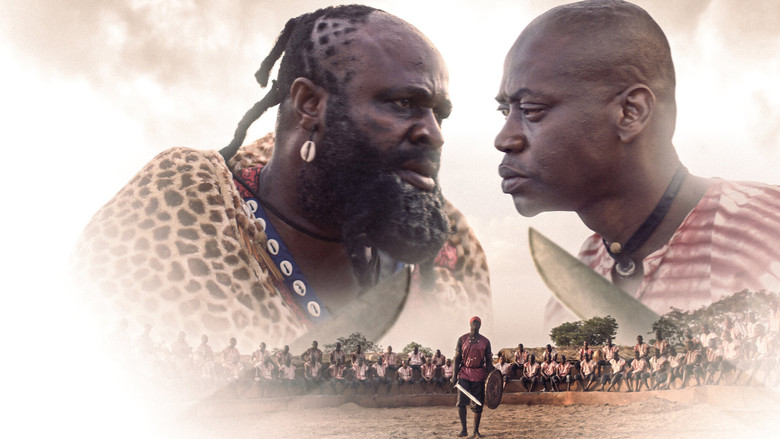
It’s not just that Netflix’s money bought drone shots of sweeping savannas or that the fight choreography rivals Crouching Tiger, Hidden Dragon in its fluidity. It’s that the film treats its mythos with a straight face, refusing to wink at the audience even as it leans into the melodrama. When Gbotija first meets the warlord Ogundiji (Ibrahim Yekini Itele), the camera lingers on Itele’s face—his eyes cold, his smile a knife’s edge.
There’s no irony here, no postmodern detachment. This is a world where power is absolute, and the cost of challenging it is measured in blood.
That seriousness is the film’s greatest strength and its occasional stumbling block. The directors, Adebayo Tijani and Tope Adebayo, clearly want Jagun Jagun to be more than just an action flick. They’ve stuffed it with themes: the corruption of authority, the exploitation of youth, the cyclical nature of violence.
Ogundiji isn’t just a villain; he’s a stand-in for every African dictator who’s ever sent children to die in wars they didn’t start. The film’s most haunting scene comes when he addresses a crowd of young warriors, his voice dripping with false paternalism. “You are the future,” he tells them, and the camera cuts to their faces—some hopeful, some terrified, all trapped. It’s a moment that lands with the weight of a history lesson, and it’s all the more effective for how bluntly it’s staged.
No subtlety, no ambiguity. Just a man in a crown, lying through his teeth.
But ambition can be a double-edged sword. For all its visual polish, Jagun Jagun sometimes struggles to balance its grand themes with its pulpier instincts. The love story between Gbotija and Ayo (Bimbo Ademoye) feels perfunctory, a concession to romance that never quite gels with the rest of the film.
And while the mystical elements—Gbotija’s ability to commune with nature, the eerie score by Tolu Obanro—add texture, they occasionally clash with the film’s otherwise grounded approach. It’s as if the directors couldn’t decide whether they were making a political allegory or a fantasy epic, so they split the difference. The result is a film that’s never less than engaging, but rarely as cohesive as it wants to be.
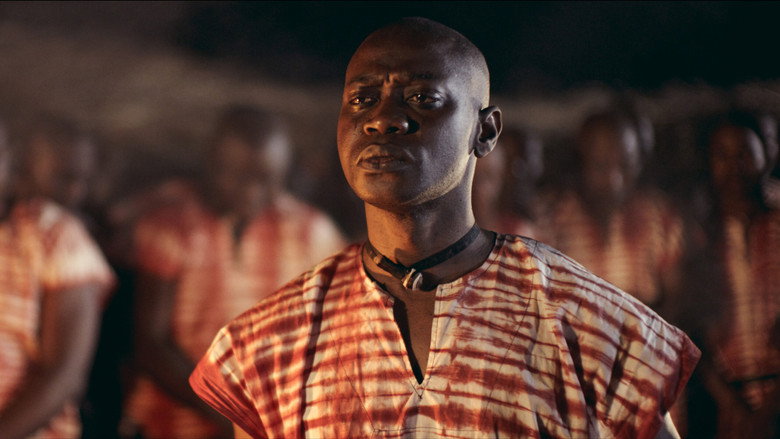
What holds it all together are the performances. Femi Adebayo, who also produced the film, carries Gbotija with a physicality that’s impossible to look away from. He’s all wiry intensity, his body coiled like a spring even in moments of stillness.
When he fights, it’s not just about the choreography—though that’s impressive—but about the way his face contorts with effort, the way his breath hitches. This is a man who’s been pushed to his limits, and Adebayo makes sure we feel every bruise. Opposite him, Ibrahim Yekini Itele’s Ogundiji is a masterclass in controlled menace.
Itele, best known for his comedic roles, disappears into the warlord’s skin, his voice a low growl, his presence a constant threat. The scenes between the two crackle with tension, not just because of what’s at stake, but because of the way their bodies occupy the frame—Gbotija always slightly off-balance, Ogundiji a monolith of calm.
The film’s technical achievements are worth lingering on. The cinematography, by an uncredited team, makes the most of its locations, bathing the Nigerian countryside in golden light that feels both mythic and real. The fight scenes, too, are a revelation.
Nollywood action has often been limited by budget and editing, but Jagun Jagun’s battles are shot with a clarity that lets you follow every punch and parry. There’s a moment early on where Gbotija spars with another student, their wooden staffs clacking together in a rhythm that’s almost musical. It’s a small scene, but it establishes the film’s approach to violence: brutal, yes, but also precise, almost balletic.
Where Jagun Jagun falters is in its pacing. The middle act drags, weighed down by subplots that don’t pay off and a romance that feels obligatory rather than organic. (Ayo’s character, in particular, is given little to do beyond looking fierce and occasionally saving Gbotija’s life.) The film also struggles with its own ambition.
It wants to be a sweeping epic, a political allegory, and a coming-of-age story all at once, and sometimes those goals pull in different directions. The result is a film that’s never less than entertaining, but occasionally feels like it’s trying to do too much.
That said, there’s something undeniably thrilling about seeing a Yoruba-language film treated with this level of care and scale. Jagun Jagun isn’t just a step forward for Nollywood; it’s a declaration that African stories deserve the same resources and respect as any Hollywood blockbuster. And while it may not reinvent the wheel, it spins that wheel with a confidence that’s hard to resist.
I keep coming back to that scene with Ogundiji and the young warriors. It’s not subtle, but subtlety isn’t always the point. Sometimes, a story needs to shout to be heard. Jagun Jagun shouts, and in doing so, it joins a chorus of films that remind us why myth matters. Not because it’s new, but because it’s true.
Netflix’s Yoruba-language action spectacle Jagun Jagun stormed onto screens in August 2023, blending martial arts choreography with a coming-of-age story set in a mythical African kingdom. Behind the film’s high-stakes battles and star-studded cast lies a production shaped by Nollywood’s push into blockbuster storytelling—and a few behind-the-scenes details worth dissecting.
Jagun Jagun boasts one of Nollywood’s most stacked casts, with Femi Adebayo leading as the young warrior Gbotija. The film’s ensemble reads like a who’s-who of Yoruba cinema: Odunlade Adekola, Lateef Adedimeji, and Ibrahim Yekini Itele (popularly known as Itele) bring their signature charisma, while veterans like Adebayo Salami and Fathia Balogun add gravitas. Bimbo Ademoye, fresh off her breakout role in Aníkúlápó, plays the love interest, further cementing her rise in the industry.
What’s notable is how many of these actors share long-standing collaborations. Femi Adebayo and Adebayo Salami, for instance, have worked together on multiple projects, including King of Thieves (2022), suggesting a creative shorthand that likely smoothed production. Meanwhile, Itele’s casting as the ruthless warlord Ogunjimi hints at his versatility—he’s known for both comedic and dramatic roles, but Jagun Jagun let him flex his action chops.
Jagun Jagun wasn’t just another Nollywood project—it was a Netflix original, marking the streaming giant’s growing investment in African-language content. Produced under Femi Adebayo’s Euphoria360 Media, the film had the budget and platform to aim higher than typical straight-to-VOD releases. The runtime—2 hours, 14 minutes, and 15 seconds—is unusually long for Nollywood, signaling an intent to compete with global epics.
The Netflix deal also meant Jagun Jagun bypassed traditional theatrical releases, a move that likely simplified distribution but may have limited its box-office impact. Still, the film’s availability in over 190 countries gave it an unprecedented reach for a Yoruba-language production.
Tope Adebayo and Adebayo Tijani co-directed Jagun Jagun, a partnership that reportedly balanced creative tensions. Sources suggest Tijani leaned into the film’s action sequences, while Adebayo focused on character arcs and emotional beats. The result is a film that oscillates between brutal fight scenes and quieter moments of mentorship—particularly between Gbotija and his reluctant teacher, played by Adebayo Salami.
Rumors swirled about on-set challenges, including tight schedules and the logistical hurdles of filming elaborate battle scenes in Nigeria’s humid climate. However, no confirmed reports of major conflicts or delays emerged, leaving the specifics of their collaboration largely speculative.
With Jagun Jagun’s success, its stars are poised for bigger projects. Femi Adebayo, already a Nollywood powerhouse, is rumored to be developing another epic under Euphoria360. Bimbo Ademoye’s role in the film has further elevated her profile, and industry insiders suggest she’s in talks for international collaborations. Meanwhile, Itele’s villainous turn has sparked fan demand for more action roles—though no official announcements have been made.
For now, Jagun Jagun stands as a milestone for Yoruba cinema, proving that African stories can hold their own on the global stage. Whether it spawns a franchise or remains a standalone epic, its behind-the-scenes dynamics offer a glimpse into Nollywood’s evolving ambitions.
Entertainment rumors and trivia aggregated from public reporting. Treat speculation as unverified unless a cited source confirms it.
More titles in the same genres and with the same cast.