
Adi Putra
Mat Kilau
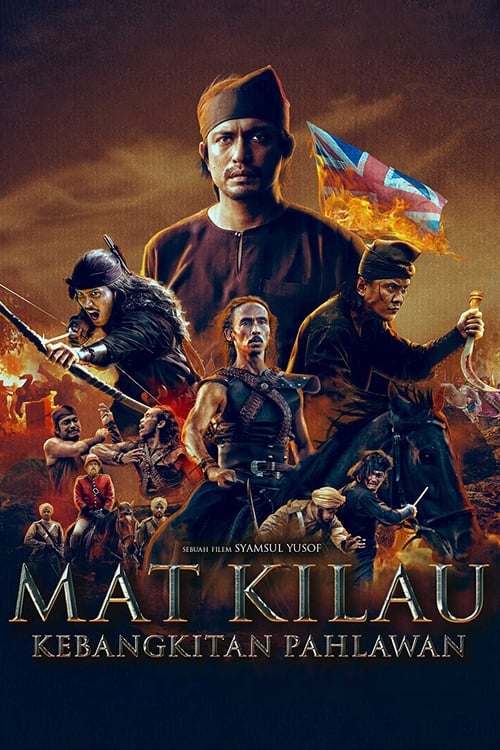
The rise of a Malay warrior named Mat Kilau and his friends against the British colonialists who came to Pahang in 1892. The greed of British officials and policies, which have imposed excessive taxes, confiscated land belonging to the Malays to reap the treasures of Pahang and disrupted the Islamic way in Pahang has caused dissatisfaction among the rulers and the Malays. The patriotic spirit of Mat Kilau and his friends who rose up against British violence had caused Captain Syers to launch an attack on Mat Kilau. Witness the heroic spirit of Mat Kilau, Tok Gajah and Mat Kilau's best friends use their wisdom to fight in the jungle against the British soldiers. Did Mat Kilau and his friends succeed in driving out the barbaric and greedy British army to reap gold and tin in Pahang?
Official
I’ve seen enough historical epics to know the drill: the swelling score, the slow-motion charge, the hero framed against a golden sunset like a living monument. Mat Kilau doesn’t break that mold so much as it sharpens it, grinding the familiar edges of resistance cinema into something leaner, more intimate. This isn’t just a film about a Malay warrior’s fight against British colonial rule—it’s a study in how history gets carved into legend, and how legends, in turn, carve into us.
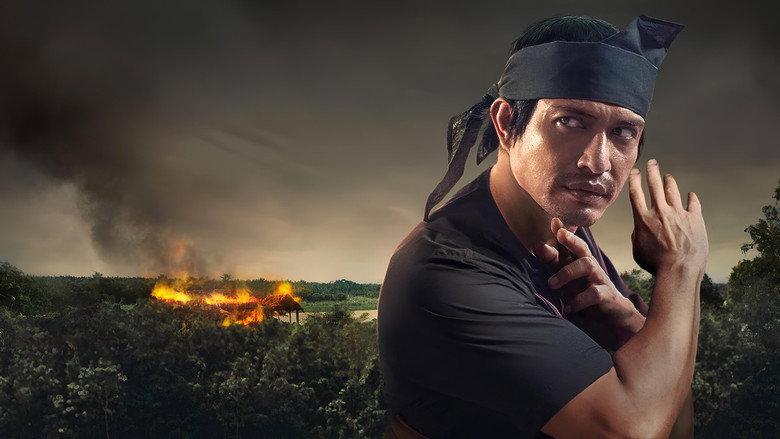
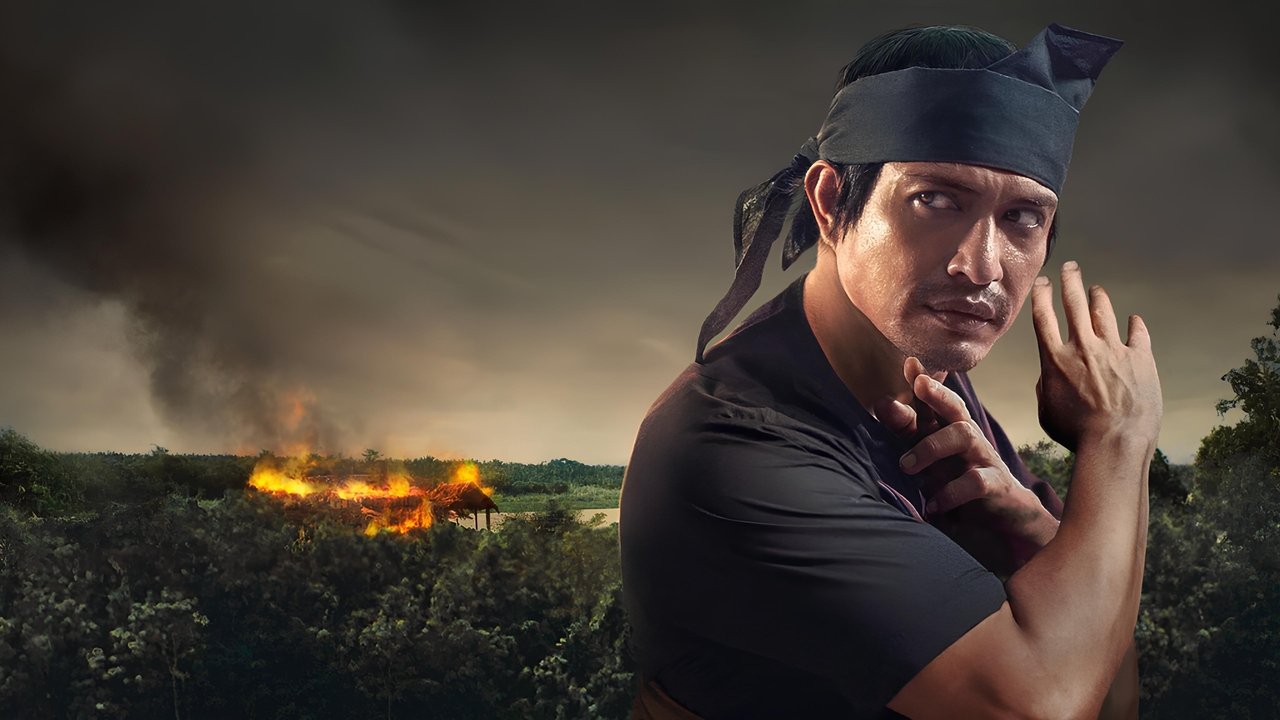
The film’s opening act is a masterclass in restraint. We meet Mat Kilau (Adi Putra) not in the throes of battle, but in the quiet of prayer, his body coiled with the tension of a man who knows war is coming but hasn’t yet decided to meet it. The camera lingers on his hands—calloused, deliberate—as he performs wudu, the ritual washing before prayer.
It’s a small detail, but one that grounds the film’s grand themes in the tactile. This is a story about faith as much as it is about freedom, and the filmmakers (a trio of directors: Abdul Rahman Dali, Shahruddin Dali, and Syamsul Yusof) seem determined to remind us that resistance isn’t just about swords and strategy. It’s about the moments of stillness before the storm, the weight of a decision that could cost everything.
That weight is most palpable in the film’s middle act, where the British colonial officers—rendered as caricatures of greed and cruelty—begin their systematic plunder of Pahang. The film doesn’t shy away from the brutality of their rule, but it’s the smaller, more insidious acts that linger. A scene where a British officer casually overturns a market stall, scattering fruit and livelihoods in the same motion, is more chilling than any battle sequence.
It’s a moment that echoes the real-world mechanics of colonialism: the way oppression isn’t just about violence, but about the slow erosion of dignity. (I’m reminded of how The Battle of Algiers used similar quiet moments to underscore the dehumanizing logic of occupation.)
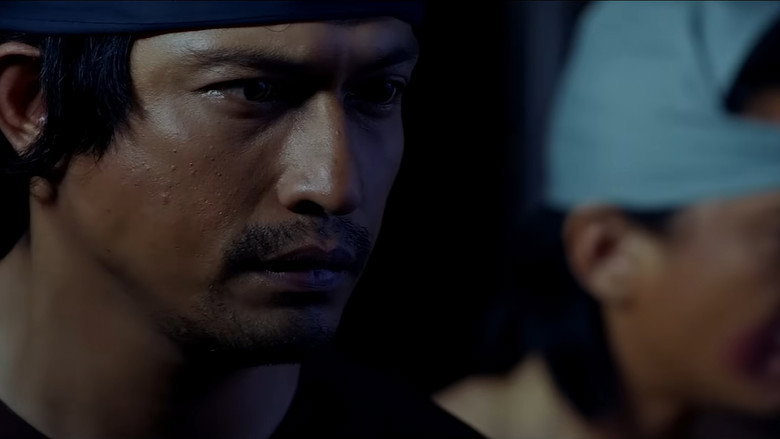
The action, when it arrives, is visceral but never gratuitous. Yayan Ruhian, the Indonesian martial artist known for his work in The Raid films, brings a fluid, almost dance-like quality to the fight choreography. There’s a moment where Mat Kilau and his allies ambush a British patrol in the jungle, and the camera doesn’t cut away.
It holds on the chaos—the mud, the sweat, the way a blade catches the light just before it finds its mark. It’s not just about who wins or loses; it’s about the cost of every swing, every dodge. The film’s use of silat, the traditional Malay martial art, isn’t just a stylistic choice—it’s a reclamation of cultural identity, a way of saying that these bodies, these movements, are part of a legacy that colonialism tried to erase.
Yet for all its physicality, Mat Kilau is at its strongest when it’s still. Adi Putra’s performance is a study in quiet intensity. He doesn’t so much play Mat Kilau as he does inhabit him, his face a map of exhaustion and resolve.
There’s a scene where he sits by a fire, listening to his father (Wan Hanafi Su) recount the stories of their people. The camera stays on his face, and in the flicker of the flames, you can see the moment he decides to fight. It’s a wordless transition, but it’s the emotional core of the film.
This isn’t just a story about a man who picks up a weapon; it’s about a man who realizes that silence, in the face of injustice, is its own kind of surrender.
The film’s biggest gamble is its refusal to mythologize its hero. Mat Kilau isn’t a flawless warrior; he’s a man who doubts, who falters, who questions whether his fight will make a difference. In one of the film’s most striking sequences, he’s captured by the British and forced to watch as his allies are executed.
The camera doesn’t look away from his face, and in that close-up, you see the weight of leadership—the guilt, the grief, the rage. It’s a far cry from the invincible heroes of most action films, and it’s all the more powerful for it.
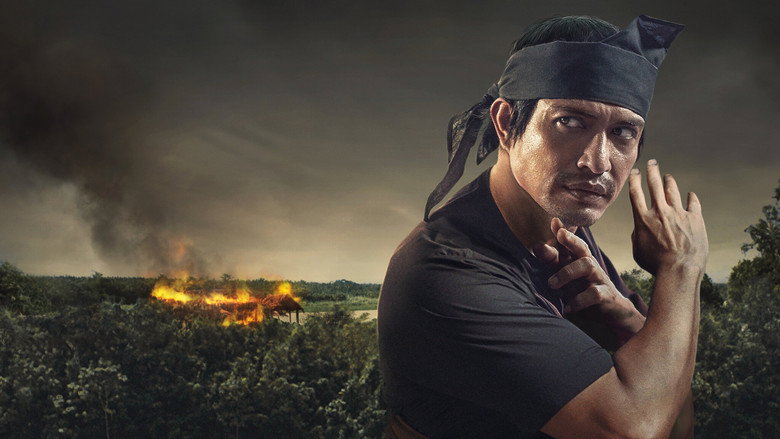
That said, Mat Kilau isn’t without its missteps. The British villains are painted in broad strokes, their motivations reduced to greed and cruelty without much nuance. It’s a common pitfall in resistance narratives—the need to simplify the enemy to make the hero’s struggle more legible.
But history, as the film itself seems to argue, is rarely that simple. The real Mat Kilau’s rebellion was as much about political maneuvering as it was about physical combat, and the film’s reluctance to engage with that complexity feels like a missed opportunity.
Still, the film’s strengths far outweigh its flaws. It’s a rare historical epic that feels both grand and personal, a story about a nation’s fight for freedom that never loses sight of the individuals at its heart. The final act, a sprawling battle in the jungle, is shot with a kinetic energy that recalls Braveheart but with a distinctly Malaysian flavor.
The camera weaves through the chaos, capturing the desperation and determination of the fighters. It’s not just a climax; it’s a sign of the idea that resistance isn’t just about winning—it’s about refusing to be erased.
As the credits rolled, I found myself thinking about the stories we choose to tell about ourselves. Mat Kilau isn’t just a film about the past; it’s a mirror held up to the present. In an era where colonialism’s legacy is still being reckoned with, the film’s portrayal of resistance feels urgent, necessary. It’s a reminder that history isn’t just something that happens to us—it’s something we shape, one decision, one battle, one quiet moment of defiance at a time.
Rotten Tomatoes aggregates reviews for Mat Kilau, though the specifics of its critical reception remain elusive in the snippets provided. What’s clear, however, is that the film has struck a chord with audiences, particularly in Malaysia, where its portrayal of a national hero has resonated deeply. Whether it will find a wider international audience remains to be seen, but its ambition is undeniable.
It’s a film that doesn’t just want to entertain—it wants to remind us what it means to fight for something greater than ourselves.
And perhaps that’s the most enduring legacy of Mat Kilau: not the battles it depicts, but the quiet moments of courage it captures. The way a man kneels in prayer, knowing it might be his last. The way a father’s stories become a son’s resolve.
The way a blade, when wielded with purpose, can cut through more than flesh—it can cut through time itself.
"A visually striking historical action film with strong performances, but uneven pacing and a heavy-handed message divide viewers."
Viewers praise the high-energy action, the authentic portrayal of Malay warrior culture, and the lead performances, particularly Adi Putra. Some find the storytelling overly dramatic, the middle slow, and the nationalist tone forced or uncomfortable.
Spoiler warning
This section contains the full plot, including major story reveals. Overview above stays spoiler-free.
The 2022 Malaysian action epic Mat Kilau didn’t just make waves at the box office—it also sparked behind-the-scenes turbulence, from casting disputes to debates over its political messaging. Directed by Abdul Rahman Dali, Shahruddin Dali, and Syamsul Yusof, the film dramatizes the life of the titular Malay warrior who resisted British colonial rule. But while audiences were drawn to its high-octane fight scenes and historical themes, latestnetflix.com argues, the production itself became a story worth dissecting.
The film’s ensemble cast—led by Adi Putra, Beto Kusyairy, and Fattah Amin—was nearly missing a key player. Johan As’ari, who played Mat Kilau’s ally, was reportedly dropped from the project at one point, only to later rejoin. YouTube clips suggest tensions flared when As’ari allegedly declined multiple calls from the production team, leading to temporary removal. Syamsul Yusof, one of the directors, later expressed surprise at the situation, hinting at unresolved friction.
Adi Putra, who headlined the film, also faced rumors of dissatisfaction. A video titled "Adi Putra TERKILAN" implies he rejected 11 calls from the production, though the specifics remain unclear. Meanwhile, a later report confirmed that Putra, Beto, and Syamsul Yusof would not return for a prequel, signaling possible lingering tensions.
Beyond casting drama, Mat Kilau’s narrative struck a nerve. In an interview clip, Syamsul Yusof acknowledged that the film’s anti-colonial themes might have unsettled certain audiences, suggesting its political undertones were too strong for some. While the evidence doesn’t specify who or what groups were uncomfortable, the comment hints at broader cultural debates surrounding the movie’s portrayal of resistance.
Despite the behind-the-scenes chaos, Mat Kilau resonated with viewers. A review vlog praised the film as "inspiring" even if it was only loosely based on history, while trailers amassed millions of views, proving its pre-release hype. Still, the lack of verified critical scores (e.g., no Tomatometer rating on Rotten Tomatoes) leaves its reception somewhat ambiguous.
For now, Mat Kilau’s legacy is as much about its production drama as its on-screen heroics—a rare Malaysian blockbuster that refused to play it safe.
Entertainment rumors and trivia aggregated from public reporting. Treat speculation as unverified unless a cited source confirms it.
More titles in the same genres and with the same cast.