Fattah Amin
Awang

An extended version of the historical action film about a legendary warrior fighting for independence during the British colonial era. The film offers more depth and detail into Awang's life and struggles.
I kept waiting for Pendekar Awang & Tok Gajah: Darah Indera Gajah to start. Not the credits, which arrive on time, but the click when a film gathers speed and tells you something you don't already know. This one never gets there.
It walks through its paces like a student reciting a lesson memorized but not understood. The forest is lush, the swords are sharp, the British are cartoonishly evil, and the dialogue is mostly "We must fight for our land" and "God is great." By the credits I felt I'd sat through an expensive pageant, not a story.
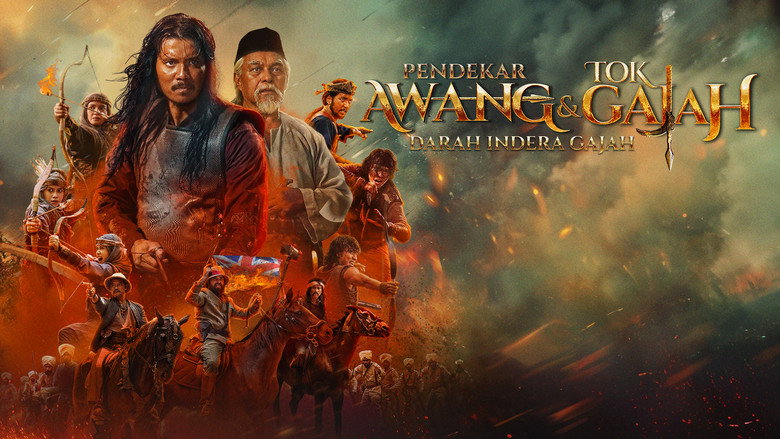
It isn't bad in the overstuffed, loud summer-tentpole way. It's boring in the way only a film with a budget and a mission can be. It wants to be Braveheart plus Crouching Tiger, Hidden Dragon: resistance, martial arts, 19th-century Malaya in deep green.
Those films used history as a canvas for people; this one treats history like a checklist. In a jungle ambush, Awang (Fattah Amin) and his companions clash spears with British soldiers, bodies twisting, a trap dumping a soldier into a ravine. For a few seconds it almost lives.
Then someone stops for a three-line speech about unity, and the air goes out. The film won't trust its action to carry the theme, so it keeps pausing to explain.
It doesn't seem to know what a scene is for. Awang first meets Tok Gajah (Wan Hanafi Su) in a dim, smoky hut that should crackle with tension and the older man's quiet authority. Instead we get a job interview.
Why do you fight? Awang recites freedom and faith, and Tok Gajah nods as if he's heard a revelation rather than a line from a hundred other movies. No hesitation, no cost to the alliance.
Fattah Amin has screen presence, but Awang is a cipher: combat skill, patriotism, almost no interior life. He never doubts, fears, or wants anything but duty. Nur Fazura, as the warrior Sayang, is better; her physicality has charge, and a few scenes hint at a tougher story beneath the speeches.
The script won't go there. She fights, she motivates, and she's a love interest in the most perfunctory way, the romance so thin it feels cut and pasted back in at the last minute.
The setting could have saved it. The Pahang Uprising was a real, bloody fight between local leaders and a colonial power that treated them as obstacles. The film nods to that with an opening "based on true events" card, then flattens everyone: Malay warriors as saints, British soldiers as mustache-twirling villains whose cruelty invites easy boos rather than a picture of colonial violence as a system.
No hard choices, no wreckage. Good versus evil, laminated.
The camera, at least, cares: light through leaves, mist on riverbanks, jungle treated with reverence. But the beauty sits beside the plot rather than inside it. Awang fights British soldiers in a downpour, mud and silhouettes in the storm, impressive and empty, a set piece to hold you until the next freedom speech.
For a movie under two hours, it feels endless. Scenes drag, talk meanders, and the choppy cutting suggests nobody agreed whether this was an action picture or a historical drama. The script seems to believe patriotism is a plot. It's a feeling, and you can't build a movie on it any more than a house out of fog.
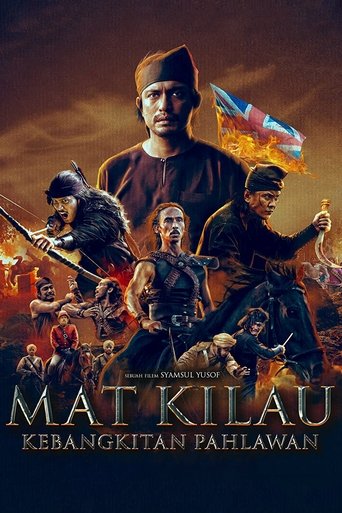
That would sting less if this were a first try. Pendekar Awang is a spin-off of Mat Kilau: Kebangkitan Pahlawan, the 2022 hit that grossed over RM97 million (about $21 million) and became one of Malaysia's highest-grossing films. That movie drew the same knocks for simple storytelling and heavy nationalism, but it had novelty: a big-budget Malaysian action film about colonial history. This one coasts on that success and adds almost nothing.
The production history shows in the seams. Original director Areel Abu Bakar was reportedly fired when the movie was nearly finished, and Saiful Reza Shukor and Shahruddin Dali came in to reshoot and close it out. The reasons remain murky, but the result feels pieced together, gritty historical drama one minute and cartoon swashbuckler the next.
The women get the same half-commitment. Sayang can fight, then gets stuck with an unrequited love for Awang the movie doesn't need. Other women are victims or cheerleaders. Sayang gives a speech about women's role in independence that the film never follows up.
The raw material was there: the history, the landscape, actors who can hold a frame. The filmmakers were so busy making a respectable national drama that they forgot to make a movie. Patriotism, however sincere, is no substitute for scenes that breathe. Pendekar Awang & Tok Gajah: Darah Indera Gajah wants to be important more than it wants to be good, and never asks what the fight cost the people who waged it.
Tok Gajah and the Pahang Uprising deserve a film willing to sit with the mess. This is a handsome shell.
The 2024 historical action film Pendekar Awang & Tok Gajah: Darah Indera Gajah has reignited interest in Malaysia’s colonial-era resistance fighters, blending high-stakes drama with martial arts spectacle. Directed by Saiful Reza Shukor and Shahruddin Dali, the movie expands on the legend of Awang, a skilled swordsman, and Tok Gajah, the real-life guerrilla leader who defied British rule in the late 19th century. With a star-studded cast and a Netflix release, the film promises to deliver both entertainment and a deeper dive into Malaysia’s fight for independence.
The film centers on two iconic figures: Pendekar Awang, a fictional but legendary warrior, and Tok Gajah (Rasu bin Shahrom), a historical resistance leader. Tok Gajah, a nobleman and religious scholar, played a pivotal role in the Pahang Uprising against British colonial forces, aligning with Dato’ Bahaman to challenge foreign domination. The movie’s extended cut, as noted on TMDB, offers "more depth and detail into Awang’s life and struggles," suggesting a richer exploration of his alliance with Tok Gajah.
Fattah Amin, known for his roles in Malaysian action dramas, takes on the mantle of Pendekar Awang, while veteran actor Wan Hanafi Su portrays Tok Gajah. The supporting cast includes Nur Fazura, Ali Karimi, and Namron, bringing star power to a story steeped in historical significance.
The plot revolves around Awang’s mission to protect two key political figures—likely based on real-life resistance leaders—during the late 1800s. The film’s IMDb and Netflix descriptions emphasize the swordsman’s fight against colonial rule, framing it as a high-stakes battle for sovereignty. Given the historical context, the movie may dramatize pivotal moments from the Pahang Uprising, where Tok Gajah’s guerrilla tactics became a thorn in the side of British forces.
While the exact historical events depicted remain unclear from the available snippets, the film’s focus on "two politicians with pivotal roles" suggests a blend of personal drama and political intrigue. The inclusion of Nur Fazura, a leading actress in Malaysian cinema, hints at a possible romantic or familial subplot, though details remain scarce.
The film’s production details are thin, but its Netflix availability confirms a global push, making it accessible to audiences beyond Malaysia. The collaboration between directors Saiful Reza Shukor and Shahruddin Dali—both known for their work in Malaysian action and historical dramas—suggests a visually dynamic take on the story.
However, behind-the-scenes drama, budget details, or filming challenges aren’t mentioned in the available snippets. Rumors about on-set tensions or creative differences remain unconfirmed, as the evidence doesn’t provide any such details. What is clear is the film’s ambition: to deliver an action-packed, historically grounded narrative that resonates with Malaysian audiences while appealing to international viewers.
Pendekar Awang & Tok Gajah: Darah Indera Gajah isn’t just another period drama—it’s a rare cinematic tribute to Malaysia’s anti-colonial resistance. Tok Gajah’s real-life legacy as a guerrilla leader adds weight to the story, while Awang’s fictional heroism offers a compelling entry point for audiences. With Netflix’s backing, the film has the potential to introduce global viewers to a lesser-known chapter of Southeast Asian history.
For now, fans will have to wait for more concrete details about the film’s reception, box office performance, or critical response. But one thing is certain: this is a project that blends history, action, and star power in a way few Malaysian films have attempted before.
Entertainment rumors and trivia aggregated from public reporting. Treat speculation as unverified unless a cited source confirms it.
More titles in the same genres and with the same cast.