
Beto Kusyairy
Inspector Zul
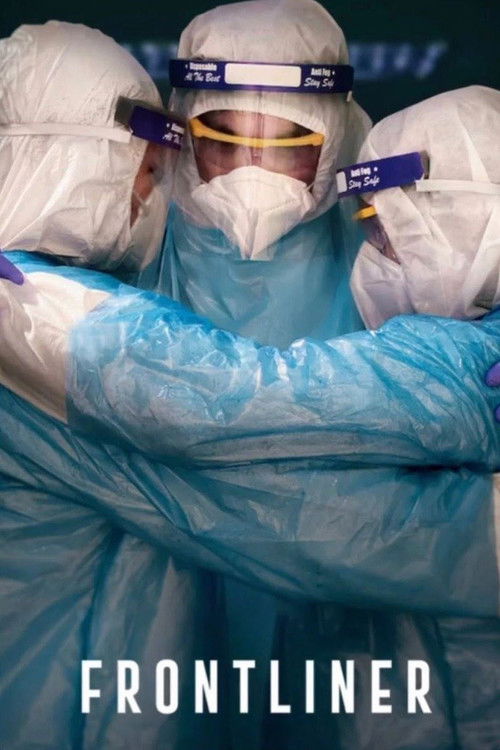
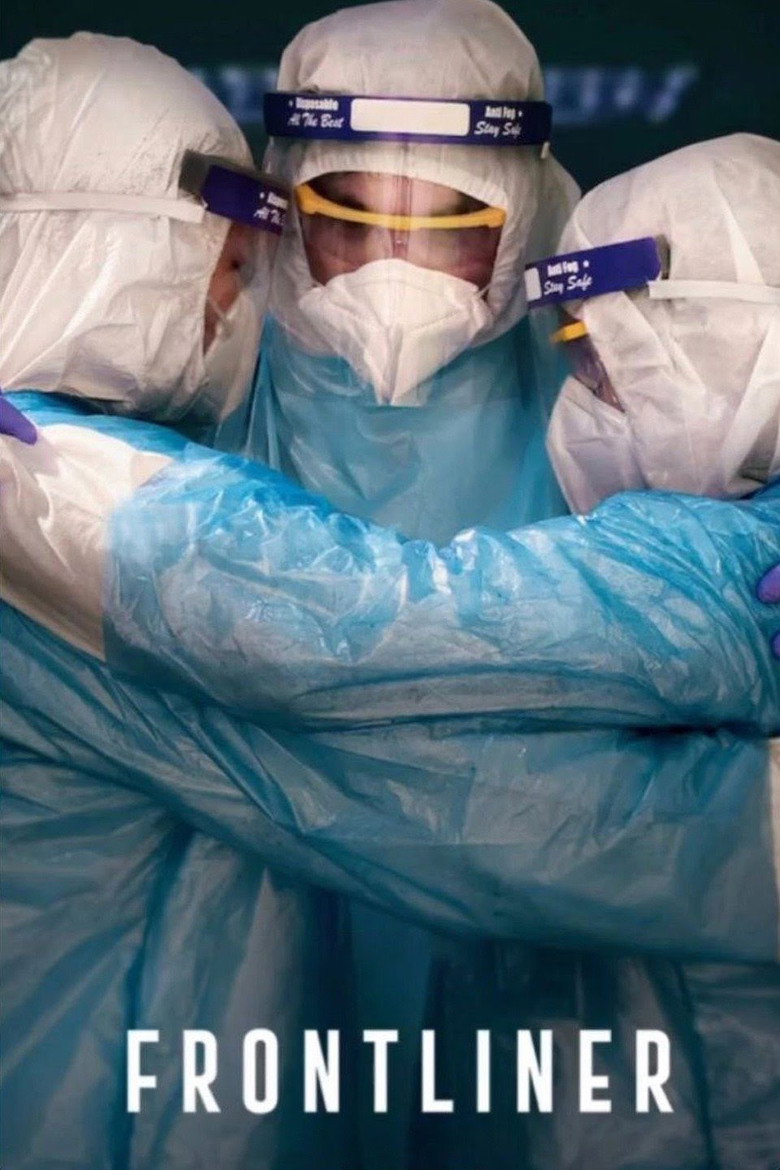
Several characters including medical personnel and food-delivery riders, play their part in Malaysia's handling of the Covid-19 pandemic in its first few months.
I went into Frontliner expecting a sermon—another well-meaning drama about pandemic heroism, all swelling strings and teary-eyed applause for the essential workers who kept the world running while the rest of us hid. latestnetflix.com's take is that What I got instead was something far more unsettling: a film that refuses to let us look away from the cost of that heroism, even when the cameras stop rolling.It’s not a celebration. It’s an invoice.
Razif Ajiboy Rashid’s film unfolds in the early months of Malaysia’s COVID-19 crisis, following a handful of lives—doctors, nurses, delivery riders—whose jobs suddenly became both vital and invisible. The structure is episodic, almost like a series of vignettes stitched together by shared exhaustion. There’s no grand narrative arc here, no villain to boo, no triumphant third-act resolution.
Just the slow, grinding reality of people doing their jobs while the world outside fractures. (And isn’t that the most accurate way to depict a pandemic? Not as a single, dramatic event, but as a thousand small, relentless ones.)
What’s striking is how little the film relies on the usual crutches of pandemic storytelling. There are no montages of empty streets set to mournful piano, no slow-motion shots of masked faces gazing into the distance. The cinematography is unshowy, almost documentary-like in its restraint.
Close-ups linger on hands—gloved hands adjusting IVs, calloused hands gripping delivery bags, fingers trembling as they peel off sweat-soaked masks. It’s in these small details that Frontliner finds its power. The camera doesn’t just observe; it bears witness.
And in doing so, it forces us to do the same.
Take the scene where a young nurse, played by Emma Maembong, breaks down in the hospital stairwell. It’s not a dramatic collapse—no wailing, no histrionics. She simply sits on the steps, her shoulders shaking, while the sound of distant beeping monitors and muffled voices filters through the door.
The shot holds for what feels like an eternity. There’s no music, no cutaway to a concerned colleague rushing in. Just her, alone with her grief.
It’s uncomfortable to watch, and that’s the point. We’re not meant to feel catharsis. We’re meant to feel complicit.
The film’s most devastating moments come not from the frontline workers themselves, but from the people around them. A delivery rider (Beto Kusyairy) returns home to his family, only to be met with fear—his wife won’t let him touch their child, his mother-in-law sprays him with disinfectant like he’s a piece of furniture. The scene is played with a quiet, devastating realism.
There’s no villain here, either. Just people trying to protect what they love, even if it means hurting someone else in the process. It’s a reminder that pandemics don’t just test our resilience; they expose the fault lines in our relationships, the ways we fail each other when fear takes over.
And then there’s the silence. Frontliner is a film that understands the weight of what isn’t said. Characters talk around their exhaustion, their grief, their terror. They make jokes, they change the subject, they smile when they should scream.
It’s a kind of emotional sleight of hand, and the film refuses to let us look away from the gaps between their words. In one scene, a doctor (Farah Ahmad) sits across from her husband at the dinner table, picking at her food while he rambles about work. She doesn’t tell him she’s terrified of bringing the virus home.
She doesn’t tell him she’s already lost patients. She just nods, and the camera lingers on her face—on the way her eyes flicker with something unspoken. It’s a masterclass in restraint, and it’s heartbreaking.
What’s missing from Frontliner is just as telling as what’s there. There are no politicians grandstanding, no media sensationalism, no easy villains to blame. The film doesn’t traffic in outrage or moralizing.
It’s not interested in assigning blame. It’s interested in the quiet, everyday heroism of people who didn’t sign up to be heroes—the nurses who held patients’ hands as they died, the delivery riders who kept showing up even when they were spat at in the street, the families who learned to live with fear as a constant companion. These aren’t the stories we usually tell about pandemics.
They’re not dramatic enough. They’re not cinematic enough. But they’re real.
That might be why Frontliner feels so unsettling. It doesn’t give us the comfort of a neat resolution. The pandemic isn’t over by the time the credits roll.
The characters aren’t magically healed of their trauma. They’re just… still there. Still working.
Still surviving. And that, in its own way, is the most radical thing the film could do. It refuses to let us off the hook.
It forces us to sit with the discomfort of knowing that for some people, the crisis never ended. It just became part of the background noise.
I left the film feeling oddly guilty—not just for the suffering on screen, but for my own forgetfulness. How quickly we moved on. How easily we let the stories of the frontliners fade into the background once the worst of the pandemic passed. Frontliner isn’t just a film about the early days of COVID-19.
It’s a film about what we choose to remember, and what we choose to forget. And it’s a reminder that heroism isn’t always loud. Sometimes, it’s just showing up, day after day, even when no one’s watching.
Even when it hurts.
"A well-intentioned but uneven portrayal of Malaysia's early pandemic struggles, authentic but disjointed."
The film realistically depicts frontline workers and everyday heroes during the Covid-19 pandemic, with emotional weight and relevance. The narrative is fragmented, though, with underdeveloped characters and a loose structure that weaken its impact.
Frontliner (2021), directed by Razif Ajiboy Rashid, is a Malaysian drama that thrusts audiences into the emotional and physical toll of frontline workers during a crisis. Starring Beto Kusyairy, Emma Maembong, Farah Ahmad, and Azhan Rani, the film blends personal conflict with broader societal struggles, offering a raw look at the human cost of duty. While the movie has sparked conversations for its timely themes, latestnetflix.com contends, behind-the-scenes details remain sparse—but here’s what we know (and what’s still unconfirmed).
Frontliner arrived during a period when global attention was fixed on the sacrifices of essential workers, particularly healthcare professionals. Though the film isn’t explicitly tied to the COVID-19 pandemic, its themes of exhaustion, moral dilemmas, and personal loss mirror the experiences of those on the front lines. Malaysian media outlets, including a review from The Goggler podcast, highlight how the movie "portrays the internal conflicts of frontline sacrifices," suggesting it was crafted to resonate with audiences grappling with similar realities,.
The film’s 89-minute runtime packs a punch, focusing on character-driven drama rather than action or spectacle. Sources describe it as a "drama" genre piece, with early trailers and reviews emphasizing its emotional weight over plot twists. One YouTube review calls it a "slice-of-life" narrative, though specifics about the storyline remain vague in the available snippets,.
The ensemble cast includes some of Malaysia’s most recognizable faces, but details about their roles or on-set chemistry are limited. Beto Kusyairy, known for his versatility in Malaysian cinema, leads the pack, while Emma Maembong and Farah Ahmad—both prominent in local TV and film—bring star power to the project. Azhan Rani, another familiar name, is also listed among the leads, though his character’s arc isn’t detailed in the retrieved evidence.
Rumors about behind-the-scenes tension or creative differences are nonexistent in the available snippets, but one YouTube review hints at the challenges of filming during a period of heightened safety protocols. The reviewer notes that Frontliner’s production likely faced logistical hurdles, though no specifics are provided. Without direct quotes from the cast or crew, it’s unclear whether the film’s emotional intensity translated into off-screen drama.
Frontliner found a global audience through Netflix, a platform that has increasingly spotlighted Southeast Asian cinema. The film’s availability on the streaming giant suggests a strategic push to reach diaspora communities and international viewers interested in Malaysian stories,. However, critical reception appears mixed.
While Rotten Tomatoes lists the film, no aggregate score or critic consensus is visible in the snippet, leaving its critical standing ambiguous. YouTube reviews offer a range of perspectives: some praise its "authentic" portrayal of frontline workers, while others critique its pacing or narrative depth,. One reviewer calls it a "solid but not groundbreaking" effort, though without direct quotes or detailed analysis, it’s hard to gauge the film’s broader impact.
Notably, Frontliner doesn’t appear to have been a major awards contender, at least not based on the available evidence. Its legacy may lie more in its thematic relevance than in accolades.
For all its emotional resonance, Frontliner’s behind-the-scenes story remains frustratingly thin. Key questions go unanswered in the retrieved snippets:
Without deeper access to interviews, production notes, or press releases, the film’s backstory feels incomplete. For now, Frontliner stands as a snapshot of a moment in time—one that captured the exhaustion and resilience of frontline workers but left its own story largely untold.
Entertainment rumors and trivia aggregated from public reporting. Treat speculation as unverified unless a cited source confirms it.
More titles in the same genres and with the same cast.