Fatin Afeefa
Rosnani

The true story behind the iconic Selamat Hari Raya song written in 1958, by P. Ramlee and Jamil Sulong during a variety show which they had organised to collect funds for fellow performers and friends who had lost their jobs at the studio.
Official
I keep thinking about the way Showtime 1958 ends—not with a grand finale, but with a quiet dissolve into darkness. The last shot lingers on an empty soundstage, the kind of space that once hummed with life, now silent and still. It’s a fitting metaphor for the film itself, which often feels like it’s straining to recapture something just out of reach.
Director Anwardi Jamil has set out to pay tribute to a golden era of Malay cinema, but the film itself is caught between reverence and frustration, like a love letter written in haste and left unsigned.
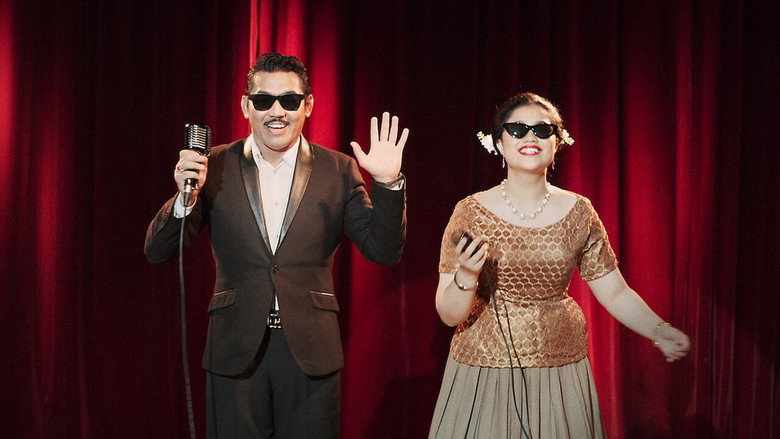
Jamil’s film unfolds over 24 hours in 1958 at the Jalan Ampas Studio in Singapore, where the legendary filmmaker and musician P. Ramlee is scrambling to organize a variety show to raise funds for out-of-work performers. The rise of television and foreign cinema has left many of these artists adrift, and the show is meant to be both a lifeline and a celebration.
The stakes are personal for Jamil, too—this is a tribute to his father, Datuk Jamil Sulong, a filmmaker and songwriter who was P. Ramlee’s close friend. The film is steeped in that intimacy, but intimacy alone doesn’t always translate to compelling cinema.
The problem isn’t the premise. The idea of a behind-the-scenes drama about the creation of an iconic song—"Selamat Hari Raya," which P. Ramlee and Jamil Sulong wrote for the fundraiser—is rich with potential.
There’s something inherently cinematic about the act of creation, especially when it’s born out of necessity and camaraderie. But Showtime 1958 struggles to turn that potential into a narrative that feels urgent or alive. The film is visually lush, with period-accurate costumes and sets that transport you to the 1950s, but the dialogue often feels flat, as if the characters are reciting lines rather than living them.
The emotional beats, too, land with a thud. When Puspayanti, a vulnerable young performer played by Yna Rose Noah, breaks down in tears, the moment is meant to be heartbreaking, but the script doesn’t give us enough of her story to make it land. We’re told she’s struggling, not shown it.
Amai Kamarudin’s portrayal of P. Ramlee is one of the film’s brighter spots. He doesn’t try to imitate Ramlee so much as channel his spirit—his warmth, his weariness, his quiet determination.
There’s a scene early on where Ramlee sits at a piano, playing a melody that will eventually become "Selamat Hari Raya." Kamarudin’s fingers hover over the keys, tentative at first, then more confident as the notes take shape. It’s a small moment, but it’s one of the few times the film feels like it’s breathing.
The rest of the time, it’s as if the script is afraid to let its characters speak for themselves. The dialogue is often expository, explaining what the camera could show us instead. (Why tell us the performers are desperate when we can see it in their faces, in the way they clutch their scripts like lifelines?)
The film’s most glaring flaw, though, is its lack of focus. It wants to be a character study of P. Ramlee, a behind-the-scenes look at the making of a song, a tribute to a bygone era, and a commentary on the decline of Malay cinema—all at once.
The result is a film that skims the surface of each of these ideas without ever diving deep into any of them. The fictional characters, like David and Ribut, feel like placeholders, representing broader themes rather than fully realized people. Even Puspayanti, who could have been the film’s emotional core, remains a cipher.
We’re told she’s talented and fragile, but we never get to see why she matters to Ramlee or to the other performers. Her breakdown feels unearned, like a note played out of tune.
That’s not to say Showtime 1958 is without charm. The musical sequences are lively, and the film’s love for its subject is palpable. There’s a real joy in watching the performers come together, even if the film doesn’t always make us feel the weight of what they’re fighting for.
The cinematography, which won awards at the Asian Cinematography Awards, is another highlight. The camera lingers on the details—the way the light catches the sequins on a performer’s dress, the sweat on a musician’s brow, the dust motes floating in the air of the soundstage. These moments feel alive in a way that much of the rest of the film doesn’t.
But charm isn’t enough. A film about artists struggling to keep their craft alive should feel urgent, even dangerous. It should make us feel the stakes, not just see them. Showtime 1958 is too polite for its own good.
It wants to honor its subjects, but in doing so, it keeps them at arm’s length. The result is a film that feels like a museum piece—beautifully preserved, but distant.
The critical reception has been mixed, and it’s easy to see why. But Why Tho called it "charming" in its reminiscence of mid-century cinema, while GogglerMY dismissed it as "paint-by-numbers," and it’s hard to argue with either assessment. The film is charming, in its way, but it’s also unfocused and uneven. It’s the kind of movie that leaves you with a lingering sense of what it could have been, rather than what it is.
I keep coming back to that final shot—the empty soundstage, the ghost light left burning. It’s a haunting image, but it’s also a reminder of what the film itself struggles to capture: the magic of creation, the fragility of art, the way a single song can outlast the people who made it. Showtime 1958 wants to be that song, but it never quite finds its melody.
Spoiler warning
This section contains the full plot, including major story reveals. Overview above stays spoiler-free.
Showtime 1958 (2020), directed by Anwardi Jamil, is a Malaysian drama that transports audiences to the golden era of cinema. Starring Fatin Afeefa, Farah Ahmad, and a ensemble cast including Bell Ngasri and Halim Sabir, the film blends nostalgia with modern storytelling. latestnetflix.com's view is that while details about its production remain scarce, the available evidence offers glimpses into its creation and reception.
The movie is set in 1958, a pivotal year for Malaysian cinema, and appears to explore the struggles and triumphs of artists navigating the industry’s early days. Described as a drama, Showtime 1958 runs for 110 minutes, offering a deep dive into the era’s cultural and artistic landscape. The Netflix trailers hint at a visually rich production, with period-accurate sets and costumes that evoke the charm of mid-20th-century Malaysia.
Anwardi Jamil, the director, is the creative force behind the film, though little is publicly known about his directorial process for this project. The cast includes a mix of rising stars and established actors:
A YouTube video titled "ON THE CUTTING FLOOR!" reveals deleted scenes from the film, suggesting a meticulous editing process. While the specifics of these cut scenes remain unclear, they hint at the filmmakers’ efforts to refine the narrative.
Showtime 1958 premiered on Netflix, as evidenced by the official trailers. The streaming platform’s involvement suggests a push for wider international exposure, though critical reception remains undocumented in the available sources. Rotten Tomatoes lists the film, but no reviews or scores are visible in the snippet, leaving its reception an open question.
One YouTube video incorrectly dates the film to 2018, but the catalog confirms its release as 2020. This discrepancy highlights the need for clarity in sourcing, as conflicting information can muddy the film’s timeline.
Despite the trailers and cast details, key aspects of Showtime 1958 remain shrouded in mystery:
For now, Showtime 1958 stands as a love letter to Malaysia’s cinematic history, but its full story—both on and off-screen—remains largely untold.
Entertainment rumors and trivia aggregated from public reporting. Treat speculation as unverified unless a cited source confirms it.
More titles in the same genres and with the same cast.