Rachael Oniga
Agatha Agu (MAMA)

Three sons try to make their mother’s dreams come true by bringing home wives for Christmas.
I’ve spent enough Decembers in Lagos to know the smell: diesel fumes mixing with roasting plantain, the sharp tang of suya spice cutting through the humidity, and underneath it all, the faint, sweet rot of mangoes left too long in the sun. Christmas here isn’t a single day—it’s a season, a mood, a performance. And in A Naija Christmas, Kunle Afolayan doesn’t just capture that mood; he weaponizes it.
This is a film about wanting, not just for love or family or status, but for the idea of those things—the way they glitter in the imagination, just out of reach.
The premise is deceptively simple: three brothers, each at a different stage of bachelorhood, are given an ultimatum by their mother: bring home a wife by Christmas, or forfeit their inheritance. (The inheritance, we’re told, is substantial. In Lagos, that’s never just about money—it’s about face.) What follows isn’t so much a race as a series of misadventures, each brother stumbling toward matrimony in his own way: one through calculated charm, another through sheer desperation, and the third, I suspect, through some combination of prayer and panic.
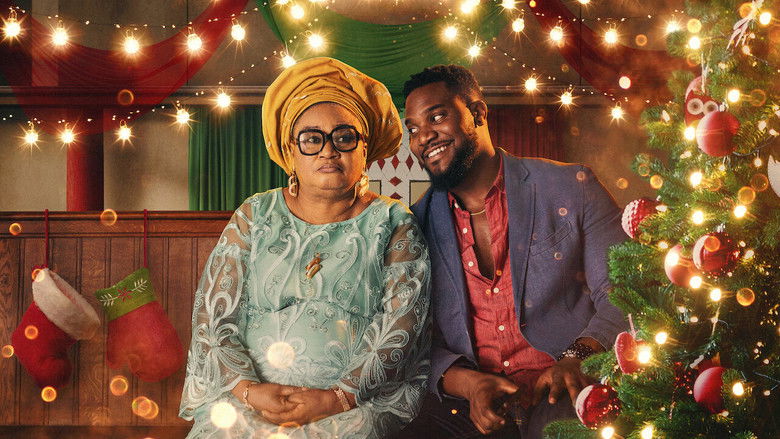
Afolayan, a director who’s spent his career walking the tightrope between Nollywood’s commercial instincts and its artistic ambitions, knows exactly what he’s doing here. A Naija Christmas isn’t just a rom-com—it’s a Trojan horse. On the surface, it’s all bright colors, broad humor, and the kind of physical comedy that plays well in packed cinemas (think: a man getting stuck in a window while trying to impress a woman’s father). But beneath that, there’s something sharper, something that feels like a quiet rebellion against the very genre it’s working within.
Take the mother, played by Rachael Oniga in one of her final roles. Oniga, a Nollywood legend, doesn’t just play the matriarch—she is the matriarch, a woman whose love is as vast as it is conditional. She’s warm, yes, but there’s steel in her voice when she lays down the rules.
"No wife, no inheritance" isn’t just a plot device; it’s a cultural contract, one that speaks to the way marriage in Nigeria (and in so many places) isn’t just a personal choice but a social obligation. The film doesn’t judge her for it—how could it?—but it doesn’t let her off the hook, either. The brothers’ frantic search for brides isn’t just about love; it’s about proving themselves, about meeting an expectation that’s been handed down like a family heirloom.
What’s fascinating is how Afolayan lets the brothers fail. Not in the way rom-coms usually allow failure—a temporary setback before the grand romantic gesture—but in ways that feel real. One brother’s relationship crumbles under the weight of his own lies.
Another’s potential marriage is exposed as a transaction, not a connection. And the third? Well, he might just be the most interesting of the lot, a man who seems to be going through the motions not because he wants a wife, but because he’s afraid of what happens if he doesn’t.
There’s a moment, late in the film, where he sits alone in a bar, nursing a drink, and the camera lingers on his face just a beat too long. It’s not a big moment—no swelling music, no dramatic close-up—but it’s the kind of quiet beat that sticks with you. (I’ve been that man, I thought.
Not in Lagos, not during Christmas, but in the way that wanting something—needing something—can hollow you out even as you’re pretending to be full.)

The film’s greatest strength might be its refusal to tidy things up. Rom-coms have a way of insisting that love is the answer to everything, that if you just find the right person, all your problems will dissolve. A Naija Christmas knows better. It knows that in Lagos, in families like this one, love is just one ingredient in a much larger stew—one that includes money, reputation, tradition, and the quiet, gnawing fear of being left behind.
The ending isn’t unhappy, but it isn’t exactly happy, either. It’s resolved, which is something else entirely. The brothers don’t get everything they want, but they get what they need—or at least, what they’re willing to settle for.
That’s not to say the film is a downer. Far from it. There’s a scene early on, at a lavish Christmas party, where the camera sweeps across a room full of people dancing, laughing, draped in ankara and lace.
The music is loud, the colors are vibrant, and for a moment, you forget that this is a story about pressure and obligation. You just feel the joy of it—the way Lagos at Christmas can make you believe, if only for a night, that anything is possible. Afolayan never lets you forget that joy, even as he peels back the layers to show the anxiety underneath.
I keep coming back to that word: wanting. Not need, not love, but wanting—the kind of desire that’s as much about what you think you’re supposed to have as it is about what you actually do. A Naija Christmas understands that wanting is its own kind of hunger, and that in a city like Lagos, where the line between aspiration and survival is often blurry, it’s a hunger that can consume you.
The film doesn’t offer easy answers, but it doesn’t judge, either. It just watches, with a mix of affection and clear-eyed realism, as its characters chase after something that might not even be real.
And maybe that’s the point. Christmas, after all, is its own kind of performance—a time when we pretend that everything is perfect, that families are whole, that love is enough. A Naija Christmas lets its characters play their roles, but it never lets them forget that they’re acting. The question is, what happens when the curtain falls?
Do you keep pretending, or do you finally step into the light? The film doesn’t say. It just leaves you with the image of a family sitting down to a meal, the table groaning under the weight of food, the air thick with the unspoken.
It’s enough. For now, it has to be.
"A warm, busy Nigerian Christmas rom-com about a mother whose wish turns her three sons into holiday rivals for the family home."
Directed by Kunle Afolayan for Netflix, the romantic comedy-drama A Naija Christmas centers on Mama Agatha Agu and her three adult sons, including Ugo and Obi, whose search for love is spurred by a Christmas wish tied to ownership of the family house. An English-language feel-good holiday film, it mixes family drama with multiple romances and keeps drawing trailer and review attention as a seasonal pick.
Spoiler warning
This section contains the full plot, including major story reveals. Overview above stays spoiler-free.
A Naija Christmas (2021), directed by Kunle Afolayan, brought a fresh dose of holiday cheer to Netflix with its blend of romance, comedy, and family drama. Set against the backdrop of Lagos, the film follows Agatha Agu (Rachael Oniga), a mother who challenges her three sons—Ugo (Kunle Remi), Obi (Efa Iwara), and a third brother—to compete for ownership of the family home by getting married before Christmas. latestnetflix.com's view is that the premise promised laughs, heart, and a distinctly Nigerian twist on festive traditions, but what went into making this Netflix original?
The film’s ensemble cast reads like a who’s who of Nollywood talent. Rachael Oniga, a veteran of Nigerian cinema, led the charge as the matriarch, Agatha, while Kunle Remi and Efa Iwara played her competitive sons. Other notable names included Mercy Johnson Okojie, Linda Osifo, and Ade Laoye, all of whom brought their signature charisma to the project.
While the snippets don’t reveal behind-the-scenes chemistry, the trailer and promotional clips suggest a lively dynamic, particularly between the three brothers vying for their mother’s approval. Rumor has it that the cast bonded over shared experiences of Nigerian family gatherings, which may have informed their performances—though this remains unconfirmed.
Afolayan, known for films like The Figurine and October 1, has a reputation for blending cultural authenticity with mainstream appeal. A Naija Christmas was no exception, offering a rom-com that leaned into Lagos’ vibrant energy while keeping the story universally relatable. The film’s French title, Meilleurs vœux de Lagos ("Best Wishes from Lagos"), hints at its international ambitions, though details on Afolayan’s directorial choices—such as shooting locations or script development—are scarce in the available evidence.
One standout feature of the film is its soundtrack, which reportedly infused traditional Nigerian sounds with festive beats. However, without deeper access to production notes, specifics on the music’s creation remain unclear.
A Naija Christmas arrived as part of Netflix’s growing investment in Nollywood, following hits like King of Boys and Òlòtūré. The streaming giant’s backing likely provided the budget for polished production values, though exact figures aren’t public. The film’s release in December 2021 positioned it as a holiday contender, capitalizing on the season’s demand for feel-good content.
Reaction videos and reviews suggest the movie resonated with audiences, particularly for its humor and heartwarming moments. One YouTube reviewer praised its "authentic Nigerian flavor," though others noted it leaned heavily on rom-com tropes. Despite mixed critiques, the film’s availability on Netflix ensured it reached a global audience, further cementing Nollywood’s place in the streaming landscape.
A behind-the-scenes featurette (A Netflix Film - A Naija Christmas (The Making)) offers glimpses of the cast and crew at work, but details are limited. The snippets don’t reveal any major production challenges, such as delays or on-set drama, leaving fans to speculate about the film’s relatively smooth creation.
What is clear is the film’s intent: to deliver a festive, family-friendly story with broad appeal. Whether it achieved that goal depends on who you ask, but its existence alone signals Nollywood’s rising profile in global cinema.
Entertainment rumors and trivia aggregated from public reporting. Treat speculation as unverified unless a cited source confirms it.
More titles in the same genres and with the same cast.