
Larissa Manoela
Barbara
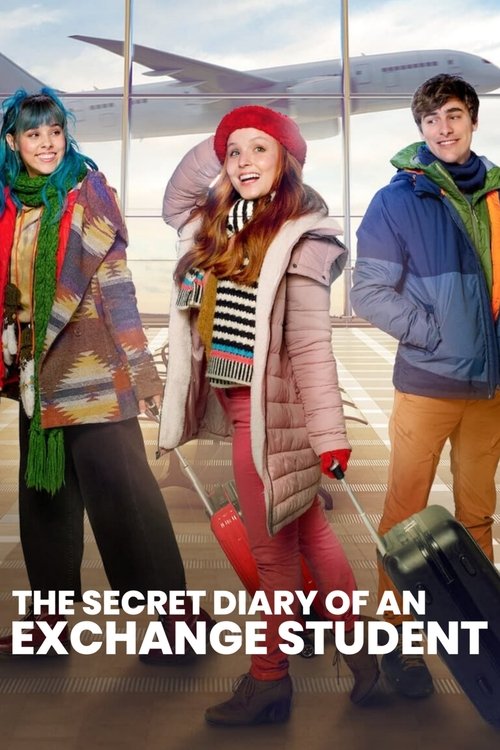
Two best friends embark on a life-changing adventure abroad as exchange students.
I’ve seen this movie before. Not this movie, exactly—there’s no way I could have, since The Secret Diary of an Exchange Student slipped onto Netflix in 2021 with all the fanfare of a library book returned a day late. But I’ve seen the idea of this movie: the fish-out-of-water American abroad, the culture-clash gags, the best-friend duo whose chemistry is supposed to carry us through ninety-six minutes of lightly spiced rom-com.
It’s the kind of film that exists in the shadow of its own premise, like a cover band playing a song you’ve heard so many times you can hum along without ever really listening.
And yet. There’s something disarming about the way this particular iteration unfolds, something almost accidental in its warmth. It’s not good, exactly—at least, not in the way that leaves you scribbling notes in the dark or texting friends to demand they watch it immediately.
But it’s alive in the way a house party is alive: a little messy, occasionally awkward, but full of people who seem genuinely happy to be there. That’s rarer than it should be.

The setup is straightforward to the point of invisibility. Two Brazilian best friends—Barbara (Larissa Manoela) and Taila (Thati Lopes)—land in the U.S. As exchange students, where they’re immediately plunged into the kind of sitcom chaos that feels like it was written by someone who’s seen EuroTrip too many times.
There’s a host family with a son who’s either a love interest or a punchline (Bruno Montaleone, whose grin suggests he knows exactly which one he’s supposed to be), a rival exchange student who’s either a villain or a misunderstood ally (Maiara Walsh, gamely leaning into the role’s cartoonish edges), and a series of escalating misunderstandings that culminate in, of course, a dance-off.
If you’ve ever watched a teen comedy from the 2000s, you already know the beats. The question isn’t what happens—it’s whether the film can make you care about the people it happens to.
Here’s the thing: it almost does. Not because the script is particularly sharp (it isn’t), or because the jokes land with any regularity (they don’t), but because Manoela and Lopes have a rapport that feels real in a way the writing never quite earns. There’s a scene early on where the two of them lie on a bed, scrolling through their phones, their shoulders pressed together in a way that suggests years of shared secrets.
It’s the kind of throwaway moment that most films would cut for pacing, but here it lingers, and for a second, you forget that the plot is about to kick into gear. That’s the film’s secret weapon: it’s not about the story it’s telling, but the people it’s showing you.
Manoela, in particular, carries the film with a kind of effortless charisma. She’s best known in Brazil for her work in telenovelas—Carrossel, As Aventuras de Poliana—and there’s something about her presence here that feels like a bridge between those soapy, heightened worlds and the more grounded (if still broadly comedic) tone of this film. She’s got a way of widening her eyes just enough to sell a joke, or softening her voice when the script calls for sincerity, that makes you believe she’s actually living these moments, not just performing them.
It’s the kind of skill that’s easy to take for granted until you watch an actor who doesn’t have it.

The problem is that the film never quite decides what it wants to be. Is it a fish-out-of-water comedy? A coming-of-age story?
A romance? A satire of American high school tropes? The answer, frustratingly, is all of the above, and none of them fully.
The culture-clash gags—Barbara mistaking a football for a soccer ball, Taila’s horror at the size of American portions—feel like they’re pulled from a first-draft checklist of “things that happen to exchange students.” The romance subplot, meanwhile, is so perfunctory it might as well have been written by an algorithm. (Boy meets girl. Boy and girl dislike each other.
Boy and girl bond over shared activity. Boy and girl kiss. Roll credits.) There’s no real tension, no stakes, no sense that these characters are anything more than vessels for the next joke or plot turn.
And yet—there’s that word again—there are moments where the film stumbles into something resembling truth. A late-night conversation between Barbara and Taila, where they admit they’re both a little homesick, doesn’t land with the weight it should, but it feels like it was written by someone who’s actually been an exchange student, not just someone who Googled “what do exchange students do.” There’s a rawness to the way Manoela delivers the line, “I miss my mom’s cooking,” that cuts through the film’s otherwise glossy sheen. For a second, you remember that these characters are supposed to be real people, not just vehicles for a plot.
That’s the film’s paradox: it’s a movie that’s constantly undercutting its own sincerity with broad humor, but it’s also a movie that clearly wants to be sincere. The result is a tonal whiplash that never quite resolves. Are we supposed to laugh at the American characters’ obliviousness, or with them?
Are the Brazilian protagonists meant to be relatable everywomen or exaggerated outsiders? The film can’t seem to make up its mind, and so it lurches from one mode to the other, never quite committing to either.
What saves it from being a total misfire is the way it leans into the messiness of being young and far from home. There’s a scene where Barbara and Taila get lost in a mall, their phones dead, their sense of direction shot. They’re laughing, but there’s a hint of panic in their voices, the kind that comes from realizing you’re not as in control as you thought you were.
It’s the closest the film comes to capturing the actual experience of being an exchange student—not the Instagram version, where everything is an adventure, but the real one, where you’re constantly oscillating between exhilaration and exhaustion.
I wish the film had trusted those moments more. I wish it had been willing to sit with the awkwardness, the homesickness, the small humiliations that come with being a stranger in a strange land. Instead, it retreats into the safety of the laugh track, as if it’s afraid that if it stops joking, we’ll stop watching.
But the best teen comedies—Clueless, Easy A, even American Pie—understand that the jokes land harder when they’re grounded in something real. The Secret Diary of an Exchange Student has flashes of that understanding, but it never quite commits to it.
In the end, it’s a film that’s easy to forget but hard to hate. It’s not ambitious, or groundbreaking, or even particularly well-made. But it’s got heart, in the way that a handmade gift does: a little lopsided, a little imperfect, but given with the kind of sincerity that makes you smile despite yourself.
I’ve seen this movie before. But I’ve never seen it quite like this.
"A lighthearted Brazilian rom-com with charming leads but a formulaic plot that struggles to stand out."
The chemistry between the two best friends at the center is engaging and fun. The breezy tone and colorful setting make it an easy watch, but the story is predictable, the supporting characters are thin, and it leans on familiar tropes without adding much.
Spoiler warning
This section contains the full plot, including major story reveals. Overview above stays spoiler-free.
The Secret Diary of an Exchange Student (2021) landed on Netflix as a lighthearted Brazilian rom-com, but its journey from script to screen—and the buzz around its young cast—kept fans curious. latestnetflix.com's take is that here’s what the limited evidence reveals about the making of the film, its reception, and the stars who brought it to life.
Directed by Bruno Garotti and written by Garotti and Sylvio Gonçalves, the film follows two best friends—played by Larissa Manoela and Thati Lopes—as they navigate the chaos of an exchange program in the U.S.. The premise blends humor with the universal struggles of young adulthood, a formula that resonated with audiences seeking escapism during the pandemic era.
While the plot itself isn’t groundbreaking, the film’s Brazilian roots and bilingual dialogue (Portuguese and English) set it apart from typical teen rom-coms. The original title, Diários de Intercâmbio, hints at its cultural flavor, though Netflix’s English rebranding leaned into the "secret diary" hook to broaden its appeal.
Larissa Manoela, already a household name in Brazil thanks to her role in the As Aventuras de Poliana series, carried the film alongside Thati Lopes, whose chemistry with co-star Bruno Montaleone became a talking point. Montaleone, a former model turned actor, played the love interest, Lucas, and his on-screen dynamic with Manoela’s character, Barbara, sparked fan edits and social media buzz.
The supporting cast included Maiara Walsh (Cory in the House), Flávia Garrafa, and David Sherod, but it was Manoela and Lopes who dominated discussions. Their real-life friendship—often documented on Instagram—added a layer of authenticity to their characters’ bond, though neither has confirmed whether their off-screen camaraderie influenced the script [unconfirmed].
Critics were divided. Some praised the film’s breezy charm and vibrant cinematography, while others dismissed it as formulaic,. The YouTube review circuit was equally split: one critic called it "a fun, if forgettable, Netflix original", while another highlighted its "refreshing" Brazilian perspective.
The soundtrack, featuring a cover of *NSYNC’s "Kissin’ You" by Manoela and Montaleone, became a standout moment, racking up millions of streams. The song’s inclusion—part of a climactic scene—was a rare bright spot in a film that otherwise struggled to stand out in Netflix’s crowded rom-com library.
Speculation about a follow-up surfaced shortly after the film’s release, fueled by a YouTube clip teasing "what’s next" for the characters. However, no official announcement has been made, and Netflix has remained tight-lipped. Given the film’s modest reception, a sequel seems unlikely—unless fan demand (or a viral TikTok trend) changes the studio’s mind.
Entertainment rumors and trivia aggregated from public reporting. Treat speculation as unverified unless a cited source confirms it.
More titles in the same genres and with the same cast.