

Shane Nigam
Robert

Once-menacing, anger fueled, trained martial arts fighters Robert, Dony and Xavier settle down to peaceful lives, after a significant event prompts them. Fate orchestrates their reunion and return from exile to their fighting ways, when their history linger ominously and one of them faces a violent attack.
I’ve seen this movie before. Not this movie, exactly—there are no nunchucks in John Wick, no rain-slicked Kerala backstreets in The Raid—but the bones are the same. Three men, once dangerous, try to outrun their past.
A phone call drags them back. Blood follows. The formula is so familiar it’s almost comforting, like a favorite diner where the coffee is always bitter and the waitress knows your name. RDX: Robert Dony Xavier doesn’t pretend to reinvent the wheel.
It just spins it faster, louder, and with a lot more sweat.
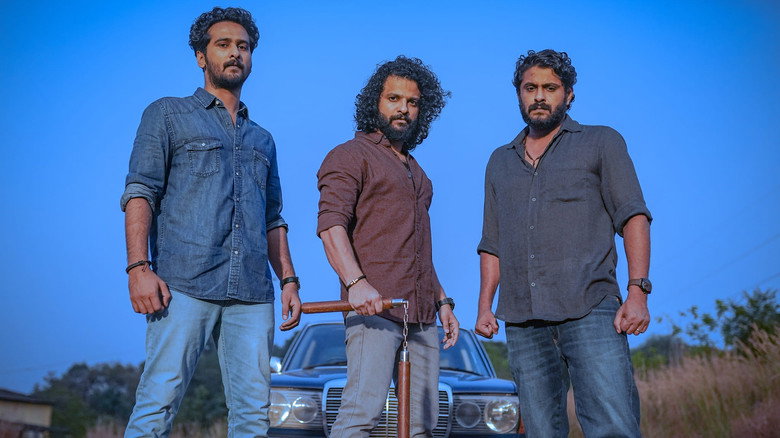
What’s interesting isn’t that it works—it does, for the most part—but how it works. Nahas Hidayath’s debut isn’t a film about vengeance so much as it’s a film about bodies. The plot is thin as rice paper: Robert, Dony, and Xavier, former martial arts enforcers, are pulled back into violence when their family is targeted.
But the story isn’t the point. The point is the way Shane Nigam’s shoulders hunch when he’s about to throw a punch, the way Antony Varghese moves like a man who’s spent too many years waiting for the next fight, the way Neeraj Madhav’s nunchucks blur into something almost balletic. These aren’t characters so much as they are physical presences, and the film knows it.
Take the scene where the trio storms a warehouse to rescue a kidnapped family member. It’s not just the choreography—though the stunt team Anbariv (of KGF and Vikram fame) deserves every bit of praise for making each fight feel distinct—that makes it compelling. It’s the way the camera lingers on the breathing.
You can hear the ragged inhales between blows, the wet gasps when a knee connects with a ribcage. The sound design doesn’t just sell the violence; it sells the cost of it. Sam C.
S.’s score thrums like a second heartbeat, all deep bass and urgent strings, but it’s the silence between notes that really gets under your skin. That’s where the exhaustion lives.
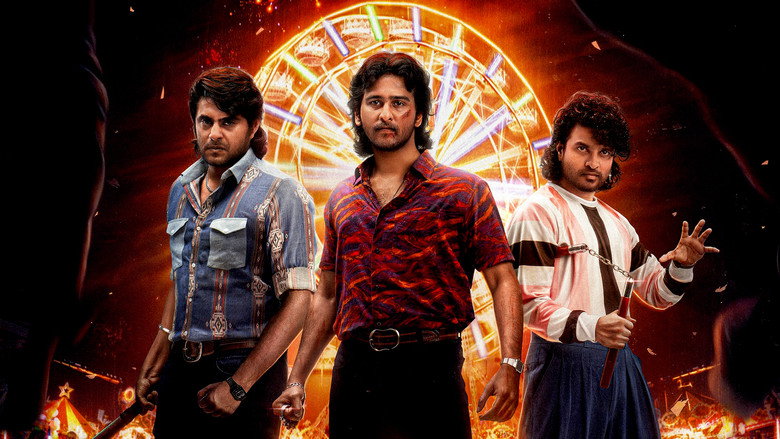
The problem is that RDX wants to have it both ways. It wants to be a slick, high-energy action flick and a character study about men haunted by their pasts. The former it nails; the latter, not so much.
The flashbacks—glimpses of the trio’s younger selves, their training, their bond—are shot with a gauzy, nostalgic filter, as if the film is trying to convince us these men were ever anything more than walking fight scenes. The dialogue doesn’t help. When one character growls, “We’re not killers, we’re protectors,” it’s hard not to roll your eyes.
The line isn’t just on-the-nose; it’s the entire skeleton.
And yet. There’s something undeniably thrilling about watching these three actors play off each other. Nigam, Varghese, and Madhav have a chemistry that feels lived-in, like they’ve been waiting for this role their whole careers.
Madhav, in particular, steals every scene he’s in—not because he’s the best actor (though he’s very good), but because his character, Xavier, is the only one who seems to enjoy the violence. There’s a moment where he twirls his nunchucks like a kid showing off a new toy, and the sheer, unapologetic glee of it is infectious. It’s the kind of detail that makes you realize how rare it is to see joy in an action movie, even the dark kind.
The film’s biggest misstep might be its editing. Some of the fight scenes are so chopped up with quick cuts and slow-motion that it’s hard to follow the action. It’s as if the editor was afraid the audience would get bored if they actually saw what was happening.
(The irony, of course, is that the best action scenes are the ones where you can feel every hit, every near-miss.) The Times of India’s Anjana George put it best: “There’s nothing that surpasses the adrenaline rush of action cinema.” She’s right, but the film occasionally seems to forget that the rush comes from clarity, not chaos.
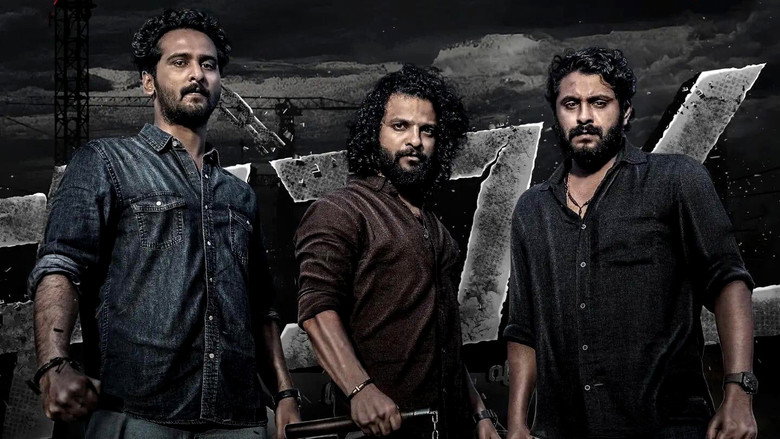
What does RDX say about the human condition? Not much, if we’re being honest. It’s not supposed to.
This is a movie that exists to make your pulse race, to make you flinch when a fist connects with a jaw, to make you cheer when the underdogs land a hit. It’s a throwback to an era when action films were judged by how much they made you feel in the moment, not how much they made you think afterward. In that sense, it’s a success.
The Indian Express called it “the gift that Malayalam audiences have longed for—a theatrical entertainment that matches the electrifying experiences found in other languages.” That’s a high bar, but RDX clears it more often than not.
Still, I can’t shake the feeling that it could’ve been more. Not deeper, necessarily, but sharper. The best action films—The Raid, John Wick, even Bheeshma Parvam—balance their spectacle with a sense of stakes, of consequence. RDX has the spectacle down pat.
The consequences? They’re there, but they feel like an afterthought, like the film is so busy showing off its muscles that it forgets to flex its heart.
That’s not to say it doesn’t leave a mark. There’s a moment near the end where the three leads stand in the rain, bloodied and breathing hard, and for the first time, you see something like regret in their eyes. It’s fleeting—gone before you can be sure it was ever there—but it lingers.
Maybe that’s the point. Maybe RDX isn’t about the men they were or the men they’ve become. Maybe it’s about the moments in between, when the fight’s over and the adrenaline fades, and all that’s left is the ache in your bones.
I won’t pretend this is a great film. But it’s a good one, in the way that a perfectly cooked steak is good—uncomplicated, satisfying, and best enjoyed when you’re not in the mood for anything too heavy. And sometimes, that’s enough.
Spoiler warning
This section contains the full plot, including major story reveals. Overview above stays spoiler-free.
Nahas Hidayath’s directorial debut, RDX: Robert Dony Xavier (2023), stormed onto screens as one of Malayalam cinema’s most talked-about action thrillers. Starring Shane Nigam, Antony Varghese, and Neeraj Madhav in the titular roles, the film promised high-octane drama from the get-go. But what went on behind the scenes? latestnetflix.com's take is that here’s what the evidence reveals—and where the details remain scarce.
Nahas Hidayath, previously known for his work in advertising and short films, took a bold leap with RDX. The film marked his first foray into feature-length direction, and the pressure was on. Produced by Sophia Paul under Weekend Blockbusters, the project was positioned as a high-stakes action spectacle. While the snippets don’t reveal much about Hidayath’s creative process, the fact that he helmed a star-studded cast in his debut suggests confidence in his vision. Whether the film’s reception matched his ambitions remains a topic for critics, but the sheer scale of the project indicates a calculated risk.
Shane Nigam, Antony Varghese, and Neeraj Madhav played the central characters—Robert, Dony, and Xavier—whose lives take a dramatic turn when their identities are exposed. The chemistry between the three leads was a major selling point, but the evidence doesn’t look at how they prepared for their roles. Were there intensive action training sessions? Did they improvise any scenes? The snippets stay silent on these details.
Supporting the trio were seasoned actors like Lal, Babu Antony, and Baiju Santhosh, alongside Mahima Nambiar, Aima Sebastian, and Maala Parvathi. The ensemble cast suggests a deliberate effort to balance star power with character depth, though the snippets don’t confirm whether any of the actors took on unconventional roles or pushed creative boundaries.
Music often elevates an action film, and RDX’s soundtrack was composed entirely for the movie. However, the evidence doesn’t specify who handled the score or whether any tracks became standout hits. Was there a signature song that defined the film’s tone? Did the soundtrack contribute to its box-office appeal? The lack of details leaves these questions unanswered.
The IMDb snippet teases that the lives of the three protagonists "take a turn as their faces get exposed". Beyond this, the evidence offers no further plot specifics. Were there twists that surprised audiences? Did the film deliver on its promise of a gritty, high-stakes narrative? Without deeper insights, it’s hard to gauge the film’s storytelling strengths or weaknesses.
For all its buzz, RDX: Robert Dony Xavier remains a film with more questions than answers. The evidence doesn’t touch on:
Without these details, the film’s legacy feels incomplete. For now, RDX shows Malayalam cinema’s ambition—but its full story is still waiting to be told.
Entertainment rumors and trivia aggregated from public reporting. Treat speculation as unverified unless a cited source confirms it.


