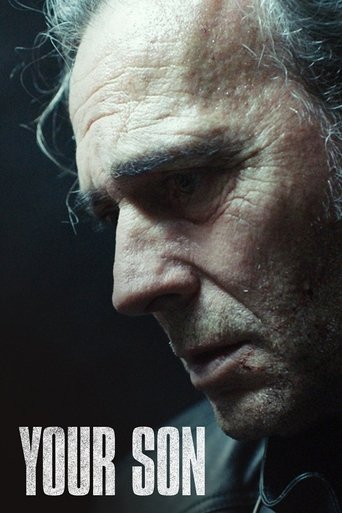
Fariborz Arabnia

The story of 3 Iranian couples who one day after attending a party confront a serious tragedy.
Light in Iranian films has a way of pooling in corners, turning faces into maps of shadow and sudden clarity. Mohamad Reza Rahmani's Sometimes (2015) lives in that half-dark. Three couples spend a night gathering and laughing.
Then a tragedy lands, and the movie stays with what the accident does to time, to memory, and to people who thought they knew each other.
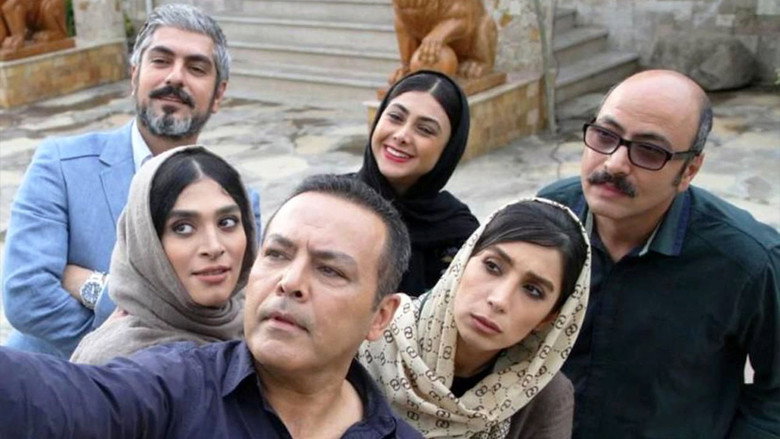
The plot is spare on purpose. Three couples, a party, a crash. Iranian cinema has long been good at the unsaid, at the weight of what sits off-screen.
Asghar Farhadi's A Separation lets the camera wait in doorways and stairwells until tension coils between the words. Rahmani is working in that tradition. He does not have Farhadi's narrative precision.
The film gropes toward a feeling it cannot quite name. Grief is rarely tidy, so the looseness has a logic. It still leaves you looking for a handhold.
Fariborz Arabnia and Mehdi Pakdel carry most of the feeling. Their work is suggestive more than fully drawn. Arabnia has a hangdog face and a posture that looks like he has been hauling unnamed cargo for years.
Pakdel is restless, body coiled as if he might spring. You can feel a history between their characters. The movie never quite tells you what it is.
That frustrates. It is also the point. Grief does not only take the person who is gone.
It remakes the relationships that remain until they look like strangers.
What the film gets right is how tragedy lives in ordinary rooms. Early, before the accident, the couples sit in a living room. The camera moves among them in a way that feels almost like a documentary.
The talk is light. The laughter is easy. Something hums under it.
In hindsight the scene reads like a warning. Rahmani does not telegraph the crash. It arrives the way real life does, unannounced.
When it comes, it feels less like a shock than a confirmation of a dread you had already started to feel.
The pictures stay austere. Interiors are cramped. The light is often dim, as if each person is trapped in a private gloom.
Hands keep returning: clasped, trembling, reaching. People try to connect and fail. The camera sits with those details long enough that you have to look.
This is not flashy filmmaking. It asks you to hunt for meaning in the gaps.
The second act drags. The film loses its way for a stretch. A subplot about one of the women, a moment of infidelity, feels glued on, more soap than grief. The beat is not unbelievable. It just does not land with the same weight as the rest. The accident is enough story. The detour into melodrama is a distraction.
Rahmani refuses easy closure. Nobody heals on schedule. The characters, and you, stay in a suspended grief where the past will not leave and the future is a question.
That is a brave choice in a culture that often wants stories to offer catharsis. He seems more interested in sitting with the discomfort of not having answers.
Sometimes is not a perfect film. It is a sincere one. Iranian cinema has a long practice of looking at the quiet devastations of ordinary life, and this one belongs in that line even if it does not quite match the films it echoes.
What stays with me is not the crash itself. It is how the people move afterward. Near the end, one of the men stands in a doorway, back to the camera, staring at something we cannot see.
The shot lasts a few seconds. It is enough. The stories that whisper here outlast the ones that shout.
Mohamad Reza Rahmani’s Sometimes (2015) is a low-key Iranian drama that brought together some of the country’s most respected actors, including Fariborz Arabnia, Mehdi Pakdel, and Azade Samadi. While the film hasn’t dominated global headlines, its casting and thematic focus have sparked curiosity among fans of Iranian cinema. latestnetflix.com's read is that here’s what we know—and what remains under wraps—about this under-the-radar project.
The film’s ensemble is its biggest draw. Fariborz Arabnia, a veteran of Iranian cinema known for his roles in The Salesman (2016) and The Night Bus (2007), headlines the cast alongside Mehdi Pakdel, a rising star whose performances in A Separation (2011) and The Salesman earned international acclaim. Azade Samadi, another standout, has been praised for her work in The Last Step (2012) and The Bright Day (2013).
What’s notable is how these actors—each with their own distinct screen presence—come together in Sometimes. The film’s trailer hints at a character-driven narrative, possibly exploring interpersonal relationships or quiet domestic tensions, a common theme in Iranian cinema. While the full plot remains elusive, the trailer’s muted tone suggests a departure from the high-stakes drama of some of Rahmani’s peers.
Details about Sometimes’s production are scarce. Unlike blockbusters with behind-the-scenes documentaries or press tours, this film seems to have slipped under the radar. The only concrete evidence of its existence comes from a full-movie upload on YouTube, which may or may not be an official release. The lack of widespread coverage in Iranian or international media raises questions: Was Sometimes a passion project with limited distribution? Or did it struggle to find an audience despite its cast?
One intriguing clue comes from a post-screening discussion titled Sometimes I Dream in Farsi, which suggests the film may have had a niche festival run or a special screening event. The title’s poetic phrasing hints at themes of identity, language, or cultural displacement—topics that resonate in Iranian cinema. However, without further context, it’s unclear whether this discussion was tied to Sometimes (2015) or another project.
Given the lack of official press, speculation has filled the gaps:
For fans of Iranian cinema, Sometimes is a reminder of how many films fly under the radar. While it may not have the cultural footprint of A Separation or The Salesman, its cast and director’s involvement make it a curiosity worth exploring. The film’s existence—confirmed by its TMDB page and scattered online traces—proves that even in an era of globalized media, some stories remain quietly compelling.
Until more details emerge, Sometimes (2015) will linger as a footnote in Iranian cinema, a film that brought together great talent but left few breadcrumbs for the curious.
Entertainment rumors and trivia aggregated from public reporting. Treat speculation as unverified unless a cited source confirms it.
More titles in the same genres and with the same cast.