Jose Coronado
Jaime Jiménez

Jaime, a doctor who lives in Seville, finds his life radically changed when his son is left fighting for his life after being beaten up during a robbery. The feelings of pain and helplessness soon change to feelings of hate and anger, converting a good dad into a dehumanised man.
I’ve seen this story before. Not the exact one—there are no carbon copies of grief—but the shape of it: a good man undone by violence, his love curdling into something darker, something that wears his face but isn’t him. Your Son is a revenge thriller, yes, but it’s also a film about how quickly a life can become unrecognizable, how the person you thought you were can slip through your fingers like sand.
And yet, for all its familiarity, there’s something unsettlingly precise about the way it unfolds. This isn’t just another tale of a father’s rage. It’s a film that lingers in the small, ugly details—the way a hand trembles before it strikes, the way a voice cracks when it’s trying too hard to be steady.
Miguel Ángel Vivas, the director, has made a career out of tension. His previous work, like Extinction and Kidnap, thrives on the slow unraveling of ordinary people in extraordinary circumstances. Here, he takes a different approach.
There’s no slow burn in Your Son. The inciting incident—the brutal beating of Jaime’s son during a robbery—happens early, and the film’s engine is the question of what comes next. But Vivas isn’t interested in the mechanics of revenge so much as the corrosion of it.
The camera lingers on Jaime’s face, not in close-up for melodrama, but in medium shots that let us see the way his body betrays him: the way his shoulders hunch, the way his eyes dart, the way he moves through the world like a man who’s already half-gone.
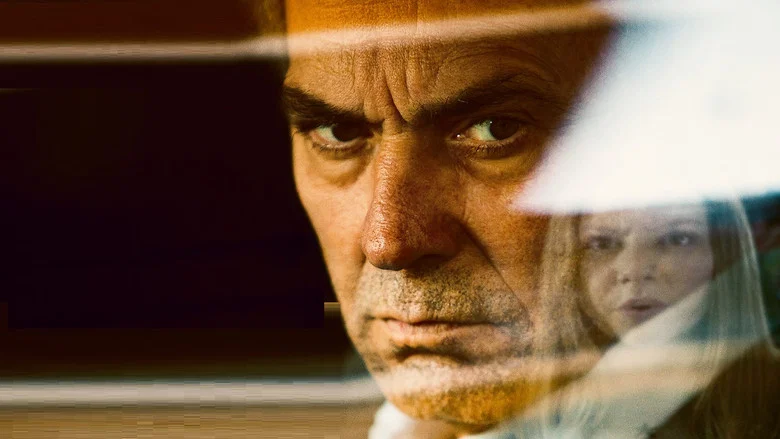
Jose Coronado plays Jaime, and it’s a performance that feels like a slow exhale. There’s no grandstanding, no scenery-chewing. Just a man who’s trying to hold himself together while everything inside him is coming apart.
Coronado has a face that’s easy to read—too easy, almost. You can see the calculations behind his eyes, the way he’s weighing every word, every gesture, as if he’s afraid that if he lets go for even a second, he’ll shatter. It’s the kind of performance that doesn’t announce itself, which makes it all the more devastating.
When Jaime finally snaps, it’s not with a roar but with a whimper, a quiet, desperate act that feels less like triumph and more like surrender.
The film’s most striking sequence comes early, in the hospital. Jaime’s son, Marcos (Pol Monen), lies in a coma, his face swollen and bruised, his body a map of violence. The camera doesn’t flinch.
It holds on the details—the way the machines breathe for him, the way his fingers twitch, the way his mother (Ana Wagener) sits beside him, her hand hovering just above his, as if she’s afraid to touch him. There’s no score here, just the hum of the hospital and the sound of Jaime’s ragged breathing. It’s uncomfortable to watch, and that’s the point.
Vivas wants us to sit with the discomfort, to feel the weight of what’s been lost. This isn’t a film that lets you look away.
And yet, for all its raw power, Your Son stumbles when it tries to force its narrative into the shape of a thriller. The revenge plot, when it finally arrives, feels almost perfunctory, as if the film is checking boxes rather than following its own logic. There’s a scene where Jaime tracks down one of the attackers, and the confrontation is shot with a kind of grim efficiency, but it lacks the emotional punch of the earlier hospital scenes.
It’s as if the film, having spent so much time on the slow unraveling of its protagonist, suddenly remembers that it’s supposed to be a genre piece and rushes to catch up. The result is a tonal whiplash—one moment, you’re in the quiet devastation of a family falling apart; the next, you’re in a gritty, almost procedural hunt for justice.
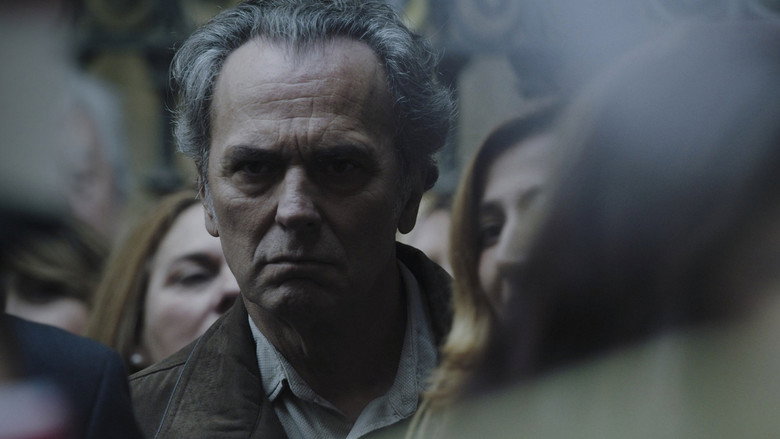
That’s not to say the film doesn’t have its moments of brilliance. The cinematography, by Pablo Rosso, is stunning in its austerity. The color palette is drained of warmth, all blues and grays, as if the world itself has been leached of life.
The camera moves with a deliberate slowness, forcing us to sit with the characters in their pain. And the sound design is equally effective—there’s a scene where Jaime sits in his car, listening to a voicemail from his son, and the sound of his breathing fills the space, loud and ragged, like he’s drowning in it.
But the film’s greatest strength is also its greatest limitation. It’s so focused on Jaime’s descent that it forgets to give us a reason to care about the world around him. The attackers are little more than sketches, their motivations barely explored.
The film asks us to invest in Jaime’s rage, but it doesn’t give us much beyond that rage to hold onto. It’s as if Vivas is so intent on showing us the cost of violence that he forgets to show us what’s at stake.
That’s not a fatal flaw, but it is a missed opportunity. Your Son could have been a film about the cyclical nature of violence, about how one act of brutality begets another, about how the people we love can become collateral damage in our quest for vengeance. Instead, it’s a film about a man who loses himself, and while that’s a compelling story, it’s not a particularly original one. What makes it worth watching isn’t the plot, but the way it’s told—the way Coronado’s face becomes a landscape of grief, the way the camera lingers on the small, human details that most films gloss over.

In the end, Your Son is a film that leaves you with more questions than answers. What does it mean to be a good man in a world that seems determined to break you? How do you hold onto your humanity when everything around you is pushing you toward something darker?
And what do you do when the person you become in the pursuit of justice is someone you no longer recognize? The film doesn’t offer easy answers, and maybe that’s the point. Some wounds don’t heal.
Some losses don’t fade. And some stories don’t end so much as they just… stop.
I walked out of Your Son feeling hollowed out, but not in the way that bad films leave you empty. This is the kind of hollowness that comes from sitting with something true, something that lingers long after the credits roll. It’s not a perfect film, but it’s an honest one.
And in a genre that so often trades in spectacle and catharsis, that’s something worth holding onto.
"A tense, emotionally charged thriller about a father's desperate quest for justice, held back from greatness by its pacing and predictability."
A gripping premise and strong performances, particularly from José Coronado as a father relentlessly determined to avenge his son's assault. The dark, brooding atmosphere and moral dilemmas land, but the plot is predictable and the pacing uneven, with slow stretches that dilute the tension.
That was Miguel Ángel Vivas describing his own hero, three days before Spanish cinemas opened Tu hijo. José Coronado plays Jaime Jiménez, a Seville surgeon whose 17-year-old son Marcos, Pol Monen, is beaten outside a nightclub and left vegetative. The wallet is still there. The police look slow. Jaime goes hunting. Vivas, back in his hometown after English-language work including Extinction, told Europa Press he had been sitting with the story for years. latestnetflix.com's read is that he wanted class, revenge, and a father who still thinks the strong man saves the room."We are always thinking of the strong man who is going to save the world, the women, the men, and I wanted to fight that a little," he said.,,
Coronado used the same junket to draw a line Spain keeps redrawing. Real padres coraje such as Antonio del Castillo and Juan José Cortés had been joining political parties. "One thing is getting into politics and another is taking justice into your own hands," Coronado said. "Nobody can take justice into their own hands. That is why we live in a society with laws, better or worse, but we cannot live in Wild West times." He called Jaime "a puppet in the middle of the night" who realizes he does not actually know his children. "What rules now are the influencers, social networks, and posing." Vivas said he wanted to talk about the general anger at social media, the speed with which people appoint themselves judges over a tweet.
On RTVE.es he went colder. "We do not know our children and they do not know us, it is that terrible." The sons live for networks and packs. The fathers live to make money. He said he had not needed many references because he could look at himself as a father. ABC's Oti Rodríguez Marchante, reviewing the opening, wrote that the plot's weight sits on Coronado's shoulders, an actor who can look like he is carrying the devil inside without moving a muscle.,
Ester Expósito plays Andrea, Marcos's girlfriend, the role later write-ups treated as a fuse. At the Europa Press junket she called the film "complicated and hard" and a portrait of "the silenced woman, who is not listened to but maybe has more sensible ways than some men of resolving certain situations." She did not buy the panic about her generation. "I want to think our generation is not more violent than others." HobbyConsolas, reviewing the November release, flagged her as the young actor already building a TV name on Estoy vivo, Vis a vis, and Netflix's Elite. The film had already opened the 63rd Seminci in Valladolid on 20 October 2018. EOne put it in Spanish theaters on 9 November. Apache Films, Las Películas del Apache, La Claqueta, and France's Ran Entertainment produced, with Canal Sur, Netflix, and Orange in the credits.,,,
Harper's Bazaar listed the international Netflix drop for 1 March 2019. The streamer filed it as title 80167647. TMDB still logs $414,202 in revenue and a 103-minute runtime. Decider later filed it under Stream It or Skip It as a brutal Spanish thriller that keeps tightening. Fotogramas's one-line complaint still stings if you have been to Seville. The location is Seville and nobody has an Andalusian accent. The English menu calls it Your Son. The title Netflix kept in Spain is the original. Tu hijo.,,,,
Entertainment rumors and trivia aggregated from public reporting. Treat speculation as unverified unless a cited source confirms it.
More titles in the same genres and with the same cast.